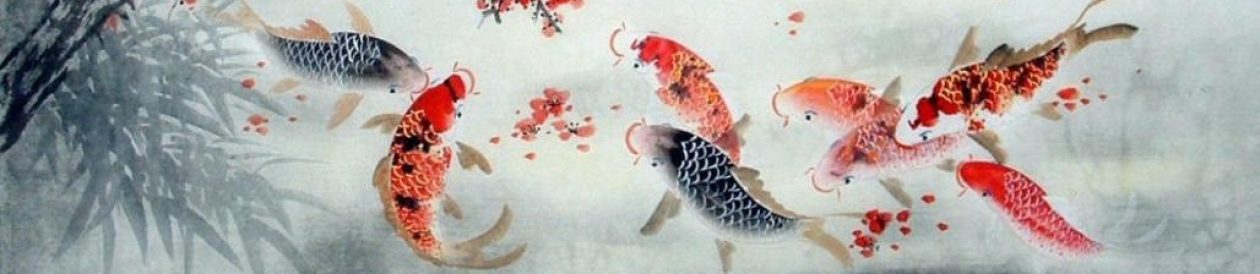
Isn’t it enough to see that a garden is beautiful without having to believe that there are fairies at the bottom of it too?
[Douglas Adams]
Category Archives: quotes
Milestones Passed in the Dark
 Last night I had a realisation, the way one does, that I must have written quite a few blog posts. But how many? Having awoken at stupid o’clock this morning I figured I’d use the time to try to work it out. Could I even do it? This weblog has been through at least three different incarnations and the old blogs are no longer online.
Wait! I have backups. Do I still have the old files? No, not on my current PC: well I did trash a lot of old data when I migrated to this machine recently. So let’s search the archive disks … and … Lo! we do have the old files, saved in an archive of my PC three before last. (How sad is that?!) So I was able to do a count …
“I don’t believe it!” If I go back to when I started blogging in January 2004 I reckon I’ve written 879 Zen Mischief weblog posts (this will be number 880). And we can add to this another 134 for the Anthony Powell Society. That’s a total of 1013 in 6½ years, or three a week. Not prolific by many blogger’s standards, but prolific enough for me, especially when you add in almost 2000 photos (and that’s just the edited ones!) posted on Flickr since February 2006.
While not everything I write is wholly original (whose writing is?) I’ve covered everything from beer, by way of diversions into naturism, science and Bagpuss, to zen. Hmmm … not bad!
Quotes of the Week
Another in our occasional series of quotations encountered during he week which have struck me: because of their zen-ness, their humour, or their verisimilitude.
Although the world’s religions may differ fundamentally from one other in their metaphysical views, when it comes to their teachings on the actual practice of ethics, there is great convergence. All the faith traditions emphasize a virtuous way of being, the purification of the mind from negative thoughts and impulses, the doing of good deeds, and living a meaningful life.
[Dalai Lama]Don’t forget those irregular verbs like hoggo, piggeri, swini, gruntum.
[pmh {at} cix]Sex and money: the forked root of evil
[Ross Macdonald, The Drowning Pool]Disbelief in magic can force a poor soul into believing in government and business.
[Tom Robbins]Girls are like pianos. When they’re not upright, they’re grand.
[Benny Hill]
Whatever Next?
I went past a building today. When I was a kid it would have been called St Bloggs’ Junior School. Today it is called St Bloggs Children’s Centre. Hmmm ….
Quote: Infinity
To infinity and beyond
[Buzz Lightyear in Toystory]
Quote: Furry Animals
I like small furry animals – as long as they’re tasty
[Lisa Jardine]
More Auction Oddities
Another in our occasional series of highlights from our local auction-room catalogues. [My comments in italic.]
A portrait of two young children, one wearing a plumed hat, with a cat, English School, probably 19th century …
I think we should be told why the cat is sitting on the hat and not the child’s lap. Or is it dead and just being used instead of a feather in the child’s hat?A Victorian Sri Lankan colonial overmantel mirror in rare zebra wood, the shield-shaped central plate beneath a fruit carved cornice, flanked by turned columns and leaf shaped mirrors above small display shelves.
It sounds a complete dog’s breakfast; I just can’t picture it.An antique style silver collar.
That’s all! A collar for what? A coat? A dog? A vicar? Mme Whiplash? – oh, sorry, no, she’s the vicar.A varied interesting lot containing military buttons, badges and dog tags, and a soldier’s service and pay book (1943), autograph book, the works of William Shakespeare, a pair of wooden barleytwist candlesticks, a bejewelled trinket box in the form of a tortoise, picture frames, mixed coinage, brassware, etc.
You just know as soon as you see “a varied interesting lot” it is going to be a collection of toot, but this one was especially, and probably literally, priceless.A large plated ‘well and tree’ meat dish, two waiters and a syphon stand.
Are the waiters holding up the syphon stand or vice versa? Are we sure it’s a syphon stand and not a village pump for extracting the meat juices from the well?A stuffed kingfisher mounted in a circular frame with domed glass.
Why?2 crocodile skins, 65 ins and 36 ins long.
Start a new fashion: crocodile skin bedroom rugs.A 19th century Arab Nimcha sword, the multi-fullered straight blade with steel hilt and angular knuckle guard with tracers of damascening, the grip of rhinoceros horn, 38 ins, remains of scabbard.
It was the “remains of scabbard” that finished me; as if this pile of dust makes everything kosher.An interesting collection of Carlton Ware comprising a farmyard condiment set of farmhouse mustard with cover, barn pepperette and hayrick salt shaker, on circular stand …
This is the piece de resistance! I almost went to the sale just to look at this hideous sounding cruet.
Interesting Times we Live in!
Either there is a civil strife in heaven,
Or else the world too saucy with the gods
Incenses them to send destruction.[…]
… There is one within,
Besides the things that we have heard and seen,
Recounts most horrid sights seen by the watch.
A lioness hath whelped in the streets;
And graves have yawn’d, and yielded up their dead;
Fierce fiery warriors fight upon the clouds,
In ranks and squadrons and right form of war,
Which drizzled blood upon the Capitol;
The noise of battle hurtled in the air,
Horses did neigh and dying men did groan,
And ghosts did shriek and squeal about the streets.[…]
A common slave – you know him well by sight –
Held up his left hand, which did flame and burn
Like twenty torches join’d, and yet his hand
Not sensible of fire remain’d unscorch’d.
Besides – I ha’ not since put up my sword –
Against the Capitol I met a lion,
Who glaz’d upon me and went surly by
Without annoying me. […]
And yesterday the bird of night did sit
Even at noonday upon the marketplace,
Howling and shrieking. When these prodigies
Do so conjointly meet, let not men say
“These are their reasons; they are natural”:
For I believe they are portentous things
[William Shakespeare, Julius Caesar]
Quote: Victorious
If sometimes you feel a little useless, offended or depressed, always remember that you were once the fastest and most victorious little sperm out of millions.
[unknown author]
Quote: Truth
The truth does not change according to our ability to stomach it.
[Flannery O’Connor]