Category Archives: personal

Leisure

Another of the short poems we read at my mother’s funeral was this. Again it captures my mother’s quiet delight in the natural world.

Leisure
By WH Davies

What is this life if, full of care,
We have no time to stand and stare.

No time to stand beneath the boughs
And stare as long as sheep or cows.

No time to see, when woods we pass,
Where squirrels hide their nuts in grass.

No time to see, in broad daylight,
Streams full of stars like skies at night.

No time to turn at Beauty’s glance,
And watch her feet, how they can dance.

No time to wait till her mouth can
Enrich that smile her eyes began.

A poor life this if, full of care,
We have no time to stand and stare.

WH Davies (1871-1940) spent a significant part of his life as a tramp in both the UK and USA, but became one of the most popular poets of his time.

Nice Mice

For no obvious reason I was recalling, the other evening, one of the short poems we read at my mother’s funeral back in June 2015.

As some here will know she was a great nature lover, and unbeknown to anyone some while before she died she had been feeding a small mouse which lived under the bath in the en suite of her care home room. Everyone at the care home loved my mother; however Rosie, the care home’s lovely manager, when she found out about the mouse went fairly ballistic – quite understandably. So when we read this poem at the funeral, Rosie absolutely cracked up.

Here’s the poem …

Mice
By Rose Fyleman

I think mice are rather nice;
Their tails are long, their faces small;
They haven’t any chins at all.
Their ears are pink, their teeth are white,
They run about the house at night;
They nibble things they shouldn’t touch,
and no one seems to like them much,
but I think mice are nice!

Rose Fyleman (1877-1957) is most famous for her poem There are Fairies at the Bottom of Our Garden.

Nudity (again)

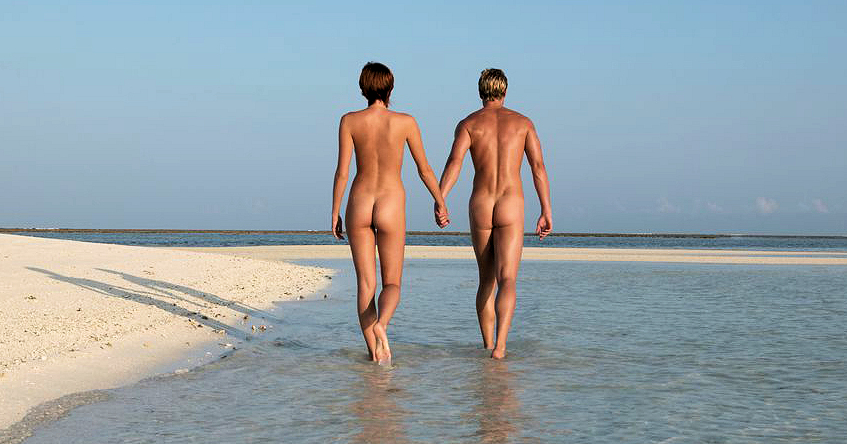
I came across an interesting post on the Naked Wanderings blog. It is overtly about the influences nudism has on our (intimate) relationships, but I found it interesting because it also throws some light on why many people find nudity (and thus nudism/naturism) so scary and taboo. Here’s the cut down version:

[N]udism has a positive influence on both our physical and mental health.
. . .
But how does nudism effect relationships?
. . .
[Apparently] the divorce rate among nudist couples is a lot lower than among textiles . . . are nudist couples sharing different values than textiles which are more likely to keep them together?
. . .
The level of trust in our relationship is high enough that we wouldn’t be threatened knowing that our partner was spending time naked among other nudies.
. . .
[But] in many relationships, trust is often linked with an inevitable idea of not letting the fox into the hen house . . . We want our partner to be sexy as hell when we go out together but we wonder why they have to look so fancy when they will spend a night with friends. We know that a couple of her well placed hip movements in that dress can make a guy go crazy or that with his three day beard in combination with that certain shirt he’ll have girls hanging on his lips. Imagine what it would be like if everyone was naked.
. . .
If we allow our partner to be seen naked and to see others in their purest form, have we conquered jealousy? [Maybe.] It’s all about the intention.
. . .
For us, it seems unimaginable not to see our partner nude at least a couple of times a day, but we would probably be surprised if we knew for how many people it has been weeks, months, sometimes even years since they last saw their partner’s naked body.
. . .
According to [one] poll . . . 40% of the interviewees preferred to only have sex when the lights are out . . . because then you avoid getting caught up in thoughts about your physical appearance . . . If you have any intention to spend at least some part of your life with this person, you still feel that you have to hide your own body?
. . .
[T]here is no hiding, we see each other naked so often that . . . we became aware of our bodies and we accept how we and our partner looks . . . nudity still gets us excited, but it depends on the situation. 
. . .
We get the question about how to convince your partner into nudism . . . Propose that they give it a try. Only once, in a secure and not very crowded place.
. . .
[W]e are completely okay with others who prefer to wear clothes. We are not saying that our lifestyle is the only right one.

If even half of this is true, then I find it a very sad reflection on the state of our minds, and the prudish control which has been exerted on us for generations – this is nothing new. A lot of it can certainly be laid at the door of Western religions and the patriarchy; although there are doubtless other influences too.

Isn’t it time we accepted that we’re basically all the same. We all know what’s under your t-shirt and jeans; my t-shirt and jeans.

So where is the problem? Yes, like so many things the problem really is only in your mind, if you allow it to be.

Ten Things, June

This year our Ten Things series is focusing on each month in turn. The Ten Things may include facts about the month, momentous events that happened, personal things, and any other idiocy I feel like – just because I can. So here are …

Ten Things about June

  1. June marks the start of meteorological Summer
  2. Dedicated to Juno, Roman goddess of marriage
  3. Magna Carta signed on 15 June 1215
  4. Summer Solstice …
  5. … which is the longest day
  6. Midsummer’s Day is on the Feast of St John Baptist, and not at the Solstice
  7. Well dressing, which is still practised in Derbyshire
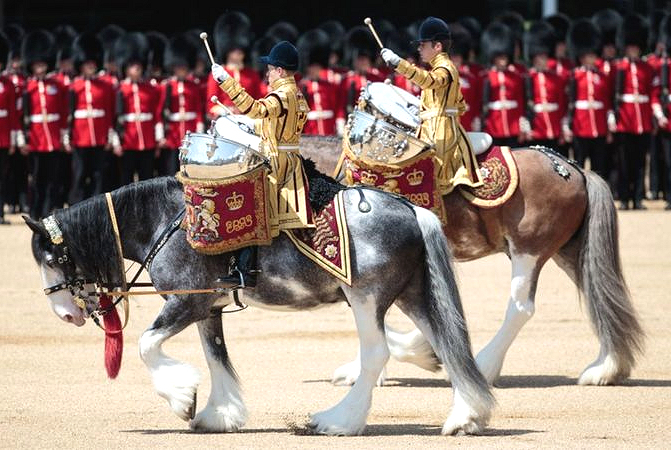
  8. Trooping the Colour (above) is part of the Queen’s Official Birthday celebrations
  9. Ratcatchers Day, Hamelin, Germany
  10. Birthstone: Pearl

Another Meme

Oh dear! It’s time for another meme. This one stolen from David Hallett on Facebook and slightly amended.

  • How old are you: 68
  • Surgeries: 9 – appendectomy, 2x cystoscopy, sinuses & septoplasty, finger nail removal, 2x arthroscopy, 2x knee replacement; all as an adult
  • Tattoos: 0
  • Piercings: 1
  • Broken a bone: no – but have come close a few times
  • Ridden in an ambulance: yes
  • Ridden in a squad car: no
  • Ice skated: no
  • Ridden a motorcycle: no
  • Stayed in hospital: yes
  • Skipped School: no
  • Donated blood: to my shame, no
  • Last text: friend Jean
  • Watched someone die: no; never managed to get there in time
  • Pepsi or Coke: Diet Coke
  • Favourite season: spring/early summer
  • Received a ticket? yes
  • Favourite Colour: yellow, or light green
  • Sunset or sunrise: sunrise
  • Beach or mountains: beach
  • Who will play this with you: probably no-one
  • Cat or dog: always cats
  • Watch someone give birth? no
  • Kids: none
  • Samsung or iPhone: almost anything but Apple
  • Favourite alcohol: Adnams Dry Hopped Lager

Ten Things, May

This year our Ten Things series is focusing on each month in turn. The Ten Things may include facts about the month, momentous events that happened, personal things, and any other idiocy I feel like – just because I can. So here are …


Ten Things about May

  1. May Day …
  2. … which is also the pagan festival of Beltane
  3. May Day holiday, which in the UK naturally doesn’t fall on May Day but the first Monday
  4. Spring bank holiday which falls on the last Monday and replaces the old Ascension Day holiday
  5. Both my parents died in May: Father in 2006 and Mother in 2015
  6. State Opening of Parliament
  7. Helston Furry Dance (above)
  8. Dedicated to Roman goddess Maia
  9. Oak Apple Day
  10. Birthstone: Emerald

Quote: Ethics

Don’t lie, don’t kill, don’t steal. Don’t use love as a game or weapon. Respect the earth, and don’t abuse its gifts. All are familiar ethics that we somehow forget, or manage to sidestep, when we just don’t feel like thinking about consequences.
[Stephanie JT Russell]

Ten Things, April

This year our Ten Things series is focusing on each month in turn. The Ten Things may include facts about the month, momentous events that happened, personal things, and any other idiocy I feel like – just because I can. So here are …

Ten Things about April

  1. In most years Easter falls in April
  2. All Fool’s Day
  3. New financial year in UK
  4. St George’s Day
  5. The birth (allegedly) & death of William Shakespeare
  6. First cuckoos & swallows normally arrive in UK
  7. Start of asparagus season
  8. Buddhist Hanamatsuri (Buddha’s birthday)
  9. Start of cricket season
  10. Walpurgis Nacht on 30th

30-a-Week?

We all know that current medical wisdom is that we need at least five portions of fruit and veg a day for good (gut) health – although the definition of “portion” is often far from clear. There’s even a suggestion that 5-a-day isn’t enough and we should be eating 10-a-day!

However recently I came across the concept that as well as our 5-a-day we should be eating at least 30 different plants a week, for optimum gut health. Fortunately you don’t need to eat that mythical portion of each; “some” seems to be enough – although again no-one is being specific.

Now I reckon I’m pretty good at getting my 5-a-day; in fact there’s hardly a day when I don’t, and more often than not I’ll have seven, eight or even 10 a day. But do I get some of 30 plants every week? Can I get 30-a-week?


Being a scientist, of course I had to find out. So last week (Monday 18 March to Sunday 24 March, inclusive) I kept a note of what fruit and veg I was eating. This is what I found:

  • Cashews
  • Hazel nuts
  • Almonds
  • Pecans
  • Sunflower seeds
  • Sultanas
  • Dried cherries
  • Walnuts
  • Avocado
  • Grapes
  • Wheat (bread)
  • Pumpkin seed
  • Olives (green & black)
  • Tomato
  • Banana
  • Cabbage
  • Carrot
  • Onion
  • Garlic
  • Chicory
  • Cannellini beans
  • Mango (juice)
  • Turmeric
  • Cauliflower
  • Cucumber
  • Lemon
  • Butter beans
  • Mushrooms
  • Rice
  • Ginger
  • Chilli
  • Raspberries
  • Strawberries
  • Sweet Pepper
  • Fennel
  • Potato
  • Black Pepper
  • Blueberries
  • Whatever herbs & spices were in sauces, curry paste, etc
  • Other seeds in the bread

That’s 40; count them! I achieved this without any real effort, and without the ubiquitous apples and pears (both of which eat regularly) and oranges (which I almost never eat ‘cos these days they’re rubbish). It is also without counting things like tea, beer, G&T. There are lots of other things which I could easily have added easily, and which I often eat, had I wanted to: kidney beans, lime, aubergine, courgette, lettuce, spinach, nectarine …

I was surprised how easy this was, and with no special effort on my part; I certainly didn’t go looking for different things to boost the total.

You can find more about the 30-a-week suggestion at:

Enjoy your plants!

Ten Books I Found Influential or Formative: 2

Following on from my series of 10 Books I’ve Loved and Books I’ve Hated or Cannot Read I now bring you the third instalment: 10 Books I Found Influential or Formative.

They are all books I’ve read, at different times, and which have had a profound influence on life, mind or belief. I have excluded anything from the previous two lists. Nor have I included anything directly related to either academic studies or work; not because I think they should be off-limits but because I can’t single out anything particular.

Again, rather than spread this across ten days, I’m posting the list in two posts, each of five books, a few days apart. There is a short commentary on why I found each book so influential. This is the second part.

In each part I’m nominating three people to produce their own list. The first three are: Christine Berberich, Ziggy Lubkowski, John Potter. Of course anyone else is welcome to sing along!


John Burton et al.; The Oxford Book of Insects

I’m not quite sure when I first came across this book, but I know my copy dates from at least the time I was a post-grad; it is still on the shelf over my desk. Although it is not academic it is a good first guide to the insect world, and as such has continued to stimulate my interest not just in insects but the natural world in general.


William Shakespeare; Julius Caesar

The first half of Julius Ceasar is the only bit of Shakespeare I ever really understood. Which is just as well as we did the whole play for O-level, and luckily I got an exam question on the first half. The second half (all the war etc.) remained a mystery to me.


Robert H Rimmer; The Harrad Experiment

My father provided this as reading material in the late 60s; GOK what his motive was! It is fiction but portrays an environment of free love and free sex in (as I recall) a student setting – something understandably attractive to the average teenager in the 60s. And it certainly helped develop my moral compass and relaxed attitudes towards sexuality.


James A Coleman; Relativity for the Layman

I don’t recall at what point I read this, whether as an undergraduate or a post-grad. Clearly I felt the need to have at least a passing knowledge of relativity, something which (with a basic understanding of quantum mechanics) has stood me in good stead for my ongoing interest in the physical sciences.


David Feinstein & Stanley Krippner; Personal Mythology

As one might suspect this is all about personal development, and discovering and understanding your inner story. I claim no success in doing this, but the section on finding and meeting your inner shaman is something I’ve found of recurrent interest.


Later in the year I hope to follow on with further, similarly themed, book posts. Watch this space!