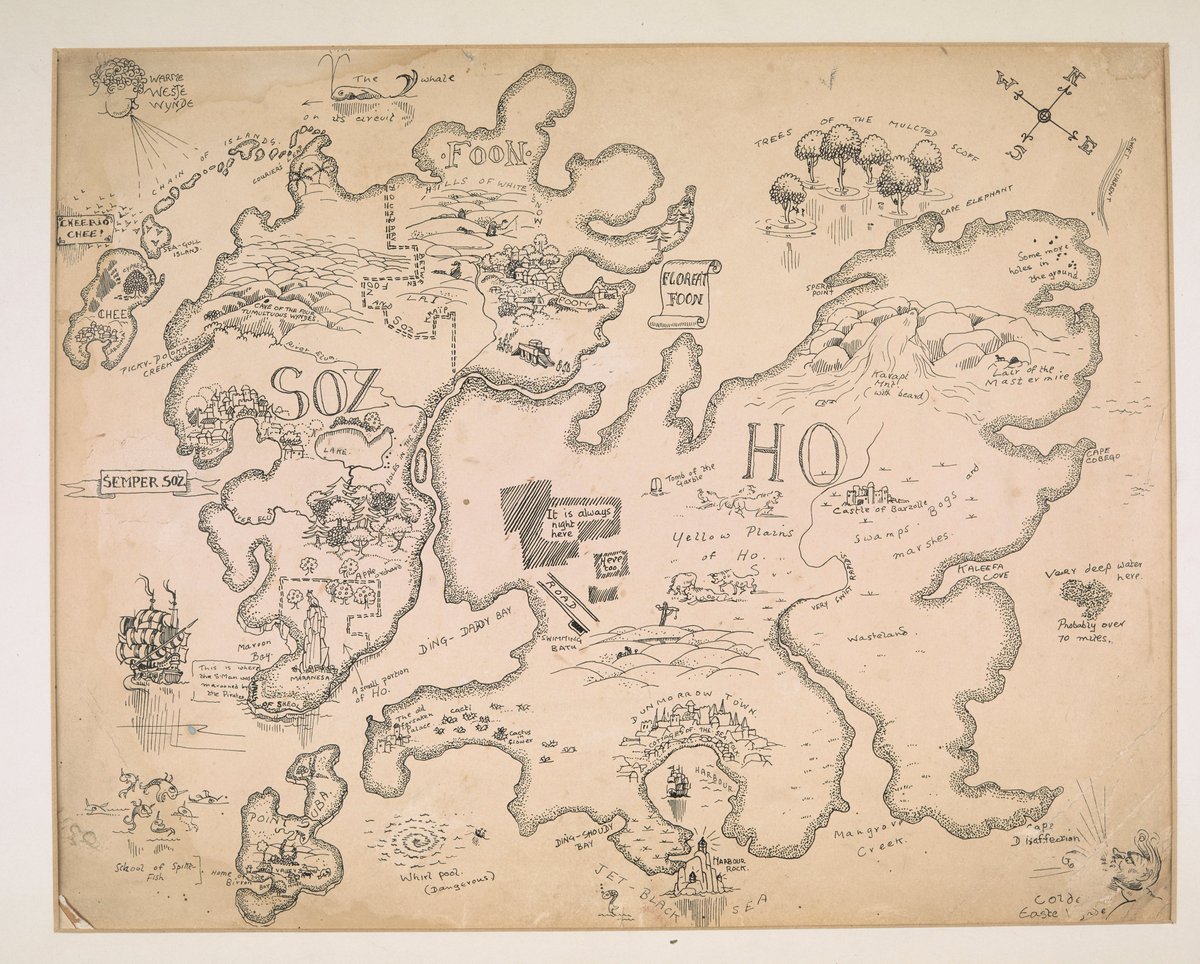
Category Archives: medical

Covid & Others News Update

For those that have missed it, a quick update of yesterday’s news on the Covid-19 vaccine, as a follow-up to my post of yesterday.

First of all the Guardian expands on the huge logistical problems distributing a vaccine: Pfizer and BioNTech’s vaccine poses global logistics challenge. The scale of the operations required is just mind-boggling.

Secondly the Guardian also reports that GP clinics are expected to administer 975 injections a week in 12-hour days, 7 days a week – roughly one every 5 minutes. (That’s 975 per clinic, there will be one clinic per area.)

The same Guardian piece reports Health Secretary, Matt Hancock, sounding some good words of caution in the House of Commons:

[T]he best way to liberate and to get life closer to normal is a vaccine … [but] … We do not have a vaccine yet but we are one step closer … There are many steps still to take. The full safety data is not yet available and our strong and independent regulator, the MHRA, will not approve a vaccine until it is clinically safe. And until it’s rolled out we won’t know how long the effect lasts for or its impact, not just on keeping people safe, but also on reducing transmission.

(One fly in that ointment is that the MHRA is not entirely independent, as it’s a government funded body.)


In other news former Prime Minister, Sir John Major, that as a result of the stupidity and ineptitude of the current government, the outlook for next year is bleak:

It now seems that on 1 January next year, Brexit may be even more brutal than anyone expected.


Covid-19 Vaccine

I didn’t blog this yesterday as I wanted to catch up on all the news reports …

Pfizer/BioNTech have announced that their vaccine against Covid-19 is 90% effective. So of course everyone is jumping about in delight and expecting that everything is going to be fixed by next week (slight, but only slight, exaggeration).

[T]he results are preliminary, have been shared only by press release, and the trials are not yet complete.

Frankly I consider this scientifically and medically irresponsible as it will get many people demanding the vaccine now, create disenchantment when they can’t, and undermine the current lockdown. The trials are continuing, the final data has not been analysed, nor peer-reviewed, nor published, nor submitted to the regulators. Press release is not the way to publish scientific research; it is purely a mechanism for bumping up a company’s share price.

So for once I was pleased to see Boris Johnson adding a touch of realism to the proceedings. Here are some more of the key snippets from the news items which show why this is not a magic bullet (references at the bottom).

[T]the announcement is just the first hurdle of many … regulatory hurdles will have to be overcome – and that is before we even think about manufacture and distribution.

Nothing in medicine is 100% safe – even something we take without thinking, like paracetamol, poses risks.

We also don’t [yet!] know how protective the vaccine is in different age groups.

[I]t must be approved by licensing authorities.

The prime minister said “if and when” the vaccine was approved for use, the UK “will be ready to use it”.

[W]hen scientists succeed in making a coronavirus vaccine, there won’t be enough to go around.

[A] huge level of production will be required, and then there is the matter of who gets the vaccine first and how mass vaccination would be rolled out.

Each … country will have to determine who it immunises first and how it does that.

[S]hould the Pfizer vaccine pass all the vigorous safety checks … older people would be first in line for the vaccination.

As the initial supply will be limited, reducing deaths and protecting health care systems are likely to be prioritised.

In the UK, older care home residents and care home staff are top of the preliminary priority list. They are followed by health workers such as hospital staff and the over 80s.

There are also logistical challenges, not least as the vaccine needs to be stored at -80°C, meaning that even in developed countries there could be difficulties in distributing the jab.

The Pfizer/BioNTech candidate … needs -80°C storage, and that is not available down at your local pharmacy [or GP]. Pfizer has been rounding up as many ultracold freezers (and as much dry ice production) as they can, but … this is going to be a tough one … the press release talks about getting 1.3 billion doses of this vaccine during 2021, but actually getting 1.3 billion doses out there is going to take an extraordinary effort, because you’re getting into some regions where such relatively high-tech storage and handling becomes far more difficult … With demanding storage requirements, the more people that are within a short distance of a Big Really Cold Freezer, the better. And the more trucks (etc.) that you have to send down isolated roads to find the spread-out patients, the worse.

Given that this vaccine needs two shots to be effective 1.3 billion doses is a nowhere near what is needed; it would provide enough to fully vaccinate only about half of India and nowhere else!

Maintaining vaccines under cold chain is already one of the biggest challenges countries face and this will be exacerbated with the introduction of a new vaccine … You will need to add more cold chain equipment, make sure you always have fuel (to run freezer and refrigerators in absence of electricity) and repair/replace them when they break and transport them wherever you need them.

Frankly, we’re in the middle of the second wave, and I [Prof Jonathan Van-Tam, England’s Deputy Chief Medical Officer] don’t see the vaccine making any difference for the wave we are now in. I’m hopeful that it may prevent future waves, but this one we have to battle through to the end without vaccine.

WHO has said it does not expect to see widespread vaccinations against Covid-19 until the middle of 2021.

[Boris Johnson] added it was “very, very early days”. He warned people not to “rely on this news as a solution” to the pandemic. “The biggest mistake we could make now would be to slacken our resolve at a critical moment,” he said.

So yes, this is good news and there is light at the end of the tunnel, but it is a very long tunnel! We will get out of the tunnel, but meanwhile stay safe!


https://blogs.sciencemag.org/pipeline/archives/2020/11/09/vaccine-efficacy-data
https://www.theguardian.com/world/2020/nov/09/uk-rollout-of-covid-vaccine-could-start-before-christmas
https://www.theguardian.com/world/2020/nov/09/what-has-pfizers-covid-vaccine-trial-found-and-is-this-a-breakthrough
https://www.bbc.co.uk/news/uk-54879676
https://www.bbc.co.uk/news/explainers-54880084
https://www.bbc.co.uk/news/health-54027269


Monthly Links

And so we come inexorably to the end of another month, and our round-up of links to items you missed before and really don’t want to miss again. There’s lots in this month’s pack, so here goes …


Science, Technology, Natural World

DON’T PANIC! The massive star Betelgeuse could be 175m light years closer to us than was previously thought.

How does 2 meters of DNA fold up by a factor of 250,000 to fit in the cell nucleus (which has a diameter of around 10 millionths of a meter)? [LONG READ]

Who knew that the Victorians were into collecting and pressing seaweeds? Turns out to be a useful resource for studying the oceans.

Small bird flies 12,000km in 11 days, non-stop.

Why do some birds have a small downturned overhang on their bill?

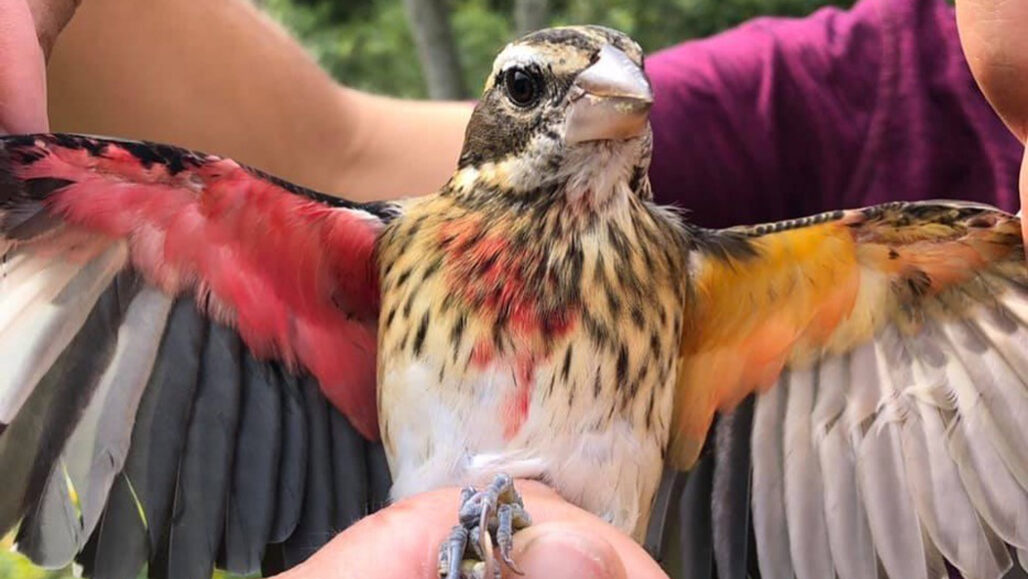
Here’s a rather stunning chimera grosbeak – a half male, half female gynandromorph.


Health, Medicine

In a quick segue into the medical, a look at why scientists say bats are not to blame for Covid-19. [LONG READ]

Are we too anxious about the risks of nuclear power? [LONG READ]


Sexuality

Female journalist visits a sex doll factory and learns about male sexual desire. [LONG READ]


Environment

Why many dual-flush toilets waste more water than they save.

There’s often more tree cover in towns and cities than in the countryside.


Social Sciences, Business, Law

The airline industry has been hit hard by Covid-19. Samanth Subramanian in the Guardian takes a look. [LONG READ]


History, Archaeology, Anthropology

The giant geoglyphs of Peru’s Nazca Lines remain an enigma especially when researchers uncover a lounging cat! (Are we really sure it’s not April Fool’s Day?)

Sculpted head, possibly of Edward II, unearthed at Shaftesbury Abbey.

A look at the history of Waltham Abbey, from Saxon times to its destruction by Henry VIII. This is especially interesting for me as it is just across the marshes from where I grew up.

The myth of medieval Europe’s isolation from the Islamic world. [LONG READ]

The importance of Michaelmas in the medieval world. [LONG READ]

St Procopius of Sázava, a saint for Halloween.

On masculinity and the medieval theories of disease [LONG READ]

The British Library has released 18,000 maps from the Topographical Collection of King George III, free to download and with no copyright restrictions.


London

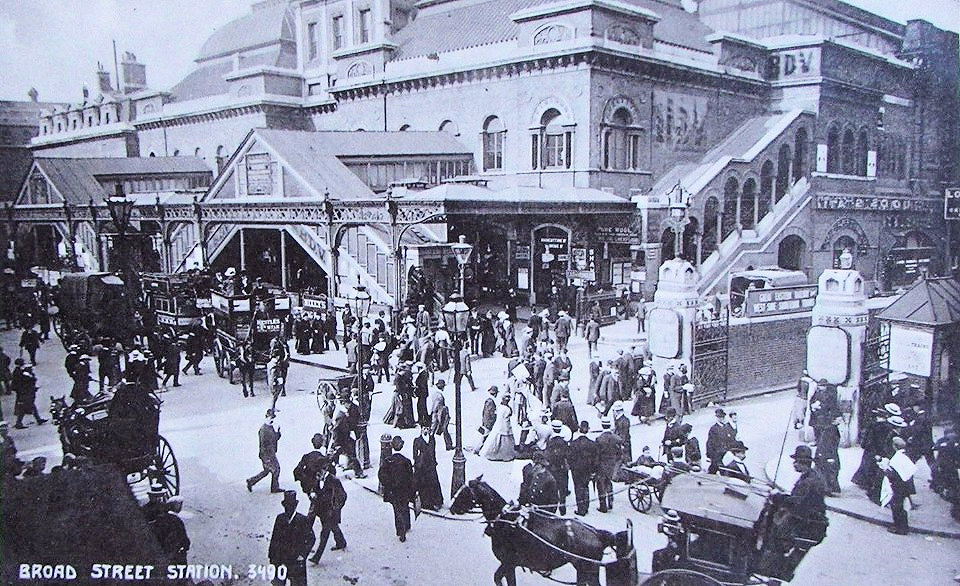
A London Inheritance takes a look at London’s long-lost Broad Street Station.


Lifestyle, Personal Development, Beliefs

Now here’s an interesting idea: when things look bleak, thinking in terms of “hope horizons” can help. [£££££]

And finally … If our scientific theories are correct you don’t have free will, and you can’t change it, so don’t worry about it. But believe in free will if you wish, because in the words of Edward N Lorenz:

We must wholeheartedly believe in free will. If free will is a reality, we shall have made the correct choice. If it is not, we shall still not have made an incorrect choice, because we shall not have made any choice at all, not having a free will to do so.


On Vaccine Logistics

Let’s think first about flu vaccination – not the vaccine itself but the logistics involved to get a needle stuck in my arm.

It is very tempting to ridicule the NHS and the UK government for failures to supply sufficient vaccines – especially flu vaccine – in sufficient quantity, and on time, when the requirements are apparently well understood. And indeed there have been supply failures in recent years. However it is salutary to consider the complexities of the logistics involved.

Somewhere around 30 million doses of vaccine have to be manufactured, packaged and shipped. Those 30 million are split between six different vaccines, made by five different companies. And there are tens of thousands of shipping endpoints (almost 10,000 GP practices in England alone, plus pharmacies, hospitals, …), all with differing requirements.

30 million doses can’t be manufactured, packed and shipped in the twinkling of a politician’s brain. It takes time, and the NHS isn’t the only customer of the manufacturers. So the supply from manufacturer to NHS warehouse will be phased; so the final shipping to the endpoint will also likely be phased. Which means at any time a given vaccine may not be available at every outlet, even if they did get their requirements correct the first time.

Keep in mind too that these vaccines are temperature sensitive and must be held in refrigerated storage at all times. That too complicates the distribution.

All of that is before one even thinks about the GP identifying, and calling those eligible for vaccination, and making enough clinic time (space, appointments, clinicians) available to actually stick needles in arms. Oh and chasing up those who don’t respond.

I know from experience of logistics at a much simpler level it is almost impossible to get this 100% correct every single time — hard though one might try! It’s almost inevitable that on this scale things will go wrong; and the further back in the chain the problem occurs the bigger the knock on effect out at the clinic.

(Incidentally it’s the same with supermarkets and getting things like loo roll on the shelves. Don’t just blame people for panic buying – although, yes, they do – but think about the logistics and supply chain involved.)

Amazingly this works the vast majority of times in developed countries. For instance, the UK currently has among the highest national coverage of flu vaccine in the world, vaccinating around 75% of the over-65s against flu every year; most countries either do worse or have no vaccination programmes for older people. But in places where the infrastructure and healthcare systems are more fragile, things break down quite quickly.

Now let’s extend this to vaccine(s) for Covid-19.

First of all let’s say that all of the above logistics still apply, but things get worse …

We don’t yet have a vaccine (or vaccines), so as yet we have no clue how many of what we are trying to deploy, or where, or how.

We don’t know if the vaccine(s) will require refrigerated storage, or actual cold storage. If cold storage (ie. freezer temperatures) is required – and this seems likely for many of the vaccines currently being trialled – this hugely complicates the distribution chain (and makes it pretty much impossible in developing countries).

How many shots of vaccine are required to provide immunity? Will just a single shot be enough? Or will patients need a booster (or two, or three, …). Again it looks as is many of the potential vaccines will need a booster shot after a few weeks. That doesn’t just double the amount of vaccine required; it doubles everything right down to ensuring patients get their booster.

And who is eligible for the vaccine? And when? Government is likely to plan on getting the vaccine to the most important people (eg. healthcare workers, food supply people) first, followed by vulnerable groups, and then everyone else. Ultimately they will want to catch everyone (barring the small number of nay-sayers): that’s 60+ million in England alone, with potentially two shots of vaccine – so four or five times the flu programme.

That’s a potential 120+ million doses of vaccine for England alone together with a huge amount of distribution and a great deal of clinical effort. That deployment will take time; maybe as much as an elapsed year! By which time the first recipients may need repeat vaccination if the immunity decays, as it well may.

All of that is before we even think about … How effective the vaccine(s) are (no vaccine is 100% effective). How many vaccines are available. Are particular vaccines (in)appropriate for particular groups of patients. How do we handle the case where the first vaccine available is followed up by one which is much more effective? – Do we revaccinate the first recipients now, or later, or not at all? What advertising campaign, or other incentives (maybe even legislation?), do we need to ensure the vast majority of people get vaccinated?

Of course, we don’t yet have a vaccine to deploy. The front runners are all still in Phase III trials which are unlikely to complete until at least the end of this year. Even if one (or more) of the candidate vaccines looks really good, it is very unlikely we’ll see an emergency approval much before next Spring. And then there may be the question of how that affects other ongoing trials.

Now you can be pretty sure that there will be people in the Department of Health and the NHS sweating blood to try to work all this out, now, even before we have a vaccine. And however well they do their job you can be sure they will get some of it wrong – because the problem is just too complex and contains too many risks and pitfalls. It isn’t at all easy, and it’s human nature to complain when things don’t work perfectly, but it helps to try to see the bigger picture.

So … (a) cut the healthcare system some slack when things don’t work 100% every time, but (b) do call the government to account if it’s their policies which cause the failures, and (c) don’t pin all your hopes on a Covid-19 vaccine being available to everyone (anyone?) real soon.


Further Reading

  1. Derek Lowe; “The Vaccine Tightrope”; Science Translational Medicine; 21 October 2020; https://blogs.sciencemag.org/pipeline/archives/2020/10/21/the-vaccine-tightrope
  2. David Salisbury; “If you’re pinning your hopes on a Covid vaccine, here’s a dose of realism”; Guardian; 21 October 2020; https://www.theguardian.com/commentisfree/2020/oct/21/covid-vaccine-immunisation-protection
  3. Jeremy Farrar; “Let’s get real. No vaccine will work as if by magic, returning us to ‘normal’”; Guardian; 6 September 2020; https://www.theguardian.com/commentisfree/2020/sep/06/lets-get-real-no-vaccine-will-work-as-if-by-magic-returning-us-to-normal
  4. Derek Lowe; “Cold Chain (And Colder Chain) Distribution”; Science Translational Medicine; 31 August 2020; https://blogs.sciencemag.org/pipeline/archives/2020/08/31/cold-chain-and-colder-chain-distribution
  5. Derek Lowe; “Preparing For the Vaccine Results”; Science Translational Medicine; 25 August 2020; https://blogs.sciencemag.org/pipeline/archives/2020/08/25/preparing-for-the-vaccine-results
  6. Megan Scudellari; “How the pandemic might play out in 2021 and beyond”; Nature; 5 August 2020; https://www.nature.com/articles/d41586-020-02278-5

Monthly Links

Once more unto the breach, dear comrades, to bring you this month’s selection of links to items you may have missed the first time round. And an e-glass of e-ale to anyone who can knit the links into a coat of mail!


Science, Technology, Natural World

Let’s begin with another look at why wasps are so annoying, but yet so useful.

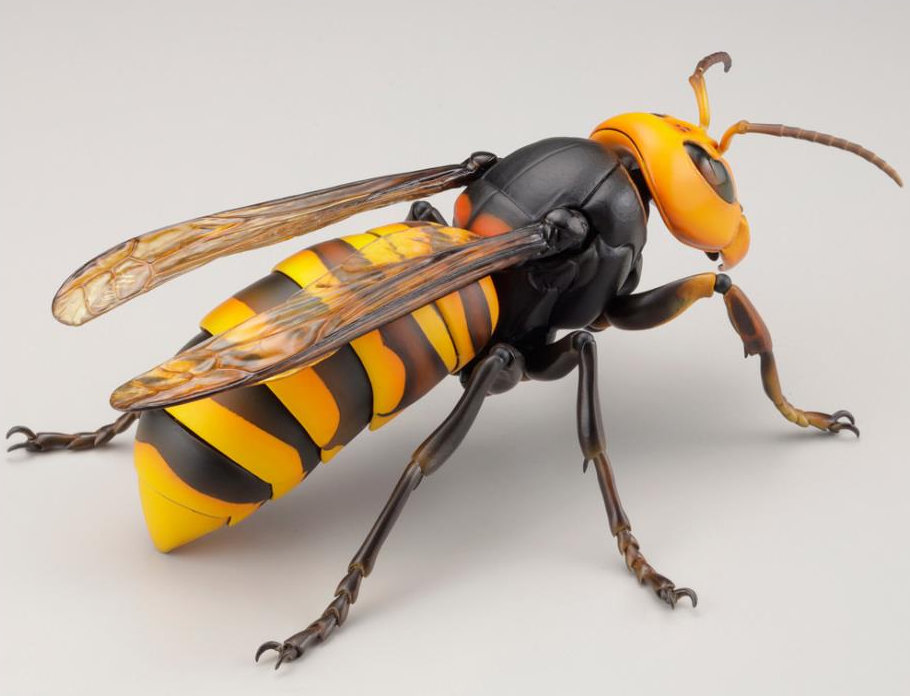
Oh and for anyone wanting to scare their visitors, you can buy a roughly five times life-size model of an Asian Giant Hornet (aka. “murder hornet”).

If you never understood why mathematics is so fascinating, take a look at odd perfect numbers. [LONG READ]

And changing topic again, scientists think they’ve found phosphine gas in Venus’ upper atmosphere, and say this could be a sign of life (albeit microbial life). Meanwhile Derek Lowe explains about phosphine but remains somewhat sceptical of the latest results.


Health, Medicine

The logistics around distribution of any vaccine (well any drug really) are complex, especially when one gets into the realm of Cold Chain Distribution.

But then we need to keep our feet in the real world as no vaccine will work by magic and return us to normality.

Girls: have you ever needed to pee standing up and envied us men our flexible hose? If so, the Shewee may be your friend.


Environment

Rewilding as an environment improvement method is taking time to get going, but not if one maverick Devon farmer has anything to do with it.


Social Sciences, Business, Law

So who thinks Scottish bank notes are legal tender in England? Spoiler: they aren’t! And what is legal tender anyway?


History, Archaeology, Anthropology

There’s some new archaeology at Pompeii which is uncovering more of its past.

Medieval sermons were one of the most effective and wide-reaching forms of propaganda, but that only works if they are in the vernacular. [LONG READ]

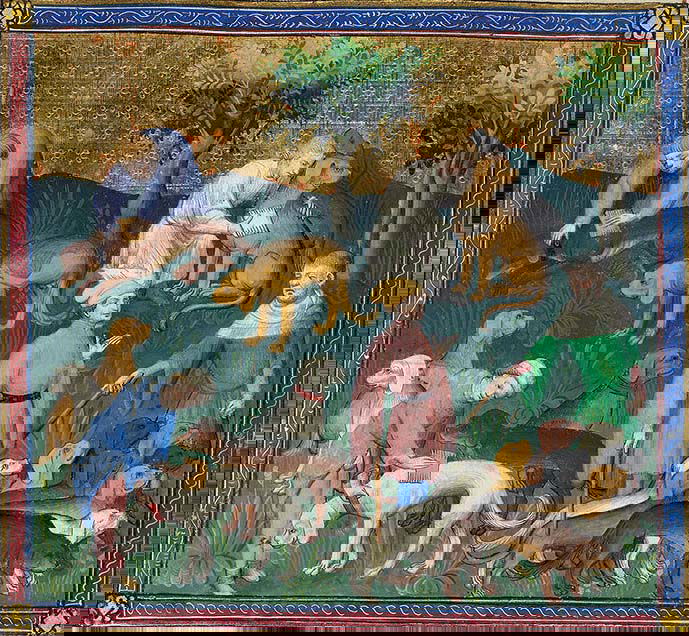
The people of medieval Europe were devoted to their dogs. [LONG READ]

Transport until the early part of the 20th century was largely dependent on the horse: either being ridden or pulling a wagon of some description. Here’s a look at horse transport in Victorian times.


Lifestyle, Personal Development, Beliefs

Oliver Burkeman, writing his last regular column for the Guardian, talks about his eight secrets for a fulfilled life.

If you’re dreading a long, dark winter lockdown, then maybe the Norwegians have something for you.

So what does your cat mean by “miaow”? A Japanese vet is apparently earning a fortune telling people what their cats are saying. Personally I thought we had a fairly good idea!


Shock, Horror, Humour, Wow!

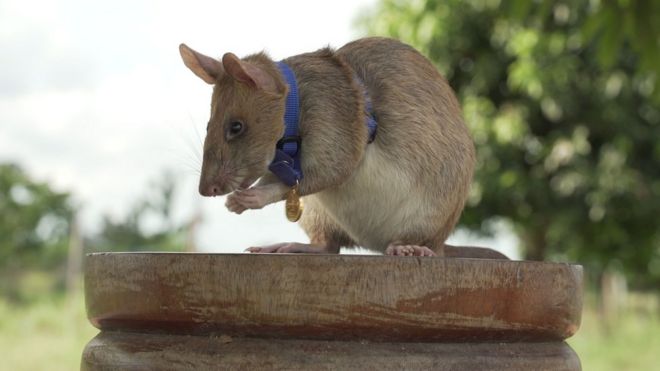
Magawa, an African giant pouched rat, has been awarded a gold medal for his work detecting landmines in Cambodia. I must say he’s a rather handsome animal, and well deserving of his apparently upcoming retirement.

And finally, what is the connexion between frozen shit and narcissists’ eyebrows? Yes, of course, it’s this year’s Ig Nobel prizes.


Monthly Links

It’s been quiet round here recently. Nevertheless we’ve been collecting our usual list of links to items you missed the first time. And this month we have an edition packed with some good (long) reads …


Science, Technology, Natural World

Astronomer Martin Rees looks at how we’ve discovered that the universe is much bigger and weirder than anyone thought … [£££] [LONG READ]

… or as our favourite theoretical physicist, Katie Mack, points out: space is big and our planet a tiny porthole, looking over a cosmic sea.

Whoops! We didn’t see it coming and it nearly got us. [£££]

Flat Earthers’ “science” may be wrong, but they aren’t entirely stupid.

Now to more mundane matters … here are two articles, one from the Conversation the other from the Guardian, on how vets identified Coronavirus in a cat.

A few weeks back, when the weather was nicely tropical, Diamond Geezer took a look at the technical definition of a heatwave – and it isn’t as simple as you might think.

Really tiny, but really cute: Leaf Sheep,
apparently the only animal that can photosynthesise.

The Somali Sengi (a species of elephant shrew) is a really cool critter: it mates for life, can race around at 30km/h and sucks up ants with its trunk-like nose – and having been thought extinct ecologists have recently rediscovered it in Djibouti.


Health, Medicine

A view from inside the NHS on what it was like trying to cope with a sudden deluge of Covid-19 patients. [LONG READ]

Covid-19 is here for the long haul: here’s how scientists predict the pandemic might play out over the next months and years.

Ed Yong looks at the totally non-intuitive complexity of the immune system, and why trying to understand it is so important. [LONG READ]

Here’s one doctor who avoids soap (except for hand-washing) and says we’re showering all wrong.

[TRIGGER WARNING] Unlike in animals, we know that around 25% of all pregnancies end in an early miscarriage, but do we really understand why? [£££] [LONG READ]

Then again, we’ve only just discovered that human sperm swim differently than we thought they did.


Social Sciences, Business, Law

For two decades scientists and officials played pandemic war games, but they didn’t factor in the effects of a Donald Trump. [LONG READ]

Be concerned; be very concerned. A lawyer looks at the government’s current review of Judicial Review.


History, Archaeology, Anthropology

Pace Richard Dawkins, it is suggested that humans aren’t inherently selfish, but hardwired to work together. (Until the ship gets overcrowded that is.)

The origins of modern humans get more complex with every new twist of DNA analysed. I have to ask whether we’re actually sure that Homo sapiens, Neanderthals, Denisovans, H. erectus (and maybe others) aren’t actually just one species with some very well-defined sub-species. [LONG READ]

Archaeologists believe they’ve found the source of Stonehenge’s giant sarsen stones.

It turns out that our medieval friends had a thing about sex with demons. [LONG READ]

And now to almost modern demons of a different kind. Here’s an old article about a potentially huge explosion lurking in a wreck off the Kent coast. [LONG READ]


London

Archaeologists have uncovered the lost medieval Great Sacristy of Westminster Abbey.

The history and workings of the Port of London in Tudor times. [LONG READ]

On the dissolution of London’s monasteries.

And another piece from The History of London on the building of Regents Canal.

A short history of the London Hackney Coach and the Horse Cab.


Food, Drink

At long last someone is waking up to the ideas that dieting per se doesn’t work and that we all have different food and metabolic requirements.


Lifestyle, Personal Development, Beliefs

There’s a Zoroastrian centre not far from here, so I’ve always wondered what they’re about. Here’s a look into the very closed world of a strange religion. [LONG READ]

Here are nine common myths about naturism which are totally wrong.

Postcrossing has been around for a while. It’s an interesting idea involving swapping postcards with unknown people around the world as a way of building global friendship.


Shock, Horror, Humour, Wow!

And finally … Only the Japanese could invent a public toilet with transparent walls. They’re quite pretty really.


Monthly Interesting Links

Once again we come to our monthly collection of links to items you missed the first time round and which you’ll find interesting. This month we have a well packed collection (lots of science and lots of history), so it’s straight in the deep end.


Science, Technology, Natural World

Astronomers still think there’s a large planet out beyond Pluto, so of course they’re still hunting for it (artist’s impression above).

So when you have this new vaccine how are you going to package it? Pharmaceutical Chemist Derek Lowe takes a look.

Many plants have stingers (think, stinging nettles), and it seems they have achieved optimal pointiness. [£££]

Oh dear! It seems likely the world’s smallest dinosaur is a lizard. [£££]

Ornithologists are revealing the long-distance travels and longevity of British birds.

Scientists still don’t know how birds navigate, though it is likely magnetic and they’re narrowing down the options.

30 years ago Red Kites were reintroduced to the Chilterns to the west of London, and this has proven to be a huge conservation success. (I’m 30 miles east of the release area, and in suburban London, and I now regularly see Red Kites over this area.)

Where have all our swifts gone? Are they on the Grand Tour?

There’s a growing realisation that old paintings can provide valuable information about agriculture both livestock and arable. [£££]

Here’s a brief look at the chemistry of cat allergies, catnip and cat pee.


Health, Medicine

How on Earth do you do surgery in the weightlessness of space without having bits of body floating around?

I find this hard to believe, but seemingly damaged human lungs can be revived for transplant by connecting them to a pig. [£££]

Researchers are worried that a new swine flu identified in China has pandemic potential.

Researchers are also looking at the potential for using magic mushrooms to help ex-soldiers overcome trauma.


Art, Literature, Language

Where are the bones of Hans Holbein? Jonathan Jones went looking, but we still don’t know. [LONG READ]

An astronomer has finally(?) pinpointed the exact date and time of Vermeer’s “View of Delft” (above).

The British Library has acquired an important archive of Mervyn Peake‘s original illustrations, preliminary drawings and unpublished early works (example below).


History, Archaeology, Anthropology

Archaeologists have uncovered stone tools which they believe show that humans occupied the Americas around 33,000 years ago – that’s over 10,000 years earlier than previously thought.

Work on the UK’s HS2 rail link has unearthed the skeleton of a possible iron age murder victim.

Drinking games have a long history. Michael Fontaine, in History Today, takes a look.

So how old is the Cerne Abbas Giant (right)? New archaeological thinking by the National Trust suggests it is not prehistoric.

Our favourite medieval historian, Dr Eleanor Janega, takes a look at colonialism, imperialism, and the perils of ignoring medieval history. [LONG READ]

Going Medieval also take a brief look at the medieval obsession with the Moon.

A look at the symbolism of the medieval haircut. Scissors or sword, Sir?

Coming closer to our time, apparently Georgian London was a haven for sexual diseases.

Even closer to home, a look at what happened on the morning of the first nuclear test in 1945. [LONG READ]

And almost up to date, the purrrplexing story of the British Museum cats.

ARCHI is a UK archaeological site containing old maps (largely Victorian, it seems) which you can overlay on the current map to see what was there before we were.


London

Here are two pieces from the History of London on the area to the east of the Tower of London. First, the St Katherine’s area, and second the development of the area around Stepney.

Going Medieval (again) introduces us to the magnificent Agas Map of London (it’s detailed and zoomable!) as well as the lfe of medieval and early modern cities. [LONG READ]


Lifestyle, Personal Development, Beliefs

And finally for this month … Dungeness is one of my favourite places and the late Derek Jarman’s cottage and garden (thankfully saved for the nation) is an absolute delight (below). Now there’s an exhibition about Jarman’s garden at the Garden Museum in London.


Monthly Links

Here are our links to items you may have missed in the last month. There’s a lot this month, so let’s dive in.

Incidentally [£££] indicates the article may be behind a paywall, although most of these sites do offer a limited number of free articles so don’t ignore them.


Science, Technology, Natural World

First off, here’s an old article from New Scientist in which Roger Penrose asks What is Reality? [£££]

However there’s a warning that we should beware of Theories of Everything. [£££]

Meanwhile scientists have calculated the most likely number of alien civilisations we could contact. [Spoiler: it isn’t 42.]

Maybe the search for extraterrestrial life is why the Americans are embarking on another round of major upgrades to their U-2 spy plane. [£££]

But back to Earth … Researchers have used camera traps to complete a thorough survey of the inhabitants of African rainforest.

Surprisingly in this day and age we still don’t fully understand where eels come from. [£££]

Ecologists have tracked the astonishing migration of one particular European Cuckoo.

Equally astonishing, scientists have managed to record and translate the sounds made by honeybee queens.

After which we shouldn’t really be surprised that crows are aware of different human languages.


Health, Medicine

So out of the crow’s nest and into the fire … What you always thought you knew about why males are the taller sex is probably wrong.

It seems there is growing evidence that we should be taking seriously the potential of psychedelic drugs to treat depression. Well I’d certainly be up for trying it.

Tick-borne Lyme Disease can develop into a debilitating chronic condition. [£££] [LONG READ]

Have you ever wondered how medical students are trained to do those intimate examinations?


Environment

There’s a movement to establish fast-growing mini-forests to help fight the climate crisis.

Barn Owls are one of our most iconic species, and the good news is that they’re growing in numbers thnks to human help.

Here’s just one example of the huge amount of rarer elements in old computers which we need to recycle.

We’re used to places like Iceland using geothermal energy, but now there’s a plan to heat some UK homes using warm water from flooded mines.


History, Archaeology, Anthropology

Archaeologists have found clues to the earliest known bow-and-arrow hunting outside Africa.

DNA from the 5,200-year-old Newgrange passage tomb in Ireland hints at ancient royal incest.

And DNA is also being used to provide clues about the origins of the Dead Sea Scrolls.

On health and safety in the ancient world – or maybe the lack of it!

Religious iconography always was about marketing and PR.

The Medievals had notions about the ideal shape of women which curiously don’t coincide with our modern ideals. [LONG READ]

But then the Medievals lived in a world without police, and it wasn’t quite a brutal as one might think.

Archaeologists think they’ve found London’s earliest theatre, the Red Lion.

If we thought Medievals had odd ideas, then Enlightened Man (in 17th and 18th centuries) was in many ways stranger; shaving and periwigs were the least of it. [LONG READ]


London

On the first few hundred years of Westminster Abbey. [LONG READ]

From Tudor times Protestants have been intermittently persecuted in mainland Europe, and escaped to Britain. Here’s a piece on the history of the Huguenots in London. [LONG READ]


Lifestyle, Personal Development, Beliefs

Is it OK for your kids to see you naked? Here’s an uptight American article which nonetheless concludes it is OK, as we all know.


Monthly Links

And so at the end of another month we come to our regular collection of links to items you may have missed …


Science, Technology, Natural World

Extraterrestrials. What is believable, and how would we know? [£££££]

Meanwhile on this earth we have Vespa mandarinia, the Asian Giant Hornet, aka. the “Murder Hornet”. But just how dangerous is it? TL;DR: Very if you’re a honeybee.

I never cease to like the (small) variety of wasps in this country and what they get up to.

Still with the hymenoptera, the humble bumblebee has a clever trick to get plants to flower.


Health, Medicine

When is a llama not a llama? When it’s a unicorn!

So why is it that clinical trials of (new) drugs are so complicated and expensive? [LONG READ]

For a long, long time sunshine has been seen as having healing powers.

Researchers, almost accidentally, have found a microbe which completely stops the malaria parasite.

[TRIGGER WARNING] Having had four miscarriages, journalist Jennie Agg wanted to understand why it happened and why it is never talked about. [LONG READ]


Sexuality

Dr Eleanor Janega has some sexual fun over on Going Medieval. Here she is on:
•  No Nut November [LONG READ]
•  Dildos and Penance
•  “Alpha Men” and poorly disguised misogyny


Social Sciences, Business, Law

Have you ever wondered how the heights on Low Bridge signs are calculated? Diamond Geezer investigates.


Art, Literature, Language

Dutch researchers have been trying to extract the secrets from Vermeer’s “Girl with a Pearl Earring


History, Archaeology, Anthropology

Mexico has too many mammoths – or at least bits of mammoths.

OK, so here’s another series from Going Medieval:
•  On chronicles versus journalism, and ruling versus governing.
•  On the King’s two bodies and modern myth making.
•  On the Lusty Month of May.


London

Diamond Geezer (again) discovers the interesting history of his local Tesco supermarket. What’s the history of your local supermarket’s site? Three near me: the iconic Hoover building, an old cinema and the site of a former gasworks!

And one more from Diamond Geezer … this time he’s been finding out the correct names for the different parts of a London bus stop.


Food, Drink

Apparently coconut oil isn’t all it’s cracked up to be. Colour me surprised! [£££££]


Lifestyle, Personal Development, Beliefs

And finally … Pity the poor curators who are having to spend lockdown in places like Hampton Court Palace!


Monthly Links

In the middle of these interesting times we’re living in, we bring you a diversion by way of our round-up of links to items you may have missed this month. And I promise it is Coronavirus-free.


Science, Technology, Natural World

The Rainfall Rescue Project are looking for (online) volunteers to help transcribe old rainfall records from the handwritten sheets, so they are digitised and useable for in depth research.

We thought we understood it, but rock samples brought back by the Apollo moon missions are reopening debate about how the moon formed. [£££££]

It seems that people who get lost in the wild follow strange but predictable paths. [£££££]

Dust is often not what you think, especially in museums.

A brief look at five dinosaurs which, once upon a time, roamed the British Isles.

The smallest known dinosaur skull has been found in a piece of amber.

Crows understand death, at least death of a fellow crow, but can we work out what they’re actually thinking?

Now, while we’re all in solitary confinement, is a good time to take up birdwatching: there’s a surprising number of birds go past your window and they’re not all sparrows and pigeons.

If they share a vase, daffodils kill other cut flowers. Here’s why.


Health, Medicine

Copper is great at killing off microbes (it’s been used in horticulture and viniculture for centuries) and yet in a medical context the more inert stainless steel is preferred.

A small number of women are born with the rare MRKH Syndrome, where they lack a vagina and possibly other internal reproductive organs.

We all know about tree rings giving information about the growth of the tree, but it seems our teeth also document our life’s stresses.


Environment

A small Japanese village is leading the way into our carbon-neutral future, but it ain’t easy.

The Guardian gives us fifty simple ways to make life greener. [LONG READ]


Social Sciences, Business, Law

Many of us like to belief we have free thought uninfluenced by others; but can we ever be a truly independent thinker?


Art, Literature, Language

Aubrey Beardsley is one of many artists whose has work been suppressed for obscenity, and is the subject of a new exhibition at Tate Britain (assuming museums are ever allowed to reopen). [LONG READ]


History, Archaeology, Anthropology

A new study reports that a supposedly important collection of Dead Sea Scroll fragments are all fakes.

Archaeologists suggest that a collection of bones found in Kent church likely to be of 7th-century saint

Drake’s Island in Plymouth Sound is to be opened up and get its first visitors in 30 years.


London

London blogger Diamond Geezer takes a look at the genesis of London numbered postal districts.


Lifestyle, Personal Development

And finally … Should ladies’ loos provide female urinals, and would they be an answer to the queues for the loos?


Take care, everyone, and stay safe!