Category Archives: links

Monthly Interesting Links

There seems to be quite a lot in thus month’s round-up of links to items of interest which you may have missed the first time round. So let’s get straight in …
Science & Medicine
A lump of rock the size of a house is apparently going to whiz past Earth on 12 October at a distance of 44,000 km – that’s like an eighth of the way to the moon. And yes, astronomers are confident in the predicted distance so DON’T PANIC, but do take a towel!


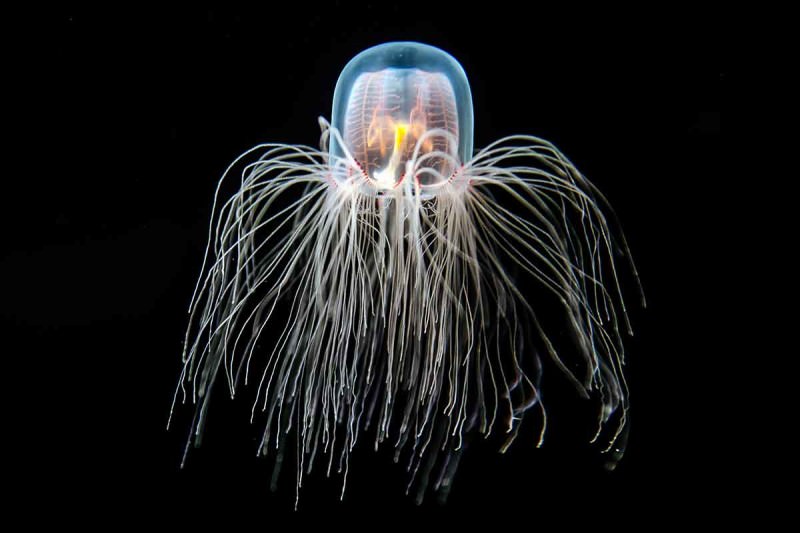
And now to the more mundane … New Scientist has a rather spectacular feature on the variety of jellyfish in the oceans. You never knew they were so beautiful!
Octopus and squid have the unhelpful habit of producing ink to cover their escape. But why? And what is the ink?
Don’t breathalyse a goldfish. At least not in the winter. For you see they avoid being frozen to death by turning turning the lactic acid in their body into alcohol.
Now you don’t expect a new species to be discovered in the UK, and certainly not right under our noses. But it seems that our (not so common) grass snake is actualy two different species.
Most of us don’t like ants in our kitchens, however the humble ant is a rather amazing creature, as researchers are beginning to understand. And there are lots of them too!
Wasps! Yes they’re intensely irritating at this time of year. But that’s only the handful of social wasps we have; there are many thousands more species of solitary wasps. Without them we would be knee deep in creepy-crawlies as they are excellent predators of other insects (as well as your BBQ burger). They are also important pollinators. But surprisingly little is known about the UK’s wasps, which a citizen science project is now trying to delve into.
Incidentally ants, wasps and bees are all quite closely related and are all members of the order Hymenoptera.
Now to our pets! Very few animals can be said to know themselves, at least according to the standard test using a mirror. And on that scale dogs are not included. However it seems that they probably do know who they are using smell.
We all know that in emergency we can give CPR to our fellow humans. But did you know it works on cats and dogs too? Here and here are a couple of items on the subject.
And finally in this section … Medics are now coming to realise that some common surgical procedures are no better than a placebo, just as some drugs aren’t.
Social Sciences, Business, Law
Constant worry, anxiety and panic about the future now seems to be a part of everyday life. But it is counter-productive and leads to burn-out rather than action.
Art & Literature
Here’s one for your diary … Next Spring the National Portrait Gallery will be showing Lewis Carroll’s photographs of the real Alice among an exhibition of early Victorian portraits.
History, Archaeology & Anthropology

I wasn’t sure whether to put this under “science” or “history” … It appears that trigonometry wasn’t discovered by the Greeks, but around a millennium earlier by the Babylonians. As one might expect it was all recorded in cuneiform on clay tablets. And they used a totally different system from that used today. However, Evelyn Lamb in Scientific American has pointed out that in fact little of this is actually new knowledge.
You wouldn’t really expect biologists to be doing research on ancient manuscripts, but they are … and they’re discovering all sorts of odd things about the parchment, the book covers and even the monks who did the calligraphy.
While on the medieval, and in other research, historians are coming to realsie that many of the supposedly iconic medieval images of the plague are nothing of the sort.
London
Did you know that for just £10 you can visit the Royal Mews and see all the Queen’s horses and carriages?
Lifestyle & Personal Development
Author Kasey Edwards discovers that so many people would like not to be married and just stay together for all sorts of reasons – but she isn’t one of them.
Berlin is designing new unisex urinals for its unisex public toilets.
Food & Drink
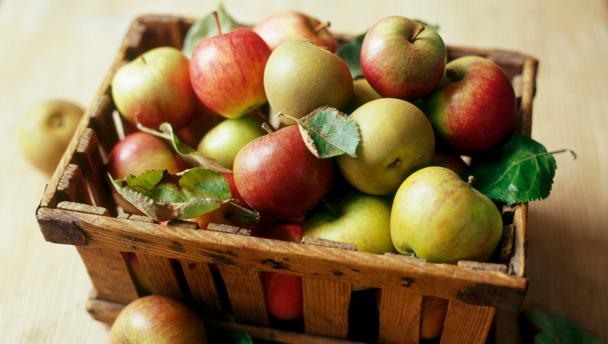
And finally … another that could have gone under “science” … geneticists have been hard at work on the apple and have traced its roots back along the Silk Road to Kazakhstan and China. The Romans may have brought the desert apple to England, but it had a long journey before that.

As usual more next month!

Your Monthly Links

So here’s our round-up of links to items which have caught our attention in the last month. There’s a lot in this month, so here goes …
Science & Medicine
Suspicious that expiry dates on products are a nonsense? Well that might be justified for some drugs.
The expected continual rise in life expectancy is slowing down. A leading medic suggests austerity is to blame.
It seems like what you always suspected may be true: a broken heart may damage your health.
We all know that cats purr. But do they purr only for our benefit?
An American veterinary service is working on making vet visits stress and fear free for nervous pets.
You thought plague was a thing of the past? Wrong. It is still alive and well in the American Southwest. Here’s the story of how one biologist tracks and identifies plague outbreaks before there’s harm to humans. [Long read]
Flying ants all seem to emerge on the same day. But do they?
Sexuality
Good news, lads! Science says you should masturbate 21 times a month – not that you needed an excuse! (Well actually they mean you should ejaculate that often; not necessarily the same thing.)
Environment
Jason Hickel in the Guardian posits that even if we all adhere to the Paris climate deal that isn’t going to be enough to save us – our future depends on de-growth
There’s a plan to reintroduce Eurasian lynx to the Kielder Forest.
Art & Literature
Worried about your books? Why not protect your library the medieval way with horrifying book curses?
History, Archaeology & Anthropology
Archaeologists are suggesting that a find of buried tools and pigments means humans reached Australia 65,000 years ago – that’s 18,000 years earlier than previously thought.
Yes, we knew the Romans had concrete. And now we know why it was so good that it still stands today when our modern concrete decays.
Infertility isn’t just a modern phenomenon. The mediaevals recognised it and realised that it could be the man at fault rather then the women – not really surprising as many in medieval times believed the embryo originated solely from the man. Oh and in true medieval style they concocted some horrid cures.


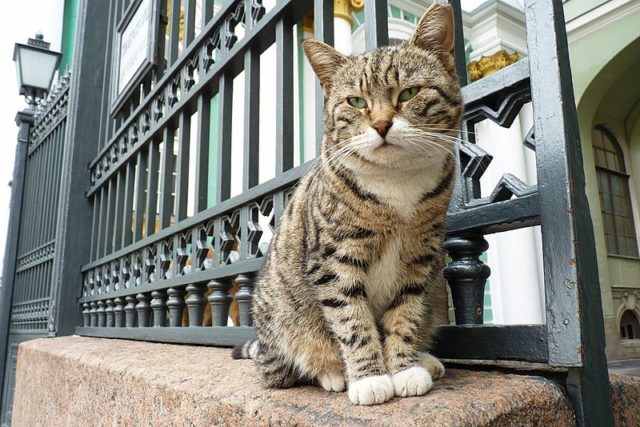
The Russian Hermitage Museum employs 74 cats just to keep its basements mice-free.
London
IanVisits investigates a south London experiment in tube tunnelling.
Lifestyle & Personal Development
What brings you happiness? Money? Stuff? Time? Surprisingly research is suggesting that you can gain the most happiness from freeing up time, even if that is paying someone to do things for you so you have the time to devote elsewhere.
So how often should you wash your bed sheets? A microbiologist looks at the problem.
On a similar note, here are a few suggestions for getting rid of pests and bugs the Buddhist way. While I can see some of this would work, a lot does seem rather unlikely.
To me this seems like a non-question: should teachers be allowed to have tattoos? Well why shouldn’t they; isn’t it all part of the life we’re supposedly educating our kids to navigate?
From which it is but a short step to asking whether witches are the ultimate feminists.
Shock, Horror, Humour
Two amusements to conclude this month …
An American researcher has used a neural network to generate a whole host of quaint, and sometimes rude, British place names.
And finally this summer’s latest fashion trend: Glitter Boobs

Your Interesting Links

There’s a lot in this month’s “links”, so let’s get right in …
Science & Medicine
For those of you with youngsters interested in science – or even just for yourself – don’t forget the Royal Society’s Summer Science Exhibition in London which runs 4-9 July.


Earthquakes are well known for making big cracks in the ground, but could an earthquake ever crack a planet apart?
So what is the oldest living thing on the Earth? And no, the mother-in-law doesn’t count!
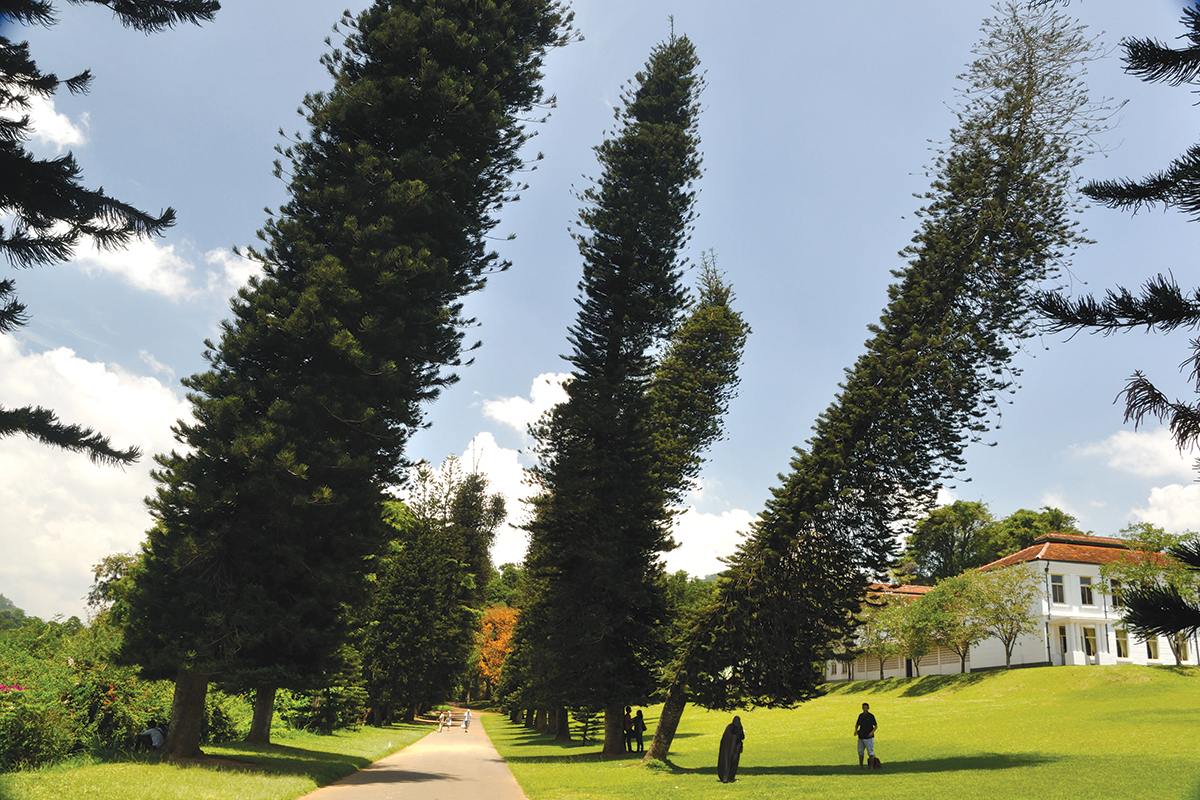
Now this is really odd. It seems that all Cook pine trees lean towards the equator – and dramatically so! Scientists have only just noticed and they don’t understand why.

It seems that jumping spiders can see the moon, their vision is so good.
Well yes, butterflies have sex, but it is a lot more complicated than we imagine.
So just why are birds’ eggs egg-shaped? Researchers have finally worked out the real reason.
Want to smell like a dog? Well now you can. Psychologist Alexandra Horowitz is training herself to approach the world in the same olfactory way her dogs do.
From dogs to cats … there have been several articles recently on research which has worked out how cats conquered the world. Here are just two, from IFLscience! and the Smithsonian magazine.
And now to humans. Apparently foetuses turn to follow face-like shapes while still in the womb.
Be afraid, at least if you’re American. It seems the Lone Star Tick is causing people to become allergic to meat, and even causing death; scientists are still trying to work out why.
Finally in this section, one science journalist has weighed up the pros and cons of having a PSA test, and found it wanting.
Sexuality
Suzannah Weiss in Glamour wants to end the expectations of pubic hair grooming.
What happens when illness robs someone of their ability to orgasm.
We’ve known for some time, but now research has provided the evidence, that women are the stronger sex.
Men need to be talking about fertility – male fertility.
Apparently there’s an association between sex in old age and keeping your brain sharp.
Environment
Harry Mount laments the vanishing glory of the suburban front garden all in the worship of the automobile.
Social Sciences, Business, Law
Will Self looks at the need for a Britain to have a written constitution – and offers to write it!
Several years ago, lawyer David Allen Green looked at the effects of the political penchant for banning things.
Language
Here are 35 words which many people use wrongly. Yes, even I fall into one or two of the traps.
History, Archaeology & Anthropology
Apparently there was a huge wooden structure at Avebury. It pre-dated Stonehenge by hundreds of years and was (deliberately?) destroyed by fire.

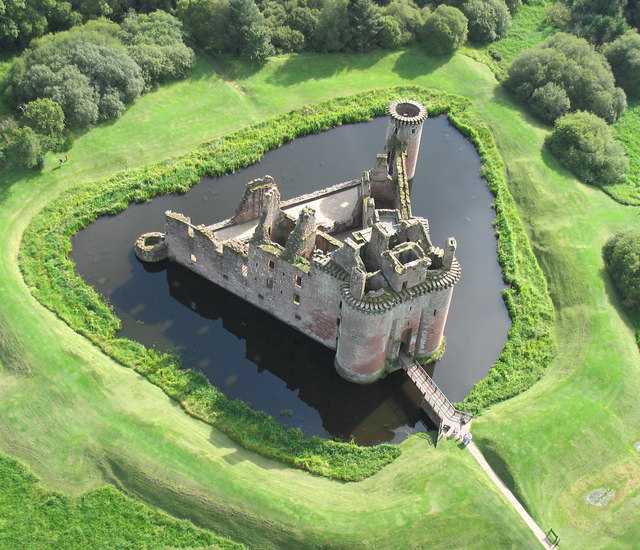
Something many aren’t aware of is that medieval castles were very cleverly designed, even down to the spiral staircases.
So what really did happen at Roswell in 1947.
London
IanVisits goes in search of London’s lost Civil War fortifications.
Also from IanVisits are two items on the London Underground. First a look at possible plans to make gardens in unused ticket offices; and secondly at some of the engineering challenges in taking the heat out of the Underground system.
Lifestyle & Personal Development
Are 16 and 17-year-olds really too young to vote? Dean Burnett, in the Guardian, looks at the evidence.
There are some amazing photos showing the work of Sutherland Macdonald, Victorian Britain’s first professional tattoo artist.
Ada Calhoun, in the Guardian again, looks at how to stay married. Spoiler: don’t get divorced.
People
And finally, Geoff Marshall (who has twice held the record for travelling the whole London Underground in the shortest time) and Vicki Pipe (of the London Transport Museum) are on a record-breaking mission to visit all 2,563 railway stations in mainland Britain this summer – documenting the state of our railways as they go. They started in early May and are already over halfway there. Follow their progress on YouTube, Twitter, Instagram, Facebook and at All the Stations.

Your Interesting Links

As usual our monthly list of links to interesting items you may have missed the first time around. There’s a lot in this month’s edition, so let’s get going …
Science & Medicine
Here are 101 ridiculous science “facts” which are mostly myth and need to die.
Researchers have worked out the genealogy of our dog breeds, and it isn’t as simple as you might think.
Meanwhile scientists have discovered the world’s largest canary on an isolated island of giants and dwarfs off west Africa.
Changing tack, it turns out the new £5 note isn’t so indestructible – if you’re a determined enough mad scientist.


Wow! A photographer has used black light (ie. UV) to photograph the luminescence emitted by plants. And it is amazing!
Another sort of discovery has led to the finding of lost research notes which undermine dietary advice we’ve been given for the last several decades.
Looking at even older “research” it seems that some of the medical recipes in medieval books may actually work and point the way to new antibiotics.
Sexuality
I wasn’t sure whether to put this here or under “science” but it turns out that unprotected sex may disrupt the microbiome of the vagina. Now there’s a surprise!

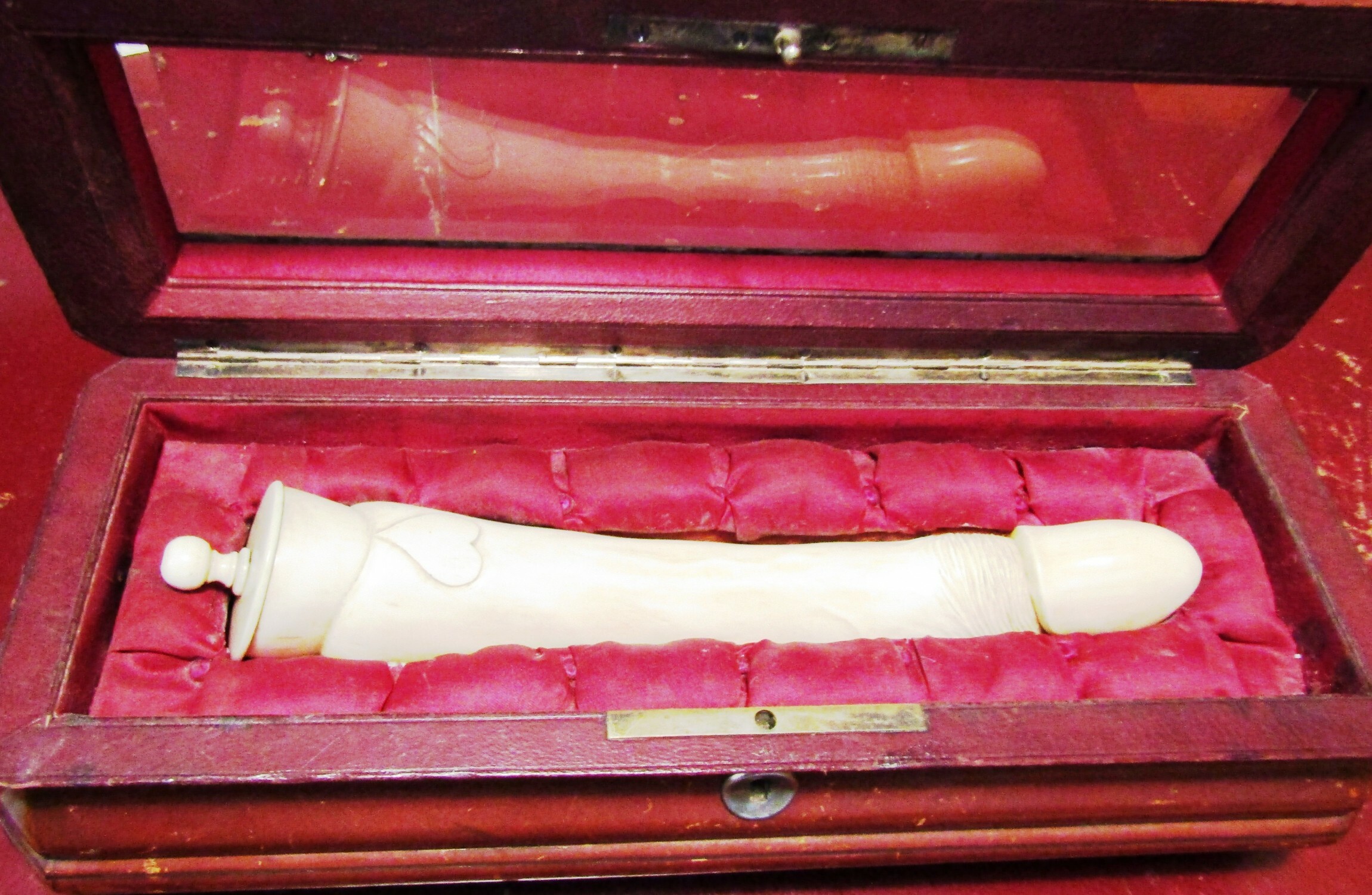
A Victorian ivory dildo, with an interesting story, has generated a lot of excitement at an auction in Ireland.
Environment
Max Hooper, the man who worked out how to date old hedgerows, has died at the age of 82.
History
Here’s another which could easily have gone in the science section … Scientists have now worked out how to extract the DNA of ancient hominids from the surrounding dirt.
Turns out we aren’t the first people to be scared of zombies; it seems the mediaevals were too and they did some barbaric things as a result.
It’s well known that the Tudors bathed only about once a year and were very smelly the rest of the time. Turns out that may be another myth as it is possible to go months without bathing and not be smelly. Yes, an intrepid researcher has tried it!
They’ve found, quite by chance, the remains of five lost Archbishops of Canterbury in a small London church. Harry Mount, new editor of The Oldie, was first on the scene.
Lifestyle
Are you a devotee of nail polish? If so here’s a piece on some of the chemistry which makes them work.
Food & Drink
Cheese. That microbial concoction of from milk. Well here’s a guide to the natural microbiology of cheese rind.
Why is ultra-heat-treated (UHT) milk so stable that it is a shelf staple, especially in tropical climes where milk easily spoils?
[Incidentally, UHT milk is always known in our house as “UFO milk” but I have no idea how you might milk a UFO!]
So what really does give beer its bitterness and flavour? While some of it is down to the malt, most seems to originate with the hops.

Why are we masochists? Why is it we love chilli so much when it burns like it does? And how does the burn work?
Shock, Horror, Humour
And finally … someone thought it was a good idea to teach a computer to write cookbooks and invent cocktails. Its recipe ideas are hilariously brilliant. Chocolate pickle sauce anyone?

Your Interesting Links

OK, so here goes with this month’s selection of links to interesting items you might have missed the first time around …
Science & Medicine


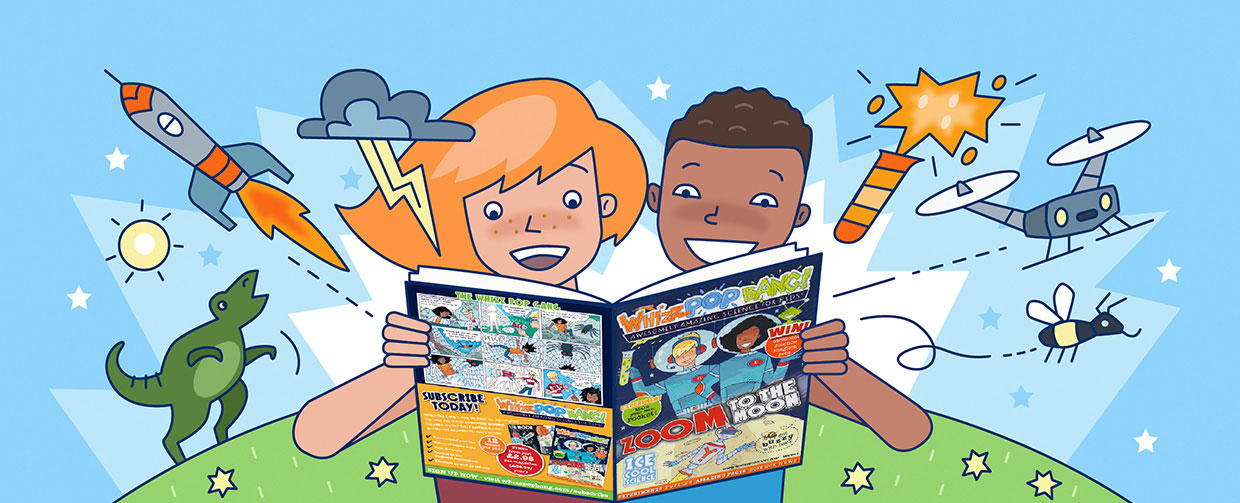
Those of you with youngish children … they might like the science magazine Whizz Pop Bang. I wish there had been such a thing when I was young.
Since the 1950s we’ve had the nuclear technology to provide power for perhaps millions of years, without creating humongous, and ever increasing, quantities of radioactive waste. So why aren’t we using it? [VERY LONG READ]
Most of us hate ironing clothes, but you’ll be glad to know that there’s some science which does make it a bit easier.
Changing tack … What is the world’s top predator? Well apart from humans it seems the answer is spiders!
New research suggests that fish evolved in a surprising way before they invaded the land – and it all started with their eyes.

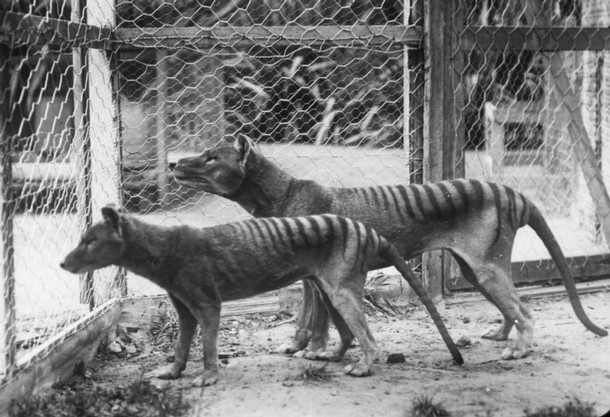
The Thylacine, or Tasmanian Tiger, has been extinct for almost 100 years – or so we think. But there are some new, and credible sounding, sightings in northern Australia (not Tasmania as one would expect). They are sufficiently credible that researchers are following up on them with camera traps. Watch his space; we might get some exciting news.
Those of us who have close relationships with cats know they have wonderful rasp-like tongues. And it turns out those tongues are indeed rather special. [VIDEO]
In a different study researchers are suggesting that cats sailed with the Vikings to conquer the world. As someone commented, I didn’t even know the Vikings had cats!
Still with cats, scientists are doing DNA sequencing on their faecal output to try to understand their gut microbiome. It turns out it is just as variable as the human microbiome.
It’s very unlikely the Neanderthals had domestic cats, but they did share one thing in common with us: dental plaque. By looking at their dental plaque researchers are working out the Neanderthal diet – and again it is highly variable.
While we’re on diet, it’s well known that eating asparagus makes your pee smelly. But not all of us can smell it, because genetics.
Now here’s another real oddball … it seems there is a connection between synesthesia and having absolute musical pitch.
And finally in this section, two posts about things feminine. Firstly Gillian Anderson and Jennifer Nadel talk about their experiences of going through the menopause.
Secondly, news that scientists have created a “lab on a chip” device which mimics the female menstrual cycle, something which could help enormously with research.
Environment
Here’s a look at the environmental impact of pet food manufacture.
History
I love it when new work changes our assumptions about what we know. Here’s news of the archaeological discovery of a Greek tomb which did just that. [LONG READ]
Archaeologists in Egypt have found an unknown statue of Pharaoh Ramses II in the mud under a Cairo slum. Except they haven’t, because it turned out not to be Ramses II but another Pharaoh altogether.
An academic is suggesting that the writings of mediaeval mystic Margery Kempe contain an early recipe for medicinal sweets to cure her religious mania.

In another case of turning what we think we know upside down it looks likely that late medieval (ie. post Black Death) peasant houses survive much more often than we thought, at least in the English Midlands.
While on housing, here’s a potted history of the British bathroom.
Harry Mount, the newly appointed Editor of The Oldie magazine, writes indignantly in the Spectator about how he sees the National Trust dumbing down and spoiling its treasures.
Meanwhile a Dutch researcher has discovered a wonderful collection of 16th-century drawings and watercolours of animals hidden away in the library of the University of Amsterdam.
London
The Londonist takes a look back at photographs of London in 1907.
400 years ago this month Pocahontas died in Gravesend. Our favourite London cabbie, Robert Lordan, looks at six places in the capital which are associated with her.
And Robert Lordan is one of the people featured in a new book For the Love of London on what makes London great by the people who make it great.
Lifestyle
It has long been known that London cabbies have an expanded area of brain associated with mapping, but now it’s been shown that using a satnav switches off the brain’s mapping ability leaving users unable to navigate without their device.
OK, so it is American, but here are eleven everyday objects with unsuspected uses.
On the importance of public loos, and knowing where they are.
People
London Bridge is falling down. What happens when the Queen dies.
Shock, Horror, Humour

And finally, from the School of Shock Horror … enormous insects and where to find avoid them.
Phew, that was a bit of a marathon! More next month.

Your Monthly Links

They’re off! … On the quest for this month’s links to items you really didn’t want to miss the first time.
Science & Medicine
Many statistics are lies compounded by misleading graphics. Here’s a quick guide to spotting lies in visuals.


Queueing is quite complex, both psychologically and mathematically, so no wonder there are old wives tales about how to queue. But many are wrong, and the right answers are non-intuitive. The Guardian gives us some clues.
We don’t normally think of Winston Churchill as a scientist, but he certainly had a passionate interest in, and knowledge of, the science of his day, even down to writing with great foresight about astrobiology and extra-terrestrial life.
Black chickens. Not just black feathers, but black all the way through: meat, bones and organs. No wonder they’re a special, and expensive, breed. It just seems wrong that so many are bred purely for divination.
Social Sciences & Business
In 1944 the CIA wrote a manual on how dissidents can surreptitiously sabotage an organisation’s productivity and gradually undermine it. Now it has been declassified and released.
Language
So who was Gordon Bennett? The BBC looks at a few of the people behind famous phrases.
Writers, improve your text. Here are a number of filler words and phrases which are superfluous and serve only to bulk out your word count.
Polari is a British slang dating back to at least the 19th century. Used by a number of tightly knit cultures it is perhaps best known for its use by sex workers and the gay subculture. As you might guess the Bible in Polari is quite a hoot; here’s my blog post about it.
Art & Literature
Book blogger Karen Langley has rediscovered Mervyn Peake’s Gormenghast trilogy. Here’s her blog post about it.
History
Construction of London’s Crossrail has unearthed a vast amount of archaeology. Here are two very different reports on the same Clerkenwell site which includes a completely lost river and a curious pair of plague victims: the first report is from IanVisits and the second from the Guardian.
London
Apart from the above item on Crossrail archaeology there is only one snippet on London this month …
Canals are well known for carrying water not electricity, but IanVisits, again, brings the story of how the Regent’s Canal ended up safely carrying both.
Lifestyle
Life is stressful. Things are continually conspiring against us. We all know that if we get too stressed we get sick. So it’s useful to have a list of major life stressors, with their relative values, so you can work out your likelihood of a stress-related illness.
Unsurprisingly the second most highly-rated stress is divorce. Here are four behaviours which appear to be the most reliable predictors of divorce.
Finally in this section is our favourite zen master talking about immigration and tribalism. It’s a perspective worth reading.
Food & Drink

And finally, finally … Garlic. Whether you love it or hate it trying to supress the resulting odour is far from obvious.
Be good until next month!

Monthly Links

Apologies that due to an incursion of lurgy this month’s collection of links is somewhat late. Anyway here goes …
Science & Medicine
Unlike most other animals, roughly 90% of humans are right-handed. But why?
Another peculiarity of humans is that we are one of only a handful of species which has an appendix. Again, why?
Evidence is emerging that women with severe PMS, called premenstrual dysphoric disorder (PMDD), really do have an aberrant cellular response to their hormones.
How do doctors measure pain? Answer: inconsistently. And they’re trying to understand this better. [Long read]


I suspect most people don’t notice the pigeons around them, but there are three which are common in the UK: the feral pigeon (rock dove), wood pigeon, and collared dove. The first two are genuine natives, but the collard dove is a recent arrival from Asia which set out to conquer Europe.
Sexuality
Ten things you probably didn’t know about the clitoris.
­
The here and there of (female) pubic hair through the ages.
On attitudes to masturbation in a relationship.
The BFI now has an archive of erotic films covering the late nineteenth century to around 1960s.
History

And bridging seamlessly into the really historical, it seems the Ancient Chinese were into sex toys, just as much as modern generations.
Researchers are getting really quite good at dating ancient objects and events. An ancient volcanic eruption has now been firmly dated using fossilised tree rings.
The myth of Medieval Small Beer — no, everyone didn’t drink beer, rather than water, in olden days.
Someone has found what is alleged to be the long-lost skirt from one of Queen Elizabeth I’s dresses being used as a church alter cloth.
A research student has been able to uncover the movements and exploits of a Renaissance spy, who successfully masqueraded as a garden designer to the rich and powerful.
London
Each year IanVisits provides a calendar of the gun salutes in London for the year.
­
Crossrail have unearthed yet more archaeology in an unexpected place: jammed and pickled under the old Astoria nightclub.
There’s a section of tunnel under the Thames on the Northern line tube which was bombed and flooded in 1940. And it is still sealed shut.
To go with the previous item, here are a few vintage pictures of London tube stations.
And, just in time for your next pub quiz, here are a few things you may not know about London buses.
Lifestyle
Some thoughts on how to talk meaningfully with children. And not just children, I suggest.
Even the most macho bloke has his bit of feminine. Here are some on the feminine things men would do if they thought they wouldn’t be judged for it.


Unless you’re doing a really dirty job (like down a coal mine) it’s likely you’re showering much too often for the good of your skin.
And finally … Just what did those prudish Victorians have to hide?
More next month.

Your Monthly Links

We’re starting the New Year with our monthly collection of links to articles which have caught our eye over the last month. Science-y stuff first — it’s not hard, but it is downhill from there.
Science & Medicine
Scientists have been hard at work over the last couple of years reconstructing the evolutionary history of elves and elf-like creatures. Here’s a summary and here’s the original work. I note, however that they have not included the Common Garden Gnome!
Synaesthesia is a strange affliction where people see words as colours, or hear sounds as smells. Just to make things even more bizarre, here’s a story about a woman who sees the calendar as a hula-hoop.


It has long been supposed that women who live together synchronise their menstrual cycles. Kate Clancy lifts the lid on a total lack of convincing evidence.
Meanwhile at the other end of lady things, it seems that pregnancy causes long-term changes to brain structure. Which could explain a lot!
Sexuality
Some students at Bristol University have made a (very short) film to get girls talking about pubic hair and why the do (or don’t) remove it.
Why do we have orgasms? Apart from the obvious need in men, it is being suggested that orgasm is like a sexual currency — reward, payment and cementing the contract.
Environment
Deep in the woods there are still pagans living in Europe, and they’ve been there a looooong time!
Art & Literature
A rare painting of Henry VIII’s Nonsuch Palace has been acquired by the V&A for the nation and saved from export.
The Madras Literary Society Library is a 200-year-old circulating and contains unknown treasures which are decaying through neglect. Now a group of volunteer members are working on the task of conserving as much of the material as possible.
History
Anyone who has delved into their family history will no doubt have noticed more than a few Christmas Day weddings. Findmypast explains why this was so popular.
London
London Underground’s Piccadilly Line has been struggling recently. London Reconnections explains what’s happened.
­Here are 13 things you probably didn’t know about Waterloo Bridge.
So who thought the River Thames was filthy and lifeless? Not so any more as it seems there is a lot move going on under the surface than we think.

Anyone who knows Kensington High Street or Notting Hill Gate areas of London has probably been past The Churchill Arms pub because it is always decked out in cascades of flowers. Here are some other things you didn’t know about the pub. (One day I will stop and have a pint there!)
Lifestyle
This collection wouldn’t be complete without the obligatory piece on nudism, so here’s a piece on improving body confidence by going nude.
Which reminds me … why is it so popularly believed that at Christmas/Winter Solstice/Yule/New Year we should all get naked, drink mead and party like a Pagan?
Here is a collection of life-saving tips which are mostly obvious when you know them!
Shock, Horror, Humour
And finally, the great German Christmas pickled cucumber tradition, Weihnachtsgurke. Rapido, where art thou?
More next month!

Your Monthly Links

Here’s this month’s instalment of links to items of interest, or amusement, you may have missed he first time round.
Science & Medicine
Who thought leprosy was only a biblical and medieval affliction? Well it ain’t, ‘cos it seems British red squirrels carry leprosy — only the third known species after humans and nine-banded armadillos.


Who’d be a scientist’s cat? Not content with abuse by Schrödinger, scientists continue to drop cats in aid properly understanding their self-righting mechanism.
Trees do it in secret. Communicate, that is. Ecologist Peter Wohlleben thinks he knows what trees feel and how they communicate. It’s not as far-fetched as it sounds.
The Guardian has a very interesting page which (goes some way) to showing you how visually impaired people see the world.
So why is it that French mothers don’t suffer from bladder incontinence? It sounds deeply dodgy, but it does appear to be a thing.
So there was this contemporary of Isaac Newton who produced the foundations of the current Information Age. Yes, Gottfried Wilhelm Leibniz.
Sexuality
So here’s yet another article suggesting that women don’t actually know what orgasm is. I had hoped we’d got past all this by now!
Environment
So here are ten things about our cutest invasive species: cats. If they weren’t so cute they’d not get away with half what they do.
There’s an interesting new theory about how the brown rat has conquered every city around the globe.
Language
Oxford University Press have recently published a massive new dictionary. It lists every surname found in the UK (including imported ones like Patel) which is held by 100 or more people. That’s almost 50,000. Not just that, but the OUP and academics have done deep research into all these names to determine their origins, often finding previously unknown documentary evidence. Want a copy? OK, well it’s four volumes and will set you back £400. But they reckon there will be an online accessible version.
Art & Literature
Prepare to be amazed. Artist Charles Young has created a complete animated metropolis from paper.
History
It seems the Romans really were ahead of the game. Researchers have discovered metallic ink used on some of the scrolls from Herculaneum (neighbour of Pompeii). That’s around 500 years earlier than previously thought.
Birth by C-section is rather (too?) common these days. But in days of yore, before modern medicine, C-sections were only performed in order to save a child by sacrificing the mother. It was rare for the mother to survive. But new evidence suggests that Beatrice of Bourbon survived a C-section as early as 1337. The previous record was of a Swiss case in 1500.
London

London blogger IanVisits walks the route London’s Roman Wall.
In which Diamond Geezer considers becoming a London cabbie.
Many pubs have dutiful dogs to look after them, but there are London pubs with characterful cats too.
Lifestyle
Just in case you hadn’t realised, there are actually good scientific reasons why you should always be naked. What’s more I can vouch for this from personal experience.
It seems we have it all wrong about addiction. We need to build “rat heaven” for humans rather than prison cells, as this video explains.
To quote poet Philip Larkin: They fuck you up, your mum and dad / They may not mean to, but they do / They fill you with the faults they had / And add some extra, just for you. So yes, here are 30 ways in which your childhood can affect your success as an adult. Which explains a lot.
I have a dream that one day the medical profession will make up their minds about alcohol consumption. Now some new research suggests a beer a day helps prevent stroke and heart disease.
Not content with London, Diamond Geezer takes an away-day to Lowestoft, Mrs M’s home town.
Shock, Horror, Humour

And finally … it seems that in the Middle Ages witches stole penises and kept them as pets or even grew them on trees as fruit. [The mind boggles over whether the fruit would be sold by the butcher or the greengrocer!]
More next month …

Monthly Interesting Links

You just can’t get the staff these days. This month’s issue of interesting links to items you may have missed is late again. Apologies. And there is a lot in this month, so let’s get going.
Science & Medicine
Our first item is a bit technical, but interesting … It seems that neural networks (models for what makes our brains work) have a deep connection with the nature of the Universe.
And now to some much easier topics …
We all get paper cuts from time to time, but why are they so painful?
Something else we all get from time to time is bags under the eyes. But why?


And in another BBC magazine story here’s something slightly scary … just what does live under our fingernails?
There’s a very odd and rare condition where people’s internal organs are arranged the wrong way round, in mirror image — it’s called situs inversus. This piece is about what it means and what it’s like if you have it.
One of the most demanding, important, and mostly unseen, medical specialisms is being an anaesthetist. No surgery can happen without them and your life really is in their hands. This is what it means to be an anaesthetist.
Sexuality
The clitoris is so often not understood and doesn’t get the attention it should (from its owner as well as from men). This piece talks about why this is important.
After a change in the law, Italy’s Supreme Court has ruled that public masturbation is not a crime as long as it isn’t done in the presence of minors. This could <cough> get interesting.
So why do polyamorous people fear ‘coming out’? Spoiler: mostly misunderstandings.
Lest anyone doubt it, sex workers are ordinary people like the rest of us. This was realised by a New York Times reporter who was investigating whether prostitution should be a crime (in the USA).
Environment
OK, so now for a complete change of tone. Here’s a forester and environmentalist who ​thinks trees talk to each other.
Things have always come in standard sizes, haven’t they? Well no, the concept of standard sizes really only starts with a German architect in the 1920s.
Social Sciences & Business

In case you’ve not caught up with it yet, here’s a piece on the UK’s new £5 note.
London
Did you know that London’s Monument (to the Great Fire on 1666) contains a secret laboratory?
Here are ten secrets about the Thames which you probably didn’t know.
And equally fascinating, just how do London bus routes get their numbers?
OK, so more secrets: here are ten places in London you’ll probably never visit.
Lifestyle
Not all of us see them as a necessity, so why do we bother with clothes? And no, it isn’t all about keeping warm.
Here’s another take on the health benefits of being a nudist.
Food & Drink
I bet we all do this, but here’s why you shouldn’t wrap food in aluminium foil before cooking it. Yes, its the appliance of science!
The Five Second Rule. Myth or not?
Here’s the latest finding: against all expectations it seems that hard-fat cheese is good for us.
Chris Leftwich is the one man in London who knows everything about fish and seafood. Londonist has the story.
Shock, Horror, Humour
And finally for this month, here are the winners of this year’s Ig Nobel prizes for research which makes you laugh and then think.
Toodle, pip!