
 Today is the feast day of St George in the Tridentine Calendar and he is celebrated on this day as the patron saint of, inter alia, England. Why a Palestinian-born, probably ethnically Greek, Roman soldier is patron saint of England is shrouded in mystery, although he has been celebrated since the 13th century.
Today is also celebrated as William Shakespeare’s birthday, with this being allegedly his 450th. But there is no evidence that he was born on 23 April 1564. We do know he was baptised on 26 April 1564, for such is recorded in the parish records of Stratford upon Avon. In Tudor times (and earlier) the date of birth was not generally recorded — it was baptism that counted — so birth records are rare.
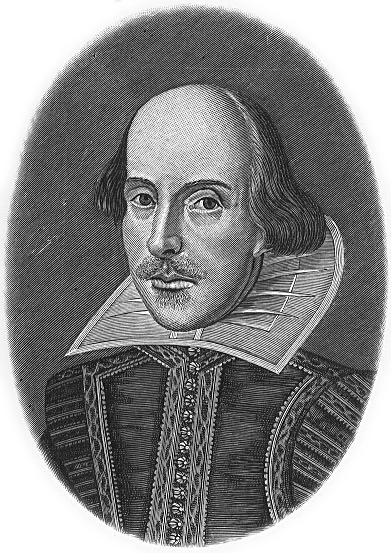 Yes, Shakespeare could have been baptised 3 days after his birth. Or three minutes. Or 3 months. We don’t know. Assigning 23 April as his actual birthday is merely a modern convention.
What we do know is that Shakespeare died on 23 April 1616. So in two years time we shall be celebrating the 400th anniversary of his death.
Pace Wikipedia, 23 April as Shakespeare’s birthday “which can be traced back to an 18th-century scholar’s mistake, has proved appealing to biographers, since Shakespeare died 23 April 1616”.
So, pedant that I am, I shall drink the bard’s health this Saturday (26th) and on St George’s Day in two years time.
Category Archives: history
Coming up in April
Interesting events an anniversaries in the month ahead.
1 April to 5 May
National Pet Month has been promoting responsible pet ownership and helping pet charities across the UK for the last 25 years. This year’s theme is Celebrating Our Pets and there events across the country. Find out more at www.nationalpetmonth.org.uk.
1 April
All Fools Day is widely recognized and celebrated in various countries as a day when people play practical jokes and hoaxes on each other. The earliest recorded association between 1 April and foolishness is an ambiguous reference in Chaucer’s Canterbury Tales.
4 April
International Carrot Day. Who said Bugs Bunny was only a cartoon character? Find out more at www.carrotday.com.
5 April
American Indian Princess Pocahontas married John Rolfe on this day in 1614.
5 April
International Pillow Fight Day when there will be massive pillow fights in cities around the world. The events are organised under the umbrella of the Urban Playground Movement who organize free, fun, non-commercial public events. Again you can find more on their website at 2014.pillowfightday.com.
20 April
Easter Day. As well as being a major festival of the Christian church there will be traditional events (egg hunts, egg rolling, simnel cakes …) in many countries around the world.
22 April
Earth Day is an international project to encourage us all to do more to protect the planet and secure a sustainable future. This year the emphasis is on education an schools are being encouraged to join in. You’ll find lots of information over at www.earthday.org.
23 April to 21 June
British Asparagus Festival. The Vale of Evesham is the asparagus growing centre of the UK and each year they hold a 2 month-long festival during the asparagus season, starting with the first crop on St George’s Day. English asparagus is the best and has to be enjoyed during its short season, hence the festival. Find out more at www.britishasparagusfestival.org.
25 April
Guglielmo Marconi, the Italian pioneer of long-distance radio transmission was both on this day in 1874.
26 April
On this day in 1564 William Shakespeare is baptised in Stratford-upon-Avon.
28 April
On this day in 1789 the Mutiny on the Bounty is led by Fletcher Christian against Lieutenant William Bligh.
Weekly Photograph
This week’s photograph is one from my perambulations of the Romney March Churches in Kent. Well actually this one, East Guldeford just outside Rye, is just in East Sussex; it is the only of the of the Romney March churches which isn’t in Kent and the only one not in the Diocese of Canterbury.
These are the Arms of Richard de Guldeford (died circa 1507) patron of St Mary’s, East Guldeford. They are on the north wall of the church and may be contemporary with the building of the church (consecrated 1505). The photo was taken during the Romney Marsh Historic Churches Trust members’ tour in July 2010.

Guldeford Arms
East Guldeford, July 2010
Coming up in February
Interesting events and anniversaries in the coming month.
1 February
Start of the last London Frost Fair, 1814 which lasted four days, during which time an elephant was led across the river below Blackfriars Bridge. This was the last frost fair because the climate was growing milder; old London Bridge was demolished in 1831 and replaced with a new bridge with wider arches, allowing the tide to flow more freely; and the river was embanked in stages during the 19th century, all of which made it less likely to freeze.

2 February
Candlemas. This is the Christian festival 40 days after Christmas of the presentation of Jesus at the temple. This day is also celebrated as Imbolc in the Wiccan/Pagan calendar (although some traditions celebrate on 1 February) in honour of Brigid, the goddess of fertility, fire and healing. It is also a time of increasing strength for the sun god and is Groundhog Day in the USA.
2 February
British Yorkshire Pudding Day. What better way to cheer up a miserable winter’s day than with Yorkshire Pudding? Read more here >>>>
10-16 February 2014
Go Green Week. The idea for Go Green Week is to encourage people, especially young people, to think about the environment and climate change. Read more here >>>>
12 February.
Bagpuss. On this day in 1974 BBC TV showed the first ever episode of the children’s animated series Bagpuss, an old, saggy cloth cat, baggy, and a bit loose at the seams. Sadly it was a bit too late for my childhood (I was a research student by then) but it was (and is) still fun and became one of Peter Firmin and Oliver Postgate’s iconic series. Read more here >>>>
14-21 February 2014
National Nest Box Week. Run by the British Trust for Ornithology, National Nestbox week is to encourage us to put up nestboxes for the birds. Why? Because so often these birds are declining due to a scarcity of nest sites as mature trees are cut down. This is also a good time to check existing nestboxes and (if they’re not inhabited by anything hibernating — insects, dormice, etc.) to clean them our before the new nesting season begins. Read more here >>>>
15 February.
Galileo Galilei was born this day in 1564. Galileo was an Italian physicist, mathematician, astronomer and philosopher who played a major role in the scientific revolution. His achievements included improvements to the telescope (and thus astronomical observations) and support for Copernicus’ theory of heliocentrism. For this latter Galileo was arraigned by the Inquisition, made to recant and sentenced to house arrest for the remainder of his life. Galileo was one of the all time giants of science. Read more here >>>>
17-23 February 2014
Chip Week. It seems that we Brits can’t get enough chips, so let’s admit defeat and celebrate! What? You mean they’re bad for us? I don’t believe it! Read more here >>>>


25 February.
Sir John Tenniel, British illustrator, graphic humourist and political cartoonist, died this day in 1914 just a few days short of his 94th birthday. He is perhaps best known today for his illustrations to Lewis Carroll’s Alice’s Adventures in Wonderland and Through the Looking-Glass and What Alice Found There. Read more here >>>>
Coming up in January 2014
This is, I hope, going to be a new monthly feature. My intention is that towards the end of each month to post a listing for the following month. The listings are likely to contain an eclectic mix of interesting anniversaries, historical events, red letter days and upcoming interesting (to me) “awareness events”, mostly UK-centric. As such this will replace the individual listings I’ve been posting erratically over the last year or more and allow me to add in days when traditional celebrations happen.
So let’s start off with what’s coming up for January 2014.
1 January
New Year’s Day. The first day of the new year and one of the important days for the wassailing of apple trees. Read more here >>>>
New Year’s Day has been a public holiday in the UK only since 1974. When I was young, before this was a public holiday, it always seemed daft to me that everyone went to celebrate and drink the New Year in, but we were then expected to be able to get up and go to work the following day.
First UK Shipping Forecast broadcast, 1924.
5 January
The Twelfth Day of Christmas and hence (in my book) Twelfth Night when all Christmas decorations have to be taken down, or left up until next year so as to avoid bad luck. The day is also sometimes known as Wassail Eve, being one of the occasions when we traditionally wassail our apple trees to encourage them to crop well this year.
6 January
Epiphany, the day the Western Christian Churches celebrate the visit of the Magi to the infant Jesus.
Old Xmas Day. In the old Julian Calendar this was 25 December, Christmas Day.
This is also the day when most people, and most traditions, celebrate Twelfth Night and is thus an important day for wassailing apple trees.
7 January
Eastern Orthodox Christmas Day. Because the Eastern Orthodox Churches still follow the old Julian Calendar this is the day on which their Christmas now falls.
Marriage of Princess Matilda, 1114. 900 years ago today the 12 year old Princess Matilda, grand-daughter of William the Conqueror, was married to the Holy Roman Emperor, Henry V at Worms. Following the death of Henry V in 1125, Matilda married Geoffrey Plantagenet, heir to the Count of Anjou. Their son later became Henry II of England. Read more here >>>>

Daguerreotype of Louis Daguerre in 1844
by Jean-Baptiste Sabatier-Blot
9 January
Birth of the Daguerrotype, 1839. On this day Louis Daguerre introduced the first publicly announced photographic process, which was to be named after him. Read more here >>>>
11 January
Old New Year’s Eve.
Birth of Sir James Paget Bt, 1814. Surgeon and pathologist who is best remembered for Paget’s disease, a chronic disorder of bone mis-growth. Paget was born in Great Yarmouth and is today commemorated in the name of the local hospital. Read more here >>>>
Charing Cross Station opened, 1864. Read more here >>>>
13 January
Plough Monday is the Monday after Epiphany. It marks the resumption of agricultural work after the Christmas festivities. In some areas of England the farm labourers toured the villages with their plough in a money-raising trip, perhaps with singing, mumming plays and dancing. Read more here, here and here >>>>
18 January
Winnie the Pooh Day. The annual celebration of the birth in 1882 of AA Milne, creator of Winnie the Pooh.
19 January
Birth of painter Paul Cezanne, 1839.
World Religion Day. Founded in 1950 the aim is to unite everyone, whatever their faith, by showing us all that there are common foundations to all religions and that together we can help humanity and live in harmony. Read more here >>>>
20 January
Blue Monday. At a time of year when we all need cheering up Blue Monday is a special day for people to focus on doing good for each other. Not necessarily presents and cards, just small (or large) acts of kindness.
24 January
Global Belly Laugh Day. Go on, cheer yourself up, have a good laugh. Read more here >>>>

Robert Burns by Alexander Nasmyth
25 January
Burns’ Night. The annual celebration of Scotland’s most famous poet, Robert Burns (1759–1796) held on his birthday. Celebration includes the eating of haggis and the drinking of whisky. Read more here >>>>
26 January to 1 February
Farmhouse Breakfast Week. Breakfast is, we are told, the most important meal of the day and what could be better than a full English farmhouse breakfast? This is a week to celebrate and indulge in just that! Read more here >>>>
31 January
Chinese New Year. 2014 is the year of the Horse.
More next month!
Christmas & New Year Traditional Events
This time of year produces a lot of traditional (and often strange) events around Britain. So many places seem to have their traditional event — some are relatively modern while others go back hundreds, maybe even thousands, of years.
I remember when I was a kid there was a relatively modern (started in 1908) Boxing Day tradition of a football match between the Bakers and the Sweeps which survives to this day. The participants, dressed and made up accordingly, paraded round the streets collecting money for charity before playing a fairly rowdy football match on one of the local recreation grounds. This tradition, like many others (both new and ancient) across the country, survives because it raises money for local charities.
I can’t hope to find out about and list here a tithe of the events happening across Britain — and there seems to be nowhere which lists them — so you will need to search out ones that interest you or that are happening near you. IanVisits lists a small number in his monthly “Things to do outside London” listings for December and January.
The most important dates to look for are:
Boxing Day, 26 December
New Year’s Eve, 31 December
New Year’s Day, 1 January
12th Day of Christmas, 5 January
Old Christmas Day, 6 January
Old New Year’s Eve, 11 January
As you see many of these traditions are tied to the old calendar and/or to traditionally important days. They deserve to survive both because they are a traditional part of the British heritage but also because so many do good work raising money for local charities.
Word: Quinquereme
Quinquereme
An ancient Roman or Carthaginian galley with five banks of oars on each side.
Perhaps the most famous of the Hellenistic-era warships, because of its extensive use by the Carthaginians and Romans, the quinquereme was invented by Dionysius I of Syracuse in 399 BC as part of a major naval armament programme directed against the Carthaginians. During most of the 4th century, the “fives” were the heaviest type of warship, and often used as flagships of fleets.
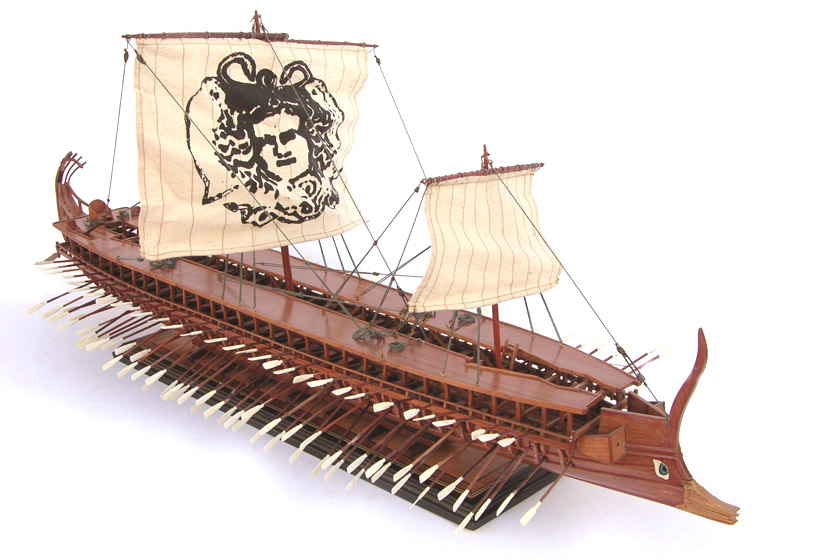
OK, we know the oarsmen were largely slaves but all those oars! The image is a model of a trireme (three banks of oars); just imagine adding another two banks of oars to that! They must have been a nightmare to power and even more of a nightmare to handle. But if done right they would have been awe-inspiringly impressive.
Things to do Out of London in December
A few days ago IanVisits published (as usual every month) a rather super list of things one can do out of London during the coming month — ie. December.
The list is full of wonderfully festive events including Christmas tree festivals, boy bishops, torch-lit processions, mummers, football and tar barrels. Many are (or are based on) very ancient traditions especially to do with mid-winter fire and light festivals. You can find the full list here. I commend it to you!
King Harold Day
Saturday 12 October is King Harold Day. Unfortunately as 12 October is also my mother’s 98th birthday I won’t be able to partake of the celebrations — which is a real shame as I grew up just across the valley from the centre of activity in Waltham Abbey.
Essentially this is a weekend of activities, both fun and serious, to celebrate Harold Godwinson — yes he’s the one who lost at home to William the Conqueror — who is (allegedly; it has never been proved or disproven) buried at Waltham Abbey, which he had refounded a few years earlier.
The events on offer range from an early music recital in the Abbey Church (above) to displays of falconry and Morris Men.
As always there more information on the King Harold Day website at www.kingharoldday.co.uk.
Heritage Open Days
Starting tomorrow there are four days of Heritage Open Days (so that’s Thursday 12 through Sunday 15 September).
Heritage Open Days celebrates England’s fantastic architecture and culture by offering free access to places that are usually closed to the public or normally charge for admission.
Every year on four days in September, buildings of every age, style and function throw open their doors. It is a once-a-year chance to discover architectural treasures and enjoy a wide range of tours, events and activities that bring local history and culture to life.
And that’s everywhere from Lanhydrock in Cornwall (above) to Berwick Town Hall via Sudbury Hall in Derbyshire.
There are maps, searchable lists and lots more information on the Heritage Open Days website at www.heritageopendays.org.uk.