Category Archives: history

Your Interesting Links

OK, so here we are again with another instalment of links to interesting (well, I found them interesting) items you may have missed the first time round. There’s a long list this time, so lets start with the hard(er) stuff and then it’s all down hill.
The Himalayan Kingdom of Bhutan, which measures its success against a National Happiness Index, is planning to invest in the widespread use of electric vehicles. And why not, because of its mountainous terrain Bhutan has copious hydroelectric generation.


Now here is something I’ve known for a while and find quit disturbing: many widely used forensic techniques have never been subjected to scientific scrutiny but rely for veracity on the original testimony of some long-forgotten, apparent expert. Which to me means that any conviction which has relied on forensic data could well be unsafe. And yes, that includes fingerprints.
Herring Gulls. Love them? Or hate them? Either way they provide a valuable service.
How many microbes do you think there are in your house? Yep, thousands. That’s thousands of different species! Here are three stories about the research: from the BBC, from the North Carolina State University research team and from one of the study leaders, Rob Dunn.
Meanwhile in South Africa a team of very small archaeologists have found thousands of bones, apparently from an unknown hominin species, in a virtually inaccessible cave.
And so to the medical … Ovarian cancer is nasty because it is so hard to detect. But (as I have been saying for ages) if women were to lose their fear of saying ‘vagina’ the rate of early diagnosis could increase dramatically. We (everyone, men and women) just have to become more comfortable with our bodies, and talking openly about them, for the good of our health!
“What’s a uterus?” This stunning level of body ignorance and illiteracy is demonstrated in an article in the Guardian from an Australian oncologist.
Now here is a medical affliction which is really frightening: sudden death syndrome.
So what is it like to be permanently like a robot; not being yourself either physically or emotionally? It’s called depersonalisation disorder and is apparently quite common but almost totally misunderstood.
It’s a good week of strange afflictions (they’re not all diseases as such). Here’s another: aphantasia. Which is basically living without any mental images; no mind’s eye; no ability to conjure up a picture of your loves ones; nothing.
Back to the more mundane … Why is it that many of use sneeze when going from the dark into (bright) light? That’s right: no-one really knows, but there are some ideas.
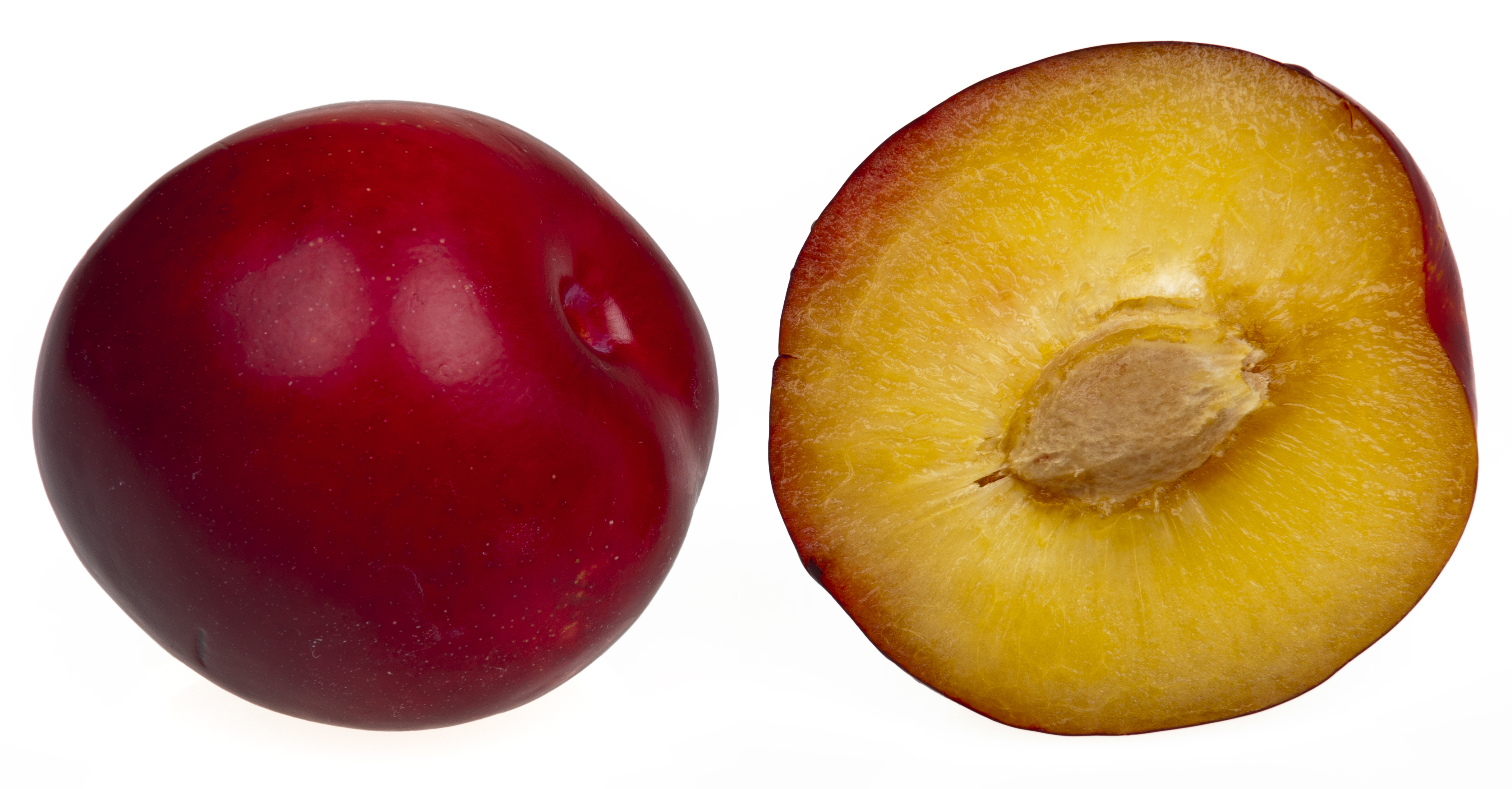
On the chemistry of plums, prunes, chewing gum and constipation.
Apparently we have bees all wrong. Royal Jelly seems not to be what makes a queen bee, but it’s what the royal larvae aren’t fed (and which is fed to workers) that forces them to become queens.
We all seem to like bees but hate wasps. But some people do like wasps despite having been stung about the privy parts. Yes, I too like wasps despite never having had more than an odd sting on the arm.
A couple of weeks ago, George Monbiot created a stir by admitting to eating a roadkill squirrel. And then repeating the exercise on live TV. Seems to me this is rather more honest than getting someone else to rear, slaughter and butcher a pig for you.
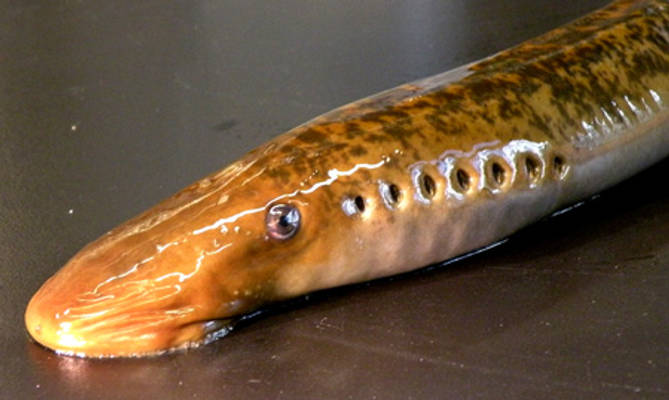
Still on the wild world, there’s a fish which is older than the dinosaurs: the lamprey. And it is returning to UK rivers after 200 years. Though it is unlikely that any time soon there’ll be enough to have a surfeit of lampreys like Henry I — which is probably as well as they are quite nasty creatures.
Do you live with a weirdo? You do if you live with a cat. Here are some tales of feline oddness.
Which sort of takes us naturally onto common beliefs we get wrong.
There are many many very wet places on this planet, but which of them wins the crown for being the wettest place on Earth?
And now to the historical … Just why was Orkney the centre of ancient Britain? Long before the Egyptians built the pyramids or ancient Britons built Stonehenge.
And talking of Stonehenge … archaeologists have discovered an unsuspected huge ritual arena just two miles from Stonehenge.
Westminster is NOT the Mother of all Parliaments. The original quotation is “England is the Mother of all Parliaments”.
Ah yes, the age old mystery of the Princes in the Tower. After 500 years it should be a very cold case but some forensic historians are trying to bring it back to life.
Next up two brief pieces from the History of London website. The first on the Great Plague and the Fire of London; the other on the Civil War and Restoration.
IanVisits is running an irregular series on unbuilt London: great projects that never happened. Here’s his piece on the iron London Bridge that never was.

London took a hammering from the Luftwaffe in the Blitz and after the war it took 20+ years to reclaim and build on all the bomb sites. So why is so much of London being redeveloped now?
Finally here’s the story of the oldest known message in a bottle, and one of the longest running scientific experiments. The bottle was cast adrift in the North Sea around 10 years before the Great War and surfaced again earlier this year!
Hopefully you’ll not have to wait quite that long for the next instalment …

Book Review: Burlington

Nick Catford
Burlington; The Central Government War Headquarters at Corsham
Folly Books; 2012
book coverThis is a large, coffee table-sized book full of photographs and maps of the now decommissioned and abandoned government bunker under north Wiltshire.
Nick Catford is one of the country’s most expert and specialist historians and investigators of underground Britain, and especially wartime/military and railway infrastructure, with several books to his credit. He is also an excellent photographer and a leading light in Subterranea Britannica (SubBrit). Which means he gets access to places most people wouldn’t and he’s absolutely the right man to write this book.
The first almost 50 pages provide a blow-by-blow history of the Corsham bunker from the mid-1930s through to it’s demise some 10 or so years ago, but majoring on its Cold War incarnations since the mid-1950s. The reminder of the 215 pages are filled with glossy photographs and charts of the layout of the various areas of the bunker, showing how each area would have been allocated and the now abandoned state of the site — complete with stored hardware, furniture, etc.


The photographs give a good idea of the decay that sets in very quickly when a site like this is abandoned. As yet apparently no roof-falls (at least not in the bunker area), but lots of water seepage and thus decaying wood and metal. Hundreds of new, but abandoned, chairs, blankets, packs of copy paper, telex machines, generators, telecoms infrastructure, catering equipment — it’s all there! It just beggars belief that all this can just be abandoned; one would think that at least the metal (and there must be hundreds of tons of it) could be recovered and sold off for scrap and recycling.

It’s the sheer scale of the enterprise, the government’s inability to organise its way out of a paper bag (certainly with any speed) and the scale of waste which for me makes this book so interesting. Plus the horrendous logistics of setting up the whole outfit, keeping it secret (the code name seems to have been changed every 2-3 years!) and maintaining it in a state of readiness. It all just boggles the mind.
If you are interested in what we get up to underground, things governmental and military or the general disorganisation of the way government goes about planning and implementing projects, you’ll likely find this book fascinating. Or you might just want to have your mind blown! If none of those floats your boat then basically, don’t bother.
Overall Rating: ★★★★☆

Your Interesting Links

So here we are again with another round of links to interesting items you might have missed the first time around. Again not too much heavy science but a lot of oddities …
Cats vs Dogs. Who wins? Well from an evolutionary perspective scientists have concluded that cats are better.


Since when has a Goth Chicken been a thing? Quite a while apparently as it is a recognised breed with black feathers, black meat and even a black heart. And they are highly prized.
We all know we eat too much animal protein, so it’s no surprise that the trend for replacing red meat with chicken isn’t actually helping.
George Monbiot considers evidence that obesity is an incurable disease and asks why then governments are intent on punishing sufferers.
So what is it like if you lose your sense of smell?
There are lots of medical screening tests available but which are really useful and what are the drawbacks?
Michael Ignatieff looks at the ongoing human impact of the Fukushima accident and subsequent clean-up.
So which shall be the master: the Meridian or GPS? It seems they don’t agree where the Greenwich Meridian is by a small matter of 102 metres. which is fine, apparently.
Galileo looked at a pendulum and thus begat GPS. Or how seemingly trivial observations and inventions can have long-lasting and profound effects centuries later.
And while we’re on inventions, a creative man has built a machine to feed his cat — but only when the cat hunts and finds a hidden ball and puts it in a slot machine!
Mention of Galileo makes us turn to history, but let’s start even further back in time … An English academic working in America has been looking hard at the walls of Tutankhamun’s burial chamber and thinks he’s spotted the bricked up entrance to Queen Nefertiti’s tomb.
Now here’s an equally puzzling conundrum. Was Shakespeare stoned when he wrote his plays? Well maybe, because pipe remains found in Shakespeare’s Stratford-upon-Avon garden have been analysed and found to contain not just tobacco but also cocaine and cannabis.

Struan Bates at www.EnglishCivilWar.org takes a further look at London’s York House Water Gate, this time as represented by various artists.
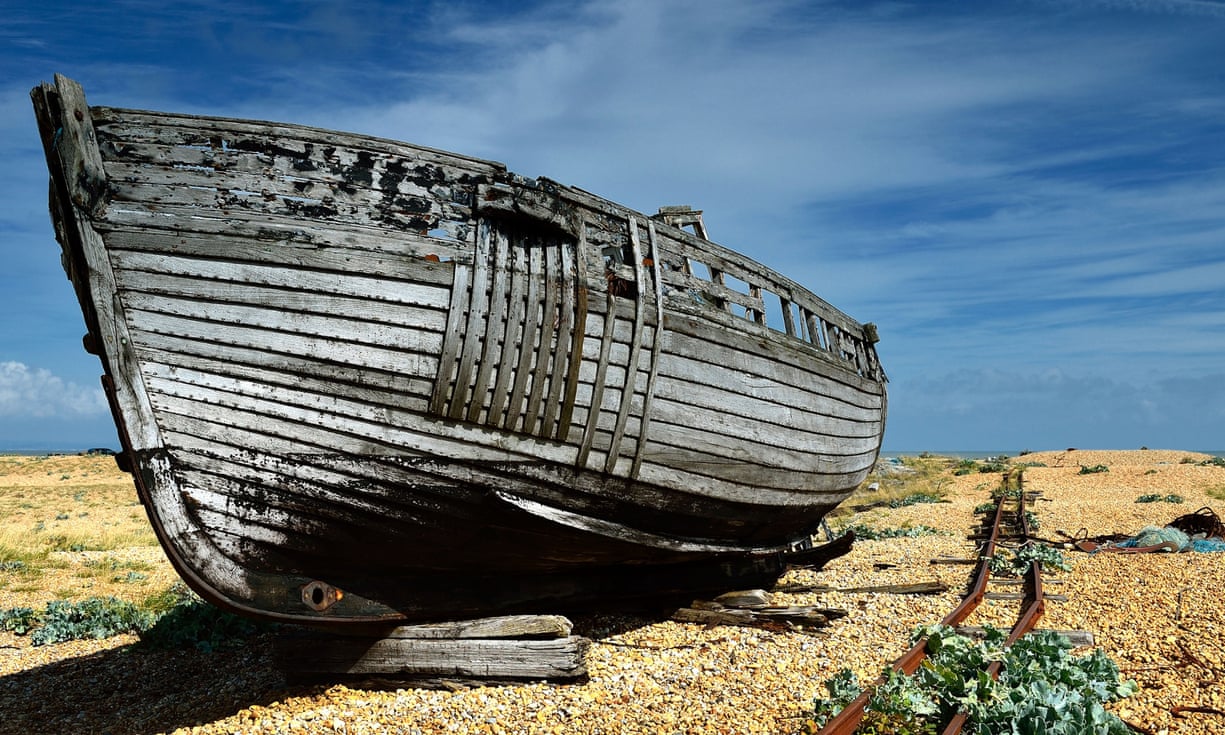
Has anyone got a couple of million to spare? If so, Dungeness is up for sale — yes, that large expanse of shingle on the Kent coast. And as it’s a very environmentally sensitive area it needs a suitable owner. Now if I can just win the lottery …

After which it is all downhill (or do I mean down the beach?) …
Guys … Do you want to increase your fertility? If so, take a tip from the Scots and wear a kilt!
Don’t want to wear a kilt? OK, so nudism is another option. Here are two items where young ladies look at the experience of social nudity: the first talks of the challenges of being a lifelong nudist and the second tackles nudity in the interests of research.
Meanwhile Amnesty International has found some sense and now backs the worldwide decriminalisation of prostitution. Is it too much to hope the politicians might now listen? Yes, I thought so.
And finally some words from a working, legal (albeit American) prostitute on the misconceptions people have about the job she has chosen for herself.
That’s all. More anon.

Your Interesting Links

And thick and fast they came at last,
And more, and more, and more

Yes, we are doing well at present for interesting links to items you might have missed the first time round. Here is the latest instalment, and again I promise you nothing too hard by way of science!
What is it that makes wet dogs smell so? Here’s a brief look at some of the chemistry.

There are definite advantages to being female, and if you’re a cat one of them is that you can have splotchy fur.
Most moths can only make noise by rubbing their legs or wings together, but the Death’s-Head Hawkmoth has a built-in flute. They also eat honey.

We all know that seeds can last a long time just by observing what happens when you turn over an undisturbed piece of ground. But how long can seeds really survive?
And from seeds we’re now on to food … We’re often told that western society eats too much meat and we should cut back. While this would undoubtedly be good for our health, can meat ever be eco-friendly?
Have you ever stopped to think about what cooking oil you use? Well some scientists have and the results may surprise you.
Scotch eggs originated in Scotland, didn’t they? Except they probably didn’t.
Who has ever had hiccups after a meal? Or maybe some other time? But why do we hiccup?
So now to some different aspects of lifestyle. What (if any) are the scientifically proven benefits of yoga? Julia Belluz looks at all the evidence.
I wonder how many of you already know these 9 facts about breasts? No, I didn’t!
How to improve your work-life balance by doing one simple thing? You can’t? Oh yes you can! It sometimes takes a bit of discipline, but I did it many years ago and it worked for me.
Next a couple (more) items — here and here — on why family nudity is actually healthy for kids. Girls especially are more likely to grow up with a good self-body image.
And now a quick shuffle across to the history room where first we find a piece on a little known relic of early 17th century London: the York House Water Gate.
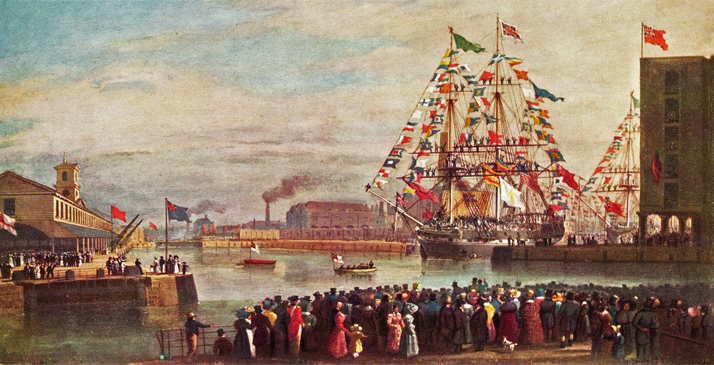
Opening-of-St-Katharines-1828

Slightly later, but still on the Thames, a piece on the creation of the St Katharine Docks and how they changed the working of the docks.
And finally, from boats to trains. Here’s the low-down on the ghost trains of Britain.

Your Interesting Links

So soon already here’s another round of links to items you may have missed the first time — with rather less difficult science in this issue!
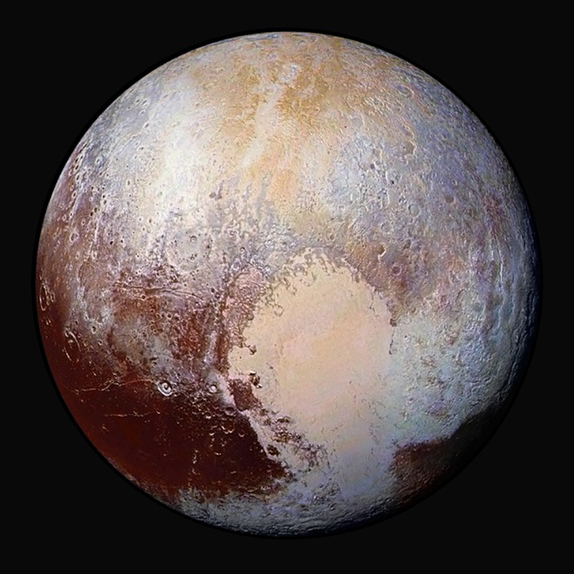
NASA have recently had a spacecraft whizzing past Pluto and they have some stunning pictures as a result, like this jaw-dropping colour image.

pluto

Do skin moisturisers do any good? Well maybe. Here is something on how they work.
On a slightly different chemical tack, why is it that many people think blackcurrants smell like cat wee? For me it isn’t the fruit itself that has this effect but the leaves of blackcurrants and flowering currants.
Girls, now do just be careful because it seems that semen has controlling power over your genes and behaviour (at least when it’s applied in the place Nature intended for it).
While on things sexual … just why do we kiss, when most other animals don’t?
Moving slightly away, here are some good scientific reasons why you should go naked. It’s basically what I’ve been saying for many years.
Now what about our pussies? Just why do cats purr? And for me even more interesting is how do cats purr?

Which leads us back to the age-old question: are cats domesticated or still really wild animals?
George Monbiot has been talking about rewilding for a long time, and it is something which does seem to make a lot of sense. In welcoming the new environmental organisation Rewilding Britain, Monbiot spotlights 15 species which could be brought back to rewild these islands.
The hope is that rewilding is not just good for the environment (for instance lynx would easily control our exploring deer population) but that it will enhance and enrich our lives too.
But hopefully one thing rewilding wouldn’t do is to increase is Mother Nature’s ability to rain frogs and other creatures.
From ecology to, well I suppose ethnology … What is the smallest language which would be useful? Well the constructed language Toki Pona contains just 123 words and really does allow you to say (almost) anything.
And now to a few things historical … A rare medieval gold ring depicting St George has been found in Norfolk. I’m glad the archaeologists know it shows St George, ‘cos it sure as hell beats me.
There has been much in the media recently about British slave ownership in 17th to early 19th centuries. Here the Guardian looks at the history and also the Legacies of British Slave-ownership database which is going to be very interesting for genealogists.
And coming slightly more up to date, I bet you didn’t know much of the history of that British institution the red post box. And yes, they were introduced by author Anthony Trollope, who also lived for some years in my home town.
Now we’re reaching the end of our quest and the penultimate curiosity is that a musician has recreated Leonardo da Vinci’s piano, and it is heard for the first time 500 years after Leonardo sketched it. And no, it isn’t All Fools Day — just have a listen to the video; it could easily be a string quartet.

And finally, just because they are stunningly beautiful, here’s a collection of animated GIFs of some gorgeous cactus flowers. Real natural fireworks!

Your Interesting Links

Another of our irregular round-ups of links to items you might have missed the first time.
We all drop our dinner down our shirt — some of us more than others — but how often do we stop to think about the chemistry behind stain removal?
I’m almost always warm and yet I know plenty of people who, unless sitting on a tropical beach, are always cold. So why do some of us feel the cold more than others?
While talking about people it seems that some people can’t picture things; they can’t conjure up mental images, almost as if their “mind’s eye” is blind.
Which leads me on to an interesting three-part article from Maria Konnikova on sleep: falling asleep; why we sleep; and on waking up (or not). [Long read]
More human wonders … Why do some people collect lint in their navels but others don’t? Spoiler: hair and clothes.
Apparently broccoli is bad for you, like, really toxic bad. Or then again, maybe it isn’t?
A list of links wouldn’t be complete without some reference to our feline friends, now would it! This attempts to explain what your cat is trying to say to you.
And while on language, here’s an interesting infographic on the world’s 23 most spoken languages — they’re spoken by over half the world’s population.
If you’re like us you love the iconic Le Creuset cast iron cookware. David Lebovitz does and he managed to get a tour of the Le Creuset factory.


If you had to think up a new use for recycled plastic, I bet you wouldn’t dream of a plastic road. Well the Dutch just did!
Shuffling quickly now from the modern into the historical … Here are five interesting facts about Lewis Carroll.
And from Carroll’s love of logic and puzzles to the secret codes on British banknotes.
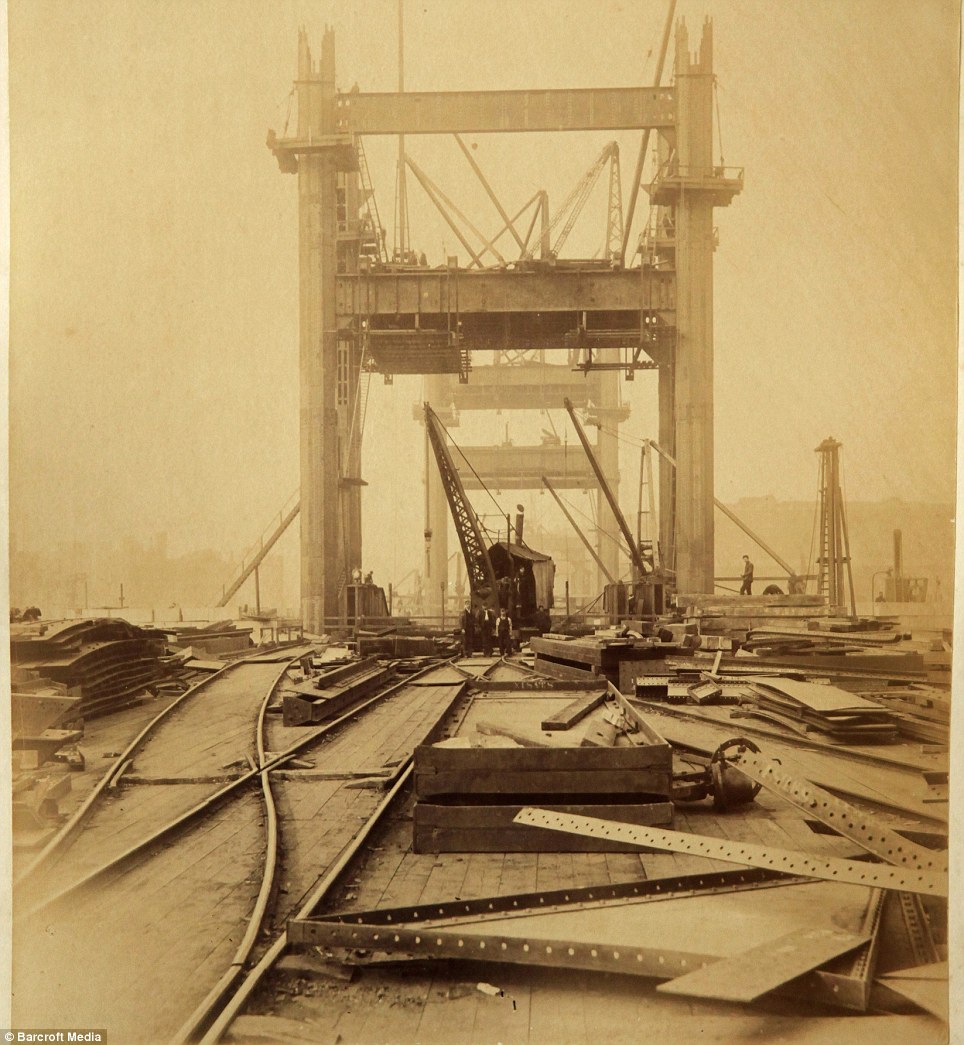
Going backwards, someone has found, dumped in a skip, a wonderful collection of photographs of the construction of Tower Bridge dating from around 1890.

Next our friendly blogging London cabbie takes a look at the curious history of Craig’s Court, off Whitehall.
And even further back here’s an alternative view of the Middle Ages.
And finally back down to earth. Critics claim that pornography degrades women, dulls sexual pleasure, and ruins authentic relationships. But does it? Seems the evidence suggests the critics are wrong.

Oddity of the Week: Monorail

According to the Monorail Society website, the first ever passenger carrying monorail was in my home town, at Cheshunt:

1825 — Cheshunt Railway
The first passenger carrying monorail celebrated a grand opening June 25th, 1825. It had a one-horse power engine … literally. Based on a 1821 patent by Henry Robinson Palmer, the Cheshunt Railway was actually built to carry bricks, but made monorail history by carrying passengers at its opening.


And I’m pleased to have been on the world’s oldest monorail which is still in operation: the Wuppertal Schwebebahn (above) which is also the only public passenger carrying dangling railway. It is certainly an interesting ride.

Your Interesting Links

OK, so here’s another round of links to interesting items you may have missed the first time. As always we start with the nasty, hard, scientific stuff and then it’s all downhill.
First here’s a long-ish piece on the fascinating world of chimeras. Although the article concentrates on humans, much the same applies to all animals and there is an interesting paragraph which explains how tortoiseshell cats are always female.


Why are some people are left-handed? Apparently some left-handed people have same genetic code abnormality as those with situs inversus, the condition where the major organs are on the “wrong” side of the body.
I’m one of those annoying people who crack their knuckles. Surprisingly scientists have only now shown why knuckles pop when pulled — and it’s all down to physics.
And here’s some more strange finger science. Professor William B Bean measured the rate at which his fingernails grew over a period of 35 years to discover that growth slows as one ages.
Still on new scientific discoveries, researchers have just worked out what sustains the human foetus during its first weeks, and it isn’t the placenta but womb milk.
Staying with food … Why do we crave specific foods? And no, it seems it isn’t because of some deficiency which the craved for food will satisfy.
Have you ever wondered how the medical profession came up with the stethoscope? Wonder no longer: it all started with Laennec’s Baton.
How do you teach trainee doctors (and other healthcare professionals) to do breast and internal examinations? Yep, there are people who use their bodies to make a living as Gynaecological Teaching Associates, guiding the trainees what to do with their hands.
Well after that I think we need a strong gin and tonic!
Italian man starts turning his property into a trattoria; goes to fix the toilet; and ends up years later with a major archaeological site.
Maps are so much more interesting than GPS! Here are 12 amazing maps which show the history, and fascination, of cartography.
Over 250 years ago British clockmaker John Harrison was ridiculed for saying he could make a pendulum clock accurate to a second over 100 days. He has finally been proven right.
The Paston Letters are one of the most valuable, and well known, sources of information on late medieval life in England. Now the British Library have digitised them and put the images online.
Coming a bit more up to date, the Victorians had plans to build a skyscraper taller than the Shard. Thankfully reality prevailed and they didn’t because the science of building materials was not nearly advanced enough.

Let’s end in the realm of human rights. First there is a new, and very powerful, resource which aims to bring human rights to life using beautiful infographics, stories and social media. It’s the brainchild of a top human rights barrister, so it should be reliable.
If, as many would claim, nudity is the ultimate test of self-acceptance. Why are we so afraid of it?
More next time!

Weekly Photograph

This week’s photograph is one I took on Saturday. It shows the commemorative plaque to General Sikorski who was leader of the exiled Polish forces in WWII. The plaque is on the (astonishingly expensive) Rubens Hotel, right opposite the entrance to Buckingham Palace Mews, which was the Polish forces GHQ for most of the War. This is not just a piece of history for it will resonate with Anthony Powell fans. Powell spent most of his war years as Military Intelligence (Liaison) and for much of that time was the officer responsible for liason with the Polish Allies — so he would have known the Rubens Hotel well.

Click the image for larger views on Flickr to read the lettering

Rubens Hotel, Polish Plaque
London, 2 May 2015

I’m sorry the image isn’t brilliant, but the hotel’s display board is at comfortable reading height, so the plaque is a couple of feet above my head height and I’ve had to correct the verticals in the image.

Cedars Park

Updated 17 February 2022; mostly correcting old links

I belong to several Facebook groups about my home town, Waltham Cross and Cheshunt in Hertfordshire. On one of them there was a thread about the park which was less than 10 minutes walk from my house and which I knew well from a very early age. Needless to say someone found and posted a few old photographs and postcards which triggered me to remember what I knew about the park and its surroundings.

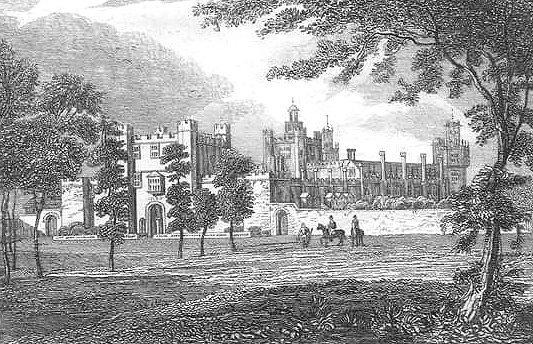
Cedars Park covered part of the site of the old Theobalds Palace, which was built around 1560 by William Cecil and where he entertained Queen Elizabeth. The Palace was subsequently “stolen” from Robert Cecil, Lord Burghley, by James I in exchange for Hatfield House. It was here that Prince Charles (later Charles I) spent much of his childhood. James I died and Charles I was proclaimed King here. Although few contemporary images of Theobalds Palace survive, it appears to have been a late Tudor masterpiece. So needless to say it was razed to the ground by Oliver Cromwell’s merry men.

Theobalds_Palace_Engraving
An 18th century Engraving of Theobalds Palace

Subsequently the estate — used by James I as a deer park — was split up and an 18th century house built on the site of the palace. Old Palace House, as I knew it, even contained a couple of the original Tudor windows from the palace, but apart from that the exact location of the palace was lost beneath the ground. As befitted a large house of its period, Old Palace House had formal gardens, stables, a kitchen garden and a large orchard. In 1919 the adjoining area was given to the local council as a municipal park: Cedars Park, so named because it contained two enormous Cedars of Lebanon which it is suggested are contemporary with Theobalds Palace. The park also contained two very old Mulberry trees which may also have been contemporary with the Palace.

I knew Cedars Park well in the 1950s and ’60s — basically from the time I could walk, and maybe earlier — less well in the ’70s when I was away at university. Since the ’70s the park has been extensively remodelled and modernised; in the process there has been a great deal of archaeological work done and the ground layout of Theobald’s Palace is now pretty well documented.

The old lady who lived in Old Palace House must have died in the very early ’60s; the house was shut up and ownership passed to the local council. It is at this period, the mid-60s, that I knew Old Palace House and its grounds. The house itself was burned down — as usual in suspicious circumstances — in the early ’70s and it is this which, eventually, started the process of clearing the site and extending the park.

One of the first acts, after making the buildings safe (ie. demolishing most of what was left) was to grub out the orchard, turn it into a field and tack it on to Cedars Park by making an opening in the dividing (ancient) wall.

As you can see there is an awful lot of history here, so if you want to delve deeper you might want to look at:
For more on the history of Theobalds Palace see British History, Hertfordshire Genealogy and Hertfordshire Memories.

For more on the history of Cedar’s Park see Broxbourne Borough Council and Wikipedia; there is also a website for Cedar’s Park.

There is lots of detailed information on the archaeological excavations around Cedars Park, mostly done by Oxford Archaeology, in their site reports here and here.

I also wrote briefly about Old Palace House in a 2009 blog post.

What now follows is my recollection of Cedars Park, and Old Palace House and grounds, as I knew them in the ’50s and ’60s.

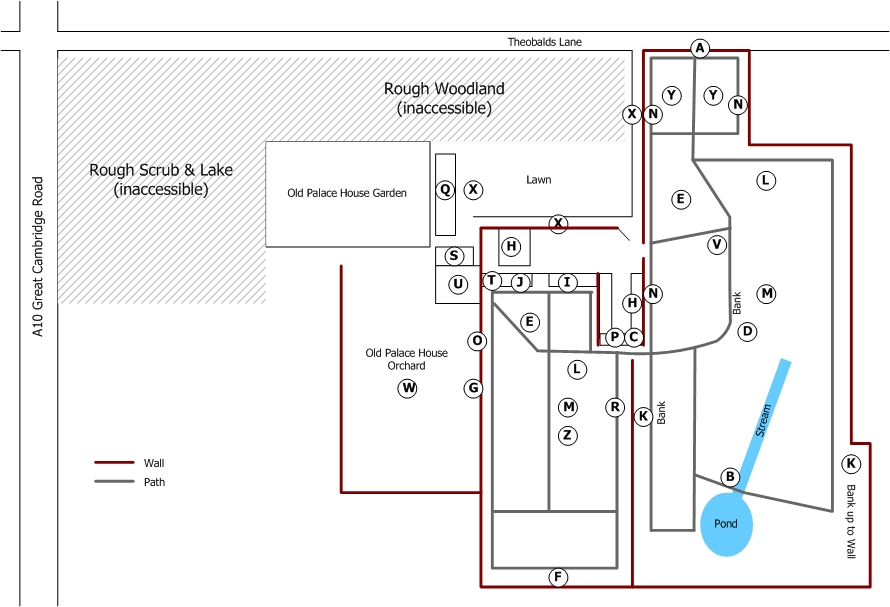
First of all an annotated sketch map, then a few more recollections.

You will want to look at this in a larger size, so click the image
cedars
Not to scale. North at the top.

A : Main entrance
B : Bridge over the stream (such as it was, usually dry)
C : Toilets
D : Monkey Puzzle tree
E : Cedar Tree (both were also very old when I knew them in ’50s & ’60s)
F : Flint-built follies
G : Old gate in the wall; later made into a larger opening when the orchard was grubbed out and the field made part of the park.
*H : Council Park Department hothouses & cold-frames (which grew most of the flowers of civic occasions and for formal planting around the town)
*I : Hothouse conservatory which housed pot-plants for formal civic occasions; it was always full of colourful pants like calceolaria and coleus
J : Conservatory shelter
K : Horse Chestnut trees
L : Pink specimen Horse Chestnut tree
M : Mulberry tree (both were very old; maybe as much as 300 years in 1950s); blimey did the fruit make a mess on the grass!
N : Herbaceous borders against walls
O : Very old wall, probably late-16th or very early 17th century; had niches for bee skeps
*P : Park-keeper’s “lodge”
*Q : Old Palace House
R : Rose walk/arcade
*S : Stables
T : Conservatory containing a glass case with two(?) stuffed tigers; later a colony of live budgerigars was added. In the early days (’50s) you could walk round the conservatory containing the glass case of tigers but obviously that stopped once the budgies were installed.
*U : Old walled kitchen garden (I think)
V : Remains of concrete plinth which had supported WWI tank
*W : Huge old walnut tree, which was the only tree kept (in the middle of the field) when the orchard was grubbed out and the resulting field made part of the park
*X : Driveway to Old Palace House
Y : Formal flowerbeds
Z : Thatched shelter

[Note that everything marked * plus Old Palace House garden, lawn, orchard and the rough land was outside the perimeter of Cedars Park as I knew it in the ’50s and ’60s (although the park keepers kept an eye on most of it once Old Palace House was owned by the council).]

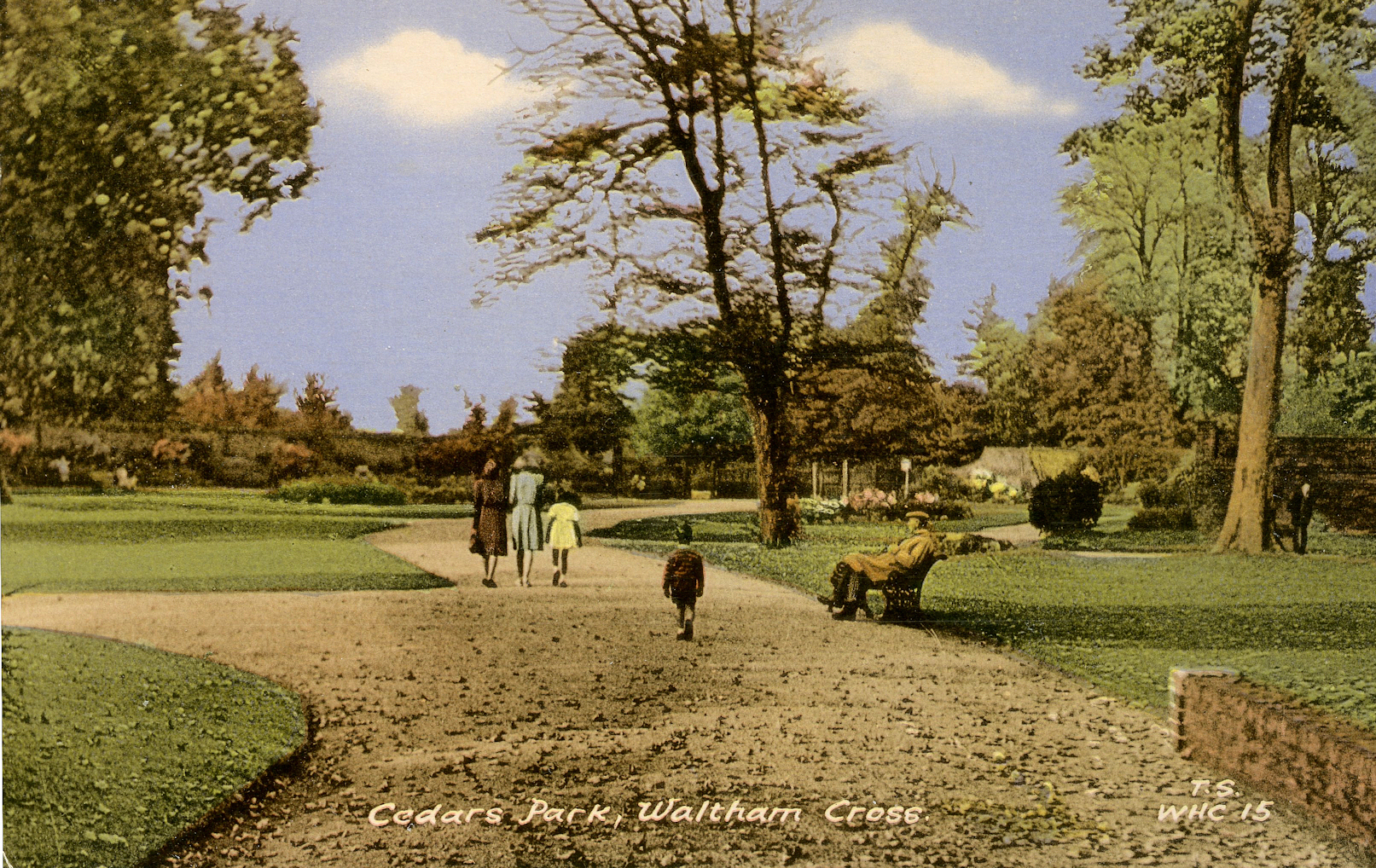
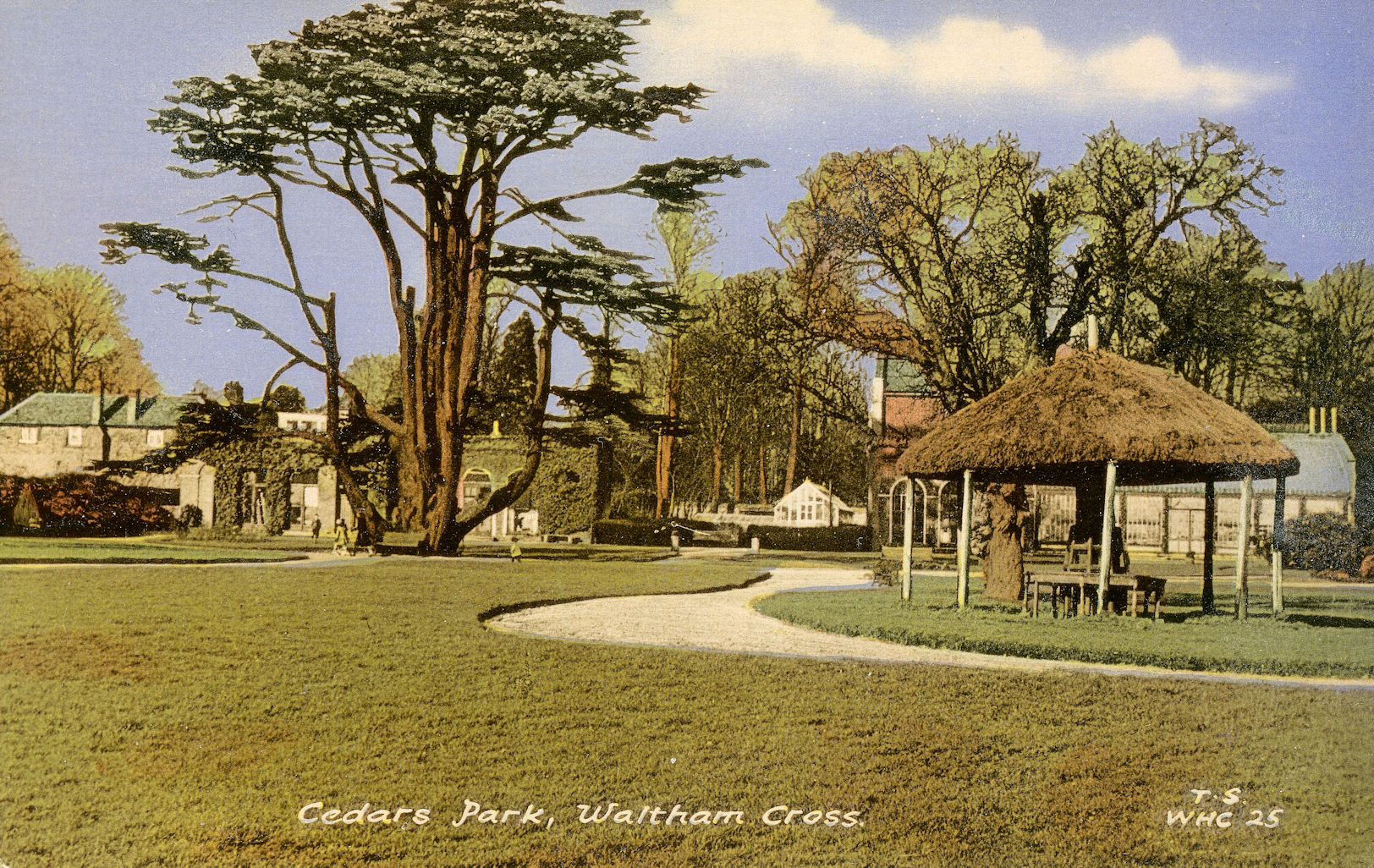
Here are a couple of postcard views of Cedars Park from, I think, the early 1950s.

Cedars_c1950_1
This is looking towards the main gate (A) from roughly the point (V) on the plan.

Cedars_c1950_2
This shows the thatched shelter (Z) with the mulberry tree (M) and cedar tree (E) beyond from in front of the follies (F) on the plan.

By the time I knew them, all the areas of Old Palace House and grounds were pretty well unkempt: lawns not cut; shrubs not pruned; orchard trees not cared for; house shut up and damp. We were occasionally allowed access to the Old Palace House grounds on a Sunday afternoon because we knew one of the park keepers who worked something like one Sunday in three. Once or twice we were taken over the house and stables.

OPH_c1935This is the rear of Old Palace House in about 1935. Note the two, possibly three, Tudor window embrasures.
The orchard, full of very old fruit trees, was a delight despite being overgrown with grass and bramble. A handful of times, over a couple of autumns, we were allowed to go in there and help ourselves to whatever fruit we could carry away (usually in rucksacks). The orchard contained just about every imaginable old variety of apple and pear. And the apples were to die for; wonderful varieties that one never sees today, many of which we couldn’t even identify. Obviously there were also things like cherry trees — stripped by the birds early in the season! I think I remember raspberry canes too. And then there was the enormous mature specimen walnut tree (that’s my memory, anyway) which stood in the middle. This walnut tree was the only tree kept when the orchard was grubbed out (in the early 70s?); I have a memory that my mother painted it in wonderful autumn colour, standing majestically alone in what was by then a field belonging to the park. While one deplored the orchard being grubbed out, the trees were so old and neglected that there was realistically little other option.

Also, knowing the park keeper, we sometimes got a look round the hothouses and the conservatory. The latter was always full of colourful plants being grown for civic occasions — calceolarias, coleus and I forget what else. Outside there were cold-frames and I think an area used for bringing on rose bushes, trees etc. Plus the inevitable sheds housing big lawn mowers and other machinery, potting sheds etc. The hothouses were heated by some old coal-fired furnaces, which had to be stoked up last thing at night and would apparently just about last until the morning.

Going back to the park, I loved the Monkey Puzzle Tree, the Cedars, the Mulberry trees; I remember rolling down the bank from the path by the Monkey Puzzle; and with the large number of Horse Chestnut trees it was a great place to hunt for conkers. I never did much like the tigers or the follies. Nevertheless the park was for me a fairly magical place.

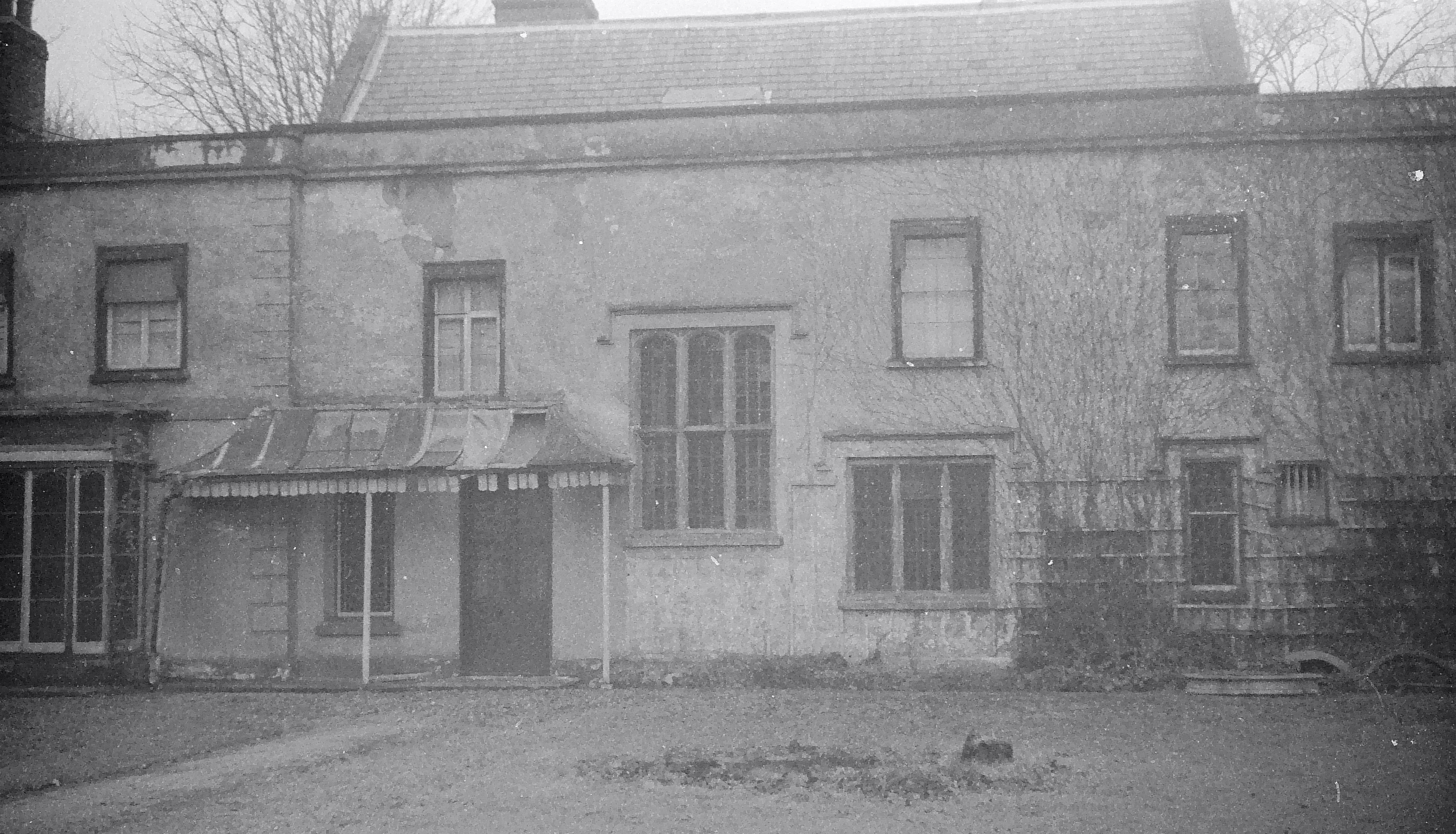
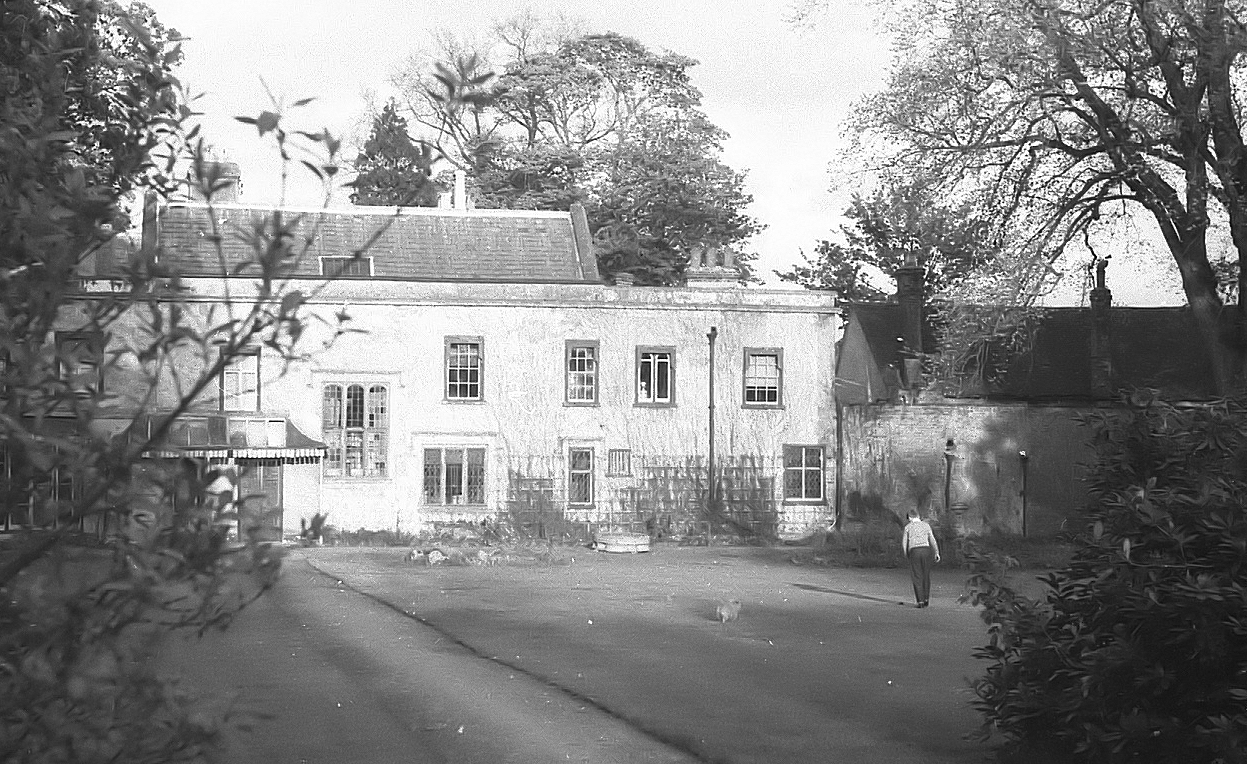
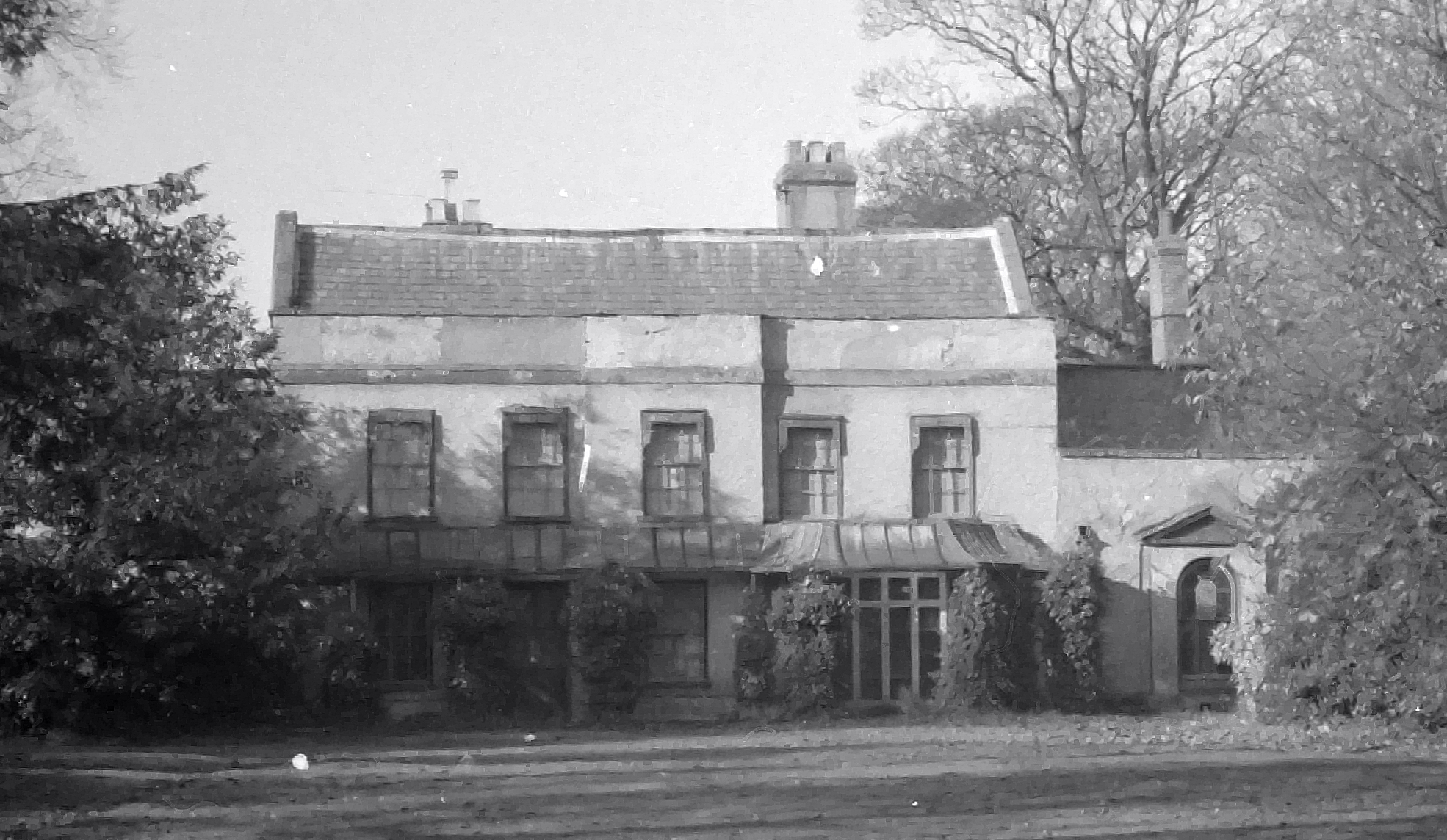
As I grew into my teens and beyond I came to much more appreciate the old walls and Old Palace House with its Tudor windows. Indeed I remember drawing the Tudor windows (badly, it has to be said) for Art homework; that would have been 1966 or ’67. And I have the following three, not very good, B&W photographs of Old Palace House from around 1964 (they may have all been taken on the same day) …

OPH rear
This shows the derelict state of the house after only a few years empty. Note the two Tudor windows at centre, plus a possible third, smaller one, to the right.

OPH rear
Another image of the rear of Old Palace House with a surprisingly tidy looking lawn. This must have been taken by my father as the young teenager (right middle-ground) is me; note also a small dog.

OPH front
And here is the front of Old Palace House, taken from the front lawn.

I also remember Theobalds Lane, between Cedars Park and Crossbrook Street (so the part off the right of the map) from the mid-1950s; it really was a country lane then. The land to the south was covered in glasshouses, which from memory grew tomatoes and cucumbers — as did a lot of the Lea Valley. The land on the north side had some glasshouses but also a couple of orchards, where I remember my mother buying apples in the autumn — that might even have been before I started school, so 1955 at latest. This was all demolished and grubbed out somewhere in the late ’50s and the housing estate built — and completed long before I went to the Grammar School in 1962 and possibly before Theobalds Grove Station reopened in November(?) 1959.

I’ll write more if I come across any more photographs.