Category Archives: food+drink

Monthly Links

Here’s another edition of our monthly guide to items you may have missed the first time around.


Science, Technology, Natural World

We’ll start off with one of my favourite subjects: wasps. We need to take sting out of our fear and loathing of wasps and welcome their importance to ecosystems

One of these days scientists will make up their minds. Unlike a while back, they’re now saying dogs arose from two populations of wolves, study finds

In good news, three Sumatran tiger cubs have been born at London Zoo. And they’ve released the usual cute cat pictures.

Scientists at London’s Kew Gardens, with many others, have found that the world’s largest waterlily is in fact a new species, now named Victoria Boliviana. That means there are now three giant waterlily species.
One of the lead scientists, Lucy T Smith, has written a blog item about the discovery. [LONG READ]
And James Wong writes about how the giant waterlilies changed architecture.

While we’re on engineering and architecture, Transport for London engineers have designed and are testing a totally new idea for cooling the London Underground.


Sexuality

In an unsurprising discovery many specialists have pointed out that male sterilisation (aka. vasectomy) isn’t going to solve (America’s) problem with abortions. [LONG READ]


Environment

While on things sexual, researchers are suggesting that grey squirrel numbers could be reduced using oral contraceptives. However I see the law of unintended consequences coming into play if this is tried.


Art, Literature, Language, Music

A look at the way our brains cope with speaking more than one language.


History, Archaeology, Anthropology

Some scientists are now reckoning that early human ancestors are one million years older than previously thought. It’ll be interesting to see if this holds up.

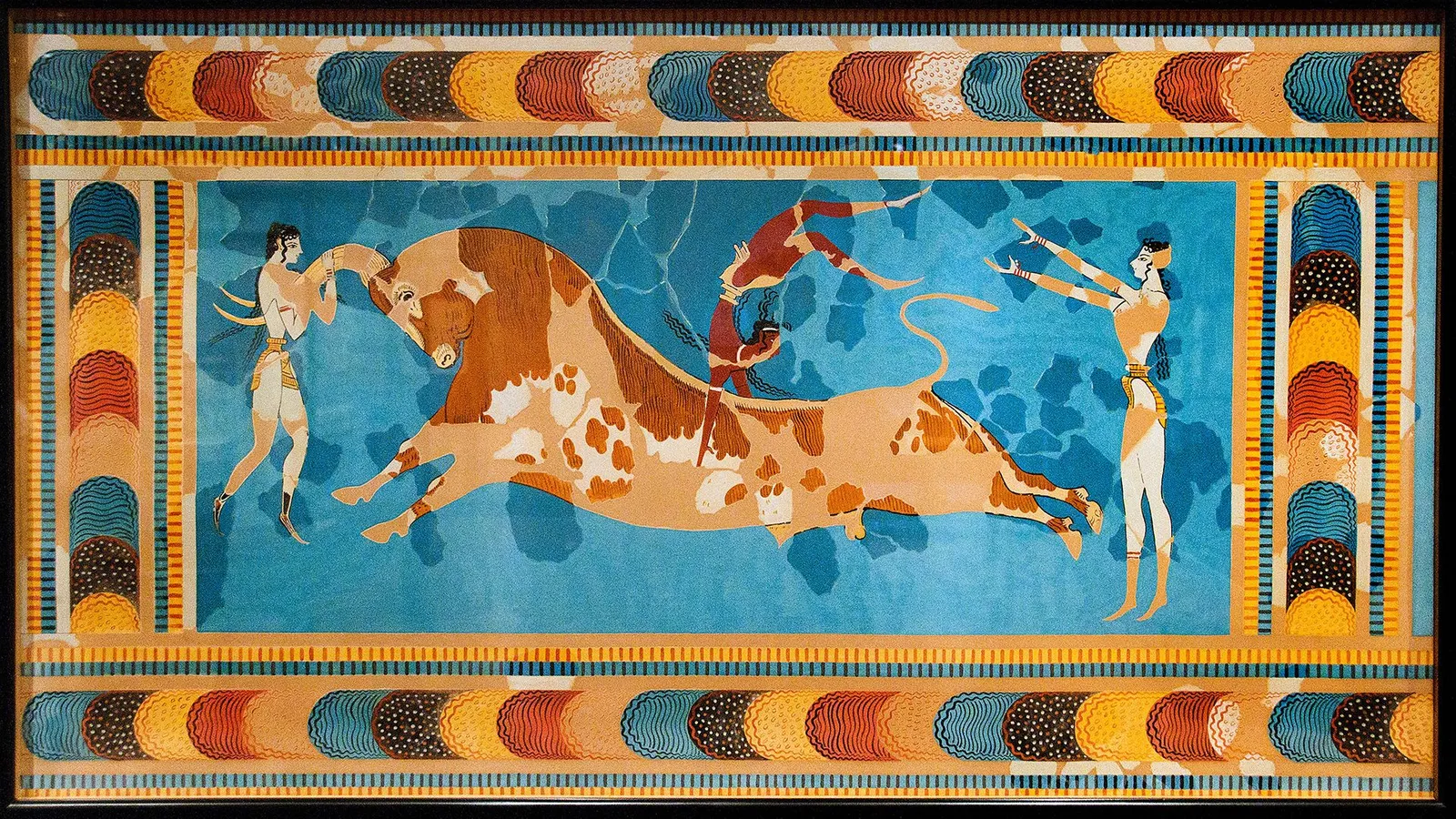
The mysterious Mycenaean and Minoan civilisations were a bedrock for much of Ancient Greece. [LONG READ]
An important hoard of Roman gold coins has been found near Norwich.

Here’s a review of Janina Ramirez’s new book Femina: A New History of the Middle Ages Through the Women Written Out of It.

Dr Eleanor Janega at Going Medieval provides a reading list on medieval abortion.
Meanwhile Scientific American takes a look at abortion and contraception in the Middle Ages. [£££]

Cavers have found a mineshaft in Cheshire which has been completely undisturbed for 200 years and is a useful time capsule.

Clandon Park House was gutted by fire in 2015. The National Trust which owns it has decided it will be mainly conserved as a ruin rather than restored to its former Palladian glory.

If you were a Victorian or Edwardian peer, what would you put in your vampire hunting kit? Well there was one for sale recently at Hanson’s Auctions; it sold for £13,000 (plus fees) some some five times it’s estimate!


London

On the interestingly named Pickle Herring Stairs.

Did you know that London had a naked Routemaster bus?

Apparently there are plans to un-culvert a stretch of the Gores Brook in Dagenham. A move which should be applauded, and repeated elsewhere.

It’s not quite London, but in our fourth item from IanVisits, he goes to Saffron Walden in Essex – a delightful small market town.


Food, Drink

The French authorities, like WHO, have now concluded there’s a definite link between charcuterie and colon cancer, due to the high level of nitrates and nitrites contained therein.

In better news, French scientists think they’ve cracked the puzzle of cultivating prized white truffles.

How safe is it to eat mouldy cheese?


Lifestyle, Personal Development, Beliefs

The Guardian goes to meet a handful of the country’s more unusual master craftsmen.

One of my favourite places is the Dungeness and the Romney Marsh. Caroline Reed in Kent Life looks at some of the best of the area.


Shock, Horror, Humour, Wow!

And finally, here’s a list of the rarest boy’s and girl’s names in the UK – 50 of each.

Culinary Adventures #88: Monkfish

Just for a change I bought some (frozen) monkfish this weekend. I’d seen a recipe somewhere and thought we should try the monkfish because, as far as I know, neither of us has ever tried it.

As always, having gleaned an idea or two, I threw the recipe away and made it up as I went along.

Once thawed I marinated the monkfish in a combination of lemon zest & juice, olive oil, black pepper, ½ teaspoon of tandoori spice mix (powder), and some fresh chopped parsley and mint. It sat in this in the fridge for about 3 hours. The fish (and marinade) was transferred to a small metal roasting tin and put in a hot oven to cook for 15-20 minutes (the first half covered with foil).

Served with hot baguette and a tomato & chicory salad. The fish was really lemony and very tasty.

Monkfish used to be dirt cheap – why else would it be an essential in a peasant dish like bouillabaisse? Now it is fairly expensive (but then so is all fish). Nonetheless I might do this again.

Culinary Adventures #87. Long Jubilee Holiday Weekend

So that’s the end of a a long Jubilee holiday weekend (plus Monday) on which we did little except eat like the gentry (as I’m sure our great-great-grandfathers would say).


Thursday
All-in-One Duck, Fennel & Asparagus Salad with Croutons
Raspberries & Cream
Ionos Greek White Wine


Friday

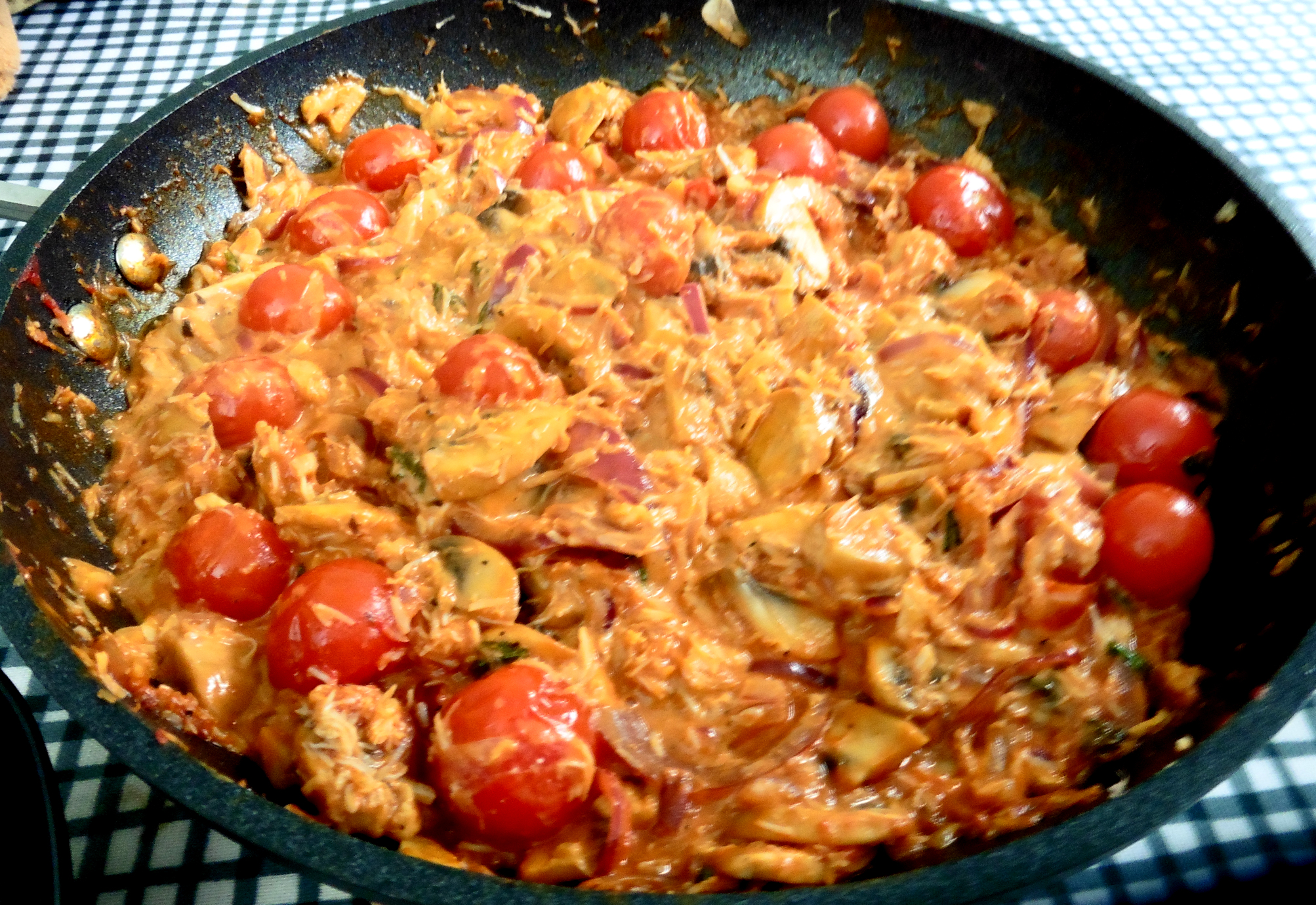
Crab, Tomato & Mushroom about to meet its Pasta

Crab with Tomato, Mushroom and Spaghetti
Strawberries & Cream
Champagne; Domaine Tariquet “Le Légendaire” Armagnac


Saturday
Tangy Stir-fry Pork with Pepper, Asparagus & Noodles
Deconstructed Ealing Mess: Strawberries & Almond Croissant Pieces with Cream
Domaine Maby Tavel Rosé 2020


Sunday
All-in-One Chicken Tikka, Asparagus & Tomato Salad with Croutons
Large, long, gin & tonic


Monday
Thick Rump Steaks, Chips & Asparagus
Summer Pudding & Cream
Champagne; Armagnac (as above)


Main courses (except Sunday) done by me; puddings and Sunday main by N.

And now we return to sausage & mash, and fish finger sandwiches. ☺☺

Culinary Adventures #85: Peach & Apple Tart

Here’s another simple concoction.

This Peach and Apple Tart is so simple I’m not even going to write a full recipe.

First off, see what you have in the cupboard. As well as a block of puff pastry we had some frozen cooking apple and a big jar of peaches in brandy. But you could use almost any fruit (or roast(?) veg if you want a savoury version).

By now you know how to make a pastry case and blind bake it. If not, see this BBC Food video; it works for shortcrust and puff pastry. I prefer to use bought puff pastry – as I did in this case – but I will make shortcrust (see here). I don’t worry about my results looking as pristine as in the video – this is neither a restaurant nor a competition!

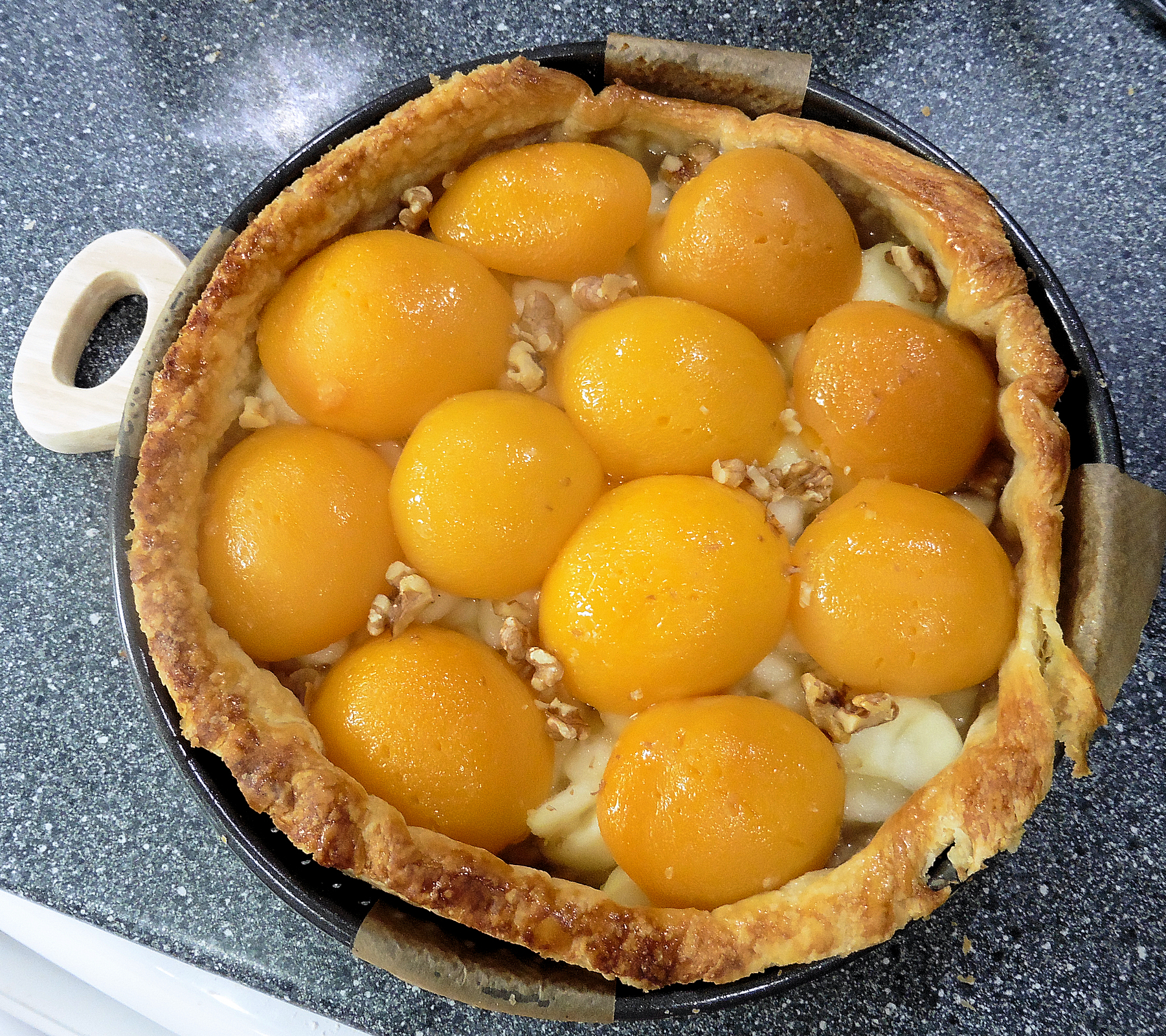
When I’d got my blind-baked pastry case, I put a layer of apple in the bottom and topped it with the peach halves. There was some of the light syrup left from the peaches, so I drizzled a couple of teaspoons of this on the apple in the gaps between the peaches. I finished off with a few fragments of walnut and glazed the edges of the pastry with some more of the syrup.

This was then baked for about 30 minutes, covered with foil for the last 15 minutes to stop the pastry over browning. When removed from the oven I immediately glazed the peaches and pastry again with the syrup, and left it too cool before removing from the tin.

Straight from the oven, having been glazed.
OK, it isn’t pretty, but we’re not in a competition.

Had I had any I would have used either glacé cherries or candied peel instead of the walnuts. But the idea here is to use what you happen to have – and if necessary be able to rustle something up quickly.

Culinary Adventures #84: Superior Cheese Scones

Here’s another experiment from last weekend. And one which turned out as brilliantly as I had hoped.


Superior Cheese Scones

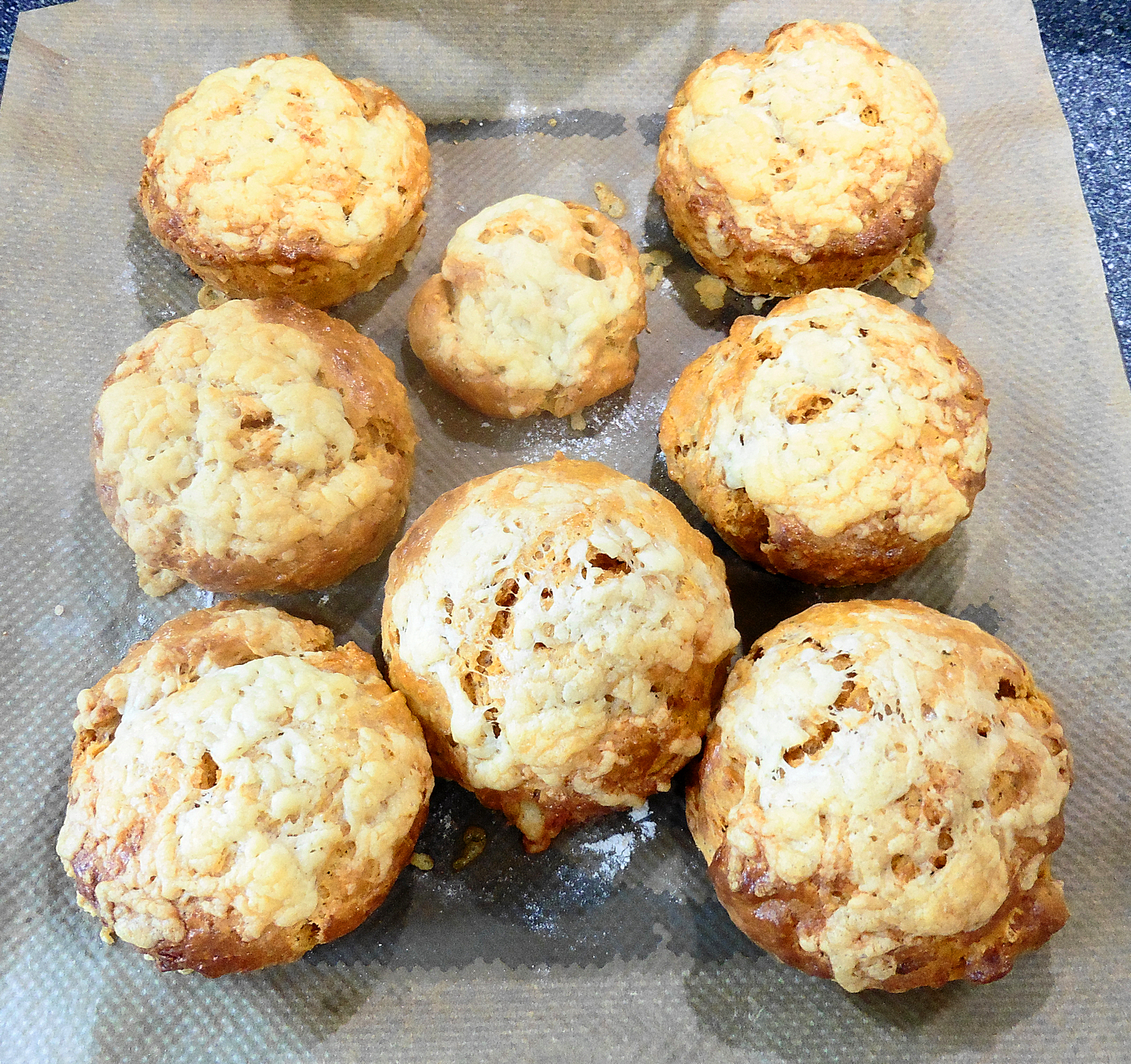
Superior Cheese Scones, straight out of the oven.
Note the tiny one from the ends of the pastry!

Makes about 12 small or 6 large
Prep Time: about 15 minutes
Cooking Time: about 25 minutes

Ingredients

280g Self-Raising Flour
50g Butter
150g Cheddar Cheese, grated; plus a bit extra for topping
160ml Milk
1 tsp Baking Powder (yes as well as the SR flour)
Pinch or two of Salt (not too much as the cheese is salty)
1 tbsp fresh ground Black Pepper
2 tbsp Tomato Paste
1 tbsp Garlic Paste
1 Egg, beaten (for glazing)

Method

  1. Preheat the oven to 200/fan 180/gas 5, and line a baking tray with parchment.
  2. Sieve the flour and baking powder into a mixing bowl, with the salt.
  3. Add the butter and rub in to combine to breadcrumb consistency.
  4. Add the cheese and black pepper and mix thoroughly.
  5. Add the tomato paste and garlic paste, followed by the milk a little at a time, to get a soft, pliable but not sticky dough. Go carefully with the milk as you may not need it all; or you may need a splash more.
  6. On a floured surface roll out the dough to about 1″ (2.5cm) thick.
  7. Use a pastry cutter to cut out circles and place them on the baking sheet, being sure to leave a gap between each one.
    Carefully reform any trimmings as they’ll likely make 1 or 2 more scones.
  8. Brush the scones with the egg, and top with a sprinkle of cheese.
  9. Bake for about 25 minutes, until risen and golden.
  10. Allow to cool on a wire rack (if they last that long!).

Notes

  1. When cut the scones should be light and moist; and they’ll be a golden orange colour from the tomato.
  2. Enjoy them with butter, or cheese, or … <well your choice>.
  3. We used Applewood cheese, which came through really well and gave the scones a lovely slightly smoked flavour, with a subtle background of tomato and garlic.
  4. If you double up the mixture, you’ll still only need one egg.
  5. I might try this with some olives instead of the tomato and garlic.

Culinary Adventures #83. Asparagus

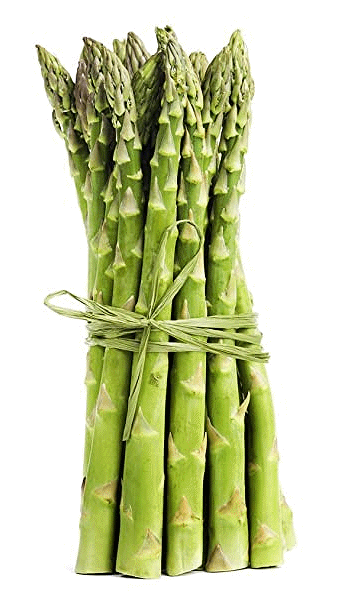
We love asparagus. But we don’t like having things flown halfway round the world if avoidable. So we normally only have British asparagus when it’s in season from April to June. And anyway British asparagus is far superior in terms of flavour, although it needs to be used as fresh as possible. Here are three tips.
Size. Don’t be afraid to buy thin asparagus spears – often called sprue. They’re going to be more tender, and often better flavoured, than the more ubiquitous tree trunks.

Trimming. You need to remove the bottom part of the asparagus spear as it will be relatively woody. Don’t use a knife and guess where to cut. Hold the spear at the bottom and about two-thirds of the way up and bend it sharply towards you. The bottom quarter or third will break off naturally leaving the most luscious top to eat. If you’re making vegetable stock, throw the woody base of the spears in that; otherwise compost them.

Cooking. This is a tip I recently spotted in a food magazine. So you’re cooking a pasta dish and want asparagus to go in it. The easiest way to cook the asparagus is to cut into 2-3cm lengths and add it to the cooking pasta about 2 minutes before the pasta is done. Then when the pasta is cooked you can spoon pasta and asparagus straight into the sauce (along with that all important spoonful of pasta water).

Culinary Adventures #82. Using Up Tomatoes

Last week we had a surplus of small, soft, tomatoes and a couple of older peppers. So I used them with some onion and garlic to make what amounted to vegetable jam, only without any added sugar. It is dead easy.

Quarter any normal size tomatoes, and skin them if you can be bothered. Chop the pepper into 2cm pieces. Sweat a chopped onion and some garlic (as much as you like) in a tablespoon of olive oil until going translucent. Add the tomatoes and pepper. (You could add any other veg, like courgette, fennel, aubergine. I’d avoid mushrooms as they’ll make the mixture a less appetising dark colour.) Season with fresh ground black pepper, add some chopped herbs and half a glass of cooking brandy. Leave to simmer gently until the tomatoes are breaking down and everything is reducing – probably about 30 minutes. When cooked, allow to cool before putting it in the fridge.

This will keep 2-3 days in the fridge; or you could eat it hot, like ratatouille.

I used ours to make a tart. Drain any excess liquid from the tomato mix. Put the mix in a blind-baked tart case and dot with dollops of Boursin cheese (or any cheese of your choice). Ours made a 20cm square flan tin and used just over half a Boursin. Bake for 20-30 minutes in an oven at about 200°C until golden; cover with foil if necessary as the Boursin tends to blacken easily. The tart is best enjoyed warm or cold, with some green salad and a glass of light white wine.

Culinary Adventures #81. Lamb’s Kidneys & Pasta

Yep, I reckon that over the last 15 or so years I’ve written at least 80 posts about my exploits in the kitchen. From now on I intend to number them, as they should include hints, tips and the like beyond just straight recipes. As an example here is one of the recent experiments.

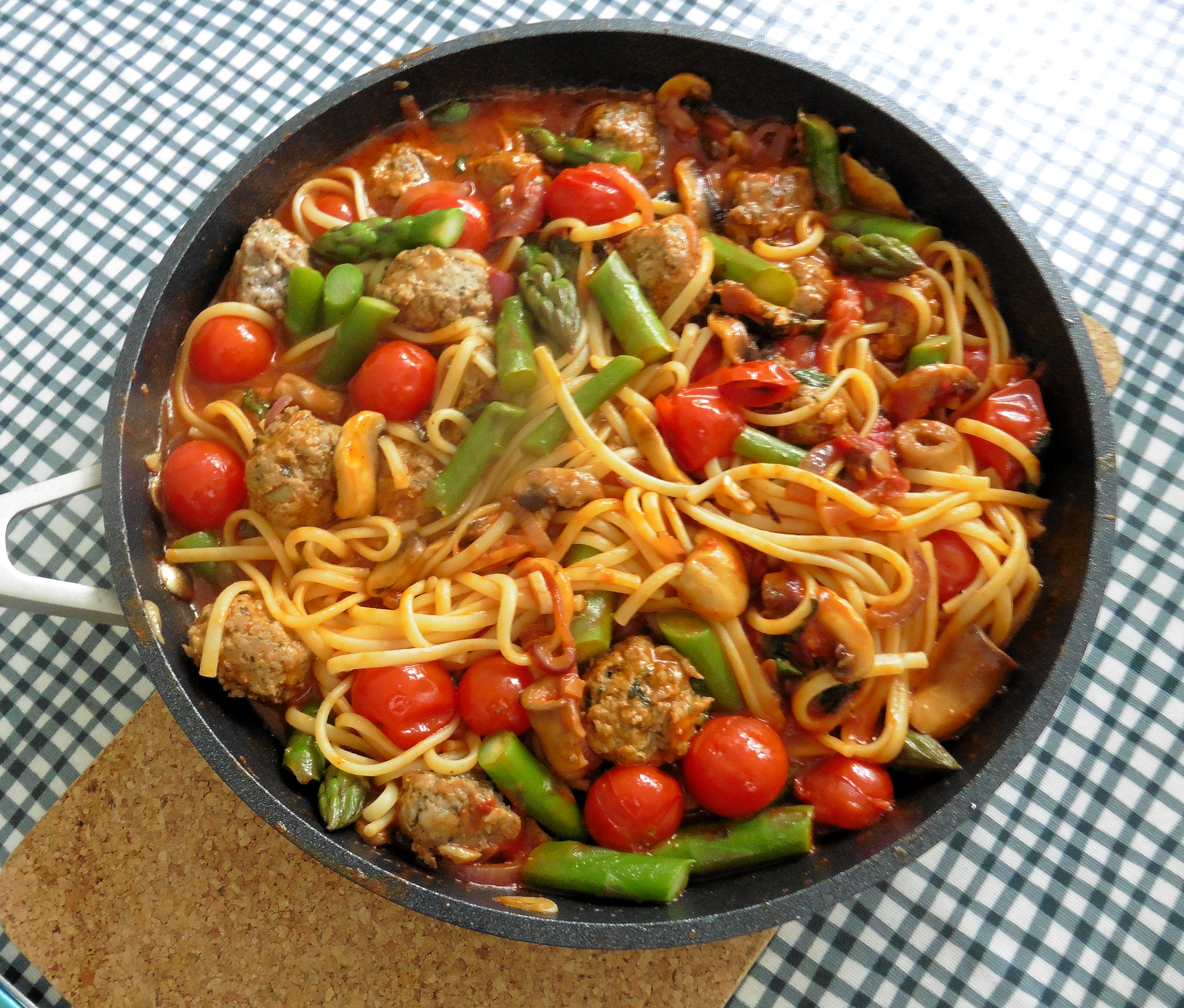
Lamb’s Kidneys with Linguini.

This was a further incarnation of my infinitely variable (see for instance here and here). I’m not going to give you the full method; you know how to cook my pasta recipes by now (if not, see the links above)!

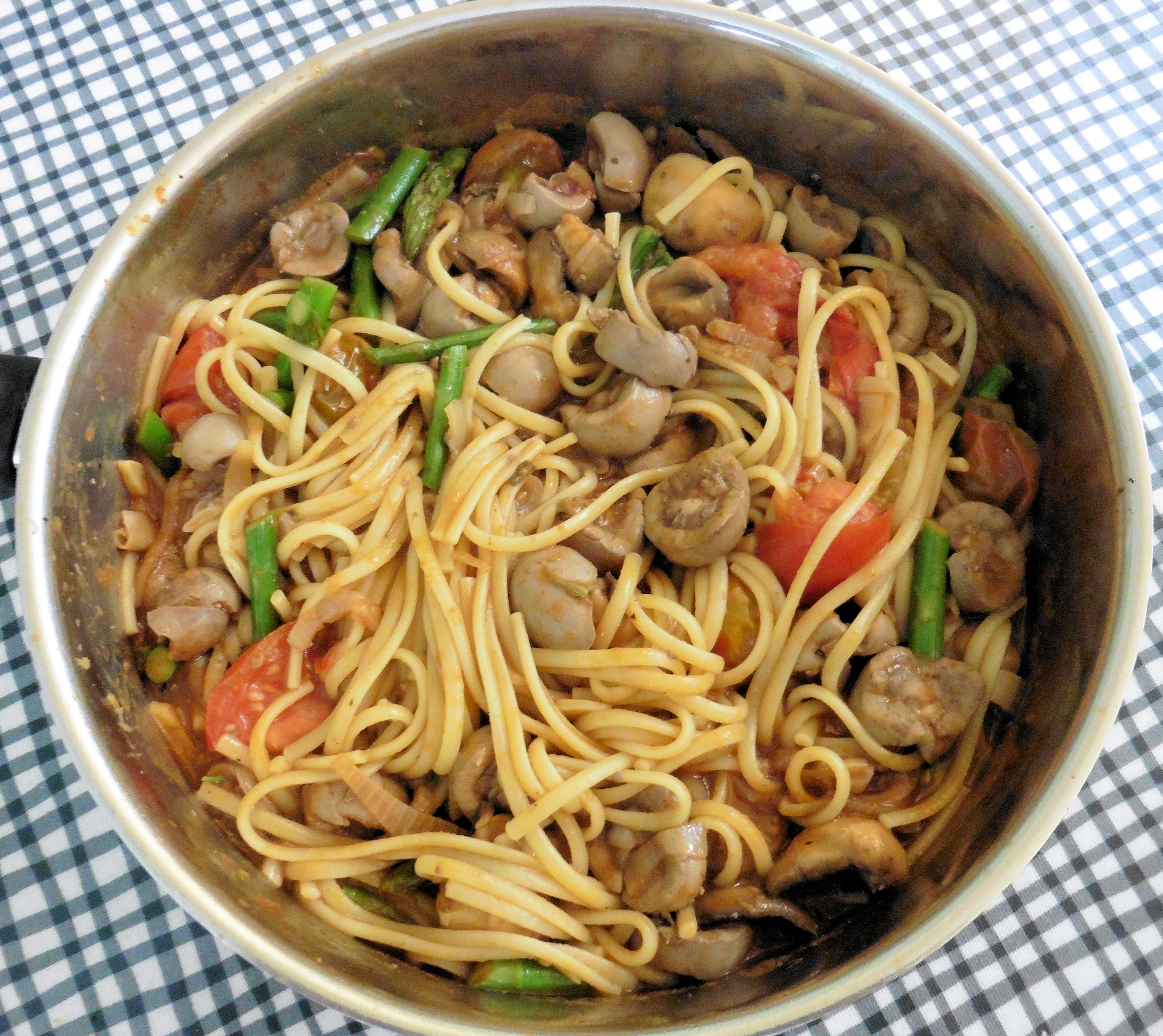
On this occasion I used a handful of lamb’s kidneys, cut into 5-10mm slices, and added cherry tomatoes, mushrooms and some asparagus (cut into 2-3cm pieces). It was the usual method, although you’ll need to ensure the kidneys go early in the pan and are well on the way to being cooked through before adding the veg.

Here’s the finished version, just before serving

It went down well with a bottle of robust red wine.

Poussin Traybake

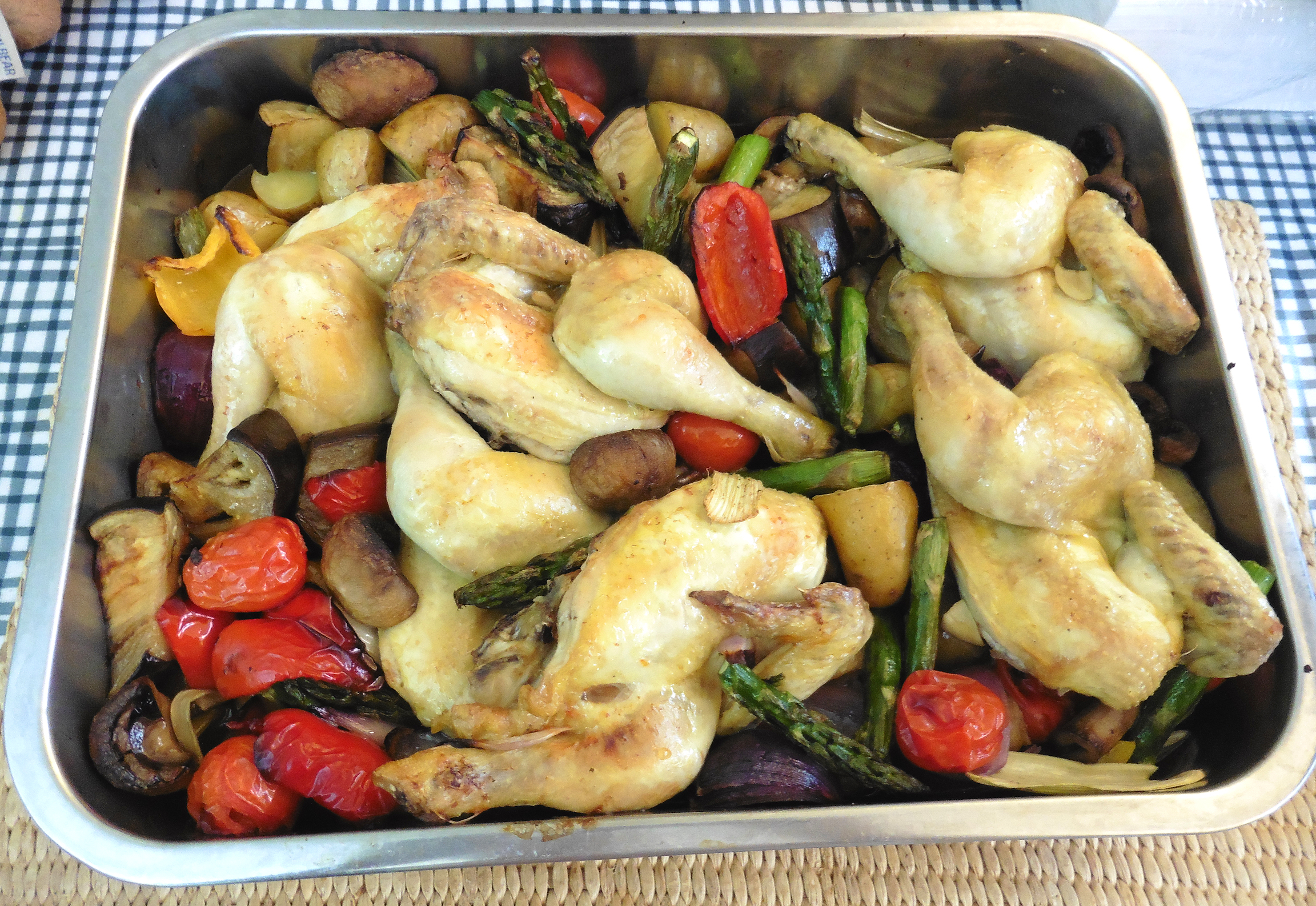
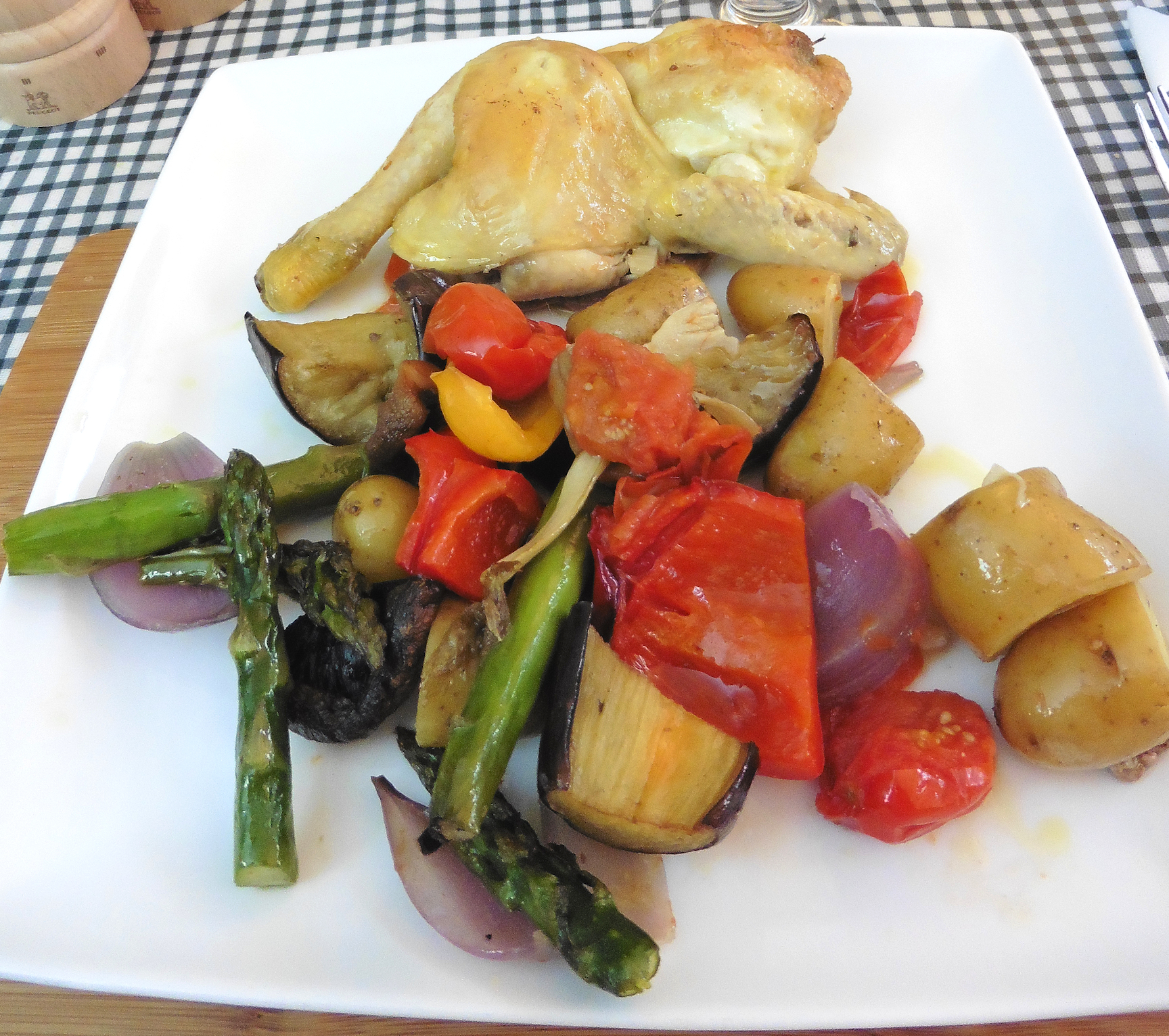
Here’s another variation on an old and infinitely variable theme which we did yesterday: poussins and mixed vegetable traybake. It went like this …


Poussin & Veg Traybake

Serves: 4 (or 2 with plenty left for cold)
Prep: 20 mins
Cook: 60 mins


We used …

  • 3 500g poussins
  • 750g small potatoes, cut into ping-pong ball size pieces, skin on
  • 2 medium onions, quartered lengthways
  • garlic, as much as you like, roughly chopped (optional)
  • 200g cherry tomatoes, left whole
  • 8-10 large mushrooms, halved
  • aubergine, cut into about 12 pieces
  • 2 peppers, each cut into 8 pieces
  • big bunch of asparagus, in 6-8cm pieces
  • olive oil
  • black pepper
Straight from the oven!

We did …

  1. Pre-heat the oven to 200°/fan 180°/gas 6.
  2. Steam the potatoes for about 10 minutes until part cooked.
  3. Meanwhile butcher the poussins: with heavy scissors cut down each side of the spine and remove it; flatten the bird and cut along the breast to get half birds piece.
  4. Put the poussins (including the spines and any trimmings) in a roasting tin along with the garlic and part cooked potatoes. Toss in 3 tbsp olive oil and a good grind of black pepper, cover with foil, and bake for about 20-25 minutes.
  5. Now prep the remaining veg, put in a large plastic bag (or a mixing bowl) and toss in another 2-3 tbsp olive oil.
  6. After 20-25 minutes, remove the roasting tin from the oven, add the vegetables and another good grind of black pepper; and mix well. (At this stage you can optionally add the juice & zest of a lemon and springs of fresh thyme.)
  7. Return to the oven, without foil, and bake for a further 30-40 minutes until the veg and chicken are cooked through.
  8. Serve with a glass (or several) of dry white wine.
Fork ready!

Notes …

  1. The poussin spines (and trimmings) will add to the stock, which is worth keeping and freezing.
  2. Any leftovers make a good cold meal the following day, or if there isn’t enough for that take the meat from the bones (including the spines!) and use for risotto.
  3. Cold roast veg makes a good sandwich filling.
  4. The lemon and thyme are optional and could be replaced with a glass of white wine, or a slug of brandy or sherry, according to taste. Omitting them altogether (as we did on this occasion) still works well!