Category Archives: environment

Beavers

I’m coming to like the idea of beavers. And no, I don’t mean those, I mean the animated furry kind. Oh maybe not that either … the animals what build dams in rivers, m’lud.
I used not to think much of these animals, but research seems to be showing that they really do have a beneficial effect on water management, otherwise known as flood control.
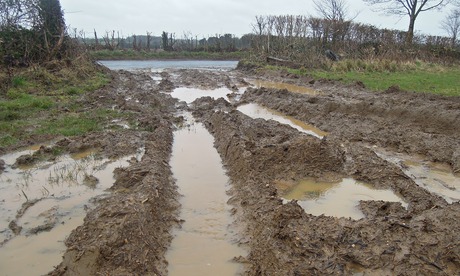
And beavers are back on the agenda (well, maybe) because a large part of southern England is under water thanks to a record breaking deluge over the last 2-3 months. December and January rainfall has been the heaviest in England and Wales since records began 240 years ago — and it looks as if February is about to join them.
According to New Scientist the rains have been exacerbated by the weather in Indonesia and the tropical west Pacific — no I don’t get that either but then I’m not a meteorologist. But regardless, we’ve had several oceans of rain recently and consequently there is much flooding in southern England.
There is an argument going on about whether rivers were dredged sufficiently, and whether if they were it would have made any difference. On the one side we appear to have the UK government who say rivers must be dredged more and they’ll pay — mainly because they’re trying to appease agribusiness. On the other hand every hydrologist being quoted is saying dredging would, at best, have made no difference and would likely have made things worse.


I think I might just trust the hydrologists rather than the politicians.
Joining in with the hydrologists is environmentalist and thinker George Monbiot. His piece in the Guardian at the end of January mocks the politicians’ unseemly positions but also makes many salient environmental points which the politicians appear to have missed (or ignored).
Quoting from an Environment Agency report, Monbiot says:

“Dredging of river channels does not prevent flooding during extreme river flows … The concept of dredging to prevent extreme flooding is equivalent to trying to squeeze the volume of water held by a floodplain within the volume of water held in the river channel. Since the floodplain volume is usually many times larger than the channel volume, the concept becomes a major engineering project and a major environmental change.”

He then says:

Is that not bleeding obvious? A river’s capacity is tiny by comparison to the catchment from which it draws its water. You can increase the flow of a river by dredging, but that is likely to cause faster and more dangerous floods downstream when the water hits the nearest urban bridge … If you cut it off from its floodplain by turning it into a deep trench, you might raise its capacity from, say, 2% of the water moving through the catchment to 4%. You will have solved nothing while creating a host of new problems.
Among these problems, the Environment Agency points out, are:
1. Massive expense. Once you have started dredging, “it must be repeated after every extreme flood, as the river silts up again”.
2. More dangerous rivers: “Removing river bank vegetation such as trees and shrubs decreases bank stability and increases erosion and siltation.”
3. The destabilisation of bridges, weirs, culverts and river walls, whose foundations are undermined by deepening the channel: “If the river channels are dredged and structures are not realigned, ‘Pinch Points’ at structures would occur. This would increase the risk of flooding at the structure.” That means more expense and more danger.
4. Destruction of the natural world: “Removing gravel from river beds by dredging leads to the loss of spawning grounds for fish, and can cause loss of some species. Removing river bank soils disturbs the habitat of river bank fauna such as otters and water voles.”

Yep, that’s right: dredging is a tool for improving navigation not land drainage. If you want to prevent flooding you need to do things like:

• More trees and bogs in the uplands — reconnecting rivers with their floodplains in places where it is safe to flood …
• Making those floodplains rougher by planting trees and other deep vegetation to help hold back the water — lowering the banks and de-canalising the upper reaches, allowing rivers once more to create meanders and braids and oxbow lakes. These trap the load they carry and sap much of their destructive energy.

So how should all this be done?
Well one answer appears to be beavers!


Yes, beavers. The pesky furry critters what fell trees and build dams.
We used to have beavers in this country but they were hunted to extinction here several hundred years ago — they lasted until Tudor times in Scotland but disappeared from England long before that.
Why beavers? Well to quote from a Wild Wood Trust document:

Beaver are considered to be a ‘key-stone’ species because they have the ability to create and maintain wetlands by building dams and digging ditches. They also create coppice, selectively felled areas of woodland. In doing this they provide essential habitat for many other species of plant and animal. Wetland areas and coppice must currently be maintained artificially, at significant cost to the public. Beaver damming activity has also been observed to filter pollutants out of the water, leaving streams cleaner.
Wetlands are … fragile ecosystems, but they can also act as a flood defence and could protect homes across the country. After heavy rainfall, wetland areas and flood plains act as a sponge, holding excess water and releasing it slowly, preventing sudden rises in water level and flash floods …
Beavers have been reintroduced across Europe, and have not caused any serious ecological problems. Reintroductions have been extremely successful as long as the population density is low enough that the beavers do not come into conflict with human activity.

There’s a fuller report, by Natural England and People’s Trust for Endangered Species, on reintroducing beavers to England here.
Sure, beavers likely aren’t going to do a lot of good actually on the Somerset Levels. But they will help if they are present on the uplands which drain into the Levels. One of the keys seems to be the need to manage water flow much higher up the valleys than the actual areas currently being flooded.
But of course that’s counter-intuitive both to the affected residents and to politicians. And of course neither trusts the experts who they employ. If you’re not going to listen to experts — insisting instead on a DIY fuck-up — then don’t waste money employing them.
So the bottom line is we need to reintroduce beavers.
What a great idea!
Meanwhile I’ll leave you with George Monbiot’s final salvo:

Cameron’s dredge pledge is like the badger cull. It is useless. It is counter-productive. But it keeps the farmers happy and allows the government to be seen to be doing something: something decisive and muscular and visible. And that, in these dismal times, appears to be all that counts.

Coming up in February

Interesting events and anniversaries in the coming month.
1 February
Start of the last London Frost Fair, 1814 which lasted four days, during which time an elephant was led across the river below Blackfriars Bridge. This was the last frost fair because the climate was growing milder; old London Bridge was demolished in 1831 and replaced with a new bridge with wider arches, allowing the tide to flow more freely; and the river was embanked in stages during the 19th century, all of which made it less likely to freeze.


2 February
Candlemas. This is the Christian festival 40 days after Christmas of the presentation of Jesus at the temple. This day is also celebrated as Imbolc in the Wiccan/Pagan calendar (although some traditions celebrate on 1 February) in honour of Brigid, the goddess of fertility, fire and healing. It is also a time of increasing strength for the sun god and is Groundhog Day in the USA.
2 February
British Yorkshire Pudding Day. What better way to cheer up a miserable winter’s day than with Yorkshire Pudding? Read more here >>>>
10-16 February 2014
Go Green Week. The idea for Go Green Week is to encourage people, especially young people, to think about the environment and climate change. Read more here >>>>

12 February.
Bagpuss. On this day in 1974 BBC TV showed the first ever episode of the children’s animated series Bagpuss, an old, saggy cloth cat, baggy, and a bit loose at the seams. Sadly it was a bit too late for my childhood (I was a research student by then) but it was (and is) still fun and became one of Peter Firmin and Oliver Postgate’s iconic series. Read more here >>>>
14-21 February 2014
National Nest Box Week. Run by the British Trust for Ornithology, National Nestbox week is to encourage us to put up nestboxes for the birds. Why? Because so often these birds are declining due to a scarcity of nest sites as mature trees are cut down. This is also a good time to check existing nestboxes and (if they’re not inhabited by anything hibernating — insects, dormice, etc.) to clean them our before the new nesting season begins. Read more here >>>>
15 February.
Galileo Galilei was born this day in 1564. Galileo was an Italian physicist, mathematician, astronomer and philosopher who played a major role in the scientific revolution. His achievements included improvements to the telescope (and thus astronomical observations) and support for Copernicus’ theory of heliocentrism. For this latter Galileo was arraigned by the Inquisition, made to recant and sentenced to house arrest for the remainder of his life. Galileo was one of the all time giants of science. Read more here >>>>
17-23 February 2014
Chip Week. It seems that we Brits can’t get enough chips, so let’s admit defeat and celebrate! What? You mean they’re bad for us? I don’t believe it! Read more here >>>>

25 February.
Sir John Tenniel, British illustrator, graphic humourist and political cartoonist, died this day in 1914 just a few days short of his 94th birthday. He is perhaps best known today for his illustrations to Lewis Carroll’s Alice’s Adventures in Wonderland and Through the Looking-Glass and What Alice Found There. Read more here >>>>

Festival of Winter Walks

Ramblers (formerly the Ramblers Association) and Walking for Health are holding their Festival of Winter Walks over Christmas and New Year, 21 December 2013 to 5 January 2014.
The Festival of Winter Walks is a great opportunity to discover the pleasures and benefits of walking while making the best of winter days and kick-starting those New Year’s resolutions!
Free, fun and open to everyone walks will take place around the country during the festival. Chosen and led by Ramblers and Walking for Health volunteers, the walks showcase Britain at its wintry best. Many of the walks are short and family-friendly, although there are always plenty of longer walks for the seasoned hiker too.
As always there is a lot more over on the Ramblers website at www.ramblers.org.uk/what-we-do/events-index/2013/december/festival-of-winter-walks.aspx

National Road Safety Week

18-24 November is National Road Safety Week.
We’re all human: we daydream, get side-tracked, run late and make mistakes. But on roads, distractions can be fatal. National Road Safety Week 2013 focuses on the theme of tuning in to road safety and avoiding distractions.
When using roads, we all need to tune in to road safety and give it our full attention — particularly if we’re at the wheel, but also when we’re walking, cycling, skating, running, you name it — to keep ourselves and each other safe.


And that means not just instilling the awareness into our children — and I remember endless amounts of this when I was a kid — but also remaining alert ourselves and doing the sensible things like not using our mobile phones when on the move.
As always there is much more about National Road Safety Week over on their website at www.roadsafetyweek.org.uk.

Goats on the Roof

Goat Grazing Fun Day in London
Saturday 19th October from 12 noon

Live goats graze the wildflower meadow on the roof of the Queen Elizabeth Hall, on London’s South Bank.
To mark the end of the season, and to help the wildflowers grow stronger next year, goats from Vauxhall City Farm will be nibbling away at the roof garden. Why? Because in the wild, animals would naturally keep wildflower meadows in good shape.
There will apparently be lots of other free activities during the afternoon, including seeds and plants from the roof garden being given away free, woodworking and refreshments.
So why not enjoy this opportunity to see a natural process played out in the urban jungle.
More details at www.southbankcentre.co.uk/whatson/goat-grazing-fun-day-79295
Such a shame I can’t go. Goats eating a meadow on a London roof really should be something to have done/seen.

Heritage Open Days

Starting tomorrow there are four days of Heritage Open Days (so that’s Thursday 12 through Sunday 15 September).
Heritage Open Days celebrates England’s fantastic architecture and culture by offering free access to places that are usually closed to the public or normally charge for admission.
Every year on four days in September, buildings of every age, style and function throw open their doors. It is a once-a-year chance to discover architectural treasures and enjoy a wide range of tours, events and activities that bring local history and culture to life.


And that’s everywhere from Lanhydrock in Cornwall (above) to Berwick Town Hall via Sudbury Hall in Derbyshire.
There are maps, searchable lists and lots more information on the Heritage Open Days website at www.heritageopendays.org.uk.

National Zero Waste Week

Starting next Monday we bring you National Zero Waste Week which runs from 2 to 8 September.
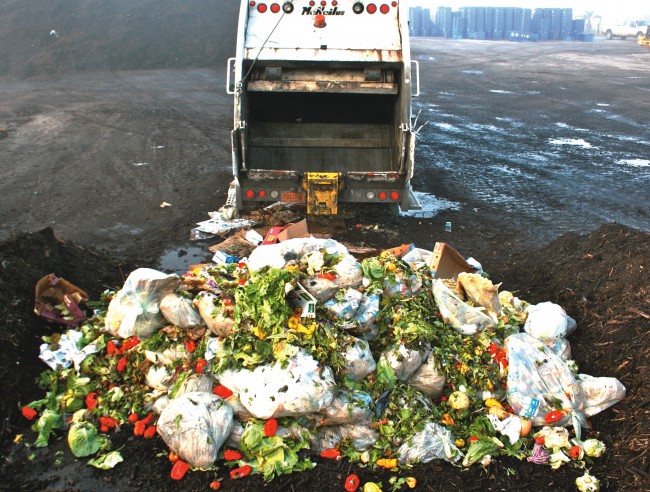
National Zero Waste Week, which is now in its sixth year, invites you to reduce landfill waste and save money. This year they will be concentrating on tackling food waste. There is research which suggests that on average in the UK we bin a quarter of all the food which is produced. That is northing short of scandalous!


So yes, the aim of National Zero Waste Week is to drastically cut the amount of stuff which goes into landfill by either (re)using it or recycling it. Ultimately it is for the good of our environment, and almost certainly our wallets too!
As always there is more over on their website at www.zerowasteweek.co.uk.

HS2

So who should be most in favour of HS2, the proposed high-speed rail connection from London to Birmingham and the north?
Well if it is as essential to the economy as we are told it is, business should be lobbying hard in its favour.
Are they? … No, they are not!


According to a report in yesterday’s Independent, and elsewhere, the Institute of Directors (ie. the captains of our businesses) considers HS2 “a giant folly”. Just 41% of IoD members consider HS2 important for their business and only 27% see it as good value for money.

Businesses know value for money when they see it, and our research shows that they don’t see it in the Government’s case for HS2 … The IoD cannot support the Government’s current economic case for HS2 … We agree with the need for key infrastructure spending, but the business case for HS2 simply is not there. The money would be far better spent elsewhere and in a way that will benefit much more of the country. Investment in the West and East Coast main lines, combined with a variety of other infrastructure projects, would be a far more sensible option.
[Simon Walker, IoD Director-General]

Interestingly there was another report in the Telegraph last December (which I had not previously picked up) exposing the fact that the projected passenger numbers also do not stack up with the business case.
Hurrah for some common sense! I’ve been saying this since HS2 was first mooted. Cynically I’d say that HS2 is the rail industry willy-waving and indulging in self-aggrandisement to distract from the fact that is hasn’t/can’t sort out the current rail infrastructure and get that working efficiently — something which should cost a lot less than the currently projected £50billion price tag for HS2. Let’s sort out what we have first and then see if we still need such a massive, environmentally and financially destructive project as HS2.
And anyway, in the current economic climate, do we really have this amount of money to throw around?

National Allotment Week

5-11 August is National Allotment Week.
National Allotments Garden Trust and the National Society of Allotment and Leisure Gardeners will be teaming up with local authorities to recognise the importance of allotments — not just locally, but nationally too.
Following on from the success of the 2012 event they are bringing back their ‘Party on the Plot’ and inviting allotment societies across the country to dust off their bunting and BBQs, spread the word and hold a jolly good knees-up!


Too often allotments are thought of as places that only grow the humble potato or everyday carrot, but in truth they offer a cornucopia of delicious treats, including some of our most delicious fruit: strawberries, raspberries and gooseberries; blackberries, plums and apples.
Allotments need protecting from development plans and budget cuts, so now is the time to get involved and help ensure they survive.
As always there is more information on the National Allotment Week website.