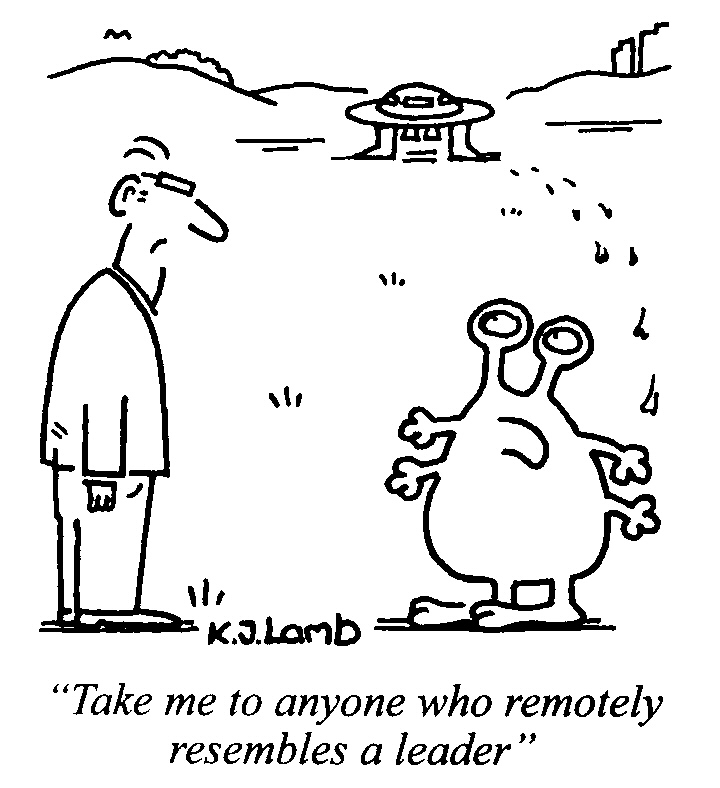
From Private Eye

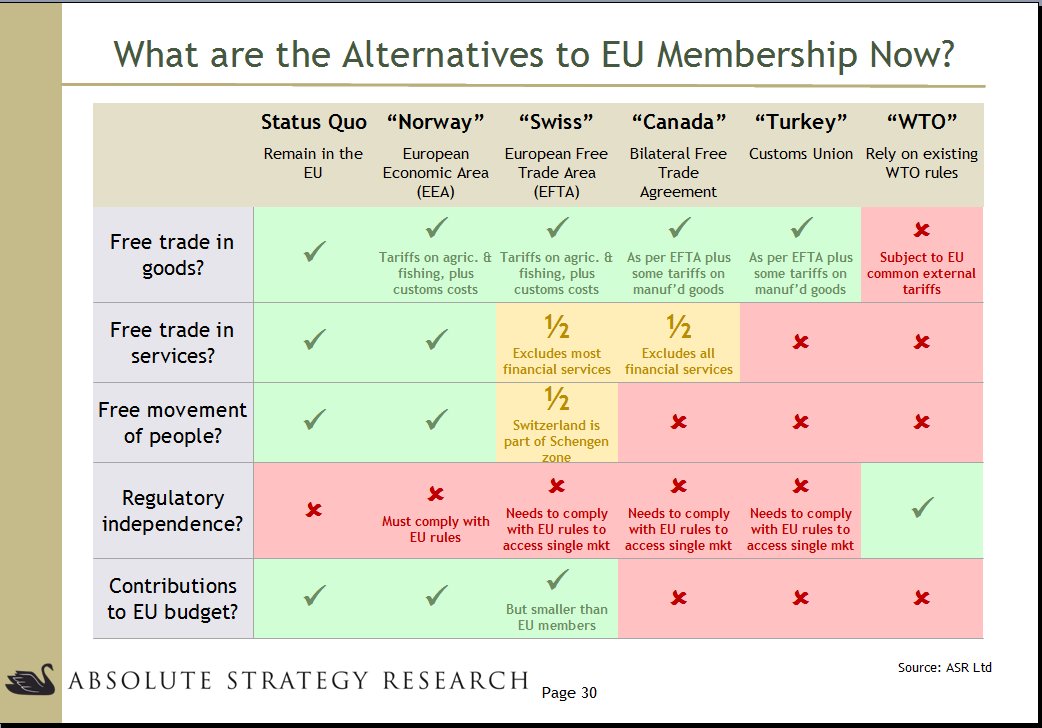
Earlier in the week I came across this graphic, which seems to nicely sum up our options for trade arrangements following exit from the EU — and compares them with the EU.
There is hope that some MPs, at least, are beginning to see some sense.
The Commons Home Affairs Select Committee has issued an interim report on possible changes to the law on prostitution with MPs coming down on the side of decriminalisation.

Yes, I’m afraid the fallout from the Brexit vote continues.
Last evening I picked up an interesting item on the BBC News feed in which the EU Trade Commissioner, Cecilia Malmstrom, points out the realities of the UK’s exit negotiations. (The article is short, very clear and worth a 5 minute read.)
The Commissioner is quoted as saying “There are actually two negotiations. First you exit, and then you negotiate the new relationship, whatever that is”. This is because:
So basically we have to negotiate just the exit deal (ie. the transitional arrangements). Then, and only then, can we start negotiations to join the EEA and/or arrange bilateral trade deals with other countries. And I have seen it suggested that negotiation to join the EEA normally takes 5-7 years, and bilateral trade deals aren’t usually a lot quicker.
Meanwhile the UK has to trade (with everyone!) under the WTO rules, which may not be to everyone’s liking or advantage — WTO rules restrict the circumstances in which countries discriminate in favour of each other in trade; they must apply to each other the tariffs they apply against the rest of the world.
Unfortunately many people, including some MPs like Geraint Davies writing in yesterday’s Guardian, clearly have no understanding of this. The two year clock started by invoking TEU Article 50 covers only the exit negotiations, and until that clock expires no other negotiations may legally take place.
So basically, if we trigger Article 50, we’re stuffed for years before we can even start to see a route out of the caldera.
A few more (random-ish) thoughts on the machinations behind all the mess of Brexit.
It ought to be the happiness and glory of a representative to live in the strictest union, the closest correspondence, and the most unreserved communication with his constituents. Their wishes ought to have great weight with him; their opinion, high respect; their business, unremitted attention. It is his duty to sacrifice his repose, his pleasures, his satisfactions, to theirs; and above all, ever, and in all cases, to prefer their interest to his own. But his unbiased opinion, his mature judgment, his enlightened conscience, he ought not to sacrifice to you, to any man, or to any set of men living. These he does not derive from your pleasure; no, nor from the law and the constitution. They are a trust from Providence, for the abuse of which he is deeply answerable. Your representative owes you, not his industry only, but his judgment; and he betrays, instead of serving you, if he sacrifices it to your opinion …
To deliver an opinion, is the right of all men; that of constituents is a weighty and respectable opinion, which a representative ought always to rejoice to hear; and which he ought always most seriously to consider. But authoritative instructions; mandates issued, which the member is bound blindly and implicitly to obey, to vote, and to argue for, though contrary to the clearest conviction of his judgment and conscience, these are things utterly unknown to the laws of this land, and which arise from a fundamental mistake of the whole order and tenor of our constitution.
However, again, not everyone agrees with this stance with many of the opinion that an MP is required to reflect the majority wishes of his/her constituents.
More snippets when there is anything useful. This one could run and run!
Over the last few days everyone has done their fair share of wailing and gnashing of teeth in response to the referendum result to leave the EU.
Whether the voters meant what they said or not; and whether we like it or not; that was the opinion of the British voters.
While I would prefer to remain in the EU, it is now time for us all to shut up and get on with life.
Why? Because we have no option.
All the possible routes for changing the decision are essentially closed. This is outlined in a very interesting Briefing Paper Brexit: What happens next? from the House of Commons Library (which is about as independent as you can get) issued on Friday 24 June.
Let’s look at some of the options, through the eyes of this Briefing Paper.
[Note that this is NOT legal opinion but my reading of the aforementioned Briefing Paper and a number of other legal pieces I’ve seen.]
Must the Government respect the vote to leave?
No, but politically it is highly unlikely that the Government would ignore the result.
Referring to a David Allen Green column in the Financial Times on 14 June:
What happens next in the event of a vote to leave is therefore a matter of politics not law. It will come down to what is politically expedient and practicable.
If any future Prime Minister ignores the result, basically they cook their goose. And they are all astute enough to know that.
What happens now in the EU and the UK?
As far as you and I are concerned, nothing in the immediate term.
The UK ‘deal’ agreed in February 2016 on the UK in the EU will not come into force.
Although the UK has voted to leave the EU, from 24 June until the point of departure from the EU the UK is still a member of the EU. Nothing about the UK’s EU membership will change initially.
… … …
The UK will continue to apply EU law and to participate in the making of EU law in Brussels. There is no need to give immediate notice of withdrawal under Article 50 TEU [Treaty on European Union] …
As David Cameron has said he will not lead the exit negotiations, there will now be a period of three or four months before a new prime minister will notify the European Council of its intention to withdraw. During this time the UK and the EU will be able to “take stock and work out who, and by reference to what strategy, the negotiations will be conducted”.
It is likely that parliament will need to set up a joint Lords & Commons select committee to scrutinise the withdrawal procedure. This is going to cost us as they will need large numbers of support staff, office space etc. — there is an estimated 80K pages of legislation which will need scrutinising.
Is Article 50 TEU the only route to leaving the EU?
The Article 50 TEU route is the legal way to leave the EU under EU and international treaty law …
… … …
The UK Government has ratified a whole series of EU Treaties, meaning that it is bound by the obligations under those treaties as a matter of international law. Repealing the European Communities Act 1972 and/or other EU-based domestic legislation would not remove those international law obligations.
One of the main principles of customary international law is that agreements are binding and must be performed in good faith … [this is] reaffirmed in article 26 of the 1969 Vienna Convention on the Law of Treaties, to which the UK is a party.
Of course we could just ignore the rules, break the treaty obligations and be in contempt of international law. Who knows what the consequences of such an approach would be, but you can be sure it would not be pretty.
What about the devolution angle?
Quoting Sionaidh Douglas-Scott of Oxford University the Briefing Paper suggests that although the UK Parliament may repeal the European Communities Act 1972, this would not bring an end to the domestic incorporation of EU law in the devolved nations.
It would still be necessary to amend the relevant parts of devolution legislation. But this would be no simple matter and could lead to a constitutional crisis. Although the UK Parliament may amend the devolution Acts, the UK government has stated that it will not normally legislate on a devolved matter without the consent of the devolved legislature. This requires a Legislative Consent Motion [in the devolved parliaments] However, the devolved legislatures might be reluctant to grant assent, especially as one feature of the ‘Vow’ made to the Scottish electorate was a commitment to entrench the Scottish Parliament’s powers … So the need to amend devolution legislation renders a UK EU exit constitutionally highly problematic.
And that says nothing about the peace agreements in Northern Ireland.
What if Parliament does not pass legislation to implement EU withdrawal?
Parliament could vote against the adoption of any legislation linked to withdrawal – an amendment to or repeal of the ECA, for example … but this would not prevent the UK’s exit from the EU if the UK Government had already notified the EU under Article 50 TEU. Article 50 stipulates withdrawal two years from formal notification, with or without a withdrawal agreement.
As I read it, and I’m sure I’ve seen this opinion in print somewhere, the decision to invoke Article 50 is with the government, not parliament. Once Article 50 is invoked then separation will happen automatically regardless of whether there is any agreement or not — no-one can stop this, but the timescale could be extended by consent of all 27 remaining EU member states. Parliament cannot legislate to prevent separation if Article 50 has been invoked. All they could do is,
Could Scotland stay in the EU without the rest of the UK?
Essentially, no.
Scotland is currently not a ‘state’ under international law capable of signing and ratifying international treaties. Nor does it have power over international relations, which are reserved to Westminster … under the Scotland Act 1998:
… … …
Scotland could not therefore be an EU Member State in its own right, or even sign an Association Agreement with the EU, however much either side wished for it.
But if Scotland became independent?
The answer, essentially, still seems to be, no. International law governs how treaties are continued if a signatory state divides. Reading the Briefing Paper these rules seem to mean Scotland would have to gain independence and then apply to join the EU.
[But this is complex and I refer you read the Briefing Paper in detail.]
A second independence referendum (in Scotland)?
Although Nicola Sturgeon considers the trigger of “significant and Material change in circumstances” in the SNP 2016 election manifesto has been fulfilled, she still doesn’t have the power to hold another referendum.
The Scotland Act 2016 did not give the Scottish Parliament law-making powers in relation to referendums, so UK consent would be required for another referendum.
Scotland’s 2014 independence referendum was called under an agreement between the UK Government and the Scottish Government to devolve the power to hold such a referendum for a limited period, ending on 31 December 2014.
Can France re-negotiate the Le Touquet treaty?
This bilateral treaty governs the ‘juxtaposed’ immigration controls for France and the UK.
… … …
France could break the Le Touquet treaty unilaterally (even if the UK did not leave the EU).
Article 23 of the Treaty of Le Touquet, establishing ‘juxtaposed’ immigration controls for France and the UK, [allows] either France or the UK [to] terminate the arrangements [unilaterally] …
What about the EU itself; what can it do?
As I understand it the EU can do little except get their ducks lined up and sit on their hands until Article 50 is invoked. They cannot force the UK to invoke Article 50 (whether sooner or later, and despite what they might like) unless or until it wishes to do so. And invoking Article 50 is the thing which triggers the formal exit negotiations. Whether the EU would be prepared to enter into informal negotiations prior to the UK invoking Article 50 is a moot point, but they seem to have said they will not do so — and why should they?
So what about this parliamentary petition to (retrospectively) change the referendum rules or force another vote?
That, my friend, is a side show; albeit a popular one. It isn’t going to happen, even if it does get debated in parliament. Parliament almost never indulges in retrospective legislation. And the government would need to find good material cause to politically justify running another referendum. Doing anything else would be political suicide — but then we’ve seen a fair amount of that already.
So what can we do?
Basically nothing. We’ve (collectively) told the politicians what we want them to do. They have to work out for themselves how to manage the fall-out — that’s what they’re paid to do.
All we can do is to get on with life and watch the fireworks. Keep an eye on your finances; don’t spend money you haven’t got; and be prepared to move money around — but then you do that anyway. Markets can go up as well as down; so can salaries; and pensions; and prices. Just stay watchful.
And we still need to watch what our “lords & masters” are doing and ensure they are held to account — especially now.
So, I’m sorry, guys & gals, we just have to get on with the mess we (collectively) have made for ourselves and live our lives as best we can.
In the words of the Irish comedian, the late Dave Allen, “May your god go with you”.
I want my country back
This is the constant refrain of the collection of spivs and barrow-boys who are hectoring us to vote to leave the EU.
And which of us wouldn’t agree?
I certainly would like my country back. But not the country of the “good old days” — formerly known as “these trying times” — as so well hammed up by AA Gill in last weekend’s Sunday Times [no link to the original as it’s paywalled, but the text has been posted on Facebook].
What I want is a country of sanity.
A country without gratuitous violence and sexual abuse.
A country where we all treat everyone as an equal …
… and other people as we would wish to be treated ourselves.
A country which is not run by self-serving, sleazy, megalomaniacs.
A country where there is a right to privacy, but also transparent & honest government …
… a right to free education up to and including university first degree level …
… a right to properly funded, excellent healthcare, free at the point of use, for all.
A society without corporate greed and unnecessary obsolescence.
A country which cares more for the environment than it does for corporate profit.
A country without a “me, me, me” “now, now, now” culture of instant gratification and ever mounting personal debt.
A country where sexuality, nudity and “soft drug” use are normalised, not marginalised and criminalised.
A country where (like Bhutan) Gross National Happiness is more important than Gross National Product as the measure of success.
I don’t care about the golden days of the Hovis bread adverts, when all men wore hats and ties, beer was 2p a pint, and we all lived in hovels with a privvy at the bottom of the yard. I’m not asking for them to return. And I’m not asking for Utopia.
I’m quite content to take a modern society with modern conveniences. I just believe we have the balance completely wrong.
And it is this lack of balance which is basically screwing us.
Unfortunately we are not going to even think about this, let alone get anywhere near it, with the present set of political lizards, whether they’re in parliament & local government or whether they’re journalists, commentators or other media hangers-on. There are just too many entrenched attitudes and vested interests. Turkeys vote neither for Christmas nor Thanksgiving.
We aren’t going to get it either by voting to leave the EU or remain in the EU. In this sense the EU referendum is as pointless and meaningless as it is tedious and divisive.
No, the only way we are going to achieve this is by a complete paradigm shift. A paradigm shift that happens to the whole country, not just a few intelligent idiots like me. It has to be a vision of the majority. A vision which the majority can find a way to implement in our governance structures. A vision which we, the people, can make stick.
I don’t know how we do this. I don’t even know how we start to do this. I really don’t.
But I do know that this is what we desperately need.
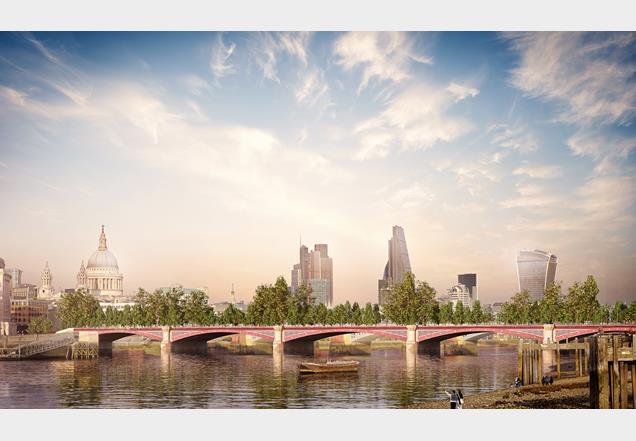
As reported in the Guardian a few days ago, architects Allies & Morrison have come up with a much more affordable version of London’s proposed Garden Bridge — an ill-conceived, cabalistic vanity project if ever there was one. And because it is affordable, and thus won’t be burdened with huge debts or the demands of corporate sponsors, it can be a truly open public space. Basically they are proposing to reuse some of the space on Blackfriars Bridge — a resource which already exists. This sounds eminently feasible.
In the latest of a series of posts about the UK and the EU, Obiterj, over at the Law and Lawyers blog, takes a look at what has to happen politically (and legally) to implement a Brexit vote.
It isn’t pretty. Or easy. Or quick. There’s a lot that would have to be done, by both the UK and the EU, and it could be years before the UK could trigger the formal 2 year (or more) process to withdraw from the EU.
Read the full piece here.
There’s a useful and quite balanced article in yesterday’s Guardian under the banner Is the EU undemocratic?
It’s worth a read.