Don’t ever worry about yourself, you are the way you are because you were meant to do what you are meant to do.
All posts by Keith
Garden Flowers
Suddenly in the last week or so, our garden is awash with flowers – especially roses. And I’ve been playing with the new macro lens for my “proper” camera. Here are the first few results.


Ten Things: June
This year our Ten Things series – which surprisingly appears on the tenth of each month – continues concentrating on the amusing, both real and fictional. So this month we have …
 Ten Characters I Invented
- Geisha Bottle (actually more likely Gaysha; East End 6-year-old; sister of Chardonnay-Madonna Bottle)
- Leena Stagarova (Soviet gymnast)
- Madeleine Cookie (pole-dancer/stripper)
- Mangoe Stikky (Jamaican rapper)
- Merkin Hick (American backwoodsman)
- Serge Tyde (Harbourmaster)
- Winnie Baygo (black American Country singer)
- Shaggy Mats (Australian gay male stripper)
- Sir Chiltern Waternut (retired diplomat)
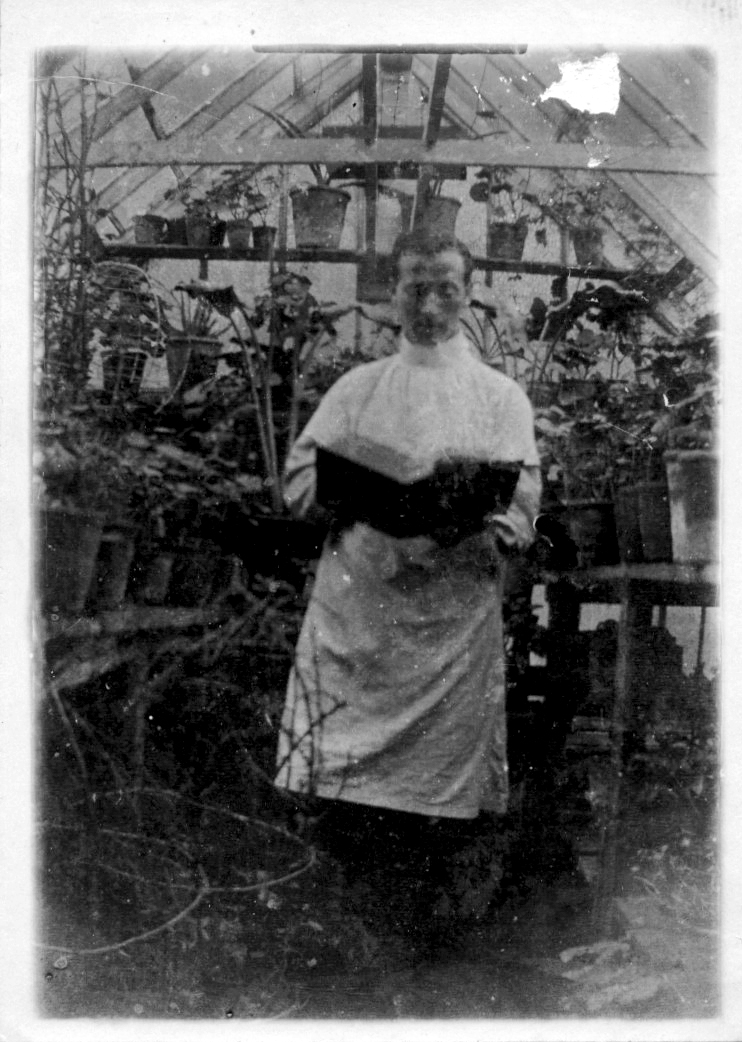
- Revd Wakefield Sconce (Victorian rector; specialist in the propagation of primulas; pictured right)
Early Chilli Harvest
Today I have harvested the first of this year’s chillies: a dozen fully ripe Scotch Bonnets from the four plants on the study windowsill.
These are last years plants, and they’re getting cramped in a single 9-10 inch diameter pot! After they finished flowering last autumn I left them on the windowsill, and kept them watered. They continued to flourish as they were getting some warmth and good light, but not enough to keep flowering.
Then in late February I cut them back to about 10 inches. Within days they were growing new side shoots, and within a few weeks were flowering. They’re now good compact plants! Today’s harvest is the result.

this year’s have gone straight in the freezer
Although I’ve not repotted them, they have had their soil topped up and been given some feed. So with regular water and more feed, hopefully they’ll produce more flowers, and chilies, as the summer progresses. Hand pollinating the flowers is the best way to ensure a good crop – an old small watercolour brush is their best sex toy.
I might even try to keep them over another winter although they really will need repotting by then!
On Privilege
Subsequent to my recent post on Living Like the Gentry, I’ve been thinking more about privilege, and as a generalisation I think there are at least two different types.
Innate Privilege. One is born into this. It would include things like: being white; family wealth; money being spent on posh schooling; being titled; family connections and networking.
Earned Privilege. This one acquires through one’s own efforts. This would include: making the most of educational opportunities; working to rise above family background; working hard to acquire good employment (with commensurate salary, pension etc.); learning to network.
By contrast there is also:
Dis-Privilege. This is usually largely accidental or lifestyle imposed, and would include: physical and mental disability; not being cis-gendered; being too openly LGBGT+; poverty (of money, accommodation etc.); low paid and/or insecure work; or just being born into insuperable Dis-Privilege.
Like all these things, this is a gross generalisation. There is a spectrum of privilege. These categories can, of course, overlap and there are always grey areas. For instance people with Innate (or Earned) Privilege could also be Dis-Privileged, through (for instance) disability (consider Stephen Hawking); the former often ameliorating the latter.
The biggest grey area is the large mass of the population who fall between Earned Privilege and Dis-Privilege. These are the people who have never worked to earn privilege but equally don’t have anything much going against them. Many are content just to bumble along (and in many ways who blames them) without engaging their brain; they can’t see that it is possible to bootstrap themselves into something better.** They are capable of thinking, but oh so often fail to stretch themselves to make the most of what they’ve been given – they tend to suffer what my late father would have called “poverty of mind”. Clearly that’s also a generalisation; many people do get out and use what they’ve got to improve themselves, even if that is only to be a plumber, taxi driver or seamstress – these people are just as valuable as dentists, wealth managers and lawyers; arguably they do more to keep the wheels turning.
Innate Privilege is there regardless of what one does. These people tend to be the cream rising (effortlessly) to the top of the heap. However through effort they can ameliorate it, “humanise” themselves, and become more in tune with the populous at large. Many do ameliorate their privilege, but equally many cash in, mercilessly and selfishly milking the system for all they can get – think Boris Johnson, David Cameron or Jacob Rees-Mogg.

The lower echelons of Earned Privilege is where Noreen and I are. We both come from humble origins, without wealth or connections to pull us up the ladder. But we’ve had good (free, state) education, made as much of it as we can, learned to think for ourselves, and consequently had decent, though not high-flying or insanely lucrative, jobs. While we’re not wealthy, we are fairly comfortable. What our Victorian forebears would have considered solidly middle class.
All this sort of, very roughly, meshes with the traditional view of the British class structure:
- Those with Innate Privilege tend to be the Upper and Upper Middle Classes.
- Those with Earned Privilege are likely to be the majority of the Middle Class.
- The great bulk of the ordinary population would be the Working and Lower Middle Classes.
- While the Dis-Privileged would be the Under Class and the lowest reaches of the Working Class.
Whatever any state might do to level this playing field (in terms of wealth, or whatever) there always will be this type of stratification. The intelligent and more intellectually able will always rise towards the top – because they can. And the more physically able will be the valued artisans.

Is this stratification wrong? Well maybe; it all depends on one’s modus vivendi. Clearly there is something wrong if the “uppers” do nothing but play their privilege for their own benefit and to Hell with the plebs; equally if the “lowers” despise and set out to arbitrarily demonise the “uppers”. But people from all layers of society can (and do) do much good while working within the system. One doesn’t have to like, or agree with, the system to be able to work within it and to overcome its failings; or indeed to try to change or dismantle it.
While one doesn’t like privilege, especially Innate Privilege, it’s here. And it ain’t going away real soon, or real easy. However much we’d like it to.
** Remember, as Robert Heinlein is quoted as saying: “There are perhaps 5% of the population that simply can’t think. There are another 5% who can, and do. The remaining 90% can think, but don’t“.
Or according to Thomas Edison: “Five percent of the people think; ten percent of the people think they think; and the other eighty-five percent would rather die than think“.
Very Garlicky Poussin
Last weekend I decided we would have the traditional “Chicken with 40 Pieces of Garlic”. But of course I had to do it my way!
We didn’t have a whole chicken, but we did have a pair of good, corn-fed, poussins. We find one 500g poussin nicely serves the two of us, so with two we always have one for cold the next day.
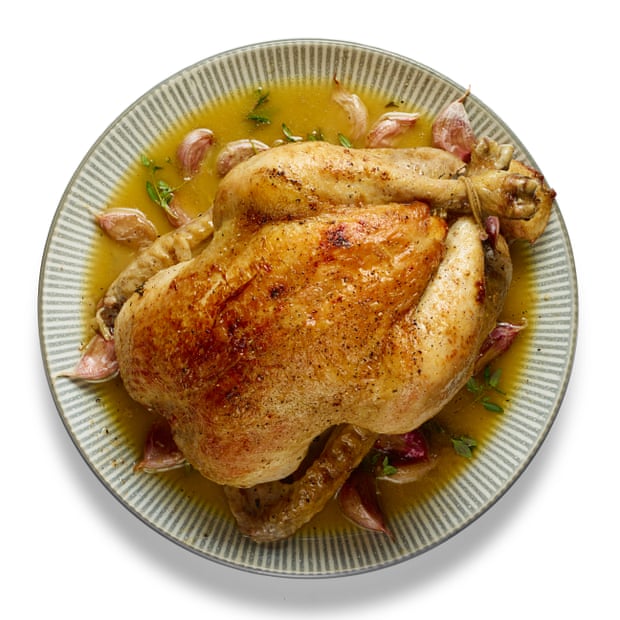
I started with Felicity Cloake’s recipe from the Guardian, and adapted, and simplified, it to suit. This is what I did …
Very Garlicky Poussin
3 large heads of garlic
2 tbsp olive oil
2 Poussin (about 500g each)
Salt and pepper
Large bunch fresh thyme
350ml white wine or vermouth (or a mix of wine and water)
Cornflour (optional)
Knob of butter (optional)
- Heat the oven to 200C (180C fan)/390F/gas 6.
- Separate the garlic into individual cloves, and peel them. (You should have about three dozen cloves, but feel free to use more if you wish.) Put aside 6-8 smaller cloves and about half the thyme.
- Put the oil in a hob-friendly casserole which is just big enough for the two poussins, and put on a high heat.
- Season the poussins, then brown them on all sides as best as you can.
- Set the poussins aside and stuff the reserved garlic and thyme in the body cavities.
- Turn down the heat to medium, add the garlic and thyme to the pot, coat in the oil, cook for a couple of minutes and season.
- Add the wine and the poussins.
- Bring the liquid to a simmer, cover the pot and put in the oven for about 30 minutes.
- Take off the lid and roast the poussins uncovered for another 15 minutes (or longer until done) to brown the skin slightly.
- Set the poussins aside to keep hot and rest.
- Return the pot to the hob and bring up to a simmer. Remove as many of the thyme stalks as possible with a slotted spoon.
- While reducing the liquid, mash the garlic into the sauce (a stick blender is easiest, but don’t spray hot liquid everywhere!) and season to taste. You want to end up with a garlic gravy/sauce, so thicken with a little cornflour and a knob of butter if you wish.
- Serve the poussins with steamed vegetables of your choice, either jacket or steamed new potatoes, and the sauce on the side.
This was really yummy and appreciated not just by us, but also by the cats who came begging! It was finger- and paw-licking good!
Things to Think About: June
This year we’re beginning each month with a (potentially logical) oddity to think about, and to keep the brain cells active. This month:
Maybe oxygen is slowly killing you and it just takes 75-100 years to fully work?
Please leave your thoughts in the comments.
Monthly Links
OK, guys & gals. Hold tight for this month’s ride through my links to items you may have missed the first time around.
Science, Technology, Natural World
We know surprisingly little detail about the landscape of our oceans as relatively little has been systematically surveyed, but now scientists have identified and accurately measured the depth of the deepest hole in each of the planet’s five oceans.

Two items on our friends the wasps. First in the Guardian on the importance of wasps. And secondly from Prof. Seirian Sumner of UCL on why she loves wasps and on their importance [LONG READ].
While on insects, an Australian school has been treated to the rare sight of a Giant Wood Moth – and yes, they really are huge!
In another pair of articles in New Scientist [£££] and Scientific American [£££] ecologist Suzanne Simard talks about discovering the hidden language of trees and how they communicate with each other.
A look at the chemistry of the fragrant flowers of viburnum.
Pharmaceutical chemist Derek Lowe takes a look at the how our genes are littered with apparently junk DNA.
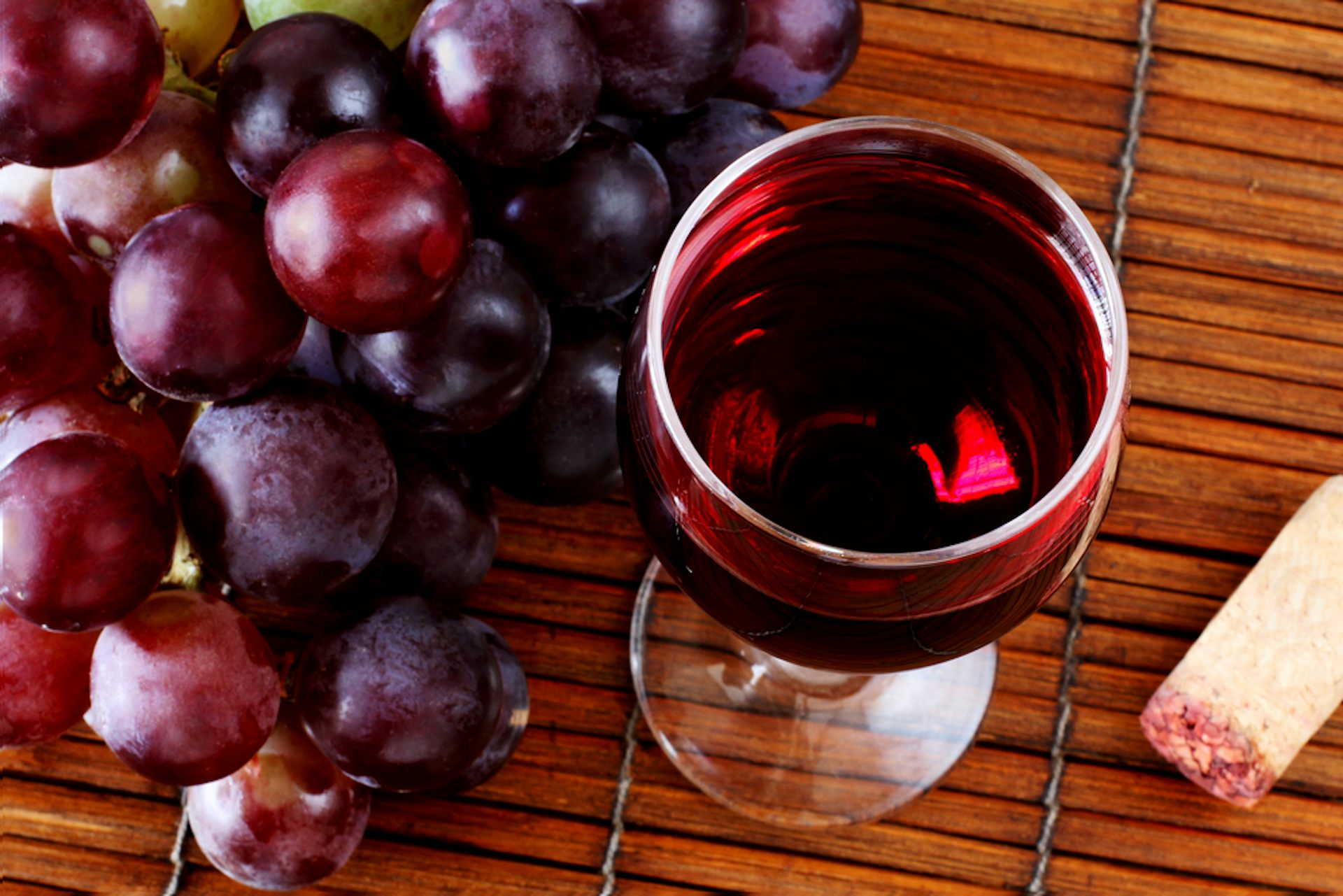
We’re regularly told that red wine is good for us and it’s all down to a chemical called resveratrol. (Actually I’d maintain all wine is good for us!)
Health, Medicine
Many women have problems with the symptoms of the menopause. Journalist Kate Muir investigates the social impact, and what could (and should) be done to help.
While on women’s health, the Guardian‘s Emine Saner investigates the (apparently) new focus on the pelvic floor. (Hold on! What’s new here? Haven’t we known about this for several decades?)
Sexuality
So in these days of Covid concern, is oral sex safer than kissing, and other questions about dating?
In which a couple of young people talk about being polyamorous.
At the other extreme several young people talk about being asexual.
Environment
From the outside you’d not think that the River Thames is one of the cleanest rivers in the world, so how come it looks so awful.

One London woman has “adopted” three urban foxes who visit her garden, and they’re confident enough to let her touch them. (We don’t actually advise doing this, guys & gals; remember they’re wild animals with a nasty bite!)
History, Archaeology, Anthropology
Archaeologists claim to have identified the oldest known tattooing tools at an ancient site in Tennessee.
Back in Europe archaeologists think they may have identified one of the victims of Vesuvius at Herculaneum as a rescuer.
Back at home, we all know the legend about Lady Godiva; it seems it is all based on the real early medieval countess Godgifu.
And in another investigation it has been concluded that the Cerne Abbas Giant in Dorset was created in Anglo-Saxon times.
Medievalist Dr Eleanor Janega gave a short talk on the Black Death. [Video]
And Dr Eleanor Janega has also devised a new (pub?) game: Annoy a Medievalist Bingo.
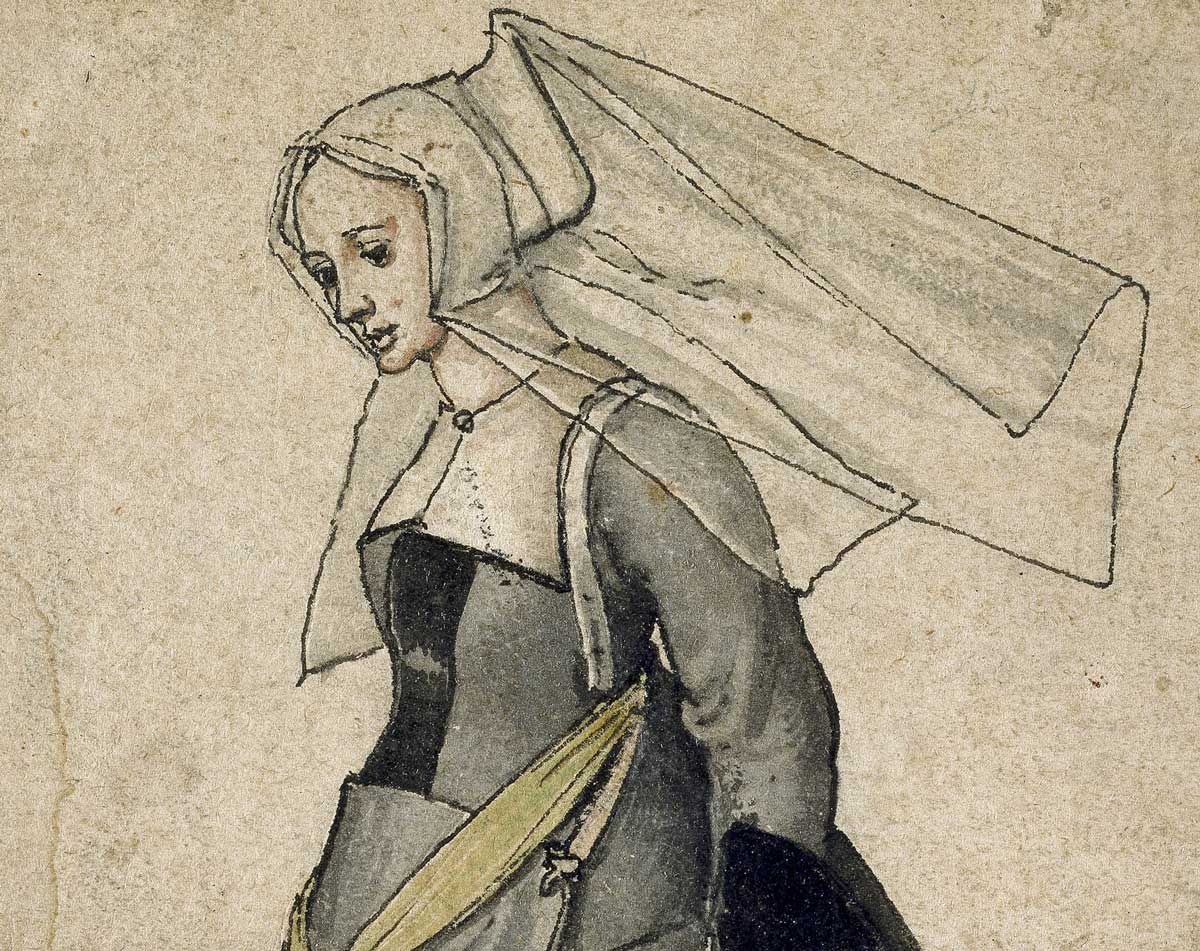
Tudor historian Prof. Suzannah Lipscomb discovers what it is really like to wear early Tudor women’s clothes.
London
Still in historical context, the Tower of London’s baby raven has been named after a Celtic goddess in a “brilliantly ridiculous” ceremony.
Back down on the ground, London Reconnections takes a look at vehicle design, with special reference to that done for (the various guises) of London Transport.
Food, Drink
What do you mean, you didn’t know avocados are good for you? Here are five reasons you should eat avocado every day. (Disclosure: yes, I do!)
Lifestyle, Personal Development, Beliefs
You know I’m not going to miss out on a chance to mention naturism … so here’s another look at why we’re better off unclothed. (Disclosure: yes, I am.)
People
Don’t underestimate or write off shy people: one such looks at how it has actually been a big benefit.
In other news, the Heritage Crafts Association has added hand kilt-making and glass eye making to list of the UK’s endangered crafts
And finally … from sewage works to cemetery, Guardian columnist Emma Beddington writes enthusiastically about the bleak local places in which we’ve found solace during lockdown.

Auction Amusements
It’s a long time since we had any amusements from our local auction house. There have been fewer auctions and the pickings have been rather thin for the last year. But here is what I’ve collected – as always it is the strange things people sell and the odd combinations that make up a lot. (Images where they seem to add something. Text & images direct from the auction catalogues.)
Enamelled items, comprising: a pair of Korean enamelled duck sauceboats with covers and spoons on a stand, brightly coloured, and a small octagonal canister, all stamped 98%; an Indian condiment stamped 925; and a Soviet Russian part egg stamped 925

A Georg Jensen silver pendant comprising three abstract triangles, design 138 by Ibe Dahlquist, marked and stamped 925 S Denmark, with associated chain.

A box of military badges presented on cards, a Harrow School bronze medallion, a small quantity of omnibus tickets, a motor car ration book, and an interesting solicitor’s letter dated 1898 and, on behalf of a client, offering an owner £1,450 for the 11 houses numbers 40-60 Avenue Street, Fulham

A saucy Naples figurine of figures at a waterfall.
A mixed lot including a silver plated photograph frame, a pair of silver plated salad servers, art deco style figurines, a vintage oil can, a Chanel book, a Radley’s ladies handbag, a silver and amber brooch, a Russian Zorki-6 cased camera, a small quantity of motor magazines etc.

A fine old Mobile Oil Pump early 20th century of tapering ovoid form.

A Simplex No. 6 Coffee Grinder with two large wheels painted red with a silver-coloured funnel.
A table of architectural items, including a large quantity of metalwork, knobs, furniture handles, a workshop lamp, five old locks, a pair of 19th century carriage lamps in brass and metal, a Georgian oak wall-mounted cutlery and candle box, another oak box, a fine Victorian set of clothes pegs with porcelain knobs on a mahogany back, an old oil can, a tea canister-style table lamp and others, and a Follows & Bate Ltd, New Universale Marmalade Machine from Manchester, with table bracket, etc.
A table and … a quantity of curiosities, including pottery, metalwares, cutlery, tools, teddy bears, old cameras, early 20th century photograph albums, handbags, Victorian boxes, a Supersonic hi-fi, a folder of early 20th century love letters, CDs, a Chinon projector, telephones, old Quink ink bottles, jewel boxes, etc.
An extensive lot, including a four-piece Teac hi-fi with a JVC amp, a Toshiba amp, a pair of JVC speaker, a Toshiba portable computer, two HP printers, a filing box of CDs, a quantity of china, an iron, a shredder, Sennheiser earphones, model cats, old telephones, etc., and three suitcases on wheels

A large pair of decorative floor-standing metal vases decorated with sunflowers and birds

A late 19th century Swiss Black Forest wooden musical coat hook, carved as an anthropomorphic dog with glass eyes, and with gun and powder flask bearing the Swiss cross, with chamois horn feet, fitted with a musical movement with 6 cm cylinder numbered 12 223, with applied circular metal label inscribed ‘C. Spiess Schloss Laufen Patent 16870’ and remains of paper label, 39 cm high
A large quantity of astrological [sic] accessories and spares across three and a half shelves including lenses by Meade and Parks plus others, many labelled with sizes and magnification, a monochrome camera by Starlight Xpress Mx716, a large mirrored refractor, possibly the base for a telescope, two Celestron Star Diagonal 1’s, a Cullmann clamp, a Revelation 2 in dielectric mirror diagonal, a Meade Plossl 5 element 9 mm, a Sirius Plossl 25 mm lens, an AC power supply unit No.110 etc., a large quantity for the keen amateur or professional (telescopes have not been checked for their completeness)
A Cuisinart 1.5L ice cream maker and a small quantity of Folio Society books

A carved wooden owl garden seat

A rare pair of early 20th century decorator’s easels, and a smaller single easel

A four-fold hardwood screen, each leaf with a panel of six glass panes above upholstered lower section covered in floral fabric, and an early 20th century folding wooden stepladder of seven steps

Four old wooden folding garden chairs and an old set of wooden step-ladders.

Eleven vintage bike lights including ‘Lucas Silver king, Birmingham’
A mixed lot comprising an oak Art Nouveau smoker’s companion, a quantity of brassware including goblets, candlesticks and vases, a vintage pencil sharpener, electrical testing equipment, a small quantity of records, flatware etc.


Electronic projector, a Rollei Projector P350A, a metal handle, a cased General Electric Company electrical implement, a large metal microscope on wooden base, two Victorian children’s nightdresses, an oval mirror etc.
A bag of golf clubs including John Letters and Daiwa, plus a Tryglider Gold Trolley, a McLaren foldable pushchair, garden seats in bags and a pair of Speedo flippers.
A nautical lot comprising a bronze porthole frame, a bronze pump, a large metal anchor and ropes.
A Dyson hot and cool fan, a Cuprinol fence sprayer, a Karcher K2 compact pressure washer, a folding music stand, an empty guitar case, a gold coloured adjustable reading light, two large silver Trider exercise balls and a collapsible circular garden table.
A musical instrument lot comprising a mandolin by G. Grandini, a mandolin in case, a violin with label inside, possibly Mapp, a Zither and a lacrosse racket.
A mixed lot including a pair of brass shell cases, a pair of Brevette French bike pedals, a small box of coins, a metal Tilley lamp, flat iron, a small collection of men’s magazines, a set of three large metal frying pans, a large flower holder, a quantity of frames, old metal cooking pots and a quantity of vintage tools including hammers, etc.
A large wooden church candlestick, two verdigris candlesticks, three lightshades and a quantity of glassware mainly wineglasses, tumblers, sherry glasses, etc., one golf club, three books on London, etc.
A quantity of long farming implements and walking sticks.
Two boxes of mid-20th century mainly children’s books including Richmal Crompton, a microscope, ephemera, puzzles, and a small collection of antique lace nightdresses, undergarments, wedding accessories, etc.
Monthly Quotes
This month’s selection of quotes which caught my attention …
No one ever commanded a cat. You can shout at a cat, and it may vanish through the window, or ignore you and begin washing its tail, or stare at you in pained surprise. But it will never apologise, never promise not to do it again.
[CR Milne]
Three articles of Civil Service: it takes longer to do things quickly; it is more expensive to do them cheaply; it is more democratic to do them in secret.
[https://twitter.com/YesSirHumphrey/status/1384965488317435911]
[T]oxic masculinity is stopping the servant day labourers of a dying empire from picking out the right avocados for me.
[https://twitter.com/SzMarsupial/status/1387525646658777093]
… the normalisation in big cities of getting a grocery servant to pick out whatever you want to cook for lunch that day …
[https://twitter.com/SzMarsupial/status/1387476900499570691]
Freckles, moles, scars, cellulite, scabs, pimples, textures, broken capillaries, stretch marks, loose skin, pigmentation, redness, dark circles, birth marks, hair … all belong as a part of the experience of skin. Our skin is alive, dynamic, changing, fascinating and weird. Our surfaces are unique works of art just as they are.
[Ashlee Bennett]
My goal is not just to feel comfortable in my skin. My goal is to feel *so* comfortable in my skin that the patriarchy gets confused, can’t compute, malfunctions, and spontaneously combusts.
[@EmilyDFitness]
Date someone you can be weird as hell with who at the end of the day still wants to get naked with you.
[unknown]
[There’s been] this separation of humanity from nature, mind from body, spirit from intellect, and that we had moved away from this more holistic, spiritual way of seeing the world. Lovelock’s idea of the biosphere as a self-regulating system was antithetical to the view that we could dissect the world and understand all the parts in a deterministic way.
[Suzanne Simard; https://www.newscientist.com/article/mg25033320-900-suzanne-simard-interview-how-i-uncovered-the-hidden-language-of-trees/]
Everything had to always be as it is, Parmenides reasoned, because nothing could come to be out of nothing – nonexistence could not produce existence, because there is no such thing as nonexistence, by definition of existence. Reality consisted in an ever-present, unchanging, unmovable mass of undifferentiated sameness that filled all of space.
[Tom Siegfried; https://www.sciencenews.org/article/anaxagoras-science-athens-history-philosophy]
The one who plants trees, knowing that he or she will never sit in their shade, has at least started to understand the meaning of life.
[Rabindranath Tagore]
None of us are getting out of here alive, so please stop treating yourself like an afterthought. Eat the delicious food. Walk in the sunshine. Jump in the ocean. Say the truth that you’re carrying in your heart like hidden treasure. Be silly. Be kind. Be weird. There’s no time for anything else.
[Anthony Hopkins]
You see, wire telegraph is a kind of a very, very long cat. You pull his tail in New York and his head is meowing in Los Angeles. Do you understand this? And radio operates exactly the same way: you send signals here, they receive them there. The only difference is that there is no cat.
[Often wrongly attributed to Albert Einstein, but who first said it?]
A fact is a simple statement that everyone believes. It is innocent, unless found guilty. A hypothesis is a novel suggestion that no one wants to believe. It is guilty, until found effective.
[Edward Teller; Conversations on the Dark Secrets of Physics]
Humans are not optimized for intelligence. Rather, we are the first and possibly dumbest species capable of producing a technological civilization.
[Eliezer Yudkowsky]
A rock pile ceases to be a rock pile the moment a single man contemplates it, bearing within him the image of a cathedral.
[unknown]
I have no right, by anything I do or say, to demean a human being in his own eyes. What matters is not what I think of him; it is what he thinks of himself. To undermine a man’s self-respect is a sin.
[unknown]
Being naked starts with your spirit. If you are not allowing yourself to be naked spiritually, being naked physically is significant.
[Stephanie McManus]
Sex is more than an act of pleasure, it’s the ability to be able to feel so close to a person, so connected, so comfortable that it’s almost breathtaking to the point you feel you can’t take it. And at this moment you’re a part of them.
[pleasure_portraits; https://www.instagram.com/p/COyilOuBpDD/?igshid=xbn7yul1eb9z; NSFW]