All posts by Keith

I’m a controversialist and catalyst, quietly enabling others to develop by providing different ideas and views of the world. Born in London in the early 1950s and initially trained as a research chemist I retired as a senior project manager after 35 years in the IT industry. Retirement is about community give-back and finding some equilibrium. Founder and Honorary Secretary of the Anthony Powell Society. Chairman of my GP's patient group.

Oddity of the Week: Electric Bacteria

No, it really isn’t 1 April, nor is this something out of Douglas Adams or Terry Pratchett …
Stick an electrode in the ground, pump electrons down it, and they will come: living cells that eat electricity. We have known bacteria to survive on a variety of energy sources, but none as weird as this. Think of Frankenstein’s monster, brought to life by galvanic energy, except these “electric bacteria” are very real and are popping up all over the place.
Unlike any other living thing on Earth, electric bacteria use energy in its purest form — naked electricity in the shape of electrons harvested from rocks and metals … Experiments growing bacteria on battery electrodes demonstrate that these novel, mind-boggling forms of life are essentially eating and excreting electricity.
That should not come as a complete surprise … we know that life, when you boil it right down, is a flow of electrons …

wires

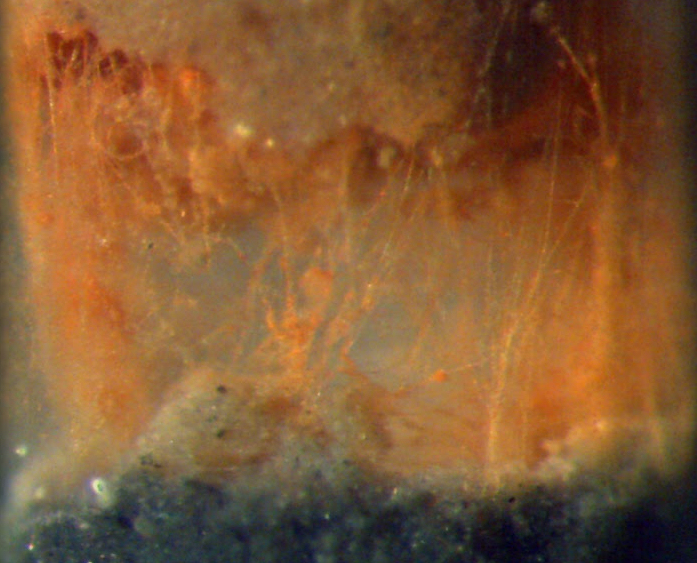
A few years ago, biologists discovered that some produce hair-like filaments that act as wires [see above], ferrying electrons back and forth between the cells and their wider environment … tens of thousands of electric bacteria can join together to form daisy chains that carry electrons over several centimetres … it means that bacteria living in, say, seabed mud where no oxygen penetrates, can access oxygen dissolved in the seawater simply by holding hands with their friends.
From: New Scientist; 19/07/2014. Read the full story (paywall).

Weekly Photograph

The City of Westminster seems to have gone mad this year with their hanging baskets. Or maybe they are just especially splendid due to the warm, and slightly damp, summer. Whichever they are magnificent. This one was in Mount Street, Mayfair, but all are the same extravagant display.

hanging
Hanging
Mayfair, August 2014

Ten Things #8

Ten things for August? Well the list was started because it’s holiday season, as you’ll see from number 1 on the list …
10 Smells I Love:

  1. The sea — which actually isn’t caused by ozone!
  2. Coffee — despite the fact that I hardly ever drink the stuff
  3. Elderflower
  4. Fresh bread
  5. Petrichor
  6. Roses
  7. Church incense
  8. Cinnamon — and Christmas
  9. Pine wood — that wonderful resiny smell
  10. Wood smoke — which takes me right back to my teenage years round the camp fire in the scouts

Small is so evocative, but different for all of us, with the power to instantly transport you somewhere else. I’m sure I could add another ten to that list quiet easily.

Your Interesting Links

Another selection of the interesting and curious you may have missed. As usual, science-y stuff first and a rather more mixed bag than normal.
Did you know that for about 2 months of every year there is no night in the UK? No neither did I! This from IanVisits back in May.
Ants that eat electricity are heading for London. No it is 1st April!
[Phobia warning] While we’re on insects, scientists have found a gargantuan aquatic insect in China.


A very rare calico lobster has been caught off the coast of Maine. Rather attractive isn’t it! It’s still alive and on display in an aquarium, but will be returned to the sea later in the year.
On to things that are slightly more concerning. Apparently the environmental cost of beef is ten times that of other meat. But why didn’t they include lamb?
Next an interesting piece on why most of our domesticated animals have floppy ears.
My body makes funny noises. Yours probably does too, but maybe different ones. But why do bodies do these strange things?
Does your rainbow smell? As a “normal” person I find it hard to imagine what synaesthesia must be like. Here are a few insights.
Going back to food for a moment … Scientists are finding a surprisingly complex world of microbes in cheese rind. Yep, that’s what makes all these cheeses taste different.
It looks as if we may have been, and still are being, seriously misled all these years into thinking fat is harmful. Scientists are now suggesting this really isn’t so and dietary advice needs to be changed. Duh!
So stepping quickly into the world of medicine … On how the Great War helped create the 1918 Spanish flu pandemic.
At last some people are beginning to understand the way things work. Here’s a medical study which underlines that decriminalising sex work actually reduces HIV infections as well as violence etc.
Next up we have two interesting articles looking at whether women should or shouldn’t shave areas like legs and armpits: the first by Hadley Freeman in the Guardian; the second by Lucy Brisbane in the Evening Standard. Basically don’t fall into the trap of doing it because fashion etc. say you should. But think about it and shave or not, depending on whether you actually want to, not because of fashion or other people’s attitudes. Be yourself and remember the old adage: “Those that matter don’t mind, and those that mind don’t matter”.
For the historians amongst you, an interesting new theory on how our legends really began.
We’ll gradually bring the historical pieces up to date, so next a look at the naughty and scatological world of medieval marginalia.
A soldier’s lot hasn’t actually changed that much since the Battle of Hastings. Photographer Thom Atkinson displays the essential soldiering kit as it evolved over the last millennium.
Our favourite London cabbie reachee the end of his series on Waterloo Station with a look at the advent of the Eurostar terminal.
This has to be crazy museum piece of the year: an exhibition of broken relationships. Well it is in Brussels.
Fractal_Giraffe

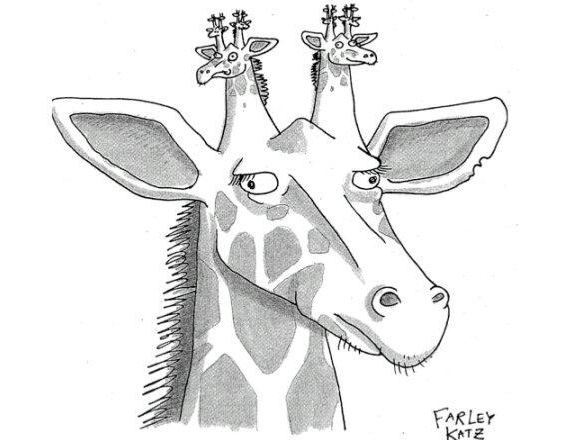
And finally I’ll leave you with two amusements. First a fractal giraffe. Secondly a display of tooth jewellery.
Anchors away!

Photograph of the Week

This week another from the archives. This young lady was wandering into Hammersmith Hospital one hot August day a couple of years ago.

Click the image for larger views on Flickr
Young Lady
Young Lady
Hammersmith Hospital; August 2012

Five Questions, Series 6 #1

Many weeks ago, for a value of “many” roughly equal to 4, I posted the questions for Series Six of “Five Questions”. And I said I would answer the first one a few days later. But I didn’t. With everything else going on it got overlooked. Now the vultures have come home to roost and it’s time to catch up and answer that question. Here goes …


Question 1: To what degree have you actually controlled the course your life has taken?
Well I suppose to some extent the answer depends on whether one believes in free will or not. If you don’t believe we have free will, then clearly whatever our lives feel like we have have no control at all.
If you do believe we have free will then one might be able to control one’s life.
It happens that I think we do have free will, but nevertheless I have done little to control the direction my life has taken. I am not one of those driven people who plot out what they want and go get it. Some people seem to have their whole life mapped out from the time they’re still in nappies. And some never do. I’m very definitely one of the latter.
Right from an early age I drifted with whatever was going — or more likely opted out, if I could, of anything I found at all uncomfortable.
I remember at the age of abut 14 knowing I wanted to do science, but I did nothing positive to go and make it happen apart from choosing school subjects that I was good at.
The same with going to university. I knew I didn’t want to go to Oxbridge (and anyway school didn’t think I’d get the grades — I did!) but apart from that choosing universities to apply to was not much better than resorting to use of a dartboard.
My research opportunities were serendipitous. Yes, I’d applied for an MSc place but didn’t think I had the grade and was stunned when offered it. My doctorate was a case of doing well enough on my MSc course and being in the right place at the right time; again not at all expected or looked for.
When I buggered up my post-doc and was looking for a job it was a case of who would be daft enough to employ me. IBM did and I stayed there for the rest of my working life. Only twice did I say “that is the job I want and I’m going to get it”; I did get both jobs but only each time at the second attempt. Beyond that I drifted into whatever job I was reorganised into next. The only other positive decision was when changing jobs at the time Noreen and I were planning to marry. Her job was tied to London and I opted to take a London job rather than one on the south coast so Noreen could keep her job.
Oh and I made a deliberate decision to take early retirement, although we were all being gently nudged in that direction and I was ready for it.
Outside work, I’ve also very much drifted along. I don’t recall anywhere that I have ever said “that is what I’m going to do” and gone to get it. It’s all been very much more low key than that. If the opportunity is in front of me, and I feel like doing whatever it is, then I will; but I won’t chase after things. I can’t be doing with the stress and hassle of it all.
OK, that means I’ve never got on as far as maybe I could have done. I’ve always wanted to get on, get to the top of whatever I’m doing; get better paid. But I’ve never been prepared to put in any extra effort for it.
And, you know, that’s maybe not what this life is about for me. Maybe it is all more about reducing stress as much as I can; being comfortable; trying to maybe help others; learning some balance — balance I didn’t have when I was younger.
In the words of the cartoon cat Garfield: “Eat and sleep. Eat an sleep. There must be more to life, but I do hope not.”

Coming up in August

Interesting events an anniversaries in the month ahead. But yet again there isn’t a lot going on this month, probably because it is holiday season. Anyway, here’s what we have …
1 August
Lammas Day which is the festival of the wheat harvest, and is the first harvest festival of the year. On this day it was customary to bring to church a loaf made from the new crop, which began to be harvested at Lammastide. It coincides with the Christian feats day of St Peter ad Vincula (St Peter in Chains). Lughnasadh (Lammas) is also one of the eight sabbats observed by Pagans and is the first of their three autumn harvest festivals, the other two being the autumn equinox (Mabon) and Samhain.
1 August
This day also marks the Accession of George I in 1714 following the death of Queen Anne. He reigned until his death in 1727 and was also Elector of Hanover from 1698 to 1727. It was during George’s reign that the powers of the monarchy diminished and Britain began its transition to the modern system of cabinet government led by a prime minister.
3 August
Friendship Day. Celebrated on the first Sunday in August, Friendship Day is a worldwide opportunity to celebrate the joys of friendship. Find out more at www.friendshipday.org.
4 to 10 August
National Allotments Week. Once again the National Allotment Society is encouraging allotment sites across England and Wales to open their gates to celebrate the enduring nature of the allotment movement and hold a party for their plot-holders and the wider community. More details at www.nsalg.org.uk/news-events-campaigns/national-allotments-week/.


13 August
Birth in 1814 of the Swedish Anders Jonas Ångström who is generally accepted to be the father of spectroscopy — study of the interaction between matter and radiated energy (light, radio waves, x-rays etc.) — on which so much of modern science and medicine is dependent.
20 August
In 1864 JAR Newlands (1837–98) produced what many consider to be the first periodic table. Although Dmitri Mendeleev is given all the credit for the periodic table, Newlands got a large part of the way to Mendeleev’s solution some five years earlier. However the Chemistry Society in Britain ridiculed Newlands’ ideas and declined to publish his papers, thus possibly denying him a prior claim.
28 August
The 1914 Battle of Heligoland bight between Britain and Germany in the SE North Sea. The battle was won by the British and restricted the movements of the German Navy.