they will believe wholeheartedly
in order to ignore the truth.
[Libba Bray, The Sweet Far Thing]
Another collection of recently encountered quotes.
At Toulon there was a lot of sun and a breeze from the sea. The interior of the railway station appeared neatly arranged for the opening act of a musical comedy. Sailors with white trousers and red pom-poms in their caps wandered about pointing at Cocteau’s latest on the bookstalls, or watched the engines puffing up and down the line. Some Tonquinese infantrymen were entraining for the Buddhist temple at Frejus. Overgrown blacks from Senegal, with their waists pinched in by red cummerbunds and wearing high tarbooshes on their tiny heads, leant against the wall, finding perpetual amusement in the antics of the French. A Captain of Spahis in a scarlet tunic, baggy trousers, and a long cloak strode up and down as if he were about to sing the first number of the show.
[Anthony Powell; What’s Become of Waring]
What the human being is best at doing is interpreting all new information so that their prior conclusions remain intact.
[Warren Buffett]
Given the existence of the universe, all the molecules in it have been here for billenia or something. They just keep juggling around. So you’ve got three of Shakespeare’s molecules and you’ve got two of Himmler’s or whatever it is, you know. Part of your fingernail was part of St Joseph of Aramathea’s frontal lobe or something. And you know, large parts of you were once a daffodil in Nova Scotia or something. You know, your feet used to be Winston Churchill. The same things keep getting recycled. It could be that when we pass away our psyches dissolve into lots of sort of strips of feeling. All the things that comprised us that were held together by our bodies dissolve. You know, hence the line in the song ‘When I Was Dead’, “I wasn’t me to speak of just a thousand ancient feelings”. Feelings that have been around since the beginning of human time.
[Robyn Hitchcock]
From an evolutionary perspective, it makes sense that we are wired to seek fame, wealth and sexual variety. These things make us more likely to pass on our DNA. Had your cave-man ancestors not acquired some version of these things (a fine reputation for being a great rock sharpener; multiple animal skins), they might not have found enough mating partners to create your lineage. But here’s where the evolutionary cables have crossed: We assume that things we are attracted to will relieve our suffering and raise our happiness. My brain says, “Get famous”. It also says, “Unhappiness is lousy”. I conflate the two, getting, “Get famous and you’ll be less unhappy”. But that is Mother Nature’s cruel hoax. She doesn’t really care either way whether you are unhappy – she just wants you to want to pass on your genetic material. If you conflate intergenerational survival with well-being, that’s your problem, not nature’s. And matters are hardly helped by nature’s useful idiots in society, who propagate a popular piece of life-ruining advice: “If it feels good, do it”. Unless you share the same existential goals as protozoa, this is often flat-out wrong.
[Arthur C Brooks; “Love People, Not Pleasure”; New York Times; 20/07/2014]
The idea of one side suffering defeat while the other side triumphs is out of date. Instead we have to develop dialogue. We have to make an effort if we want a peaceful, more compassionate world. It requires education, based on patience, tolerance and forgiveness. Too often violence results from greed, so we also need contentment and self-discipline.
[Dalai Lama]
Teachers open the door; but you must enter by yourself.
[Chinese proverb]
Gossip is charming! History is merely gossip. But scandal is gossip made tedious by morality.
[Oscar Wilde; Lady Windermere’s Fan]
Human beings to me are as much a part of nature as trees or birds, and the unclothed body expresses this belongingness directly and powerfully.
[Wynn Bullock]
I hold a beast, an angel and a madman in me.
[Dylan Thomas]
(Or in my case just leave out the angel.)
No one on earth lives separated from angels and spirits.
[Emanuel Swedenborg]
And in the morning they shook their pillows violently, hoping all the dreams they lost that night would tumble out.
[Joseph Gordon-Levitt; The Tiny Book of Tiny Stories: Volume 2]
But then again, if you don’t imagine, nothing ever happens at all.
[John Green, Paper Towns]
This week’s photo is just a silly diptych I made from a couple of boring shots taken in a restaurant earlier in the week.
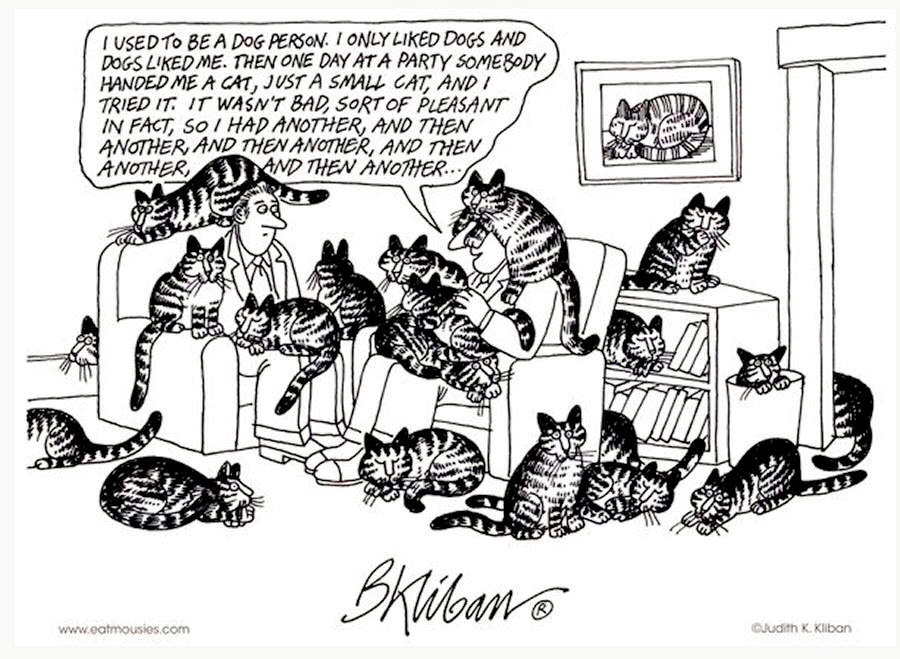
For all my doggy friends …
Seeing red
It seems that the paint on red cars fades more quickly than any other car colour. Is there a reason why? (Continued)
I noted the comments on fading red paint in The Last Word (7 June). I came across an amusing instance of this in the Flinders Ranges of South Australia, where the Pichi Richi Pass is a spectacular feature on the road from Port Augusta to Quorn. For many years a sign naming the pass stood at its entrance. It was written in black text, except that the initial letters of each word were in red. That part of the world enjoys a lot of bright sunlight and clear skies, and the red paint faded over time to be almost invisible. This left behind a rather amusing sign.
From: “The Last Word”; New Scientist; 12 July 2014
Time for another selection of links to articles you may have missed.
As usual let’s start with the real nerdy science stuff and descend into banality.
For those of a mathematical bent, and to celebrate the 400th anniversary this year of logarithms, here are ten top mathematical innovations.
We now know that our bodies are home to many microbes, both good and bad. But are we using them, or is our microbiome using us?
We all use pharmaceuticals of some form at least sometimes. What is surprising is how little we absorb and how much is excreted. So what happens to all those drugs we flush down the toilet?
Scary stuff for all those mothers and would-be-mothers out there. There’s actually a war going on in the womb.
So much of what we think we know is actually urban legend. Here’s an interesting long read on how such academic urban legends arise.
This week’s photo was taken a few years ago at Avebury Stone Circle. This is just one of the stones and the two girls give you some idea of their size, although not all the stones are as enormous as this.

Following on from the previous post about the liberalisation of prostitution, here’s another piece of unexpected sensible news.
The NHS in Wales will be the first in the UK to fund a cannabis-based medicine for people with multiple sclerosis. The drug in question is Sativex which has been on the market for some time.
Bravo for them as this is in line with current medical research, but directly contrary to the the recent draft NICE clinical guideline which rejected the drug for use on the NHS in Wales and England based, apparently, on a flawed assessment of its cost effectiveness.
You see, by chipping away, entrenched attitudes can be changed.
Wales 1, Blinkered Politicians 0
There was a very interesting article in the Economist on 9 August under the headline “Prostitution: A Personal Choice”.
The first interesting thing is that such an august institution as the Economist does not support the UK government fetish of zero tolerance because the buying and selling of sex is dangerous, immoral etc. etc.
Instead the writer makes a number of points supported by recent research. First and foremost:
The internet is making the buying and selling of sex easier and safer. Governments should stop trying to ban it.
While they agree …
Some prostitutes do indeed suffer from trafficking, exploitation or violence; their abusers ought to end up in jail for their crimes. But for many, both male and female, sex work is just that: work.
This newspaper has never found it plausible that all prostitutes are victims … the commercial-sex trade [looks] more and more like a normal service industry.
They go on …
Moralisers will lament the shift online because it will cause the sex trade to grow strongly … But everyone else should cheer. Sex arranged online and sold from an apartment or hotel room is less bothersome for third parties than are brothels or red-light districts … the web will do more to make prostitution safer than any law has ever done. Pimps are less likely to be abusive if prostitutes have an alternative route to market. Specialist sites will enable buyers and sellers to assess risks more accurately. Apps and sites are springing up that will let them confirm each other’s identities and swap verified results from sexual-health tests. Schemes such as Britain’s Ugly Mugs allow prostitutes to circulate online details of clients to avoid.
Governments should seize the moment to rethink their policies. Prohibition, whether partial or total, has been a predictable dud. It has singularly failed to stamp out the sex trade.
Moreover …
The “Swedish model” [criminalising the purchase of sex instead of its sale] … is misguided, as a matter of both principle and practice. Banning the purchase of sex is as illiberal as banning its sale. Criminalisation of clients perpetuates the idea of all prostitutes as victims forced into the trade. Some certainly are — by violent partners, people-traffickers or drug addiction. But there are already harsh laws against assault and trafficking. Addicts need treatment, not a jail sentence …
Sweden’s avowed aim is to wipe out prostitution by eliminating demand. But the sex trade will always exist — and the new approach has done nothing to cut the harms associated with it.
And finally …
Prostitution is moving online whether governments like it or not. If they try to get in the way of the shift they will do harm … the unrealistic goal of ending the sex trade distracts the authorities from the genuine horrors of modern-day slavery … and child prostitution (better described as money changing hands to facilitate the rape of a child). Governments should focus on deterring and punishing such crimes — and leave consenting adults who wish to buy and sell sex to do so safely and privately online.
One day governments will start taking real notice of research findings and start understanding.
This week’s cartoon is for all the adults out there …