Another selection of interesting and/or amusing quotes encountered …
How amazing it is that we drink water from a tap and never once worry about dying forty-eight hours later from cholera.
[Steven Johnson, How We Got to Now: Six Innovations That Made the Modern World]
Our lives are surrounded and supported by a whole class of objects that are enchanted with the ideas and creativity of thousands of people who came before us: inventors and hobbyists and reformers who steadily hacked away at the problem of making artificial light or clean drinking water so that we can enjoy those luxuries today without a second thought, without even thinking of them as luxuries in the first place … We are indebted to those people every bit as much as, if not more than, we are to the kings and conquerors and magnates of traditional history.
[Steven Johnson, How We Got to Now: Six Innovations That Made the Modern World]
Johannes Gutenberg’s printing press created a surge in demand for spectacles, as the new practice of reading made Europeans across the continent suddenly realize that they were farsighted; the market demand for spectacles encouraged a growing number of people to produce and experiment with lenses, which led to the invention of the microscope, which shortly thereafter enabled us to perceive that our bodies were made up of microscopic cells. You wouldn’t think that printing technology would have anything to do with the expansion of our vision down to the cellular scale, just as you wouldn’t have thought that the evolution of pollen would alter the design of a hummingbird’s wing. But that is the way change happens.
[Steven Johnson, How We Got to Now: Six Innovations That Made the Modern World]
If we lie to the government it’s a felony. But if they lie to us it’s politics.
[Bill Murray]
The door of a bigoted mind opens outwards so that the only result of the pressure of facts upon it is to close it more snugly.
[Ogden Nash]
You cannot perform in a manner inconsistent with the way you see yourself.
[Zig Ziglar]
He was a man of middle age and, to judge by his bowler hat and frock coat, of the official class, and his umbrella had caught alight. I do not know how this can have happened. I passed him in a taxicab, and saw him in the centre of a small crowd, grasping it still by the handle and holding it at arm’s length so that the flames should not scorch him.
[Evelyn Waugh, Labels; hat-tip Stephen Holden]
By default, any good book that is more than 10 years old is filled with life-changing ideas. Why? Because bad books are forgotten after a decade or two. Any lasting book must be filled with ideas that stand the test of time. Meanwhile, the news is filled with fleeting information. We justify paying attention to the media because we think it makes us informed, but being informed is useless when most of the information will be unimportant by tomorrow. The news is just a television show and, like most TV shows, the goal is not to deliver the most accurate version of reality, but the version that keeps you watching. You wouldn’t want to stuff your body with low quality food. Why cram your mind with low quality thoughts?
[James Clear in “Overrated vs. Underrated: Common Beliefs We Get Wrong” at http://jamesclear.com/overrated-underrated]
We love status. We want pins and medallions on our jackets. We want power and prestige in our titles. We want to be acknowledged, recognized, and praised. It’s too bad all of those make for hollow leaders. Great teams require great teammates. Nowhere is that more true that at the top. No leader ever became worse by thinking about their teammates more.
[James Clear in “Overrated vs. Underrated: Common Beliefs We Get Wrong” at http://jamesclear.com/overrated-underrated]
Learning, growth, and improvement are undervalued in the name of getting faster results.
[James Clear in “Overrated vs. Underrated: Common Beliefs We Get Wrong” at http://jamesclear.com/overrated-underrated]
Life has no meaning. Each of us has meaning and we bring it to life.
[Joseph Campbell]
The propagandist’s purpose is to make one set of people forget that certain other sets of people are human.
[Aldous Huxley]
One of the biggest and most important tools of theoretical physics is the wastebasket.
[Richard P Feynman]
All posts by Keith
Oddity of the Week: Seaside Rock
It has just been brought to my attention that Blackpool (and one suspects other places) are now offering seaside rock in a variety of flavours other than the hitherto ubiquitous peppermint and occasional fruit flavours.

According to the Blackpool Gazette local vendors are now offering flavours such as cappuccino, peanut butter, gin & tonic, chicken tikka, cheese & tomato pizza and, rather oddly, fish & chips.
Cappuccino and gin & tonic might just work. I’m not convinced about the others.
Sexual Wellbeing
Sexual Health Week, which is this week, has been run annually by the FPA since 1997. This year’s theme is pleasure and wellbeing.

So often we forget that most sex takes place for reasons of pleasure, intimacy and desire rather than reproduction. As well as being pleasurable, an active sex life is a good form of exercise, reduces stress, aids relaxation and sleep, is a good pain reliever and keeps the prostate gland and genitals healthy.
In this context sex doesn’t just mean what goes on between two (or more) consenting adults, but includes masturbation. Oh come on! We all do it. And masturbation can make you happier, healthier and more fertile. The chemicals released by masturbation include dopamine, which triggers the pleasure centres of the brain and reduces stress; endorphins which reduce pain (including menstrual pain); and prolactin, which aids sleep. Apparently males especially (why especially males, I don’t know) benefit from masturbation when they are under the weather, as it increases the production of bacteria-fighting white blood cells. In addition it can help prevent prostate cancer by flushing out the carcinogenic toxins in the prostate.
As sex educator Emily Nagoski says, pleasure is the best measure of sexual wellbeing. And as Emily would no doubt also point out, you only get the real pleasure if you approach sex with confidence and joy.
However the one thing we really must do to achieve this sexual wellbeing (indeed general wellbeing) is to talk much more openly about sex, our bodies and indeed everything medical. We need much better body awareness and to normalise sex and nudity rather than criminalising them. And I believe that has to include the decriminalisation of prostitution and removing the stigmas around STIs.
But this is only going to get easier if we start talking much more, and much more openly, about sex. And that means all of us: parents with children; friends with friends; partners with each other; everyone with their doctor.
The more we talk about what sex is really like, ensure consent and promote informed choices, the less harmful the extreme images, videos and information can be. Good communication really does enhance sexual wellbeing, and it is important that people have the confidence to speak openly and clearly to health professionals about their sexual health.
So if there is one thing I want everyone to start doing during this year’s Sexual Health Week — well I want you to start any time; the sooner the better — it is to talk about sex: with friends, parents, your children, your doctor, your brothers & sisters … anyone and everyone.
The more we talk, the easier it will get. And the more we talk the better our wellbeing.
Weekly Photograph
This week’s photograph is one I took last week. We were in Rye for a few days and perusing the showroom of Rye Pottery. I looked in a large bowl and couldn’t help but see this enormous Tegenaria spider — probably Tegenaria parietina but there are several very similar species. The body was around 1.5 to 2cm long and the whole thing, as seen, about 10-12cm across.
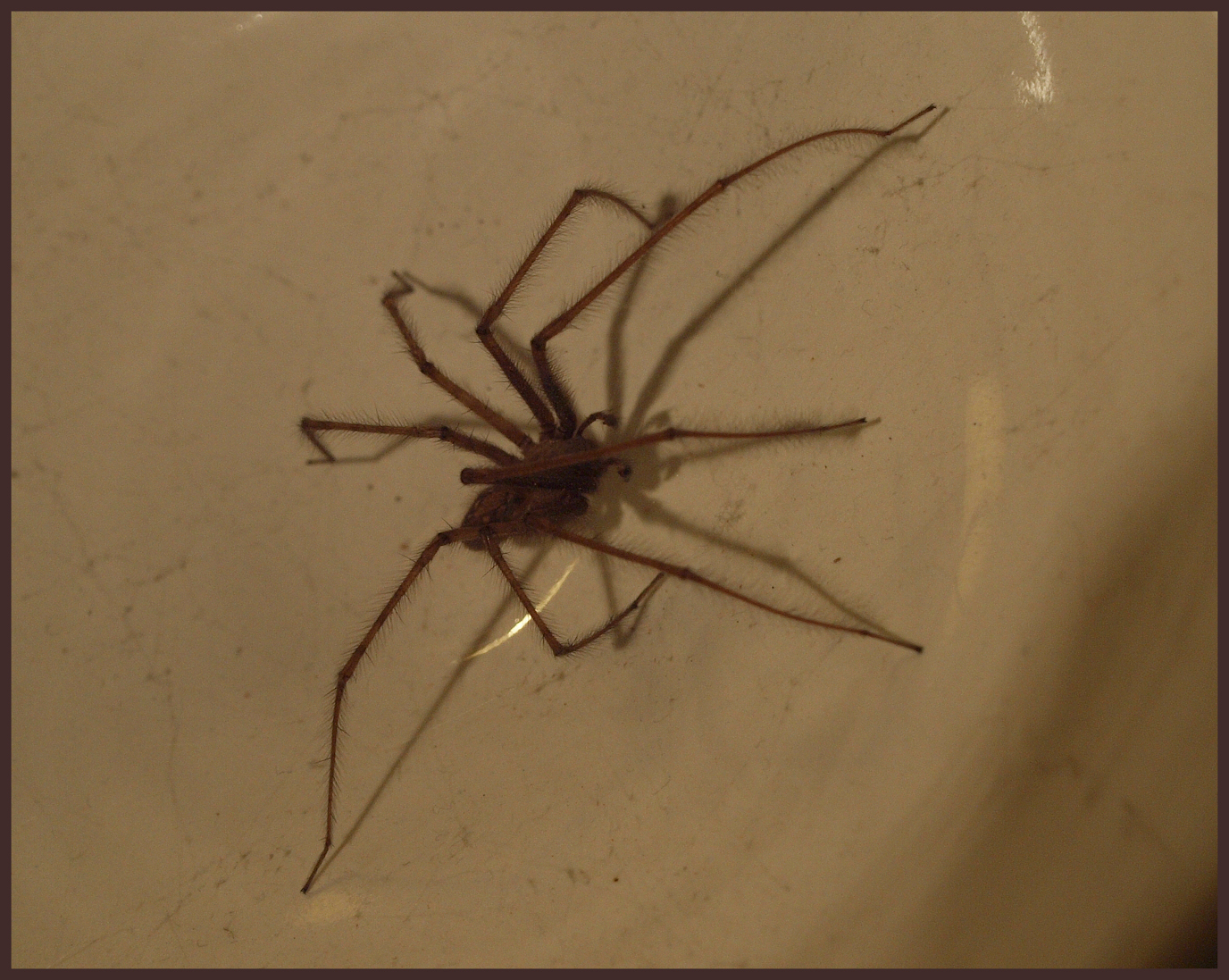
Tegenaria parietina?
Rye; September 2015
These spiders live in buildings — especially old buildings — and walls. Females can live for up to eight years, while males die shortly after mating. They are actually quite harmless to humans.
I know many people don’t like spiders, but how can you not be impressed by a stunning creature such as this.
Your Interesting Links
OK, so here we are again with another instalment of links to interesting (well, I found them interesting) items you may have missed the first time round. There’s a long list this time, so lets start with the hard(er) stuff and then it’s all down hill.
The Himalayan Kingdom of Bhutan, which measures its success against a National Happiness Index, is planning to invest in the widespread use of electric vehicles. And why not, because of its mountainous terrain Bhutan has copious hydroelectric generation.

Now here is something I’ve known for a while and find quit disturbing: many widely used forensic techniques have never been subjected to scientific scrutiny but rely for veracity on the original testimony of some long-forgotten, apparent expert. Which to me means that any conviction which has relied on forensic data could well be unsafe. And yes, that includes fingerprints.
Herring Gulls. Love them? Or hate them? Either way they provide a valuable service.
How many microbes do you think there are in your house? Yep, thousands. That’s thousands of different species! Here are three stories about the research: from the BBC, from the North Carolina State University research team and from one of the study leaders, Rob Dunn.
Meanwhile in South Africa a team of very small archaeologists have found thousands of bones, apparently from an unknown hominin species, in a virtually inaccessible cave.
And so to the medical … Ovarian cancer is nasty because it is so hard to detect. But (as I have been saying for ages) if women were to lose their fear of saying ‘vagina’ the rate of early diagnosis could increase dramatically. We (everyone, men and women) just have to become more comfortable with our bodies, and talking openly about them, for the good of our health!
“What’s a uterus?” This stunning level of body ignorance and illiteracy is demonstrated in an article in the Guardian from an Australian oncologist.
Now here is a medical affliction which is really frightening: sudden death syndrome.
So what is it like to be permanently like a robot; not being yourself either physically or emotionally? It’s called depersonalisation disorder and is apparently quite common but almost totally misunderstood.
It’s a good week of strange afflictions (they’re not all diseases as such). Here’s another: aphantasia. Which is basically living without any mental images; no mind’s eye; no ability to conjure up a picture of your loves ones; nothing.
Back to the more mundane … Why is it that many of use sneeze when going from the dark into (bright) light? That’s right: no-one really knows, but there are some ideas.
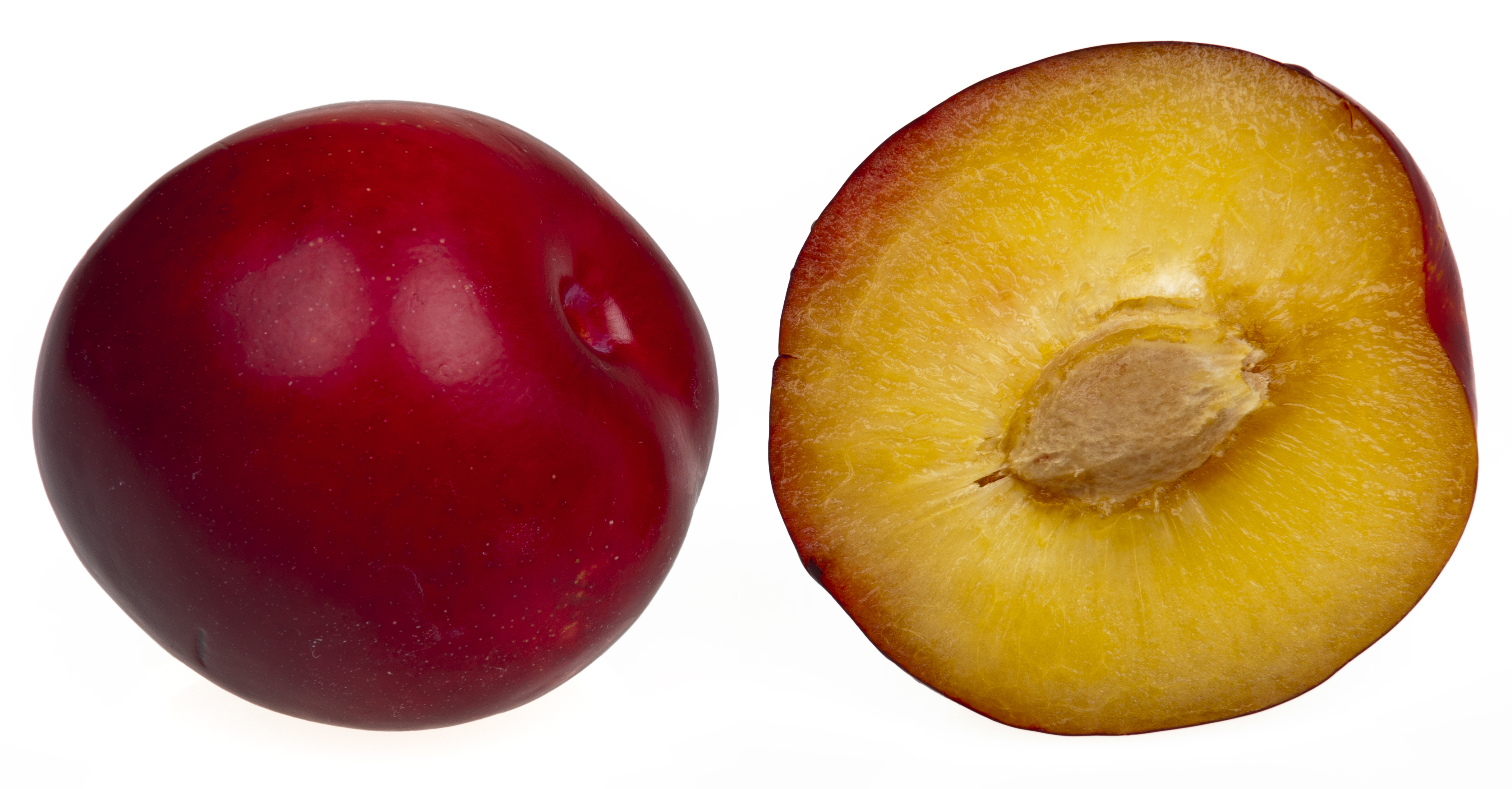
On the chemistry of plums, prunes, chewing gum and constipation.
Apparently we have bees all wrong. Royal Jelly seems not to be what makes a queen bee, but it’s what the royal larvae aren’t fed (and which is fed to workers) that forces them to become queens.
We all seem to like bees but hate wasps. But some people do like wasps despite having been stung about the privy parts. Yes, I too like wasps despite never having had more than an odd sting on the arm.
A couple of weeks ago, George Monbiot created a stir by admitting to eating a roadkill squirrel. And then repeating the exercise on live TV. Seems to me this is rather more honest than getting someone else to rear, slaughter and butcher a pig for you.
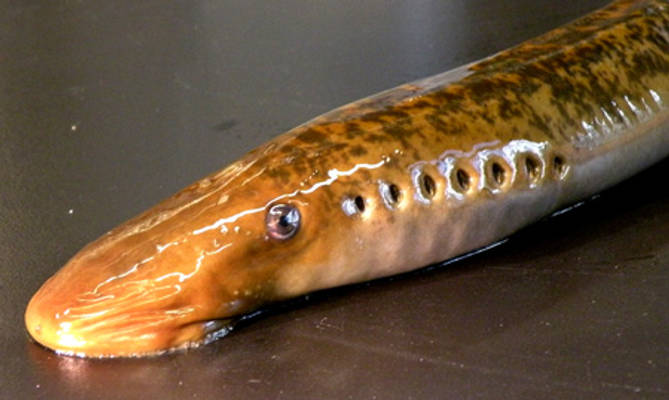
Still on the wild world, there’s a fish which is older than the dinosaurs: the lamprey. And it is returning to UK rivers after 200 years. Though it is unlikely that any time soon there’ll be enough to have a surfeit of lampreys like Henry I — which is probably as well as they are quite nasty creatures.
Do you live with a weirdo? You do if you live with a cat. Here are some tales of feline oddness.
Which sort of takes us naturally onto common beliefs we get wrong.
There are many many very wet places on this planet, but which of them wins the crown for being the wettest place on Earth?
And now to the historical … Just why was Orkney the centre of ancient Britain? Long before the Egyptians built the pyramids or ancient Britons built Stonehenge.
And talking of Stonehenge … archaeologists have discovered an unsuspected huge ritual arena just two miles from Stonehenge.
Westminster is NOT the Mother of all Parliaments. The original quotation is “England is the Mother of all Parliaments”.
Ah yes, the age old mystery of the Princes in the Tower. After 500 years it should be a very cold case but some forensic historians are trying to bring it back to life.
Next up two brief pieces from the History of London website. The first on the Great Plague and the Fire of London; the other on the Civil War and Restoration.
IanVisits is running an irregular series on unbuilt London: great projects that never happened. Here’s his piece on the iron London Bridge that never was.
London took a hammering from the Luftwaffe in the Blitz and after the war it took 20+ years to reclaim and build on all the bomb sites. So why is so much of London being redeveloped now?
Finally here’s the story of the oldest known message in a bottle, and one of the longest running scientific experiments. The bottle was cast adrift in the North Sea around 10 years before the Great War and surfaced again earlier this year!
Hopefully you’ll not have to wait quite that long for the next instalment …
Something for the Weekend
Ten Things #21
For this month’s Ten Things I thought we might have a bit more fun.
Over the years I’ve come across many strange, but perfectly genuine, names given to people. They range from the apparently ordinary (I once worked with a guy called Carl Marx) to the totally outrageous. Here are a few of the more outrageous.
Ten Remarkable Names of Real People
- About thirty years ago we had a vacation student working in our office who went by the name of Fanny Hyman …
- … which I think is one step worse than the friend of a former colleague called Simone Kuhnt.
- Of course these aren’t all people I’ve encountered. Some, like the charity worker spotted in 2003, come from media reports. This lady was called Patricia Titti; I just hope she isn’t known as “Pat”.
- Continuing in this somewhat dubious vein, I once played cricket against a guy called Jimmy Riddle.
- Or again, back in 2000, there was a Urologist at the Devon & Exeter Hospital by the name of Brenda Wee. Which I think beats the urologist by the name of Jack Cox who once treated me.
- Going to the more mundane, we shouldn’t forget the former English rugby player, Austin Healey.
- But why is it that the medical profession seems to have more than its fair share of odd names, like the Canadian medic, spotted in 2001, by the name of Prof. Lester Grimspoon.
- Although to be fair the Victorians had their moments too. Doing family history searches recently I spotted Leonardi Da Vinci Williams (died 1846 in Lambeth).
- Oh but there are modern ones too, like Summer Helps whose birth was announced in the Times in 1997.
- Nevertheless I’m almost totally convinced that first prize must go to Patriarch Moran Mor Ignatius Zakka I Iwas, Supreme Head of the Universal Syriac Orthodox Church who died in 2014.
And there are hundreds more where they came from!
Oddity of the Week: Pearls
Japanese artist and jeweller Shinji Nakaba specialises in making tiny wearable sculptures. The pieces come in all shapes and sizes, but his most prolific series involves human and animal skulls carved from oyster pearls and attached to rings, necklaces and brooches.
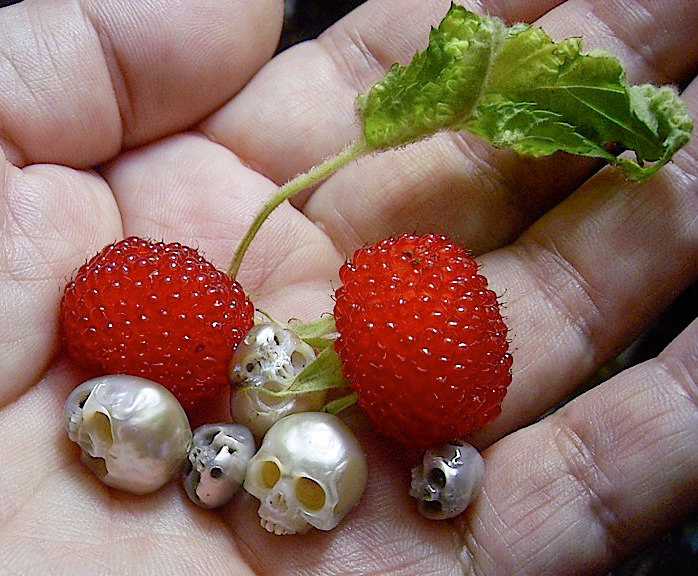
You can buy his pieces through his online shop, although at several hundred dollars a time, they aren’t cheap. But a great present for your inner goth!
From: www.thisiscolossal.com/2015/08/skull-pearls/.
Weekly Photograph
Something for the Weekend
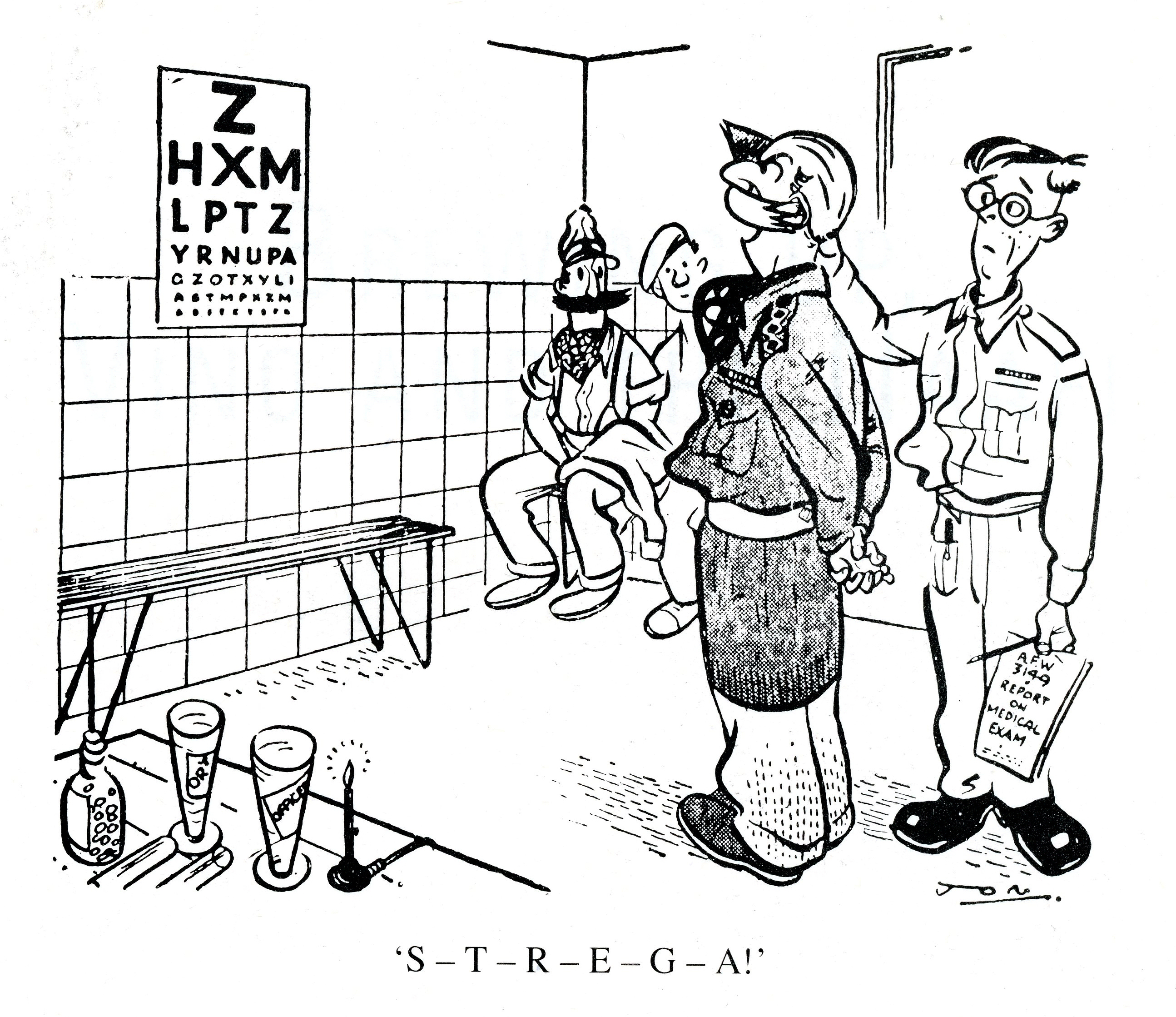
This week I thought we’d have a wartime offering from the cartoonist Jon, famous for his “Two Types” — eccentric British Army Officers so often encountered in wartime.