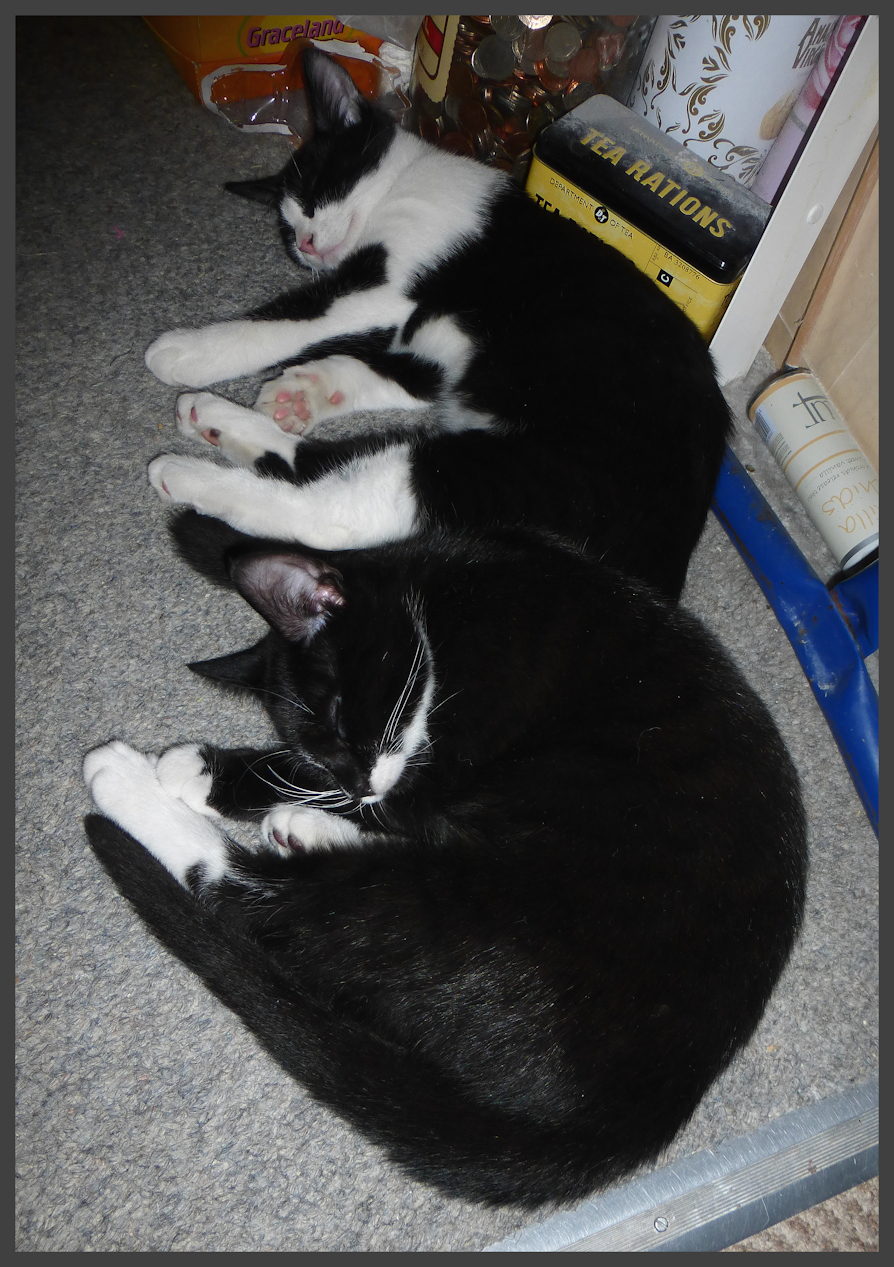
Something for a Bank Holiday Weekend

Here’s another selection of interesting, thought-provoking and amusing quotes encountered in the last few weeks.
Nothing is stronger or better than this, that a man and his wife live together, sharing one heart and one mind, a great grief to their enemies and a joy to their friends; but best of all they know it themselves.
[Homer, The Odyssey]
When a German dives into a sentence, you won’t see him again until he emerges at the other end with the verb between his teeth.
[Mark Twain]
If you have a garden and a library you have everything you need.
[Cicero]
To succeed in life, you need two things: ignorance and confidence.
[Mark Twain]
The strategy relied on forlorn hopes that the “confidence fairy” would lift Greece out of this policy-induced nose-dive.
[Ambrose Evans-Pritchard in a Daily Telegraph article, 29 July 2016, on how the IMF has screwed up Greece; http://www.telegraph.co.uk/business/2016/07/28/imf-admits-disastrous-love-affair-with-euro-apologises-for-the-i/]
All you really need to know for the moment is that the universe is a lot more complicated than you might think, even if you start from a position of thinking it’s pretty damn complicated in the first place.
[Douglas Adams]
Gossip is charming! History is merely gossip. But scandal is gossip made tedious by morality.
[Oscar Wilde; Lady Windermere’s Fan]
Nature does not hurry, yet everything is accomplished.
[Lao Tzu, Tao Te Ching]
Usually when people predict an end to religion, what they’re hoping will take its place is a world of pure scientific rationality based on a strictly materialistic view of the universe. I think Richard Dawkins and his followers would like to see that.
The problem with that is, pure materialism has failed us just as badly as pure spirituality. The pure spirituality of the Middle Ages provided a lot of uplifting fantasies, but left most people living in filth and squalor. The pure materialism that took hold in the 19th century, and continues to dominate us today, provided flush toilets, the Internet and a generally higher standard of living. But it left people feeling empty inside while runaway technology and the waste it produces threatens us with extinction.
[Brad Warner at http://hardcorezen.info/the-age-of-reality/4716]
As soon as dogs realise we have bones hidden under our skin all hell is going to break loose.
[unknown]
If we want things to stay as they are, things will have to change.
[Giuseppe Tomasi di Lampedusa, The Leopard]
Yoni
According to the OED the word first appears in English in 1799 and is derived from the Sanskrit yonih, womb, abode, source.
Lingam
Again, the word is from the Sanskrit liṅga, liṅgam, mark, penis. It is first recorded in English in 1719.

Zanzibar
Zanzibar is now a semi-autonomous region of the East African country of Tanzania. Situated off the coast of the mainland just north of Dar es Salaam, it is an archipelago consisting of two large islands, Unguja (the main island, referred to informally as Zanzibar) and Pemba, and many smaller ones. Long ruled by Arabs (mostly from Oman) it was a Portuguese colony and latterly a British Protectorate, before merging with the then country of Tanganyika (now Tanzania) in the 1960s. Zanzibar’s main industries are spices (especially cloves, nutmeg, cinnamon and black pepper), raffia and tourism.
In keeping with the randomness of this series, this month’s Ten Things is words.
10 Words I Like:
- Cuneiform
- Halberd
- Petrichor
- Psittacosis
- Varmint
- Verisimilitude
- Vermifuge
- Vespiary
- Yoni
- Zanzibar
Interesting that I seem not to have written a word post about the last two. This will have to be rectified.
Now this is something I never expected o see here in West London! Noreen found it on the (inside of) the study windows late last evening. It’s a (female) Jersey Tiger Moth.
I’ve only ever seen one once before, in Lyme Regis some 10 or more years ago. They are apparently “nationally scarce”. Once restricted to, yes, Jersey, they are most common along the coastal areas of the South West, although they are obviously spreading and there are now reports from the London area. Instantly identifiable as a Tiger Moth, the size (that’s a 5mm grid), pattern and the distinctively striped head are diagnostic. Oh and they like Buddleia, and we have a bush not far from our back door.
Sorry not brilliant pictures as this was lively, so contained in a plastic bug-catcher, being photographed with my point-n-shoot late at night with flash. I have removed the slight colour-cast from the images, I hope without destroying the moth’s colours.


 Also found this morning on our bathroom ceiling was this gorgeous little Oak Bush Cricket. The body is about 17 mm long and note those spectacular antennae which are three or four times the length of the body.
Although I think I’ve seen these before, I spotted them (again) earlier this week on Facebook.