Anthony Gadd; Andrea
please click on the image for further information and a larger view


WTF happened there? Where has this year gone? It’s already the end of November and we’re deep into SAD season. But let’s not despair ‘cos here’s our monthly selection of links to items you might have missed the first time round.
Science, Technology & Natural World
If you’re an AI designer the Law of Unintended Consequences is never far away. Such systems are well known for gaming the system with a solution that satisfies the stated objective but fails to solve the problem according to the human designer’s intent. There’ll be some examples at the end of this post.
A violent storm on the Sun could cripple communications on Earth and cause huge economic damage, but why are solar storms such a threat?
Health & Medicine
Here are six surprising drug interactions which often fly under the radar but which you should know about. Even I knew about only two of them.
This one is definitely straight out of the “I Don’t Believe It” drawer … apparently llama blood may provide clues to beating the flu.
Researchers at the University of Portsmouth are investigating how the proportion of fat and glandular tissue affects the perkiness of boobs, and why one bra design doesn’t fit all.
Our favourite OB/GYN, Dr Jen Gunter, takes a look at the menopause, and her personal experience in deciding how to manage it.
GPs in England are being encouraged to prescribe social activities to their patients as part of the government’s strategy to combat loneliness. But this is raising some ethical questions: are the consequences acceptable and does the initiative respect people as people?
As so often, the ancient Chinese had an inventive way of doing things: pay your doctor as long as you’re healthy; when you’re sick they’ve failed and don’t get paid.
Sexuality
Here’s one good example of why we must not be too scared to talk about teenagers having sex.
Labour MP Jess Phillips is campaigning to ensure girls are taught about their sexuality from a young age so they form healthy sexual relationships as adults and not just “how to handle and dispose of men’s pleasure safely”. Read her views here and here.
On the other side of the coin, a survey confirms that stress damages many people’s sex lives.
So now relax ‘cos you’re unlikely to be masturbating too much.
Environment
Scientific American looks at why we really do need innovative nuclear power.
History, Archaeology & Anthropology
Researchers have been taking an in depth look at Neanderthal teeth, and discovering some surprisingly intimate details of their daily life.
Meanwhile others have been dating the oldest known animal painting which has been found in a cave in Borneo. I’m glad they know it’s an animal.
Still with animals but much closer to home, archaeologists at the Vindolanda fort have uncovered a Roman dog with fur intact. Well they say it’s Roman, but they also say it is 2000 years old: both cannot be true!
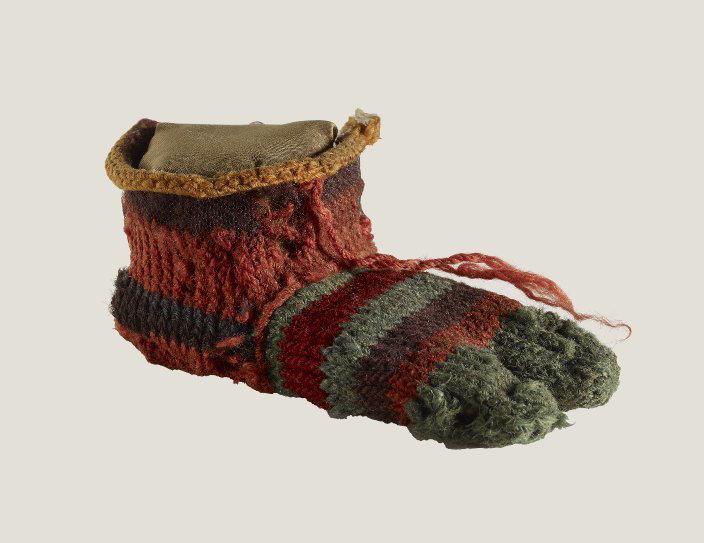
Yet another group, this time at the British Museum, have been delving into Egyptian fashion and examining a 1700-year-old child’s left sock.
Since Ancient Roman times, and right up to Hollywood, witches have been seen as figures of fun as well as malevolence.
From at least 1000 years ago the Peruvians were into making holes in their heads.
Finally in this section, and coming almost up to date, a dredging project at Blenheim Palace has uncovered over 30 rooms flooded when Capability Brown created the estates lakes.
Food & Drink
The Marine Conservation Society has been looking at the humble fish finger and found that they are surprisingly sustainable and some of the best products to buy are also the cheapest.

Shock, Horror, Humour
Finally, we promised some more on the unintended consequences of AI. There are quite a few examples in a Google document, including these two:
A self-driving car which was rewarded for speed learnt to spin in circles.
In an artificial life simulation where survival required energy but giving birth had no energy cost, one species evolved a sedentary lifestyle that consisted mostly of mating in order to produce new children which could be eaten (or used as mates to produce more edible children).
Remember: If a system can be gamed, someone or something will game it.
Enjoy your Christmas turkey!
Almost every hand you’ve shaken has touched a penis.
I came across this the other day. It’s a few years old but still a worthwhile humanist take on the dreary Christian meme.
These are the ten winning beliefs of the Rethink Prize, a crowdsourcing competition to rethink the Ten Commandments. The contest drew more than 2,800 submissions from across the globe with the winners being selected by a panel of judges.
Three (I think) important articles recently about teenagers and sex. As usual we bring you key quotes, although I would recommend reading the articles themselves (none is long).
The first article reports on Labour MP Jess Phillips’ contention that the discussion of female pleasure is essential to redress the gender power imbalance.
Teach schoolgirls about orgasms (Guardian; 8 November 2018)
Schoolgirls should be taught about orgasms in sex education lesson … girls should be taught about sex from a young age in order to form healthy sexual relationships when they become adults.
[It is] vital to discuss female pleasure in order to “break down the culture of power imbalance between men and women” …
“I’m not suggesting we teach children how to masturbate, I’m suggesting we talk to them about the things they’re doing anyway.”
Women’s expectations “should be greater” and they should “start demanding more” during sex.
“I’ve made a career out of being able to talk about difficult things, and that comes from growing up in an environment where nothing was embarrassing.”
Phillips is campaigning for sex education in [all] secondary schools to be compulsory by 2020 … [E]ducating children about healthy relationships and their anatomy will reduce the risk of violence against women: “To liberate women and end violence is to break down the culture of power imbalance. Let’s stop people feeling ashamed.”
The second article is by Jess Phillips herself.
Yes, yes, yes: why female pleasure must be at the heart of sex education (Guardian; 13 November 2018)
By the time they started talking to us about [sex] at secondary school, I think in the third year (year 9), most of the girls in my class had had their first sexual encounters … The teachers were clearly counting on us not having had intercourse (although some of us had) because our sex education was about Aids … and babies. It was essentially a lesson in contraception.
Sex and relationships were never discussed in our contraceptive education. It was all about the dangers of a man climaxing … We were shown how to handle and dispose of men’s pleasure safely.
[T]he average member of the British public thinks men need sex more than women … This is a cultural norm we have all accepted and it seeps into how we live our lives and teach our children. Men don’t need sex any more than women, they just enjoy it more because it has a guaranteed payoff.
“Just say no” doesn’t work, so perhaps we need to try teaching young people about why they might want to say “yes”. What does good, healthy and happy sex look like, for example?
Girls masturbate, girls know all about what they like and want. They also know what boys like and want. Boys only know the latter. Girls and boys spend at least the first 10 years of their sex lives focusing exclusively on what boys want … Would it hurt to talk to both boys and girls about how sex should be for both parties? Giving girls a bit of hope that shagging won’t just lead to them dripping in breast milk or being a witness in a trial.
I don’t want young girls growing up thinking that sex is just something that happens to us. I want boys and girls to know that it should be about both people not just agreeing, but also enjoying it.
The third article is from a young Nigerian, Jennifer Amadi, who lost a close friend to a DIY abortion because everyone had been too scared to talk to teenagers about sex.
The world must not be too scared to talk about teenagers having sex (Guardian; 9 November 2018)
[T]the world is too scared to talk about teenagers having sex. And young people are losing their lives and livelihoods as a result.
I see these attitudes everywhere, from Nigeria to the UK. Parents who are too uncomfortable to have “the talk” with their kids, nurses who deny young girls contraceptives because they think they’re “too young to have sex”, education ministers who believe the best policy for addressing teenage pregnancies is a sound beating paired with expulsion rather than comprehensive sex education classes.
[P]oliticians … worry that supporting programmes that increase youth access to contraception will cost them their jobs … fearful leaders … earmark foreign aid for politically safe initiatives like abstinence-based sex-ed or programmes that only provide birth control to married women.
There are 1.2 billion people in the world between the ages of 10 to 19 and most live in developing countries …
[W]here the world fails to deliver for its young people … teenagers continue to have unintended pregnancies. Millions of girls experience health issues stemming from pregnancy and childbirth their bodies aren’t ready for, and efforts to improve gender equality are upended as teenage mothers are forced to drop out of school and face lifelong economic insecurity … this has the potential to put the economic and social progress of entire countries at risk, and has lasting implications for global trade, migration and foreign affairs.
[I]nvest in our young people so they can get reliable information about reproductive health and birth control. They decide when to have children and how many to have. They become the biggest generation of educated, empowered, working adults the world has seen. They break the cycle of poverty for their families and shape the future of their countries.
As I keep saying, time to wake up and smell the coffee. With the UK government currently looking at reforming sex education in the classroom this country has the opportunity to lead the world. But it needs imagination and bravery, something for which the UK government has never been noted.