Your Interesting Links

Another selection of amusing, and even interesting, articles you may have missed …
It’s that time of year when the IgNobel prizes — for research that makes you laugh and then think — are awarded. This year the recipients included research on the slipperiness of banana skins and …
… this mind-boggling report on controlling nose-bleeds with tampons of bacon.
Equally topically here’s a piece on the chemicals behind the colours of autumn leaves.

autumn-leaves

And while we’re on colours, it seems we’re all striped, with Blaschko’s Lines, it’s just that they only show in some rare medical conditions. It looks to me as if they may also be related to birth-marks.
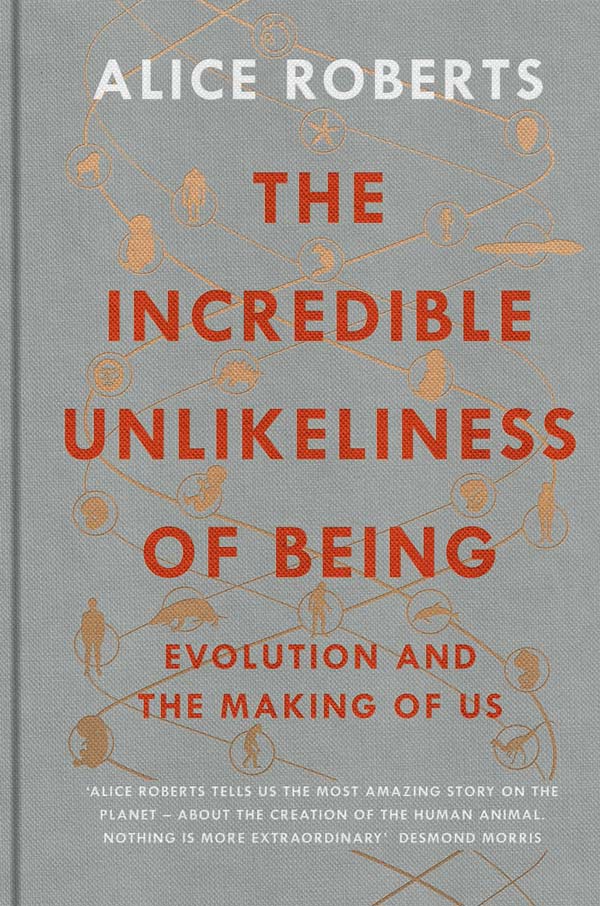
Prof. Alice Roberts has a new book out: The Incredible Unlikeliness of Being; a masterful account of why our bodies are the way they are. Here’s a review by Adam Rutherford in the Guardian and here’s my review.
So you think you know where babies come from? Here’s Alice Roberts herself on the way in which our understanding of the making of babies has developed since Aristotle.
Recent research is suggesting that modern European genetic codes are made up from those of three ancient “tribes” which intermingled a bit less than 7000 years ago.
Just for a little more variety, Mick Jagger has had the 19-million-year-old species of extinct water nymph Jaggermeryx naida — Jagger’s water nymph — named after him. Apparently it is long legged and has a “highly innervated muzzle with mobile and tactile lips”.
Rewilding Britain: bringing wolves, bears and beavers back to the land. Should we? Or shouldn’t we?
So Jack the Ripper has been identified as Aaron Kosminski using DNA analysis. Or has he? Ted Scheinman isn’t convinced, and neither am I. This is research which needs to be peer reviewed and published in the scientific literature.
Next up a piece by Maryn McKenna in praise of her anonymous kitchen knife.
Paperclips! Love them or loathe them, they’re here to stay. The stories behind five everyday items of office stationery.
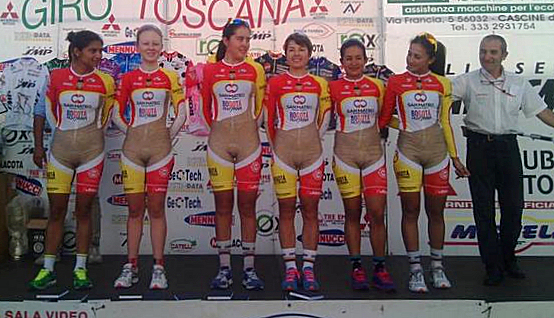
And finally from the annals of “what were they thinking?” we give you the Columbian Women’s Cycling team
col

Quotes

Another selection of recently encountered quotes to make you think or smile. So to get us off on just the right note …
Beloved, we join hands here to pray for gin. An aridity defiles us. Our innards thirst for the juice of juniper. Something must be done. The drought threatens to destroy us.
[Wallace Thurman, writing in Infants of Spring]
One martini is alright, two is too many, three is not enough.
[James Thurber]
I have the deepest affection for intellectual conversations. The ability to just sit and talk. About love, about life, about anything, about everything. To sit under the moon with all the time in the world, the full-speed train that is our lives slowing to a crawl. Bound by no obligations, barred by no human limitations. To speak without regret or fear of consequence. To talk for hours and about what’s really important in life.
[unknown]
Stories never really end … even if the book likes to pretend they do. Stories always go on.
[Cornelia Funke, Inkspell]
When we love people so, we love them for what they are, not for what we wish they were.
[Leo Tolstoy, Anna Karenina]
Sometimes the best way to find out what you’re supposed to do is by doing the thing you’re not supposed to do.
[Gayle Forman, Just One Day]
By means of ever more effective methods of mind-manipulation, the democracies will change their nature; the quaint old forms — elections, parliaments, Supreme Courts and all the rest — will remain. The underlying substance will be a new kind of totalitarianism. All the traditional names, all the hallowed slogans will remain exactly what they were in the good old days. Democracy and freedom will be the theme of every broadcast and editorial. Meanwhile the ruling oligarchy and its highly trained elite of soldiers, policemen, thought-manufacturers and mind-manipulators will quietly run the show as they see fit.
[Aldous Huxley]
Telling people not to shag until they’re married is like telling them not to play tennis until they’re in the Wimbledon final.
[Girl on the Net]
Good sex is like good bridge. If you don’t have a good partner, you’d better have a good hand.
[Mae West]
Learn from the mistakes of others. You can never live long enough to make them all yourself.
[Groucho Marx]
I have always imagined that Paradise will be kind of a library.
[Jorge Luis Borges]
People have to talk about something just to keep their voiceboxes in working order so they’ll have good voiceboxes in case there’s ever anything really meaningful to say.
[Kurt Vonnegut]
Most species do their own evolving, making it up as they go along, which is the way Nature intended. And this is all very natural and organic and in tune with the mysterious cycles of the cosmos, which believes that there’s nothing like millions of years of really frustrating trial and error to give a species moral fibre, and in some cases, backbone.
[Terry Pratchett]
People say nothing is impossible, but I do nothing every day.
[AA Milne, Winnie-the-Pooh]

Independent or Not?

On the back of Scotland’s decision not to become an independent country, it occurs to me to ask …
How many “countries” (states, provinces, or whatever you want to call them) have ever voted in a free and fair election NOT to take independence from their “imperial masters”?
The only other which comes to mind is Quebec in 1980 and 1995. Are there any others since (say) 1800? One hears of so few that it seems to me that if independent sovereignty is sought, it is almost always attained.

Book Review: The Incredible Unlikeliness of Being

Alice Roberts
The Incredible Unlikeliness of Being: Evolution and the Making of Us
Heron Books, 2014
Alice Roberts is Professor of Public Engagement with Science at the University of Birmingham, and is perhaps the outstanding scientific polymath of our age: medic, anatomist, anthropologist, archaeologist, television science presenter and no mean artist. The Incredible Unlikeliness of Being is her latest book and sets out to unfold for us the amazing way in which we develop as an embryo and foetus and some of the ways in which we have probably evolved to this. And what an amazing voyage we are taken on!
I found the book immensely interesting and very readable. Roberts’ style is light, airy and chattily personal, while being scientifically accurate and informative — at times amusing and even ribald: how many authors could get away with a section entitled “Mind the Bollocks”? In fact I found the book so readable I had to ration myself to one or two chapters a night otherwise I would have devoured it in a single all night read.
We are taken on a journey from conception to birth with a look at how all the major systems of the body develop throughout pregnancy from the single egg and the successful sperm to the birth of a baby. Along the way Roberts describes the embryology, including insights from her own two pregnancies and the medical tests she has had done on her in the interests of science.
But more than this, she also discusses the archaeological evidence for how and why evolution has given us the kit of parts we have; how evolution got to produce them; and why they are different from other species. Right at the beginning of the book Roberts discusses the various theories of embryos and how babies are built from Aristotle to the present day. She is at pains to point out that each of these theories was consistent with the state of knowledge at the time so we shouldn’t scoff at them for being ignorant — one day our theories will be considered equally backward in the light of new knowledge.
Yes, I thoroughly enjoyed this book, but that doesn’t mean I don’t have reservations about it. It is a book for the scientifically (specifically, medically) literate layman. Roberts, rightly in my view, calls things by their correct scientific and medical names but I felt too often missed the opportunity to explain those names; what the part is or does. Of course the downside of providing more explanation is that it could disrupt the flow of the text (and make for a larger, more expensive book).
However I think there is a solution, at least in part, to this problem. The book is illustrated by Roberts’ own delightful line drawings — a very real demonstration of her skill as an anatomist! But there are for my money far too few illustrations. There were many occasions where I felt that a drawing (or other illustration) could have made the text much more powerful: especially in cases where the anatomy of different species, or at different stages of development, is being compared. Yes, some of those drawings are there, but for me too few. And drawings could have been used to explain some of the otherwise unexplained. In this respect I wanted more.
My other gripe is one which I all too frequently have to level at modern publishing (rather than authors): the poor quality of the paper used. Yes everyone wants to keep cost down and at £19.99 for almost 400 pages in hardback this is at the cheaper end of the spectrum. But oh that poor quality paper, which will not stand the test of time.
These are, however, relatively minor complaints about a book which I found informative, hugely interesting and immensely readable. I definitely came out somewhere different to where I went in!
So if you are interested in how babies grow in the womb, and how we got to be the shape we are, then I would thoroughly recommend this book.
It really is just so unlikely that we are all here, and as “normal” as we are!
Overall Rating: ★★★★★

Oddity of the Week: Viagra

Israeli and Australian researchers discovered that 1 mg of [sildenafil (Viagra)] dissolved in a vase of water can extend the shelf life of cut flowers, making them stand up straight for up to a week beyond their natural life span. The drug also slows down plant ripening; tests were done strawberries, legumes, roses, carnations, broccoli, and other perishables. Viagra increases the vase life of the flowers by slowing the breakdown of cGMP by cGMP-specific phosphodiesterase type 5. The Viagra acts on the cGMP in a fashion similar to nitric oxide (which also slows down the ripening process), but was found to be easier to use with cut flowers.
The 2007 Ig Nobel Prize in Aviation went to Patricia V Agostino, Santiago A Plano, and Diego A Golombek of Universidad Nacional de Quilmes, Argentina for their discovery that Viagra helps treat jet lag recovery in hamsters.
From Wikipedia

Five Questions, Series 6 #3

Yet again I’ve been ignoring my Five Questions series. Well the last month or so has been quite busy. Anyway here we go with the answer to Question 3.


Question 3: If you had to wear a warning label, what would it say?
Well this has to be one of the easier questions I’ve ever had to answer …
Intelligent idiot
Contains nuts

Ten Things #9

So something different for my ten things for September.
10 Curious or Amusing London Bus Stop Names
London has over 20600 bus stops and every one has a name, so there are bound to be a few amusements, including …

  1. Badgers Mount/Badgers Rise
  2. Brian Close (if you aren’t a cricket fan you likely won’t get this)
  3. Crooked Usage
  4. Ha Ha Road
  5. Maypole/Bo Peep
  6. Neasden Underpass (who surely should be a character from Dickens)
  7. Nutter Lane
  8. Oval Square
  9. Popes Grotto
  10. Stoats Nest Village
  11.  
    And as a bonus I have to add …

  12. Uneeda Drive which is just down the road from me

Diamond Geezer provides a lot more for your amusement, and there is a full downloadable list of every one of the 20600+ bus stops on the WhatDoTheyKnow website.