It seems like it is time for a cartoon. I spotted this one a few days ago on Facebook. Brilliant as always from Randy Glasbergen.

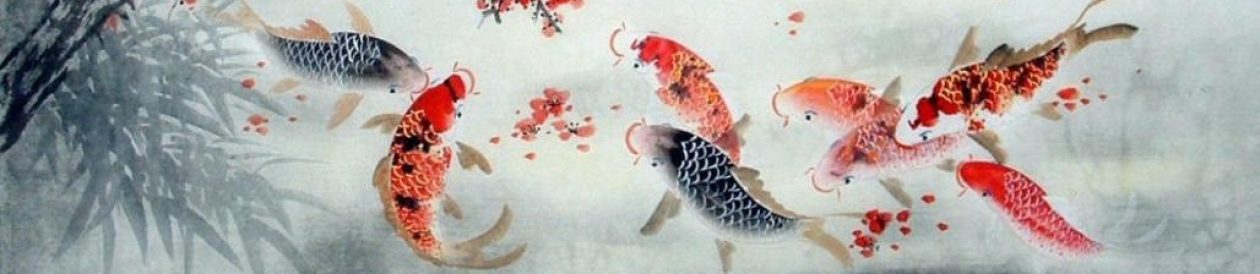
It seems like it is time for a cartoon. I spotted this one a few days ago on Facebook. Brilliant as always from Randy Glasbergen.
 Gugglet, or as the OED would have it more correctly Goglet.
A long-necked vessel for holding water, usually made of porous earthenware, so that the contents are kept cool by evaporation.
From the Portuguese gorgoleta, ‘an earthen and narrow-mouthed vessel, out of which the water runs and guggles’. Also possibly the French gargoulette which has a similar meaning.
The OED records the first English use in 1698.
Kudos to my local auction house’s catalogue for teaching me a word I really didn’t know.
Our local auction houses seem to have been quiet recently, perhaps because of not wanting to compete with all the summer festivities. But they have now sprung back into life with their usual eccentric mix of objets trouvés. Here are some choice spots from the latest sale.
A large collection of Dutch ‘peasant’ silver octagonal buttons, comprising five of probably 18th century date, including four with horse and rider design and one with a coat of arms and with various maker’s marks … a set of seven horse and rider examples of later date with dolphin tax marks; a set of three with OS maker’s marks; a pair of large size; another pair with AR marks, and two others – one with a stag, together with a lion badge and a figural terminal.
 A Spanish … silver articulated swordfish with green eyes, a pair of small fish pepperettes of similar type, a pair of shell salts on associated loaded silver bases, and a metal porringer.
Two shelves including decorative carthorses, cottage teapot, a quantity of Midwinter Roselle tea and dinner ware, cut glass, book on knitting, etc.
I’ve always been fascinated by the idea of selling things by the shelf. But they really do display the objects on labelled shelves.
A considerable quantity of as new and boxed items including a snooker table, electronic dart board, two folding beds, garden gate, rolls of hose, garden ornaments, solar lamps, kitchen tools, water features, and two spiral topiary trees, etc.
My mind is boggling slightly at the idea of boxing a snooker table.
A large heavy metal figure of a macaw on a stand replicating a tree stump, approximately 4’5″ tall.
A collage of stuffed birds: bullfinches, coal tit, greenfinch, chaffinch, etc.
A shelf and a half of wooden carvings, mainly tribal to include masks, flat faces, sculptures, busts, boxes and smaller implements
A wall mounted set of buffalo horns.
A stuffed blue Jay under glass dome
Four brown stoneware jugs and pots by Doulton, Lambeth etc., Framed, a blue glass dish, Staffordshire ogs, various other chinaware and figures, ‘The Ultra Lens’ boxed, black lacquered pots, a teddy bear riding a bicycle, didgeridoo-do, golf clubs, etc. Framed postcards: Colmans mustard, Wills ‘Gold Flake’ cigarettes, Championship lawn tennis Post, Huntley and Palmers, Bovril and Dunlop and a picture, Village cricket Nine gentleman in Waiting.
… but no kitchen sink!
A large bow with arrows and a large print of children with a horse.
The latter presumably as a target for the former.
A decorative sword in medieval style and a similar battle axe together with an Eastern dagger and scabbard and an Indian dagger.
A Rosenthal group of a putto and penguin disputing a crab, signed Ferd Liebermann
Two alligator skins, one including the head.
A 19th century Indian window surround of ornate carved design with painted decoration, and a panel of six candle holders.
Another selection of interesting and/or amusing quotes.
Why is it that in every single place I’ve ever worked, the photocopier has special needs?
[Hails at Coffee Helps]
I just love the idea of copies being “special needs”, but it’s absolutely right, they are!
 His grace doesn’t half sound in a wax this morning, ducks.
[Julian Maclaren-Ross, quoted in DJ Taylor, What You Didn’t Miss]
Most of what gets marked down as ‘poetry’ these days is simply prose chopped up into irregular lines.
[DJ Taylor, What You Didn’t Miss]
Imagine the surprise of David Purdy on receiving a special offer of the Family Tree Maker program at less than half price. How could he resist the chance to “find out whether any of your descendants were on the Titanic”?
[Feedback, New Scientist, 22/09/2012]
In the darkness of secrecy, sinister interest and evil in every shape have full swing … Publicity is the very soul of justice … it keeps the judge himself, while trying, under trial.
[Jeremy Bentham, political and legal philosopher, 1748-1832]
Our political masters need to sometimes keep this in mind, and the following …
[T]he judge should have the last word … under the procedure devised in the Bill the judge does have the last word. The only difficulty is that that word is dictated to the judge by the Secretary of State. First, the judge can make a decision only if the Secretary of State makes an application … Secondly, when the judge does come to consider it, it is not for him to weigh up the relative merits of … or to decide what the fairest way would be to decide the case. The judge’s hands are effectively tied. If there is disclosable material that impacts on national security … the judge is required to agree … The judge “must” order a closed material procedure … the government have given formal effect to the requirement that the judge should have the last word, but in substance the Secretary of State continues to pull the strings.
[David Anderson QC, Independent Reviewer of Terrorism Legislation, on the Justice and Security Bill; quoted on the Law and Lawyers Blog]
Which reminds me of this insult I once heard hurled at some fiasco or other:
A ball-withering succession of cock-ups
Somehow it also reminds me of Borges …
These ambiguities, redundancies, and deficiencies recall those attributed by Dr Franz Kuhn to a certain Chinese encyclopaedia entitled Celestial Emporium of Benevolent Knowledge. On those remote pages it is written that animals are divided into (a) those that belong to the Emperor, (b) embalmed ones, (c) those that are trained, (d) suckling pigs, (e) mermaids, (f) fabulous ones, (g) stray dogs, (h) those that are included in this classification, (i) those that tremble as if they were mad, (j) innumerable ones, (k) those drawn with a very fine camel’s hair brush, (l) et cetera, (m) those that have just broken a flower vase, (n) those that resemble flies from a distance.
{Jorge Luis Borges, Essay: The Analytical Language of John Wilkins]
So what are you normally doing at 8 o’clock in the evening? Or even what are you abnormally doing? That’s what Tara is asking as her theme for the Gallery this week is 8PM.
Until recently my normal activity at that time would have been eating, but we’ve now brought evening mealtime earlier (it is better for you, it seems) so the answer has mostly now become reading, in one form or another. One thing I mostly am not doing at 8PM is taking photographs. But of course there are always exceptions: when late home, away on business, on holiday or just out on the town. Which is how my three contributions come about.
I can’t guarantee they were all taken at exactly 8PM, but they were all taken around then.
Click on any of the images for larger views on Flickr
Waiting for the Virtual Curtain
Montage of the Globe Theatre on a very wet evening

We’re Going Home!
On the M40 into London after another long day at the office

Night Ride Timelapse
Another late evening on the road from somewhere
Another selection of links to recent items you may have missed. This edition is an unusual mix of history and science.
 Ben Goldacre, writer of the “Bad Science” column in the Guardian, has a new book out this week. Titled Bad Pharma it looks at the ways in which drug companies and their allies distort the evidence about the effectiveness of drugs and mislead regulators, doctors and patients. Here’s an extract.
Can I go back to bed now? We all suffer from insomnia at least occasionally. This Guardian item looks at the problem of persistent insomnia and current ideas on what to do about it.
It seems taking too many painkillers can give you a headache. Duh, my head hurts!
Humans eat humans. Well who knew? But now there is good evidence for prehistoric cannibalism which wasn’t just ritual.
I think we already knew that wild parrots name their babies, but here’s another look at the original study.
This interesting short item from the New York Times looks at the finding of a scrap of papyrus which appears to refer to Jesus’s wife.
Following up on a recent theme the Guardian (well they do have a good science stream) has a piece on the completion of the archaeological dig which may have found the remains of Richard III.
And finally after something like 60 years the experts have decided that three “fake” JMW Turner paintings are actually the genuine article. New technology has provided new evidence that has altered opinions. And finally it’s vindication for the collectors who bequeathed then the the National Museum of Wales.
Tim over at Bringing up Charlie has started something new. It may even turn into a meme.
As a result of some new-fangled programme on the wireless, which seems to be called I’ve Never Seen Star Wars, Tim has come to realise that there are a collection of things he’s never done or which have somehow passed him by, but which everyone assumes everyone else actually has done. And guess what? The summit of his list is never having seen Star Wars.
Tim then goes on to challenge the rest of us to document the things we’ve never done but which might surprise our friends. Being as I like memes, and I’m insatiably curious about other people, it would be churlish of me not to join in. So here’s my list of a dozen (apparently common) things I’ve never done.

Interestingly only one thing on that list bothers me not to have done. Anyone care to guess which one?
So now I dare everyone else to tell, their darkest, secret, “I’ve never dones” — either in the comments here or on your own blog (with a link in the comments), so we can all have a good snigger. 🙂
Ordure
From the French ordure, from ord filthy, foul, which is in turn from the Latin horridus horrid.
Week 45 (just 15 to go) in my experiment documenting each week five things which have made me happy of for which I’m grateful — and it’s been another strange week where I’ve totally lost all notion of what day it is. Anyway here’s my choice for the week.
 So yet again, somehow, another week has gone round and it’s time to try to answer the fourth of the five questions (series 2) I posed a few weeks back.
Question 4. What are your top five personal values?
As usual; this is a lot harder than it might at first appear.
The Best Year Yet methodology for personal development provides a long list of personal values which one is supposed to categorise under five headings: Very Important, Important, Quite Important, A Little Important, Not at All Important. The idea being that one’s goals should be things that support one’s most important personal values. The complete list is:
| Abundance Achievement Autonomy Belonging Challenge Closeness Competition Contact Contribution Creativity Excellence Excitement Fitness Freedom Friendship Fun Growth |
Health Helping Others Honesty Independence Influencing Integrity Involvement Justice Kindness Learning Love Loyalty Making a Difference Order Passion Peace Perfection Power |
Recognition Respect Responsibility Risk Security Self-Expression Self-Respect Serenity Spirituality Spontaneity Stability Status Success Tradition Trust Variety Wealth |
Now I’m not convinced there’s a whole bunch of difference between some of those, nor am I convinced some of them are actually personal values. Moreover it seems to me that groups can be encapsulated into more meaningful values.
But then another way of looking at the whole question of personal values is to understand the mottoes which resonate and by which one tries to live. Now I’ve talked about mine before, most recently in this series last week. And in fact when I thought about it many of my my top personal values do come out of my mottoes. I guess that shouldn’t be surprising; indeed one might be worried if they didn’t.
So what did I come up with as my top five personal values?
1. Respect. Basically this amounts to Treat others as you would wish to be treated yourself. And it must include at least: Self-Respect, Recognition, Respect, Responsibility, Freedom and Kindness from the list above.
2. Freedom of thought, word and deed. Essentially I should be able to think what I like, say what I like and do what I like with only the absolute minimum of constraint by society’s overarching values (aka. laws). From the list this would, for me, include Spirituality, Self-Expression, Creativity, Freedom, Independence.
3. Honesty. Be honest and truthful in all that you do, which is actually quite hard as we are programmed at least to tell “white lies” as it has been shown that they do oil the wheels of personal relationships. This has to include both Honesty and Justice from the list.
4. Trust. Nothing works without some level of trust between people. Without it there is anarchy and/or violence. I should be trustworthy and trusted by others and should be able to trust them in return. Again this seems to include a number of items from the list: Integrity, Loyalty, Closeness, Friendship, Kindness, Love and of course Trust.
Actually I suppose both Honesty and Trust could really be included under Respect.
5. Sex and nudity are normal. Although this is the value which I espouse, it actually goes a lot deeper. It is all tied up with attitudes to Health, to Respect (especially Self-Respect), to Honesty (why can’t we be honest about these things?), Freedom and Growth.
Looking at that the one thing that seems to be almost all-pervading is RESPECT. Your respect for others is key. But to have their respect you likely have to do most (all?) of the other things too.
Now does anyone dare tell me their top five personal values?