
Absorb and Adsorb are two easily confused verbs which scientifically decribe different interactons.
Absorb
1. To swallow up.
2. To engross, or completely engage, the attention or faculties.
3. To suck in, drink in a fluid; to imbibe.
4. To take up by chemical or molecular action.
Absorption is essentially a macroscopic level effect.
Compare this with …
Adsorb
1. To undergo or cause to undergo a process in which a substance (often a gas) accumulates on the surface of a solid forming a thin film, often only one molecule thick. Mostly used in Chemistry and often descriptive of molecular level catalytic processes where a reaction is enhanced with one molecule sticking to the surface of the catalyst.
There is more than a subtle difference here. Note the use of the Latin prefixes ab- off, away, and ad- to, onto, towards.
Think of it this way in everyday terms: A sponge absorbs water, whereas a sticking plaster is adsorbed onto the skin. Alternatively, the man eats the pie (absorption) or the pie sticks to the man’s face (adsorption).
Book Review
John Conway, CM Kosemen, Darren Naish
Cryptozoologicon, The Biology, Evolution and Mythology of Hidden Animals, Volume I
(Irregular Books, 2013)
This is strange book. It is one I wanted to read and I was given a copy for Christmas. It sounded as if it would be interesting.
What the authors set out to do, and they are up front about stating this, is to look at some of the myths of strange animals unrecorded by science and then to look at how plausible the myths are and what the animal might be. They write a couple of pages about each of the 28 creatures they choose. All of which is fine, if eccentric.
What they then go on to do is to speculate wildly about history, evolution and taxonomy of each creature as if it were real. They do say repeatedly that what they are indulging in is speculation, but they acknowledge that it will be misinterpreted by the wilfully minded.
As they say on the cover blurb:
Cryptozoologicon is a celebration of the myths, legends, evolution and biology of hidden animals. Always sceptical, but always willing to indulge in speculative fun, Cryptozoologicon aims to provide a new way to approach cryptozoology: as fictional biology.
And in their Introduction:
For each cryptid, our entries consist of three sections. We consider it important that people understand exactly what we have done. In the first section of text, we briefly review what people have said beforehand about the given cryptid. We refer to the key accounts and describe what the creature is supposed to look like.
In the second section, we present an evaluation of the reports, make a conclusion about the identity of the given cryptid, and decide whether the accounts refer to a real creature or not. Given that we have included quite a range of mystery animals in our book — some of which are fairly ridiculous and others of which have essentially been debunked — our conclusions range from the open-ended to the “case closed” type.
Finally, we include a third section of text in which we deliberately jump onto the bandwagon of speculation, and wax lyrical about the identity, evolution and biology of the cryptid concerned, tongue firmly planted in cheek.
Yeah, “fictional biology” is about the size of it. I had hoped that it might present some interesting new evidence for something. It doesn’t.
And I had hoped that even if it didn’t the book might be amusing. It isn’t that either.
I found it tedious beyond belief. There is nothing here except a regurgitation of the already known myths and their debunking with some wildly speculative and very tedious fiction. The text is extremely dull; not especially poorly written just unimaginative and not sparkling. On top of that I dislike the large colour illustrations; that’s down to their style rather than content; for me they didn’t add a great deal.
The book could, indeed should, have been interesting; and this could have been done with very little extra effort.
For me this book just didn’t work. I found it incredibly tedious and in fact gave up reading attentively no more than half way through and skipped through the remainder.
Unless you have to read this book for some reason, frankly I’d give it a miss.
Overall Rating: ★☆☆☆☆
Oddity of the Week: Penguin
Penguin eggs were relished by the Vicomte de Mauduit:
Penguin eggs: greenish white … about the size of a turkey’s, should be eaten hard-boiled, cold with a salad. To hard-boil them takes about three-quarters of an hour; when shelled, the whites appear like pale green jelly … they are as delicious to the taste as they are attractive to the eye.
[The Vicomte in the Kitchen; 1933]

Penguin meat itself was served up by John Thompson, cook on Captain Cook’s first expedition to the Southern Ocean (1768-71); Cook described the flesh as “reminiscent of bullock’s liver”.
Your Interesting Links
Anther catch-up on items you may have missed.
If you were a medieval, what would you have called your dog or cat? No probably not Beyoncé!
Apparently dogs are sensitive to small variations of the Earth’s magnetic field. So sensitive apparently that they tend to prefer to shit in a N-S direction.

How do you get primary school kids interested in science? Grow the bugs they’re carrying around in their lunch boxes and on teacher’s shoes. Brilliant piece of science engagement from Rob Dunn’s group!
Feed a Cold and Starve a Fever. So we’ve always been told. Not so much, apparently.
The UK government are suggesting cutting down ancient woodlands to build new houses as long as the developers plant 100 trees for every one cut down. Who thought of this stupidity? The biodiversity of ancient woodland is not the same as any number of saplings. Gawdelpus.
So why was Tutankhamun mummified with an erection?
Following on from our link last time to George Orwell on British food, here he is on making tea.
So piranhas will destroy you at the slightest provocation. Well actually no, they won’t.
Christmas food is always tastier than food usually is. Is it? Or is it our perception? Why?
Making New Year’s resolutions is almost a guarantee of failure. So why do we do it, and why do they fail so often.
So just don’t tell other people how they should think. Right!?
OK, so open plan offices are inefficient and irritating. What kept you guys? We knew this 40 years ago!
So what price David Cameron’s great porn firewall now?
The globe is losing ice. But emerging from the wreckage there is a plethora of archaeology.
So 2,300 years ago the ancient Chinese had a decimal ready reckoner. Is there anything they didn’t invent two millennia before us?
Just ignore it, it might go away. How we are almost completely blind to the fact that we’ve actually not solved any of our catastrophic problems. Well actually, I’m not blind to them but politicians etc. are and it’s they who matter in this.
Allergic to eggs? Why not try ice-cream made with blood instead? What do you mean “Yeuch!”? It’s only black pudding!
So why does it go quiet when there’s snow falling? No, it seems absorption isn’t the answer.
How long does it take you to get a crab out of a jar? Here’s an octopus that can do it in under a minute! It takes me that long to read the “best before” date.

And on playing animals, the crow family are the champions of the avian world, and maybe up there with primates. Cunning, devious and fun-loving. What’s not to like?
And finally, wow! Have a peek inside the world’s largest cave, Son Doong Cave in Vietnam. Stunning!
Weekly Photograph
This week I think it’s about time we had another round of pussy porn. So here are a few more recent shots of Tilly, who has now grown into a lovely small cat.
First up, here she is guarding my desk over Christmas to ensure that no work is done.

Desk Guard
December 2013, Greenford
And now two from this weekend. While enjoying a patch of sunshine on my desk (I swear that cats are solar powered!) Tilly decide it was time for a wash and brush up.

You Wanted Me for Something?
January 2014, Greenford

My these paws do taste good!
January 2014, Greenford
You would never think from these demure poses that she was an absolute little varmint! She’ll take almost anything she can carry as contraband to spear around the house; she specialises in pieces of paper, socks and her fish supper.
Five Questions, Series 5 #1
OK, so here we go with an answer to the first of the Five Questions in Series 5 that I posed about a week ago.
Question 1: What is time?
Well from a technical, scientific, point of view if I knew the answer I would have a Nobel Prize. Yes, this is one of the most intransigent, but most important, questions in the whole of physics. The answer is critically inter-related with our understanding of the whole of cosmology and the structure of the universe. If we knew exactly what time was, and why it appears to move only in one direction, we would likely have a theory of everything. Yes, scientifically it is that important. But despite the best efforts of the best brains in theoretical physics, we basically have very few clues.
At a more prosaic level there are all sorts of constructs around what time is. One of the best that I can come up with is that it is an artificial construct for distinguishing past, present and future in a vaguely, but also artificially, quantum way.
At an everyday level we divide time into years, months, weeks, days, hours, minutes and seconds. All are essentially artificial, although years, months and days do have a more or less tight relationship with astronomical events. But weeks, hours, minutes and seconds are essentially arbitrary and historic divisions of time. Why are there 24 hours in a day, and not 10, 20, 25 or 100? And one can ask a similar question of weeks, minutes and seconds.
And essentially, non-scientifically, we treat these divisions of time in a quantum-ish sort of way. Either a second has passed or it hasn’t. Although we know that these time divisions are not really quantised at all. If they were we would never be able to time the 100m dash in the way we do.
That doesn’t mean that time cannot be quantised. Physicists think it may well be quantised, but at a much finer level that we can currently measure, ie. with quanta smaller than 10-15 seconds.
But time is even stranger than that. Scientists tell us that time ticks along at an absolutely constant rate, which is what our clocks tell us. But maybe this is only because scientists have defined it that way? And so our measuring systems reflect that.
At a very personal level we know that time does not progress linearly. Some mornings we get up, shower, dress, breakfast and are ready to leave for work at 7.30. Other days we do exactly the same only to find that it’s 8.00 and we’re half an hour late. We’ve all experienced this. We know intuitively that time does not pass at a constant rate.
How can this be? We don’t know. Some think this is a function of the way our brains work. But is it not at least possible — though scientists will deny this — that time really is non-linear and somehow these imperfections are embedded deep in the underlying structure of the cosmos? Well who knows? But quantum effects have found equally strange and unexpected effects.
So then, what is time? Well only God (who or whatever he or she may or may not be) knows. And she’s not telling us!
I’ll leave you with a couple of thoughts from greater luminaries than me:
Some people are old at 18 and some are young at 90 … time is a concept that humans created.
[Yoko Ono]
To us, the moment 8:17 AM means something — something very important, if it happens to be the starting time of our daily train. To our ancestors, such an odd eccentric instant was without significance — did not even exist. In inventing the locomotive, Watt and Stevenson were part inventors of time.
[Aldous Huxley]
Birthday Gin
Hic! One of my birthday presents was a bottle of Hammer & Sons “Old English Gin“. It comes in a recycled green bottle, with a cork and wax seal.
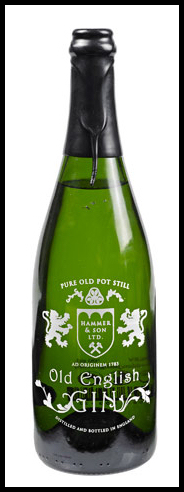 So of course I had to try it at lunchtime. It is rather nice. I recommend it!
This Old English Gin is made from a 1783 recipe, distilling eleven botanicals in Angela, the oldest pot still being used in England today. Despite the number of botanicals used there is a distinct juniper flavour, which I like. (The juniper flavour seems contrary to the current fashion in gin making where the final product appears not to have even seen any juniper — that’s just not gin in my book, more like funny flavoured vodka!)
I spotted this gin on the British Library shop website (of all the unlikely places!) but it seems to be rather more widely available than I had expected. Good grief, it’s even available on Amazon! OK it isn’t cheap, but it is strong (44% ABV) and it is good.
Yes, this is a strong, refreshing gin. In fact it is so good it almost seems a shame to add anything to it, even tonic water. It is definitely too good for making cocktails or using the enhance the curry. Drink it strong with not much tonic, so that the botanicals get a chance to show through.
This could well become one of my most favourite gins, along with Adnams Copper House gin.
Overall Rating: ★★★★★
Ten Things #1
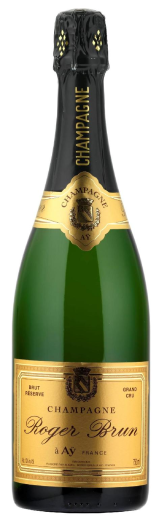 Here beginneth a new monthly series. My idea is that on the tenth of each month I will post a list of 10 things. They may be things I like; things about me; fun things; stupid things; or just random things like ships’ names or types of cauliflower. Who knows until we get there!? It’s just a bit of fun. I’m going to start semi-seriously with …
10 things I want to do in 2014:
- Sleep
- Eat well
- Relax more
- Be more active
- Be miserly
- Keep breathing
- Meditation
- Have a holiday
- Take more photographs
- Drink more champagne
And finally what could be better than …
Something for the Weekend
Just for all you Shakespeare enthusiasts …
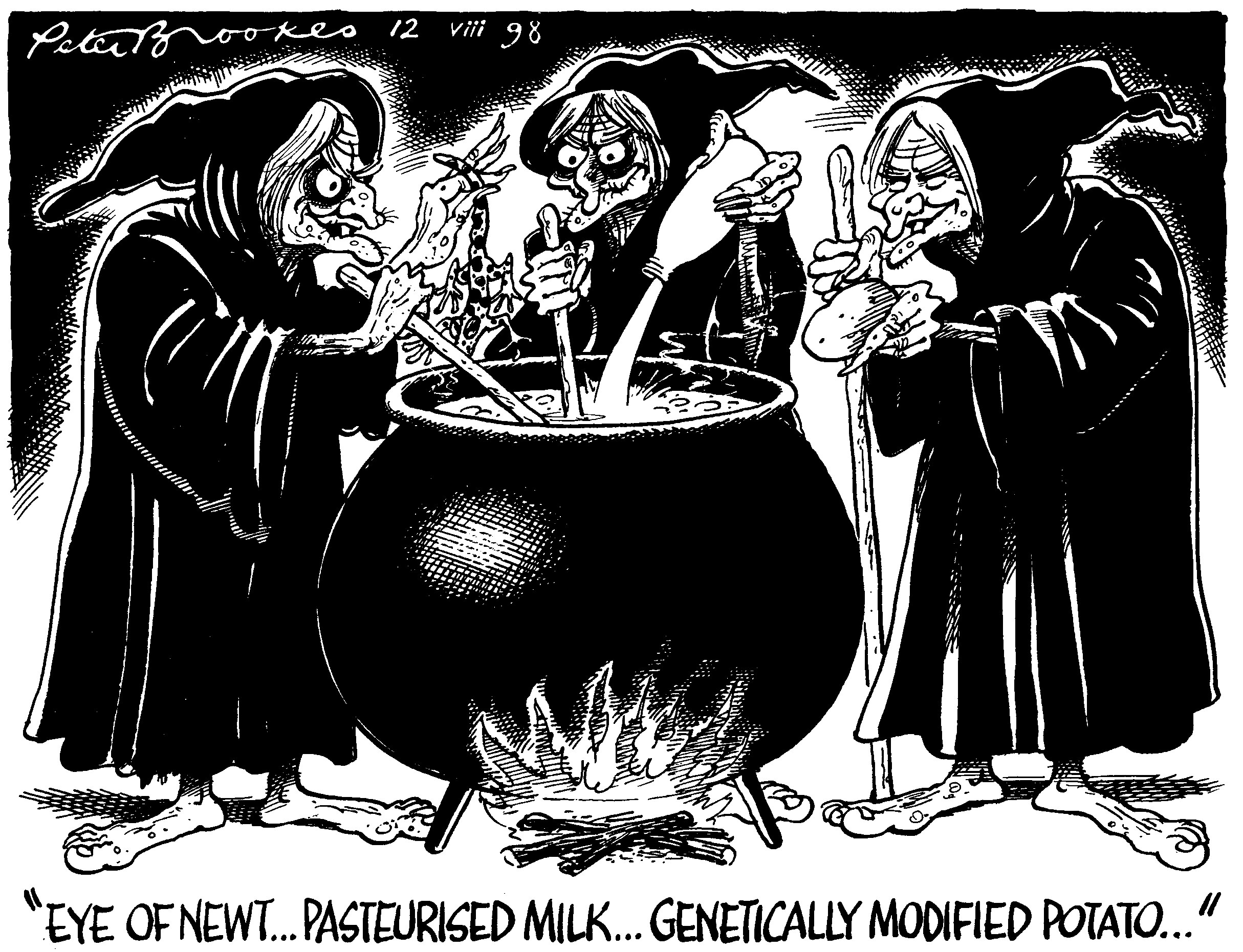
Click the image for a larger version
Oddity of the Week: Sheep Walking
OK, guys and gals, here’s another silly little regular (I hope) series to pique your interest in the middle of the week: Oddity of the Week.
There are just so many odd, curious and amusing facts out there. And they just cry out to be shared. Like everything here some will be serious; some will be amusing; and some will just be terminally out of their tree. It all depends how I feel at the time.
Let’s start with one of those real curiosities of English Law, and in this case a modern one:
Sheep-Walking.
On 10 December 2003 the then Under Secretary of State at the Department of Environment, Food and Rural Affairs, Ben Bradshaw MP, provided a Commons written answer to confirm that taking one’s pet sheep for a walk does not require a licence. However, walking one’s pet pig does: a regulation introduced in 1995 to reduce the risk of spreading disease.