Weekly Photograph

This week another from the archives. I spotted this enormous cup and saucer last summer in the window of Alice’s Shop, in St Aldate’s, Oxford. And yes, that is a normal sized cake stand next to it!

Click the image for larger views on Flickr
Mega Cup
Mega Cup
Oxford; August 2013

Your Interesting Links

Another in our series of links to items you may have missed, but which I found for you.
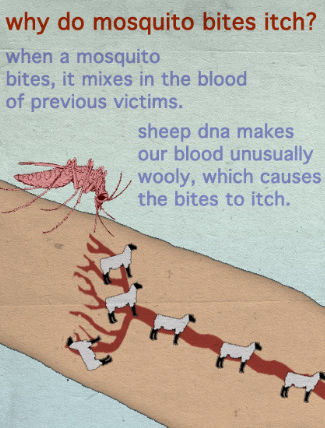
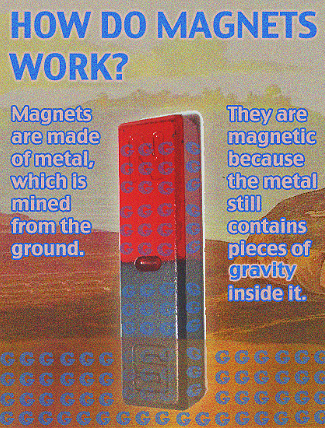
First off let’s kill off a few common science myths which most people seem to believe but which are, well, myths.

Next, something dear to my heart … what gives beer it’s flavour?
Also interesting is what causes the colours of gemstones.
And a third infographic (isn’t that a horrible word?) on how dogs evolved.
Returning to the theme of science mysteries and myths, here are a few things about how the world of flying works.
And on to the medical. What is the classical medieval disease? No not plague, but leprosy. It is something else which is commonly misunderstood, including the fact that it is still around.
And here are seven things you shouldn’t let your doctor do unless you absolutely have to.
Just what were they thinking? A Chinese hospital has installed an automatic sperm extractor.
Yes, apparently female infant masturbation is a thing, at least in America. And it really isn’t a cause for concern.
Meanwhile sex educator and blogger Emily Nagoski has this week been answering sex education questions from her readers. Interestingly one asked “How do you fix sex education?” Here’s Emily’s answer, which is just as applicable to the UK as the USA.
Apparently one psychologist is suggesting that we should give up forcing gender equality in the sciences at school. And from reading this article have to say I agree: far better that boys and girls study what they’re interested in than we channel them into subjects they may not do so well at, just because. At the end of the day I don’t care who deigns my drugs or my car; I’m more interested that they do it well and hopefully enjoy doing it. But that doesn’t mean we should put roadblocks in the way of girls doing science or boys doing needlework. When I was at school (half a century ago!) no-one stopped girls doing science. Yes more girls than boys did English, French and Biology at A-level but almost as many girls as boys did Maths and Physics. And we even had one boy who insisted on doing O-level Domestic Science! Let’s just find out what kids can do and encourage them to do what they enjoy — which should be so much more fulfilling.
Meanwhile according to another doctor we would all be much better off and less stressed if we were all to work a four day week. What he doesn’t say is whether we would get only 4 days pay for it, and if not how it would be funded.
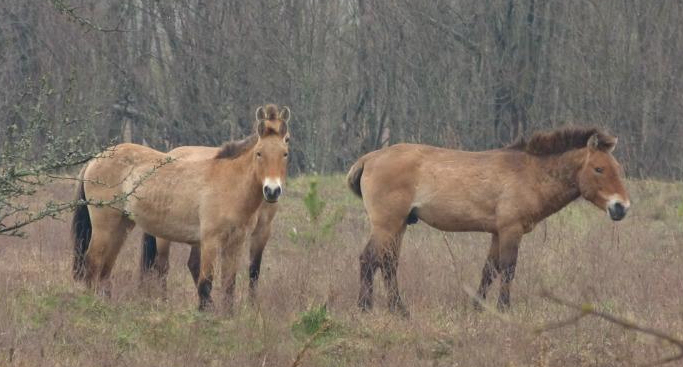
horse

Now an article on how wildlife is thriving in the aftermath of Chernobyl and in the absence of meddling humans.
A very interesting report on some historic experiments to determine if birds of prey see or smell out their carrion lunch.
What to do with dead wood? For the sake of wildlife, just leave it alone.
George Monbiot (who else?) suggests that the principal threat to freedom of expression comes not from state regulation but from censorship by editors and proprietors
Ah, so we’re now onto wordy things. OK, so here are 11 “modern” words which are much older than we think.
Still on words, it seems Shakespeare invented many phrases we take for granted in the modern world.
Which allows us to shimmy quickly to history. Our favourite London cabbie is still writing about the history of Waterloo Station and its environs. Episode 9 is about Waterloo’s darker side.
And while on the darker side, here’s an encyclopaedia of everyday monsters, starting with that widespread parasite, the earworm.
Coming up to date, here are some more infographics who owns all the major brands in the world. So who thought all these companies were independent?
Finally I’ll leave you with this summary of what it is like to be middle aged …

Ten Things #7

So, here’s my list of ten things for July.
10 Trees in My Garden:

  1. Apple (an old tree, which we think is James Grieve; it may be as much as 80 years old but still gives us some fruit every year!); also two ornamental crab apples
  2. Silver Birch; and the closely related Downey Birch
  3. Spruce (not sure the exact species as they were potted Christmas trees)
  4. Rowan
  5. Hawthorn (self-set)
  6. Liquidamber (grown from seed by me)
  7. Cherry — an edible cherry as well as a couple of ornamentals
  8. Pedunculate Oak (that’s Quercus robur, our native English Oak; self-set probably from an acorn cached by a bird; now 20 years old and growing slowly; hopefully a lasting legacy when all the others are gone)
  9. Pittosporum
  10. Holm Oak, Quercus ilex

Pine Cones
Cones on one of our Spruce trees

Yes we really do have that many different species of tree — and a few more — in our (not over large) suburban garden. And we’ve planted/encouraged them all except the old apple tree which was here when we came 30+ years ago. They’re all a bit crammed in and many quite young (under 20) so not all are yet huge trees but the birches, the English Oak and the Liquidamber are as tall as the house. In the past we’re also had a pear tree, ash tree and an elder tree.
The neighbours don’t understand why we like trees. They don’t like anything that grows over 3 feet high. They must like looking at the backs of the houses in the next road.
But we do like trees. They add shade, make dividers between “rooms” in the garden and they encourage wildlife. Because we have a woodland glade we get lots of birds and squirrels as well as woodland edge butterflies like Speckled Wood which wouldn’t be here otherwise.
We need more trees, and suburban gardens are actually a good place for them (just not too close to the foundations). If more people planted a couple of trees it would help clean the air and encourage wildlife by providing small green corridors for them to move along.
Something else we can all do is to encourage our local councils to plant trees in the streets and on verges. Most councils are open to people suggesting a site for a tree. And if you want one outside you house, and are prepared to fund it (our council charges £250 for the tree and planting), the council is more likely to plant that tree.
We need trees. We need to encourage wildlife diversity. We need to keep England green. And you feel good for giving something back to the environment.

Oddity of the Week: Derailed How?

kcm029

This image is from a painting by George Heiron reproduced in an article on “The Engines that Won the War” in The Railway Magazine, July 2014. The caption reads:
A surviving British war hero: WD No. 307 was built by North British in 1940 and was intended for mainland Europe. However, the fall of France that year saw it kept in the UK and used as LMS No. 8233. The WD reclaimed it in 1941 and shipped it to Persia, where it … worked supply trains into Russia. After service there (during which time it was derailed by a camel!) it returned to the UK … It survived until the end of BR steam in August 1968 and was then saved for preservation on the Severn Valley Railway.
Derailed by a camel indeed! And we aren’t even told the fate of the camel.

Weekly Photograph

This week another from the archives. This is a montage of individual shots of the ten Queen’s Beasts statues outside the Palm House at Kew Gardens. They’re magnificent statues some 6 feet tall.
In fact these are replicas in Portland stone (commissioned in 1958 by Sir Henry Ross, then Chairman of the Distillers Company) of the original plaster versions. The originals were commissioned by the British Ministry of Works from sculptor James Woodford to stand in front of the temporary western annexe to Westminster Abbey for the Queen’s coronation in 1953. The originals are now in Canada.

Click the image for larger versions on Flickr
Queens Beasts at Kew
Queen’s Beasts at Kew
May 2010; Royal Botanic Gardens, Kew

The ten heraldic beasts represent the genealogy of Queen Elizabeth II. They are (from L to R):

  • White Greyhound of Richmond
  • Yale of Beaufort
  • Red Dragon of Wales
  • White Horse of Hanover
  • Lion of England
  • White Lion of Mortimer
  • Unicorn of Scotland
  • Griffin of Edward III
  • Black Bull of Clarence
  • Falcon of the Plantagenet

Five Questions, Series 6

Many moons ago I said I would do another round of “Five Questions”. Just to keep us all on our toes. And well, we all need a snigger from time to time.
So here, in series 6, is another selection of difficult and stupid questions, all of which can be interpreted with whatever degree of seriousness and erudition you like — or not.


The five questions for series 6 are:

  1. To what degree have you actually controlled the course your life has taken?
  2. If anything is possible, then is it possible that nothing is possible?
  3. If you had to wear a warning label, what would it say?
  4. If all the nations in the world are in debt, who’s got the money?
  5. What gets you out of bed in the morning?

Again, like the previous series if you take them seriously I think they’re going to be deceptively tricky. I certainly don’t know exactly how I’m going to answer them all; it will depend very much on how I feel at the time.
Anyway I’ll answer them one at a time over the coming weeks, I hope starting next week with question one. If you want to follow along then post your own interpretations in the comments to each answer, or post it on our own blog and put a link in the comments.
And as I’ve said before, if anyone has any more good questions, then please send them to me. I’d like to continue to do this a couple of times a year so good, but potentially fun, questions are needed.

Word: Thixotropic

Thixotropic
Of fluids and gels, having the property of viscosity that decreases when stressed (by stirring or shaking) and returning to the semi-solid state upon standing.
Hence thixotropic paints, which are essentially non-drip because they return to the more solid state quickly following the cessation of stress stirring, brushing).
Some clays are thixotropic, which is important in structural and geotechnical engineering. Landslides, such as those common in the cliffs around Lyme Regis, Dorset and in the Aberfan spoil tip disaster in Wales are evidence of this phenomenon.
Some thixotropic fluids, for example ketchup, return to a gel state almost instantly while others such as yoghurt take much longer.
The word is derived from the Greek thixis, touch + -tropy. The OED gives the first usage in 1927.

Oddity of the Week: Earworms

The Earworm (Halicocephalus strepitus) is a microscopic parasite most commonly found in the inner ear of human beings. These creatures have long been assumed benign due to their symbiotic relationship with nearly all human people and a lack of evidence pointing to their presence as a source of harm. Several scientists attempted to narrow down exactly what earworms subsist on and why our humble ear canals provide such a hospitable environment. Their now-classified research went largely unfinished as the full 8 person team vanished after a few months of experimentation; this wasn’t uncommon for scientists in the 19th century. Though there are few discernible benefits to being an earworm host, there are no demonstrable negative effects either. To keep it that way, make sure you nourish your earworm with high quality repetition. Childhood commercial jingles and any music to which you can recall fewer than 5 consecutive words of lyrics are ideal, but playground songs and modern electronic pop are great alternatives. Odd words and nonsense phrases (eg. tuberous phalange, cantankerous, spoon plumage, serving Council of Nicaea realness) are a sign that your earworms are healthy but restless. Don’t let them become restless.
From: Figueroa’s Findings on the Habits of Everyday Monsters at