On Depression — II

This is the second in my series of articles on depression — my depression. They are written from a very personal perspective; they are my views of how I see things working and what it feels like on the inside. Your views and experiences may be vastly different. My views and experiences are not necessarily backed by scientific evidence or current medical opinion. These articles are not medical advice or treatment pathways. If you think you have a problem then you should talk to your primary care physician.

I was first diagnosed with depression back around 1980 — certainly some time in the two years after Noreen and I married. I have been on and off antidepressants ever since. And over the years I’ve tried just about every possible approach to managing the depression: drugs; psychiatry; counselling; CBT; giving in and curling up under the duvet.
Talking therapies don’t work on me and they never have; I know (and have likely tried) everything they try to suggest and I know already it doesn’t work. Such is the curse of being intelligent, questioning and experimental. The last thing I need is for some therapist to give me something more to do.
For the last couple of years I’ve been having monthly-ish hypnotherapy sessions and even this has not yet been very productive, although I remain hopeful; it feels closer to a solution than many previous attempts.
Looking back I have probably been depressed at least since my teenage years, maybe earlier, although no-one, including me, realised. It may all be tied up with being shy; a loner; and not having many friends.
The first real trigger I can remember was at the start of my second year at university (so over 40 years ago) when my girlfriend of over 2 years and I broke up (at her instigation).** This, piled on top of other circumstances, left me paralysed with depression for several months; I’m very lucky I didn’t totally screw my chances of getting a degree. Of course being male, and young, and not really knowing what was happening, I never got medical help but just tried to struggle on.
Since then, although I have had bouts of more serious depression, above the background level, I am not conscious of any particular thing which has been a trigger. I’m lucky in that I have never been seriously suicidal or into self-harm; that’s something I’ve not had to cope with. Nor do I have bipolar disorder: I never have the highs.
But one general trigger does seem to be a high level of change and overload. Too much to do and/or too much change. This happened when I was at work; everything occasionally got on top of me and I had to take a duvet day. This did my career and reputation no favours, and I was well aware of it. This is also why I never pushed to get higher up the ladder than I did; I knew I didn’t want the aggravation that went with it, much as I would have liked the recognition. It is also why I ended up retiring early, because I could not have done another year of the “project from hell” I was working on.
And this overload/change effect still happens, because I still keep doing things. I cannot not be involved. If I didn’t get involved I fear I would quickly vegetate. As someone expressed it to me the other day: “if I sat at home all day I’d go senile”.
But sometimes everything gets too much. I try not to let it get in the way of things I have committed to do for other people – just as I tried to avoid it affecting my professional life. But that means all too often the fallout descends on my personal life. Hobbies get neglected; and far too often I end up ducking out of something we’ve booked to do. However much I need to find that space, I always feel bad about it because it always affects at least Noreen as well. I’ve got to the stage where the only real way to mitigate this is to book as little in advance as I can. And that in itself is demoralising and depressing.
I’m very lucky in that Noreen does her best to understand this and ride with it, even if she cannot really understand from the outside what the depression is actually like on the inside. Understandably she feels helpless to do anything to alleviate my suffering. I’m continually surprised, and hugely grateful, that Noreen is as understanding and patient as she is. She does a lot to help: doing bits and pieces for me; mopping up after me; quietly, behind the scenes, helping me achieve a lot of the things I get involved in. And she stops me getting involved in too much! I don’t think she realises just how much difference she makes and just how grateful I am. In this I am truly lucky; it is probably the one thing which really keeps me going.

To be continued …

** I’m not going to write in detail about this because although 95%+ of it would be about me there would be things about other people from whom I cannot get consent and who, should they happen to read this, may not wish to be reminded of what happened.

Your Interesting Links

Another selection of articles you may have missed. And there’s not so much hard science in this edition.
#333333;" />Many people still have concerns about vaccinations, which is largely unwarranted. Wired has looked at what actually is in a ‘flu shot.
The Ancient Greeks knew far more than we realise, but did Ancient Greek women use tampons? Seems the jury is probably still out on this one, ‘cos it’s all a matter of language.
Nuts. Most blokes like theirs. Girls: how much do you love you guy’s nuts? Because you should: testes contain the most distinct types of human tissue of anywhere in our bodies. But sorry, girls, the study isn’t reported to have looked at your ovaries — poor show!
How did cats become domesticated? It seems it is probably all down to their genes, which are rather different to their nearest wild relations — although scientists don’t yet understand what all the differences mean.
While on cats, have you ever wondered how much exercise your moggie gets? So some guy fitted a FitBit tracker to his cat Java to find out. Which is seriously cool even if I can’t be bothered to try it!
PS. Java is seriously cool too …


Hands up everyone who sleeps in the nude. You don’t? Seems like you should, ‘cos there’s more evidence it is good for you.
Here’s a short introduction to the history of peppers, both the peppercorn and chilli types. Also something on the heat of the chilli.
I don’t need to ask who out there likes gin ‘cos I know the answer is all of you! So you’ll be interested that a French distiller has recreated the earliest known gin from a 1495 recipe. Sadly you don’t appear to be able to buy it but you can bid for a bottle (proceeds to charity).
Do we drink more than our ancestors did? Answer: as far as we can tell no we don’t; we may actually be drinking less! But it is really hard to tell, especially as beer and wine was weaker in days past.
Mushy peas are nothing new! Rebecca Rupp investigates the development of the modern pea.
From peas to elephants. Here are some of history’s most amusing misconceptions about elephants.
Iron Age Maiden. Boudica, our earliest anti-European (well anti-Roman, anyway) hero!
Sectioning books is something I’d never really thought about. Nicholas Dames in The New Yorker brings us an interesting history of the chapter.
What was made out of handkerchiefs and patented in the USA on 3 November 1914? Yes, a weapon of mass constriction: the bra!
Still on things American, our favourite London cabbie brings us news of a small piece of America in Trafalgar Square.
From there it must be downhill all the way home!
Another favourite London blogger, Diamond Geezer, muses on the single life.
Meanwhile Janet Street-Porter writes a lot of common sense about nudity, which is fine on our screens but which most people won’t tolerate in real life.
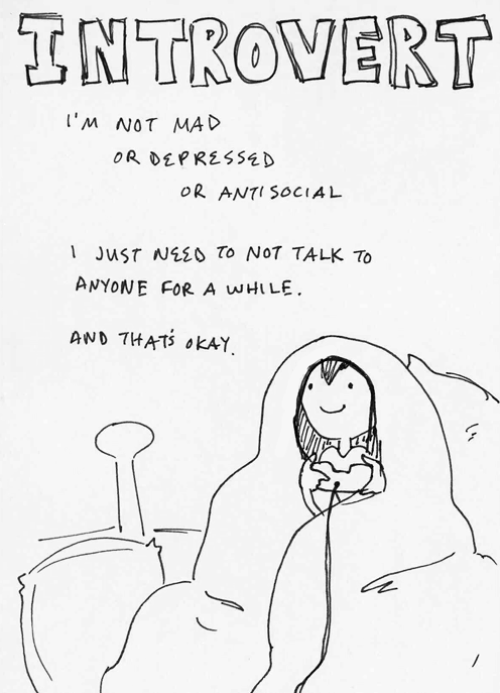
Now look here you extroverts, you need to understand that us introverts interact differently with the world, and that’s OK.

And finally … When did you last do something you wouldn’t normally do for a period? Yes, then. Maybe.
Now I’m off to do something normal.

Ten Things #11

This month’s “Ten Things” continues last month’s theme of “influences”. It was inspired by the quotation from Eleanor Roosevelt which I came across some time back:

Many people will walk in and out of your life, but only true friends will leave footprints in your heart.

So here are 10 people who have left their muddy bootprints on my heart. And no, I’m not going to explain; those who know, know; those who don’t can make wildly wrong guesses.

  1. Jill Broad
  2. Jill Weekes
  3. Noreen Oldman
  4. Victor Stok
  5. Faith Shaw
  6. Barry & Julia Say
  7. Sue Frye
  8. Katy Wheatley
  9. Jessie Hicks
  10. Dan Wilson

Hmmm … interestingly female dominated and not always for the reasons you might think!

Weekly Photograph

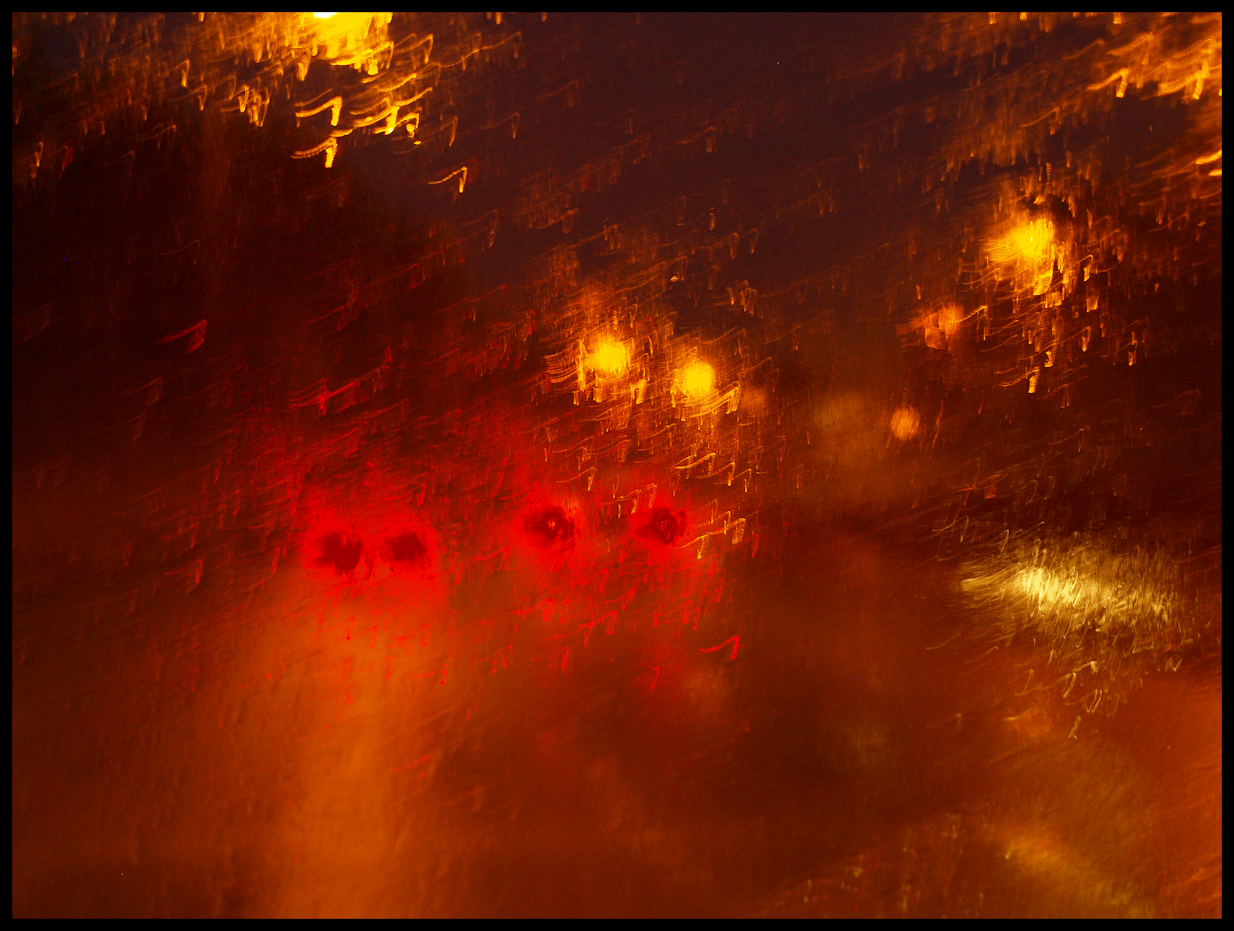
This week’s photograph was taken a few weeks ago on our way back from Norwich. We ran into heavy rain as we neared London. Being in the passenger seat I took the opportunity to capture the moment.

Click the image for a larger view
driving rain
Driving Rain
A1(M) Hertfordshire; October 2014

Five Questions, Series 6 #4

Oh dear, oh dear, oh dear! I had completely forgotten about the ast two questions in my Five Questions series. No excuses; just incompetence! So without further ado, here is the answer to Question 4.


Question 4: If all the nations in the world are in debt, who’s got the money?
Well for a start it isn’t me!
What are we talking about here? Governments being in debt? If so, well yes they are, almost by definition.
Remember that no government has any money. All they have is what they take from us as tax and what they can borrow either on the open market or in exchange for government bonds. So government will always, by definition, be in debt.
So who do governments borrow money from? Basically anyone who will lend it to them. That’s how the market works. And these people are? Businesses and the rich. They are the only people with money.
So however they manage to acquire it — basically selling things either legally or illegally — businesses and people are the only ones with any money.

On Depression — I

This is the first of a series of articles on depression — my depression. They are written from a very personal perspective; they are my views of how I see things working and what it feels like on the inside. Your views and experiences may be vastly different. My views and experiences are not necessarily backed by scientific evidence or current medical opinion. These articles are not medical advice or treatment pathways. If you think you have a problem then you should talk to your primary care physician.

My name is Keith. I have depression.
I have been in a serious bout of depression for most of the last 6 months — yes all summer and autumn — and I have no clue why.
I’ve decided to write a occasional things about depression; my depression. Just because.
Unless you are one of the half a handful of people closest to me you would probably not know I have depression, because most of the time when I’m out and about I can put on a mask to hide it and function more or less normally.
I want to get rid of the depression but I don’t have the first fucking clue how to.
No that isn’t an invitation to tell me how to do it – so please don’t! — because over the years I have tried almost everything and it hasn’t worked (as you’ll see by reading on).
I’ve been on antidepressants for many years; this time around I know it is well in excess of 12 years because I was on them when I changed doctors shortly after the millennium. I’ve been on the tablets for so many years I no longer have a clue whether they are doing any good, but currently it feels as if they’re useless.
Unfortunately the antidepressant I’m on is one of the worst for withdrawal symptoms when you try to get off them. I’ve had several attempts over the years but failed every time. After talking with my GP recently I’m currently having another attempt to switch to a different antidepressant. I’m hopeful this time I will succeed; but I’m fearful that I won’t.
What makes this worse is that I don’t really know why I have depression. I know that it is multifactorial and I know what some of those factors may be. For instance I know that I am worse during the winter and that I do technically have mild SAD (I was tested for that about 25 years ago). I know change and overload are also big factors. And there may be a genetic predisposition as my father and his father were also both depressives. Worrying about all the things I know I should do (exercise, lose weight, blah, blah, blah) makes the depression worse too. So it isn’t as if there is one cause which I can change to fix the problem. I wish there were.
Along with the depression, for me, go anxiety and panic attacks. Fortunately the panic attacks are now relatively rare; much rarer than they were back in the 1990s. But only because I have found strategies to avoid putting myself in the position where they are likely to happen; so I can to a large-ish extent control this.
For instance, I dislike the London Underground: the motion; the lack of fresh air; being packed in like sardines; the claustrophobia. So ask me to travel on a packed tube train and you’re asking me to have a panic attack. So I don’t travel on the underground if I can avoid it, although short distances and the over-ground parts are doable, sometimes. I feel similarly about buses, although there the problem is more to do with motion sickness — something I’ve always suffered from. Compensating for this gets expensive as it means using taxis. And luckily I am OK with normal trains; I’ve always loved proper trains.
Here’s a useful graphic which will tell you a lot more about depression. (Click the image for a larger, readable, version.)

To be continued …

Quotes

Yet another selection of recently encountered bon mots.
If people never did silly things nothing intelligent would ever get done.
[Wittgenstein]
What is true during dreamless sleep is true no matter whether you can recall the experience and write about it or not. What is true in a whorehouse in Bangkok is true whether you visit it and take Polaroids or not. What is true for six-legged aliens on the fifth planet circling Epsilon Centauri is true whether you go there and talk to them or not. You may never know the life your toothbrush leads when you’re not around but it’s certainly real.
[Brad Warner; Hardcore Zen: Punk Rock, Monster Movies and the Truth about Reality]
Man is the religious animal. He is the only religious animal. He is the only animal that has the True Religion, several of them. He is the only animal that loves his neighbour as himself and cuts his throat, if his theology isn’t straight.
[Mark Twain]
To have his path made clear for him is the aspiration of every human being in our beclouded and tempestuous existence.
[Joseph Conrad]
He isn’t a household name even in his own living room.
[David Mellor]
Every scar comes with a story, a memory. Our scars make us who we are. And I’m not only talking about physical scars. We have many scars on our heart and in our mind. Some of these we proudly show off as a sort of trophy of our accomplishments. Others we prefer to keep hidden … every scar has changed the course of our life and is proof of what we’ve been through and what we’ve endured and made it through.
I wouldn’t change one scar. While there are things in my life I wish I would’ve handled differently or avoided altogether, I can never regret those decisions or experiences because they have made me who I am. And I’m OK with that.

[Stephanie Hughes at The Stolen Colon]
As the scholar Paula Arai wrote in a review of Richard Jaffe’s book on clerical marriage, “Men escape domestic duties by marrying. Women escape domestic duties by taking monastic vows!”
[Gesshin at That’s So Zen]
What some people don’t understand is that naturism is designed to heal negative body image. It’s the truest form of body acceptance.
[Steve White on Twitter]
Intuition is the universe telling you what you really want to do. The problem is that we have been taught since birth to drown out our intuition with thought before we can really even understand what those intuitions are.
[Brad Warner; There is No God and He is Always with You]
Water is the softest thing, yet it can penetrate mountains and earth. This shows clearly the principle of softness overcoming hardness.
[Lao-tzu (thanks John Monaghan)]
The Sage falls asleep
Not because he ought to
Nor even because he wants to
But because he is sleepy.

[Lao-Tsu]
At all costs, the Christian must convince the heathen and the atheist that God exists, in order to save his soul. At all costs, the atheist must convince the Christian that the belief in God is but a childish and primitive superstition, doing enormous harm to the cause of true social progress. And so they battle and storm and bang away at each other. Meanwhile, the Taoist Sage sits quietly by the stream, perhaps with a book of poems, a cup of wine, and some painting materials, enjoying the Tao to his hearts content, without ever worrying whether or not Tao exists. The Sage has no need to affirm the Tao; he is far too busy enjoying it!
[Raymond Smullyan, The Tao is Silent]
The Tao does not talk. That’s another reason I like the Tao so much; it doesn’t talk! I hate people who talk too much. When I’m in company, I like to be the one to talk; others should just respectfully listen!
Is it not marvellous that I can talk to the Tao to my heart’s content, and the Tao never contradicts me or answers back? The Tao never criticizes me for being egocentric or talking too much.
When I talk about talking to the Tao, the more sophisticated and psychoanalytically oriented reader will say that I am not really talking to the Tao, I am really talking to myself. But this is not so! Since all words come from the Tao, my talking to the Tao is not really me talking to myself but the Tao talking to itself! So, you see, the Tao talks to itself. Yet the Tao does not talk, it is silent! Is this not a remarkable paradox?

[Raymond Smullyan, The Tao is Silent]
In a rare uncalculating moment, Boris Johnson wrote last year that, if Britain finally ended its “sterile debate” over Europe by leaving the EU, it would quickly discover “that most of our problems are not caused by Brussels, but by chronic British short-termism, inadequate management, sloth, low skills and a culture of easy gratification and under-investment”.
[Michael White; What if Britain left the EU?; Guardian; 04/11/2014]

Book Review: There is No God …

Brad Warner
There is No God and He is Always with You: A Search for God in Odd Places
New World Library, 2013
Brad Warner is an American Sōtō** Zen master, and monk, who lives in the world. He has been practising and studying Zen since 1983 in America and Japan. This is his fifth book looking at various aspects of Zen, what it is and how it works for him in the world rather than in an enclosed monastery.
Zen does not require belief in a god, or gods, or an afterlife, or any of the trappings of the Abrahamic religions (Christianity, Judaism and Islam), Hinduism or many of the other Buddhist traditions. Warner’s assertion is that Buddhism, as a philosophy and way of life rather than a religion requiring faith, has no need of god(s); those “mainstream Buddhism” has have been bolted on over the centuries. In this sense the Zen schools are truer to the original way taught by Gautama Buddha.
And yet Warner says there is a god. Not the Santa Claus figure sitting on a white cloud of the Abrahamic religions; nor the pantheon of Hinduism. God is much more nebulous, not really there at all, certainly not an identifiable figure, and yet is everything and always. To me this seems an essentially pantheistic view, but one emanating from much deeper: from Warner’s enlightenment.
This book looks at a variety of aspects of this god; at what some of the Zen teachings say; and where Warner says they have hitherto been poorly interpreted. The book also looks at the ways and times Warner has encountered this god in the world. He also touches on the philosophical concepts of the meaning of life and the afterlife. Unsurprisingly there is a lot of Brad Warner in the book as he develops nearly all the 22 short chapters from a real worldly experience.
Warner has a light, readable style, which means you can read this book quickly and at a superficial level, as I admit I have mostly done. While the book is an easy read I didn’t find it as captivating as his previous books. That’s not to say it doesn’t make one stop and think from time to time, and I feel sure it would repay another, deeper, reading as Warner packs a lot into just under 200 pages.
If you’re interested in Buddhism, Zen or comparative religion this is worth a read. Who knows, it may even lead you to enlightenment.
Overall Rating: ★★★☆☆
** Forget about the tricks of Zen koans; these are the teaching methods of the Rinzai school of Zen. Sōtō Zen (founded by Dōgen in the 13th century) is more about using pure meditation to discover things for oneself.