OK, so here’s another nasty, not so little, piece of legislation from the UK government.
The new digital economy bill, which is currently going through parliament, intends to block websites hosting “unconventional” sexual content. So who decides what is conventional, and who will implement and police such a ban?
There’s a piece in yesterday’s Guardian (yes, again!) which tries to explain the What, how and why?
Now whether you like so-called pornography or not, this is worrying. The legislation is ill-conceived and appears to be not just draconian but also potentially arbitrary and ill-defined.
Worse, my personal belief is that it infringes freedom of speech (and belief) and I would agree with critics of the bill who say it is not the government’s place to police what kinds of consenting sex (or indeed anything else) can be watched by adults.
I continue to believe that pornography (unless violent, coercive or involving minors) has a valuable place, just as does the rest of the sex industry. You, personally, may find it distasteful — just as I find the idea of male-male sex distasteful — but that doesn’t mean either should be banned and I would always defend your right to indulge should you choose.
The whole of the English-speaking world has a history of drawing its rules of censorship much more tightly than continental Europe. But that changed with the internet allowing information to be streamed direct to our homes without restriction. And the English-speaking, puritan, nanny state doesn’t like it.
It’s time we started treating people like adults and allowing them to make up their own minds. But to do that requires us to invest in sensible education of our children, and isn’t it easier to keep them in ignorance and subjugated?
So-called pornography is not being forced down people’s throats. It is complete myth that the internet is awash with porn at every turn and it’s being gratuitously feed to every child in the land. Yes, it is there, but you (whatever your age) have to look for it. My systems have every available filter turned OFF and still I do not get a continual stream of emails offering me penis enlargement (surely fairly tame?) nor does every Google search bring up 27,000 pages sex videos and bestiality.
It is worrying enough to have the state control our sexual predilections but the fear is that this will go way beyond pornography; it is the first example of any liberal democratic country creating an internet censor. The fear is what such a framework could go on to be used for.
Yes, this is censorship and as such must be resisted.
Wake up, the coffee pot is bubbling on the stove.
Doomed. We're all Doomed.
There was a very depressing piece in yesterday’s Guardian from George Monbiot under a headline: The 13 impossible crises that humanity now faces.
Surprising as it may seem, given the frequency with which I refer to Monbiot, I don’t agree with everything he writes. And I don’t agree with all of this.
For instance I don’t buy his item 7: Job-eating automation. Automation never has reduced the demand for people and the number of jobs available. This was said about the industrial revolution and about computerisation. And in my view it has not turned out to be the case. What has happened is that the jobs have changed.
Notwithstanding the article is a worthwhile but sobering read, especially if you feel like you want to be depressed — or feel in need of a paradigm shift.
Thinking Thursday: Kaprekar's Constant
Another in our very occasional series “Thinking Thursday” …
The number 6174 is known as Kaprekar’s constant after the Indian mathematician DR Kaprekar. This number is notable for the following property:
- Take any four-digit number, using at least two different digits. (Leading zeros are allowed.)
- Arrange the digits in ascending and then in descending order to get two four-digit numbers, adding leading zeros if necessary.
- Subtract the smaller number from the bigger number.
- Go back to step 2 and repeat.
The above process, known as Kaprekar’s routine, will always reach 6174 in at most 7 iterations. Once 6174 is reached, the process will continue yielding 7641 – 1467 = 6174. For example, choose 3524:
5432 – 2345 = 3087
8730 – 0378 = 8352
8532 – 2358 = 6174
The only four-digit numbers for which Kaprekar’s routine does not reach 6174 are repeated digits such as 1111, which give the result 0 after a single iteration. All other four-digit numbers eventually reach 6174 if leading zeros are used to keep the number of digits at 4.
In each iteration of Kaprekar’s routine, the two numbers being subtracted one from the other have the same digit sum and hence the same remainder modulo 9. Therefore the result of each iteration of Kaprekar’s routine is a multiple of 9.
the equivalent constant for three-digit numbers is 495.
For five-digit numbers and above, there is no single equivalent constant; for each digit length the routine may terminate at one of several fixed values or may enter one of several loops instead.
Monthly Quotes
Here is our monthly selection of amusing, interesting and thought-provoking quotes encountered in the last few weeks.
Anger is an acid that can do more harm to the vessel in which it is stored than to anything on which it is poured.
[Mark Twain]
To argue with a person who has renounced the use of reason is like administering medicine to the dead.
[Thomas Paine]
Everyone knows silence is a beautiful thing. Conservatives know it. Liberals know it. People who believe in a literal interpretation of ancient scriptures know it. People who believe in the scientific method know it. Everyone who follows any religion knows it. Even terrorists know it. There is nothing about silence that anyone can argue about. You can’t compare one kind of silence to a different kind of silence. It’s always exactly the same.
[Brad Warner at http://hardcorezen.info/zen-and-the-art-of-rock-guitar/4927]
It may be that this current wave of refugees is human society acting as a single entity to try to balance itself out. I know a guy in Germany who keeps bees. He said you can’t understand bees if you just consider individual insects. You have to think of the hive as a single entity. I wonder if people are like that too.
We don’t act this way consciously, of course. Our so-called “leaders” are just worker-bees with delusions of grandeur. The best they can accomplish is to follow the hive directive while pretending they invented it themselves. I believe a lot of forces are at work that individual human beings can never truly understand because they don’t operate on the level of the individual. The individual is totally inconsequential.
I know a lot of people believe that the human collective must be stupid, that it always devolves into the lowest common denominator. I believed that myself for a very long time. But now I’m starting to wonder if the human collective might be smarter than any of us as individuals. We may be forcing ourselves into these head-on confrontations knowing unconsciously that it’s the only way things will ever get solved.
[Brad Warner at http://hardcorezen.info/resist-xenophobia/4939]
The only success worth one’s powder was success in the line of one’s idiosyncrasy. Consistency was in itself distinction, and what was talent but the art of being completely whatever it was that one happened to be? One’s things were characteristic or were nothing.
[Henry James]
The way a government treats refugees is very instructive. It shows how they would treat the rest of as if they thought they could get away with it.
[Tony Benn]
The difference is important. Freaks lead. Frauds follow. Freaks want out. Frauds want in. Freaks are truth-tellers. Frauds are attention-hounds. Freaks are driven by their weirdness. Frauds perform weirdness for the delight of strangers. Freaks are tenacious. Frauds are thin-skinned. Freaks are in it for life. Frauds are in it for laughs — and when the party’s over, they can always move back home to Connecticut and start studying for the LSAT.
[Chris Richards, Washington Post, 28/10/2016]
All human beings, driven as they are at different speeds by the same Furies, are at close range equally extraordinary.
[Anthony Powell]
But do not lie about all day under a punkah in a dressing gown, reading trashy novels; be trim and neat as you would be in your home in England and when, you lie down, take off all your garments as though going to bed at night and have a complete rest. Then after a cup of early tea, get into fresh dainty kit once more and be ready to meet the “goodman” at tea or wherever it is. You will often feel inclined to give in to slack ways when the heat is severe, but believe me it is better for you both mentally and physically to keep yourself up to the mark, and you will be far better in health and much happier for this little self-discipline.
[Advice to ladies in India during the Raj]
Telling people nudity is good for them is like trying to persuade them to eat healthily. Best way to promote naturism is to just be natural.
[@Ladygod1va]
A long time ago, I found myself working in unfamiliar mountains where I knew nobody. Within days of arriving, I came across a lone rowan by a rock and for the following months, this became ‘my place’. We’re all topophiliacs. We have a predisposition to invest locations with attachments. We should perhaps look at that extended tract of blue and green and grey that was Doggerland and Britain in 9000 BC and see most of it as ‘space’, an abstract, unknown entity. Faintly sketched onto this space were the ‘places’ that were known to foragers and hunters. The story of Britain is a contest between space and place, between the unknown and known, the insecure and secure, the unconfined and confined. Space was imagined from afar; place was experienced from within.
[Nicholas Crane; Making of the British Landscape]
A king can stand people fighting but he can’t last long if people start thinking.
[Will Rogers; humorist; 1879-1935]
One doesn’t have to get anywhere in a marriage. It’s not a public conveyance.
[Iris Murdoch; A Severed Head]
No drug, not even alcohol, causes the fundamental ills of society. If we’re looking for the source of our troubles, we shouldn’t test people for drugs, we should test them for stupidity, ignorance, greed, and love of power.
[PJ O’Rourke]
Bill Clinton and Tony Blair did not possess a narrative of their own. Rather than develop a new political story, they thought it was sufficient to triangulate. In other words, they extracted a few elements of what their parties had once believed, mixed them with elements of what their opponents believed, and developed from this unlikely combination a “third way”.
… … …
the result is first disempowerment then disenfranchisement. If the dominant ideology stops governments from changing social outcomes, they can no longer respond to the needs of the electorate. Politics becomes irrelevant to people’s lives; debate is reduced to the jabber of a remote elite. The disenfranchised turn instead to a virulent anti-politics in which facts and arguments are replaced by slogans, symbols and sensation.
[George Monbiot at https://www.theguardian.com/commentisfree/2016/nov/14/neoliberalsim-donald-trump-george-monbiot]
And the pièce de résistance of the last month …
The thing about forward guidance is that it is guidance that is forward. Which isn’t to say it’s meant to be in any way accurate. Indeed, it would be surprising if it were. The most important thing about forward guidance is that the underlying economic determinants should be correct, not that it should be helpful.
[Mark Carney, Governor of the Bank of England, to Parliamentary Select Committee, 14/11/2016; reported at https://www.theguardian.com/business/2016/nov/15/mark-carney-bank-of-england-brexit-treasury-select-committee]
Cat Cuteness
In today’s episode of cate cuteness from our furry tribe, Tilly has discovered the trough on the study windowsill in which I grow chillies. (The plants were cut back a few days ago and the trough hasn’t yet been moved!)


Meanwhile Wiz has found the warm spot in front of the airing cupboard.

Click the images for larger views on Flickr
Nudity. Why Not?
Yesterday, in between doing lots of other interesting things (which I’m not allowed to write about, at least yet) and having a day off, I came across a thoughtful piece of journalism on nudity.
In The Scientific Reasons Why You Should Just Always Be Naked Lauren Martin looks at some of the evidence in favour of accepting nudity. OK, it’s American — although that doesn’t make it any less valid elsewhere — not greatly detailed and is written with many questions in order to challenge our prejudices and taboos.
It is well worth reading the whole article, but here is the essence:
Things are only taboo because we make them that way.
… … …
Nudity is a taboo … because we primarily equate nudity or nakedness with sexuality and we have taboos about sexuality.
… … …
What would happen if we accepted our bodies the same way we accepted everything else? What would happen if we stopped covering up and started stripping down? What would happen if we all just let our bodies hang out in the open and didn’t hide them …?
… … …
There’s … no denying … that if we could get past our childish perversions and accept nudity as a basic and natural human form, there would be a lot less “deviousness” and fewer obsessions with the human body — and we could all just stop caring so much about it.
… … …
If men … were exposed to nudity on a normal, everyday basis, they wouldn’t fantasize and obsess over it the way 14-year-olds do at the sight of their first breast … By making nakedness an ordinary, matter-of-fact, common experience, unassociated with sexuality, the unhealthy prurient interest in pornography would be considerably lessened.
Imagine if men were desensitized to the female body … Imagine if men stopped putting all their time and energy into seeing women naked and just learned to live side-by-side with them?
… … …
Imagine if we all just looked at each other the way God made us without any implications or idealized notions of the perfect body? … it’s our clothing that creates our insecurities and inability to accept and love each other the way we should.
… … …
What if we’d grown up in a nude household? What if we’d been taught from a young age nudity is natural [and] beautiful?
… children exposed to nudity from a young age became … unfazed by the human body later in life and sometimes, psychologically stronger because of it … children raised around nudity [grow] up with a higher body self-concept … coming from a nudist family [plays] a more significant role in the children’s positive self body-image than their race, gender, or area of the country in which they lived.
… … …
Humans donned clothing to keep away parasites and filth, yet only created breeding grounds for different types of infections and disease … Along with infertility rates and Lyme disease, clothes also contribute to yeast infections and UTIs.
… … …
It seems arbitrary, but walking around barefoot increases brain flexibility. It doesn’t just make you feel young again, it makes your brain feel young again.
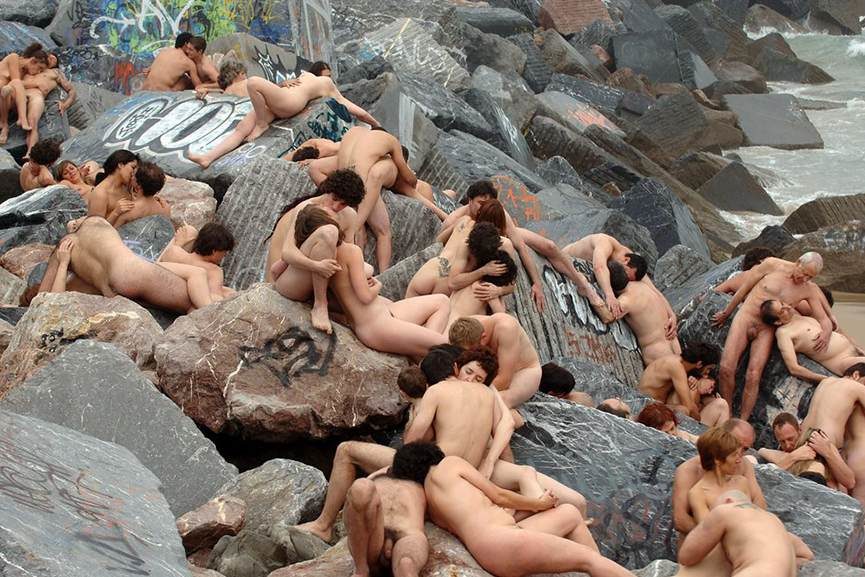
I was brought up in a household where nudity was natural and pornography was seen as a healthy part of life’s rich pattern (but violence and abuse were definitely not acceptable). To this day nudity and pornography don’t faze me — and I fail to understand the taboos around sexuality. I’ve long been an advocate of mixed student residences and mixed changing rooms — if we were all well adjusted to nudity and our bodies this should not be a concern for anyone (but until we are it will be).
I spend time in the nude when I can and I know I have a lot fewer problems with yeast infections and so on because of it. Despite admonishment from the medics I do spend almost all my time at home barefoot (it has to be really cold for me to put socks on) because fresh air is not only better for the feet (see yeast infections, above) but there is thought to be a protective effect against dementia.
So there you have it. An article which looks at some of the evidence and comes out supporting what I’ve been saying for nearly 50 years! Nudity is healthy, mentally and physically, and embracing it would benefit all of us both individually and as a society.
So what really is so special about nudity that we have to make a taboo out of it? Nothing! Get over it.
PS. As an example of how daft all this is, it took me longer to find a suitable illustration for this post than it did to actually write the thing!
A Word for Our Times: Kakistocracy
Kakistocracy
Government by the least qualified or worst persons.
The word derives directly from the Greek κάκιστος worst + -κρατία rule, but ultimately from the Indo-European root kakka-/kaka– (to defecate), which apparently also gave us poppycock, cacophony, cacology and cacography; as well as the Francophone caca. The earliest documented use was in 1829.
H/T: A.Word.A.Day
Word: Ducat
Ducat
1. A gold coin of varying value, formerly in use in most European countries; said to be worth about 9s. 4d.
2. A money of account in the Venetian republic.
3. (loosely) A piece of money.
The etymological origin of the name is from Medieval Latin ducatus, 12th century Italian ducato, initially meaning “duke’s coin” or a “duchy’s coin”. According to the OED, the first recorded use in English was around 1384 by Chaucer.

Venetian ducat from the time of Doge Michele Steno, 1400-1413
Originally used as the name of a silver coin issued in 1140 by Roger II of Sicily the ducat became a trading coin largely due to its use by Venice. The first gold ducat, also called zecchino d’oro, was struck at Venice in 1284 under the Doge John Dandolo. Subsequently many European states issued their own ducats (and fractions of ducats) usually of gold, but sometimes of silver. As always there is a lot more information on Wikipedia.
Meme Me
Thanks to Emily Nagoski over on Facebook, I bring you a slightly different meme — well at least one I’ve not seen before. The original is somewhat too American for my liking so I’ve Anglicised both the language and some of the questions. So here goes …
Piercings : 1
Children : None
Surgeries : At least 5
Fired a gun : No
Quit a job : Twice
Flown in a plane : Quite a few times
Been 100+ miles by car : Only twice (there and back) so far this year
Been 100+ miles by train : Oh so many times
Been zip lining or bungee jumping : No way!
Cried over someone : No
Fallen in love : A few times
Skipped school : Once, when aged 8, my parents took me to the Chelsea Flower Show
Watched someone give birth : No
Watched someone die : No
Been to Canada : No
Been in an ambulance : Yes, once
Bid at an auction (eBay doesn’t count) : Yes, and I won
Been to Egypt : No
Been to Scotland : Yes
Visited Disneyland (US or Europe) : No, and I have no desire to
Visited Poland : No
Visited Las Vegas : No, and again I have no desire to
Sung karaoke : Not on your life!
Had a pet (or pets) : Yes, many
Been sledding on big hill : No
Been downhill skiing : No, I have no wish for a broken leg
Ridden on a motorcycle : Scooter yes, motorbike no
Ridden a horse : Yes, once and never again
Been in hospital overnight : Yes on at least 6 occasions
Donated blood : No, to my shame
Driven a Transit van or bigger : No, I’ve never driven anything
Been in the back of a police car : No
If you’re daft enough to want to play this very silly game — well at least it will provide 5 minutes distraction from these trying times — then copy the list, past it to your blog or Facebook, oh and don’t forget to update your answers!
Toodle pip!
Word: Sarcophagus
Sarcophagus
 1. A kind of stone which the Greeks supposed had the property of consuming the flesh of dead bodies deposited in it, and which was consequently used for coffins.
2. A stone coffin, especially one embellished with sculptures or bearing inscriptions, etc.
3. A wine-cooler.
The word comes into English, via Latin, from the Greek σαρκοϕάγος (sarkophagos) = σαρκο- (sarko-), σάρξ (sarx) flesh + -ϕάγος (-phagos) eating.
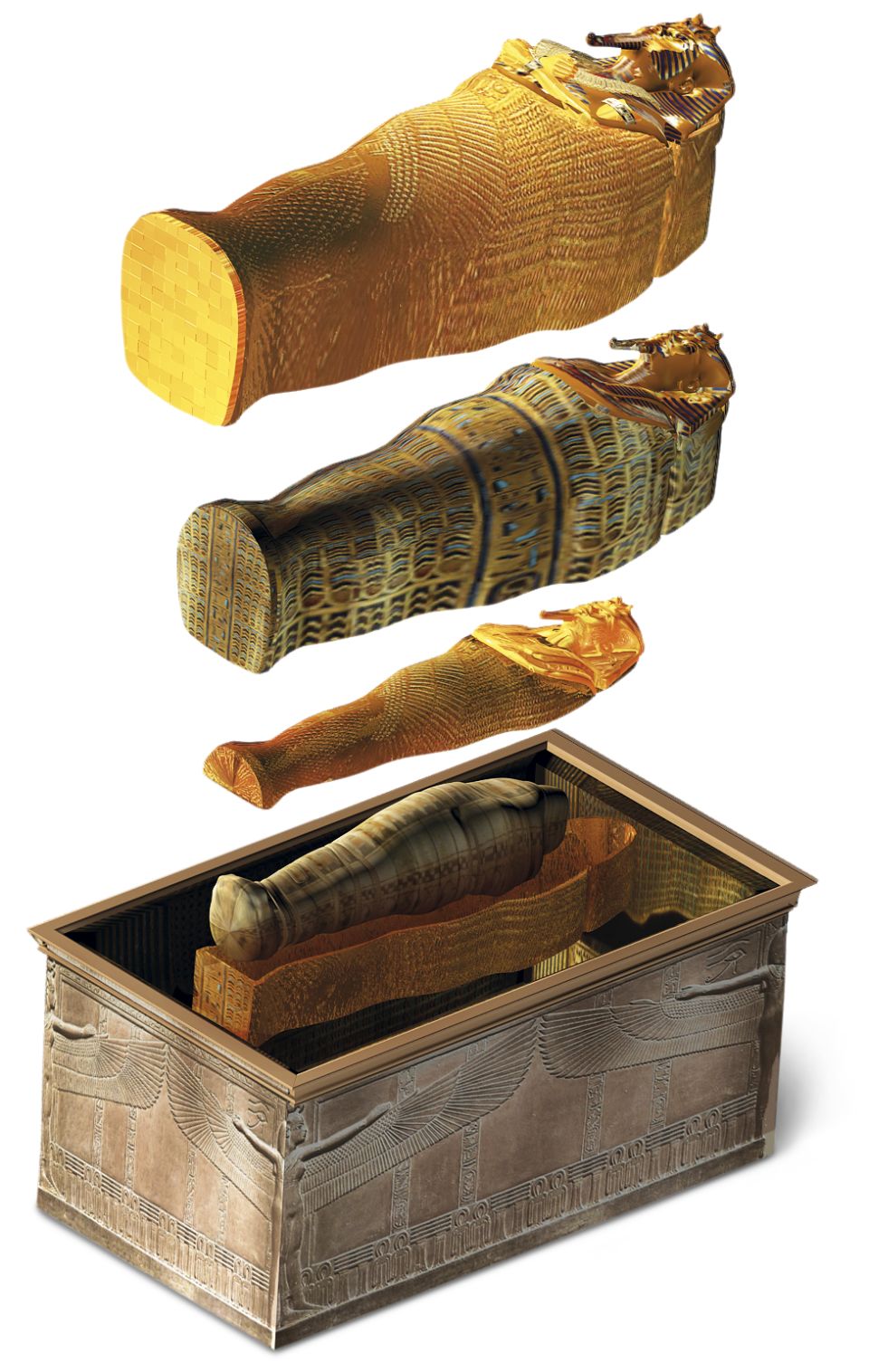
The OED records the first use with meaning 1 in 1601 and with meaning 2 in 1705. Perhaps the most famous Sarcophagus is that of the Egyptian Pharaoh Tutankhamun, although the highly decorated coffin we think of is actually the second of a layer of three which were then placed in the stone sarcophagus.