Shittimwood
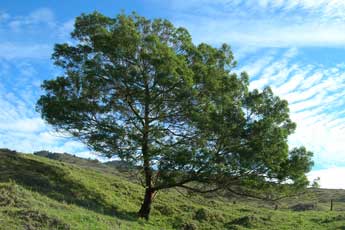
The wood of the shittah tree (a species of acacia) from which the Ark of the Covenant and furniture of the Tabernacle were made.
[From the Hebrew shiṭṭīm, plural of shiṭṭāh; original meaning unknown]
Shittimwood
The wood of the shittah tree (a species of acacia) from which the Ark of the Covenant and furniture of the Tabernacle were made.
[From the Hebrew shiṭṭīm, plural of shiṭṭāh; original meaning unknown]
Callipygian
Having well-shaped or finely developed buttocks.
(In more modern parlance) having a nice bum.
From the Greek καλλίπῡγος, κάλλος beauty + πῡγή buttocks.
The Ancient Roman Statue Venus Callipyge is literally “Venus with the beautiful buttocks”.
Hat-tip: Steve Olle for reminding me of this superb word!
Postilion, postillion

Post chaise with postillion
Heterodox
1. Not in accordance with established doctrines or opinions, or those generally recognized as right or ‘orthodox’.
2. Holding opinions not in accord with some acknowledged standard.
3. An opinion not in accord with that which is generally accepted as true or correct.
Time for another interesting and fun word, so I give you:
Blackamoor
1. A black-skinned African, an Ethiopian, a Negro; any very dark-skinned person.
and thus by association …
2. A devil.
3. Black-skinned, quite black.
The OED gives the earliest written citation as 1547. The word was used for several centuries without the deprecatory or pejorative connotations we may infer given that it often referred to slaves or servants; it merely served as being descriptive. While, like piccaninny, the word itself has fallen out of use, largely due to it’s perceived pejorative inferences, one can still find a significant number of public houses in the UK with the similarly inspired appellation The Black Boy(s).
Curtilage
1. A small court, yard, or piece of ground attached to a dwelling-house and forming one enclosure with it, or so regarded by the law. The area attached to and containing a dwelling-house and its out-buildings. (Now mostly used in legal or formal settings.)
2. (Obsolete) Tillage of a croft or kitchen-garden.
As regular readers will know I love words. Almost any words. But I’m always especially attracted to those words which English has acquired from Indian mostly during the British Raj.
What I had never realised is that in the 1870s two men, Arthur Burnell and Colonel Henry Yule, documented all those words of Asian origin which English had acquired. Sadly Burnell died before the 14 years project was completed, but since its publication Hobson-Jobson: A glossary of colloquial Anglo-Indian words and phrases, and of kindred terms etymological, historical, geographical and discursive has never been out of print.

And now there’s to be a new edition of the 1000 page work; it is being prepared for the OUP by Dr Kate Teltscher of Roehampton University.
The BBC News item about this lists over 50 well known words we acquired from India and includes these wonderful lines from Tom Stoppard’s play Indian Ink:
Flora: While having tiffin on the veranda of my bungalow I spilled kedgeree on my dungarees and had to go to the gymkhana in my pyjamas looking like a coolie.
Nirad: I was buying chutney in the bazaar when a thug who had escaped from the chokey ran amok and killed a box-wallah for his loot, creating a hullabaloo and landing himself in the mulligatawny.
[And even then amok is Mandalay!]
OK, the lines are a bit contrived but they do go to show just how big an influence the Raj had on our culture. And it’s not just words and foods (like chilli, curry, piccalilli, mulligatawny and IPA) but as this list of words used in the BBC News item shows it pervades our whole culture.
| atoll avatar bandanna bangle bazaar Blighty bungalow cashmere catamaran char cheroot cheetah chintz chit chokey chutney cot cummerbund curry pyjamas |
dinghy doolally dungarees guru gymkhana hullabaloo jodhpur jungle juggernaut jute khaki kedgeree loot nirvana pariah pashmina polo pukka pundit purdah |
sari shampoo shawl swastika teak thug toddy typhoon veranda yoga calico chilli coolie dam gingham mulligatawny tiffin wallah |
Sure there were many things wrong with the British Raj, but isn’t that just the most superb set of words?! To whet your appetite even further here are a handful of the original Hobson-Jobson definitions:
Kedgeree: A dish of seasoned rice. “A mess of rice, cooked with butter and dal and flavoured with a little spice and shred onion”.
Shampoo: To “knead and press the muscles with the view of relieving fatigue”.
Pyjamas: A “pair of loose drawers or trousers, tied round the waist”.
Gymkhana: “It is applied to a place of public resort at a station, where the needful facilities for athletics and games of sorts are provided”.
Veranda: “An open pillared gallery round a house”.
Isn’t it also interesting how the meanings have changed over the years. Notice that there is no mention of fish or eggs in kedgeree, and shampoo has nothing specific to to with hair!
I feel some book-buying coming on.
Continuing our occasional series on the now prevalent appalling use of the English language.
In the last couple of days we’ve taken the train on a journey down to Somerset and back (more of which anon) and have been subjected to the vagaries of the English language as perpetrated by train company staff (I was going to say BR, but of course it no longer exists!).
There is the now ubiquitous Train Manager (I think they mean Guard or Ticket Inspector) speak:
We will be arriving into [station]
Our next station stop is [station].
And there is Buffet Steward-ese:
We will be serving teas, coffees and hot chocolates, hot and cold snacks, … and an on-board chef.
But yesterday I heard for the first time a new one from a Train Manager:
If you require any further information please ask from myself [name].
Maybe we need to get Jamie Oliver to sort out Train Company English rather than School Dinners?
Quetzal
1. An extremely beautiful bird (Pharomachrus mocino, the Resplendent Quetzal) of Central America; the male is remarkable for its long tail and wing coverts of resplendent golden-green. These largely solitary birds feed on fruits, berries, insects and small vertebrates.
2. The name of a silver Guatemalan coin, initially equivalent to one US dollar, and comprising 100 centavos.
The name “quetzal” is from Nahuatl quetzalli, “large brilliant tail feather” , from the root quetz = “stand up” used to refer to an upstanding plume of feathers.
Item 1 of “a lot”, judging by most of the written English I see.
Let’s forget the much over-discussed greengrocers’ apostrophe and look at a few of my bêtes noir of grammar and vocabulary.
of. Very few if any past participles in English take “of”. So not “bored of” but “bored with”. Not “sensitive of” but “sensitive to”. And especially not “off of”, just “off”!
Chef’s “off”. Why do chefs have to “do off” everything. “I’m just going to fry off these onions”! Argghhh! None of the verbs you guys use should have “off” added. At best it is affectation, at worst slovenliness. Just “fry” will do!
Decimate. Unless you really do mean a reduction by exactly 1 in 10 it is incorrect.
Different to. No. Something is “different from” something else. But it is “similar to” another. Likewise things are “compared with” each other not “compared to”.
My school teachers also always used to deride the old exam favourite “compare and contrast” as being tautology: “compare” technically includes both similarities and differences, so “contrast” is unnecessary.
Impact on. Things do not “impact on” each other. They may “impact”, “collide”, “interact” or “impinge”, none of which need “on”.
Nude and Naked. The OED gives these as cognates, at least as far as human form is concerned, although I discern some variation. Used alone they are absolutes: both mean undressed; totally undressed; not wearing a bikini, or socks, or a hat. But gradations of nakedness (but not, I discern, nudity) can be indicated by the use of “almost”, “nearly”, “not quite” etc. Naked may also mean devoid of hair (where hair would generally be expected). Naked is much more readily and correctly applied to plants, animals, land, swords etc. etc.
Less and Fewer. The rule here is simple. Less of a quantity. Fewer of number. So we would get “less milk from fewer cows” and not any other variant.
OK, so language is a living thing and subject to change. But one had to have some standards, you know!