Djinn or jinn.
 In Islamic mythology (including the Quran) an order of spirits lower than the angels which is said to have the power of appearing in human and animal forms and which can to exercise supernatural influence over men. Together, the djinn, humans and angels make up the three sentient creations of God.
In Islamic theology djinn are said to be creatures with free will, made from smokeless fire by Allah just as humans were made of clay etc. This free will allows them to do as they choose thus, like humans, the djinn can be good, evil or neutrally benevolent. They are usually invisible to humans, and humans do not appear clearly to them. They have the power to travel large distances at extreme speeds.
Commonly used as the singular to denote an individual spirit.
Like many words it seems to have it’s origins in English in the latter part of the 17th century, I suppose reflecting the increasing importance of international trade and travel. Due to The Thousand and One Nights, and hence Aladdin and pantomime, they are now best known as genies residing in lamps and bottles.
 According to the
  One employed in a particular occupation or activity (eg. kitchen wallah; rickshaw wallah).
 In Islamic mythology (including the Quran) an order of spirits lower than the angels which is said to have the power of appearing in human and animal forms and which can to exercise supernatural influence over men. Together, the djinn, humans and angels make up the three sentient creations of God.
 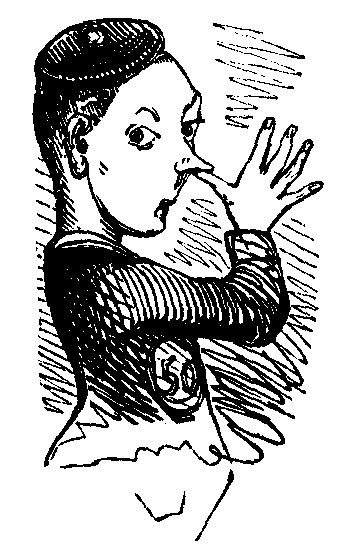 I’m sure that we can all guess it means “a situation which is shambolic from every possible angle”. Oh, yes, just like the BBC!