Panacea
A remedy, cure, or medicine reputed to heal all diseases; a catholicon or universal remedy.
From the Greek (via Latin) παν + ἀκἐομαι, everything + to heal or to cure.
The OED says the first recorded usage in English was in 1548.
Category Archives: words
Word: Lambrequin
Lambrequin
- An ornamental hanging covering the edge of a shelf or the upper part of a window or door.
- A border pattern giving a draped effect, used on ceramics etc.
[Think of the filigree ornamental wooden edging on Victorian railway station canopies or on the Colonial Governor’s house.] - A heavy protective cloth or scarf worn over a helmet in medieval times.
- In heraldry another name for mantling.

The word is a surprisingly late import from French with, according to the OED, the first use being in 1725 in Coats Dictionary of Heraldry.
Your Interesting Links
Another round of pointers to articles you probably missed the first time …
According to Dan Vergano at BuzzFeed Mars Missions Are A Scam, as I have always suspected. He lays out the opinions of many scientists that, despite claims by NASA and various private outfits, we have neither the know-how nor the funding to send people to the Red Planet.
Also on things celestial, did you know that Earth has a second moon, with a crazy orbit, and that we didn’t know about it until recently.
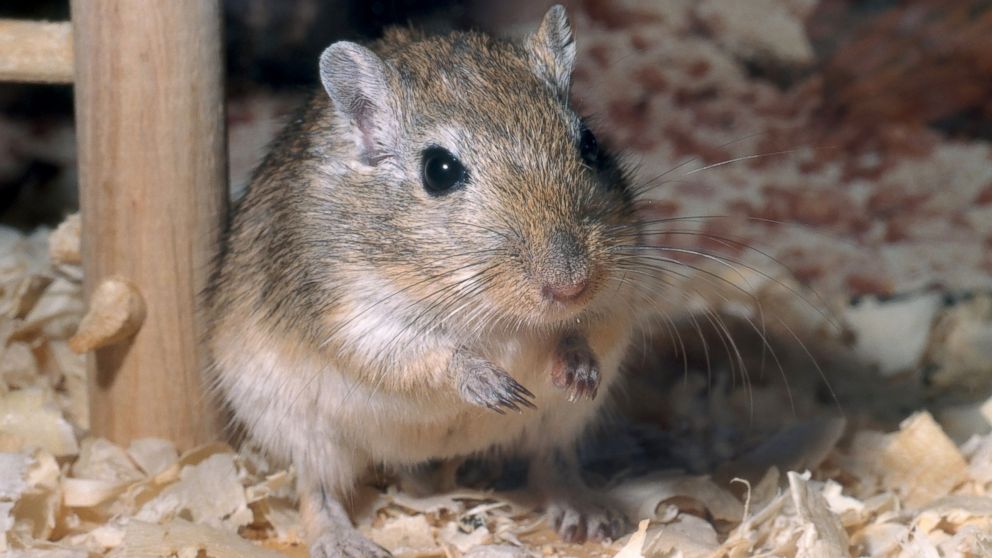
There’s a new theory that it was cute little gerbils and not nasty rats which were to blame for spreading bubonic plague. Yeah right. Maybe in Asia, but we don’t have indigenous gerbils in Europe. [Why is it that rats are nasty and dirty unless they’re gerbils or squirrels?]
How self-aware are animals? Well certainly Asian elephants, magpies and great apes are among the species that can self-recognize. But what do animals see in the mirror?
And then we have to ask whether what they see is blue, because there is another theory that no-one could see the colour blue until modern times. It is a theory which I don’t entirely buy … we must have been able to see blue but we may not have decided what to call it.
And here’s another curiosity about sight … It appears that we have fibre optic cables in our eyes which act to separate different colours of light and direct the colours to the correct cones. But it implies that, contrary to what I had been led to believe, we have only red and green sensitive cones and it is the rods which are blue sensitive.
DON’T PANIC but right now you are breathing a potentially dangerous substance: AIR. Maybe you don’t want to know what floats around in this essential ingredient of life but there are guys who make it their job to find out. [Long read]
Still on human biology, here’s a troubled history of the foreskin — albeit a US-centric history. Curious irony: Americans will campaign vigorously against FGM and yet they routinely circumcise their own male children; somehow this does not compute! [Another long read]
So girls, your turn: there is nothing wrong with your sex drive. Sex educator Emily Nagoski writes an op-ed in the New York Times. Oh and I’m reading her new book Come as You Are: The Surprising New Science That Will Transform Your Sex Life on which her op-ed is based; it’s well written and very interesting.
So why is it that the menstruation taboo just will not go away?
It isn’t as great a step to this next item as one might think … What’s it like to have a form of synaesthesia in which you taste words. Pretty horrible when they taste of ordure.
And here’s another curiosity … it seems that after we shake hands with someone of the same sex we surreptitiously smell the palm of our right hand, presumably for scent markers. But we don’t do it if we shake hands with someone of the opposite sex. Guess it has to be more dignified than dogs smelling each other’s bums.
It seems that Lewis Carroll’s two Alice in Wonderland books reveal some interesting facets of the brain.
Gerardus Mercator was the 16th century cartographer who came up with the projection we mostly still use for mapping the globe onto a sheet of paper. Where it falls down is that it distorts the relative sizes of countries, making those nearer the poles appear larger than they should. There are other projections, of course, but because they are all a 2D mapping of a 3D object all will have distortions somewhere.
From maps to languages … the latest research suggests that Indo-European languages originated about 6000 years ago in the Russian grasslands.
And still on words, here’s a fascinating Guardian piece by Robert Macfarlane on rewilding our language of landscape. [Long read]
And finally here’s a review of Ruth Scurr’s new biography of John Aubrey. Her approach of writing the biography as a sort of diary in Aubrey’s own words is a very interesting approach — I’m reading the book and so far it is a method which works.
Word: Tarantism
Tarantism
1. A hysterical malady, characterized by an extreme impulse to dance, which prevailed in parts of Italy from the 15th to the 17th century, popularly attributed to the bite of the tarantula. The dancing was sometimes held to be a symptom or consequence of the malady, sometimes practised to cure it.
2. Overcoming melancholy by dancing; the uncontrollable urge to dance.
First used in English around 1640, according to the OED the word is derived from the modern Latin tarantismus, Italian tarantismo and French tarentisme which in turn derive from the Italian town of Taranto. However it was popularly associated with Tarantola, the tarantula spider.
Word: Bascule
Bascule
A device operating like a balance or see-saw, especially an arrangement of a movable bridge, by which the rising floor or section is counterbalanced by a weight.
A bridge with a movable section hinged about a horizontal axis and counterbalanced by a weight.
London’s Tower Bridge has two bascules …

From the French bascule, formerly bacule, a see-saw; from battre to beat, to bump, or bas low, down + cul the posterior.
The word appears to have been first used in English in 1678.
Word: Gynandromorph
Gynandromorph
An organism that contains both male and female characteristics.
The term is mainly used in the field of entomology where butterflies occasionally occur displaying both male and female characteristics because of sexual dimorphism.
A gynandromorph can have bilateral asymmetry, one side female and one side male, or they can be mosaic, a case in which the two sexes aren’t defined as clearly (as in the calico lobster below).
As well as insects, cases of gynandromorphism have also been reported in crustaceans, especially lobsters, in birds and very occasionally in mammals.


Gynandromorph is derived from the Greek gyne female + andro male + morph form.
Note that gynandromorphism is different from hermaphroditism where only male and female reproductive organs are present as in, for example, some slugs and snails.
Word:
Chirography
1. Handwriting.
2. One’s own handwriting or autograph.
3. A style or character of writing.

The word was first recorded (at least according to the OED) in 1654 and derives from the Greek.
Word: Wassail
Wassail
 1. A salutation used when presenting a cup of wine to a guest, or drinking the health of a person (to which the correct reply is “drink-hail”) and thus by extension any general salutation.
2. The liquor in which healths were drunk and particularly the spiced ale used in Twelfth Night and Christmas Eve celebrations.
3. A custom observed on Twelfth Night and New Year’s Eve of drinking healths from the wassail-bowl and hence a carousal or riotous festivity.
4. A carol or drinking song sung by wassailers.
5. To drink to the health of fruit-trees, cattle etc. in wassail, in order to ensure their thriving — hence the tradition of wassailing apple trees.

According to the OED the word is first recorded in Geoffrey of Monmouth circa 1140. It derives from the Old Norse ves heill via the Old English wes hál, literally ‘be in good health’ or ‘be fortunate’ and the Middle English wæs hæil.
Word: Acetarious
Acetarious
Used in salads, as lettuce, cress, etc.
The OED records the first usage as being 1822.
Word: Entheogen
Entheogen
A psychoactive substance which is used in a religious or shamanic ritual or to bring about a spiritual experience, typically a plant or fungal extract.
Entheogens can supplement many diverse practices for transcendence and revelation, including meditation, psychedelic art and magic.

Entheogens have been used in a ritualized context for thousands of years; their religious significance is well established in anthropological and ethnographic studies. Examples of traditional entheogens include: peyote, psilocybin mushrooms, cannabis, ayahuasca and Amanita muscaria.
The OED says the word was first used in 1979 and is derived from the ancient Greek ἔνθεος, divinely inspired, or perhaps more literally “creating god within”.