Does anyone else have the occasional memory spring randomly into their mind about something heard or learnt in childhood but had long forgotten? Of course it usually happens when you’re in the shower or just dropping off to sleep, so you forget about it again even though you would like to investigate it.
Well that happened to me the other night, yes, as I was dropping off to sleep. Luckily I wasn’t so asleep I couldn’t scribble a reminder. (I always have a pad of Post-Its and a pencil by the bed.)
And what was this? Something I got from my mother as a child: dialect numbers and counting used by shepherds in various areas of the UK. I learnt one from my mother, but there are many and they’re all slightly different.
Imagine you’re counting sheep on a hillside. The one I learnt goes like this:
You can just see the old shepherd, who can just count to ten on his fingers, using this to count his flock.
I shouldn’t have been surprised to find that Wikipedia lists a couple of dozen such sheep counting schemes from around the UK. Apparently this one comes from Borrowdale. That would fit as my mother certainly spend time hostelling in the Lakes before the war.
At least it is logical — well as logical as the way the French count above sixty, where for instance 63 is soixante-treize, and 92 is quatre-vingt douze.
Isn’t it just brilliant?!
Kakistocracy
Government by the least qualified or worst persons.
The word derives directly from the Greek κάκιστος worst + -κρατία rule, but ultimately from the Indo-European root kakka-/kaka– (to defecate), which apparently also gave us poppycock, cacophony, cacology and cacography; as well as the Francophone caca. The earliest documented use was in 1829.
H/T: A.Word.A.Day
Ducat
1. A gold coin of varying value, formerly in use in most European countries; said to be worth about 9s. 4d.
2. A money of account in the Venetian republic.
3. (loosely) A piece of money.
The etymological origin of the name is from Medieval Latin ducatus, 12th century Italian ducato, initially meaning “duke’s coin” or a “duchy’s coin”. According to the OED, the first recorded use in English was around 1384 by Chaucer.
Venetian ducat from the time of Doge Michele Steno, 1400-1413
Originally used as the name of a silver coin issued in 1140 by Roger II of Sicily the ducat became a trading coin largely due to its use by Venice. The first gold ducat, also called zecchino d’oro, was struck at Venice in 1284 under the Doge John Dandolo. Subsequently many European states issued their own ducats (and fractions of ducats) usually of gold, but sometimes of silver. As always there is a lot more information on Wikipedia.
Sarcophagus 1. A kind of stone which the Greeks supposed had the property of consuming the flesh of dead bodies deposited in it, and which was consequently used for coffins.
2. A stone coffin, especially one embellished with sculptures or bearing inscriptions, etc.
3. A wine-cooler.
The word comes into English, via Latin, from the Greek σαρκοϕάγος (sarkophagos) = σαρκο- (sarko-), σάρξ (sarx) flesh + -ϕάγος (-phagos) eating.
The OED records the first use with meaning 1 in 1601 and with meaning 2 in 1705. Perhaps the most famous Sarcophagus is that of the Egyptian Pharaoh Tutankhamun, although the highly decorated coffin we think of is actually the second of a layer of three which were then placed in the stone sarcophagus.
Zanzibar
Zanzibar is now a semi-autonomous region of the East African country of Tanzania. Situated off the coast of the mainland just north of Dar es Salaam, it is an archipelago consisting of two large islands, Unguja (the main island, referred to informally as Zanzibar) and Pemba, and many smaller ones. Long ruled by Arabs (mostly from Oman) it was a Portuguese colony and latterly a British Protectorate, before merging with the then country of Tanganyika (now Tanzania) in the 1960s. Zanzibar’s main industries are spices (especially cloves, nutmeg, cinnamon and black pepper), raffia and tourism.
The word Zanzibar comes from Arabic Zanjibār (زنجبار), which is in turn from Persian Zang-bār (زنگبار), a compound of Zang (زنگ, “Black”) + bār (بار, “coast”).
As so often there is a whole host more information on Wikipedia.
Pelage
1. The coat of a mammal, consisting of hair, fur, or wool, as distinct from bare skin.
2. Something that resembles the coat of a mammal Pelage is the mammalian equivalent of “plumage” for birds.
The word is not recorded by the OED until around 1830, whereas it is derived from the Old French peil, pel, or poil meaning hair or down.
Compare with French peler, to deprive of hair — and hence depilation (which is a much older arrival in English).
Apricate
1. To sunbathe or bask in the sun
2. To expose to sunlight ApricateThe word is derived from the Latin aprīcāt- (participial stem of aprīcāri) “to bask in the sun”.
According to the OED the first use was probably in 1691, and John Aubrey is recorded as the second user in 1697. The word has however remained rare.
What is perhaps surprising is that the fruit apricot is not derived from this root but (the OED says) from Greek via Spanish Arabic.
Flocculate
1. (v) To cause individual particles suspended in a liquid to aggregate into small clumps or cloudy masses which often remain for some time suspended in the liquid rather than falling quickly to the bottom. (See diagram below.)
2. (n) The masses resulting from such flocculation.
Flocculation of suspended algae from pond water
Surprisingly the word was not in use until the mid-19th century.
Eccentric looks at life through the thoughts of a retired working thinker



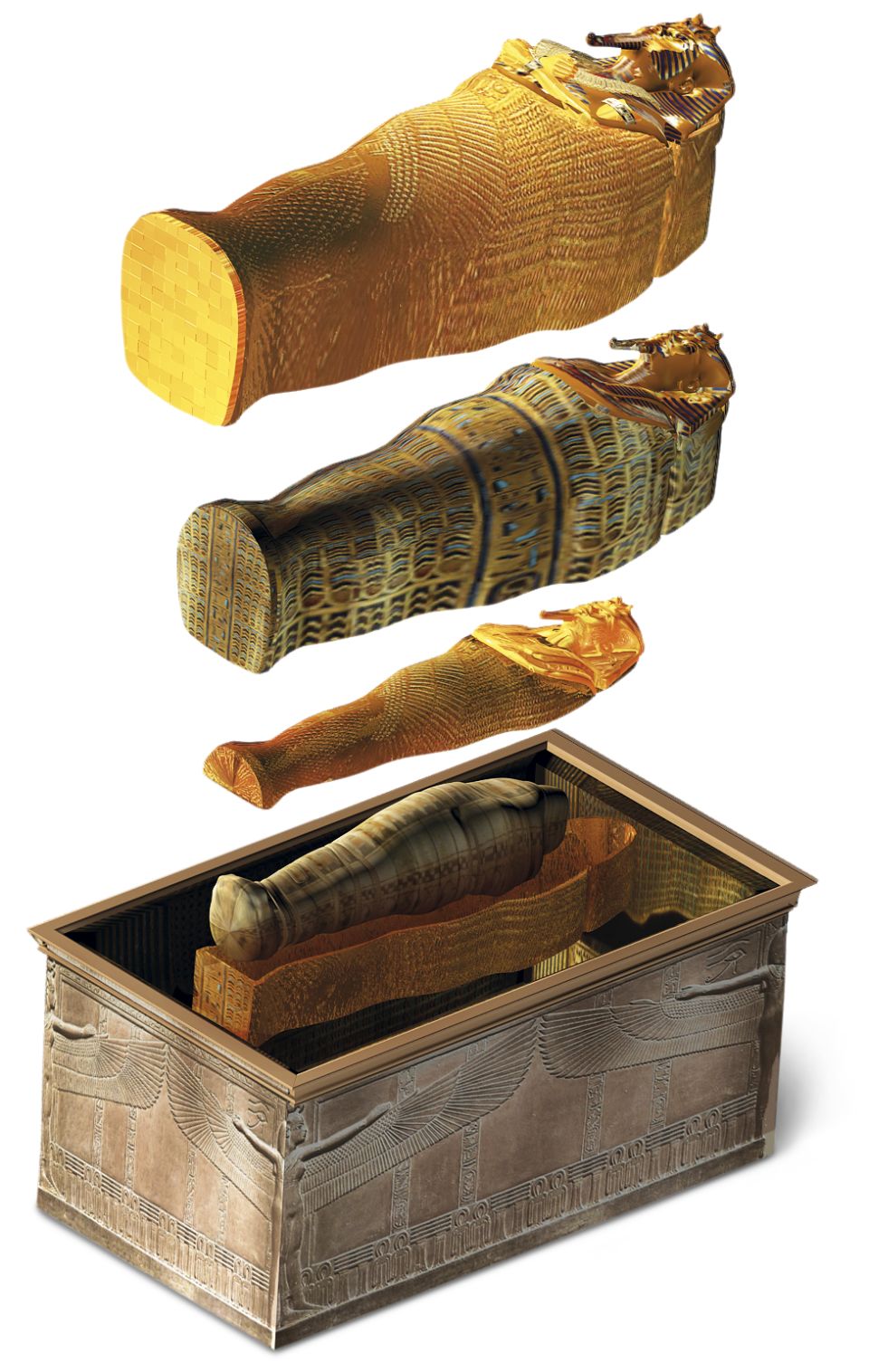 1. A kind of stone which the Greeks supposed had the property of consuming the flesh of dead bodies deposited in it, and which was consequently used for coffins.