Category Archives: science

Monthly Links

Time flies, probably like a banana, when you’re too busy to notice. So we’ve suddenly arrived at this month’s collection of links to items you missed the first time round – and considering it’s the “silly season” (aren’t they all nowadays?) we’ve got a well packed, and very varied, bag this month.

Science, Technology & Natural World

A lot of what we now consider normal technology has its origins in the Cold War.

We often forget that there are volcanoes under the sea as well as on land, and they can produce huge rafts of pumice.

The universe is weird, and weirder than we can imagine. Look at the night sky and you’re being blasted by all manner of high energy radiation. Now astronomers have found the Crab Nebula emits incredibly high energy gamma rays.

An infographic about the majesty of trees.

For a long, long time the Japanese have looked upon sightings of rare fish as an omen of earthquakes. Now they are being urged not to as there is no evidence to support the belief.

Well who knew? Apparently black squirrels (yes, they are a thing; they’re in the UK and I’ve seen them in Washington DC; they’re rather handsome!) are the result of an interbreeding between grey squirrels and close relatives fox squirrels which produced a faulty gene now being passed down through grey squirrels.

At least one species of ant keeps its nurseries cleaner than we humans keep ours.

Every ten years Painted Lady butterflies undergo a massive population explosion and there are millions of migrants to the UK.

Health & Medicine

A top epidemiologist takes a look at the nightmare which is infectious disease aboard cruise ships.

Anyone, especially older people, on a medley of medication has an increased risk of unintended harm.

How about instead of women suffering through the menopause because they can’t be open about it, we actually fix society’s attitude so there can be open discussion and greater understanding from employers?

A significant minority of women suffer painful sex due to vulvodynia, and all too often it is not taken seriously.

And why we’re on lady bits, here’s an article explaining why the vagina doesn’t need to smell like a bouquet of flowers. And anyone who says otherwise is either indulging in patriarchy or marketing bollocks.

Oh no! We’re still on the same topic! One young lady, a sexual abuse survivor, was scared of having a smear test, but was helped through it by Twitter.

And still more … An interview with Canadian OB/GYN, Dr Jen Gunter, who is on a crusade to tell the truth about women’s health and expose the purveyors of snake oil. And here’s another interview.

And still with Dr Gunter, here’s a long essay adapted from her new book The Vagina Bible: The vulva and the vagina – separating the myth from the medicine. Buy the book; I’m reading it and it is excellent. [LONG READ]

Sexuality

One lady appreciates her pubic hair.

Well from there the only way is up …

Environment

A report in the RSA Journal argues that we need to be building homes not housing and that property should be on a human scale.

On continental Europe, apparently wild boar are being a problem in cities. This article looks at how Barcelona is fighting back. [LONG READ]

Ungardening … how to make your garden a wildlife haven.

Social Sciences, Business, Law

Ten reasons why you should be worried about facial recognition technology.

So how will the world’s major religions cope with the discovery of alien life?

Do you need to be able to address anywhere on Earth? Even the middle of the ocean? You need What3Words, a brilliantly simple idea with an app that has saved lives.

Language

We keep hearing that the English language is going to the dogs. But language always has changed, and always supposedly for the worse. Maybe it’s time to stop worrying about the English language. [LONG READ]

Wherever there is language, people swear, so trying to ban swearing is pointless. Besides there is some evidence that people who swear are more honest.

Art & Literature

How can medievalists get excited about a scrap of parchment? When it contains a fragment of a “vagina monologue”.

Following on from which there is a new translation of the gleefully indecent poems of medieval welsh feminist poet Gwerful Mechain.

We all know about haiku, but there was a ruder equivalent called Senryu. [LONG READ]

You’ve almost certainly heard of Eric Gill, but did you know he had an equally talented younger brother MacDonald “Max” Gill? This is an old review of a long gone exhibition, but serves as an introduction to his work.

History, Archaeology & Anthropology

So who were the mysterious people who preceded the Ancient Egyptians?

Still with Ancient Egypt, an article of the hugely important role of the scribe. [LONG READ]

Archaeologists have found evidence of early fish tapeworm infection at one of Britain’s most important prehistoric sites.

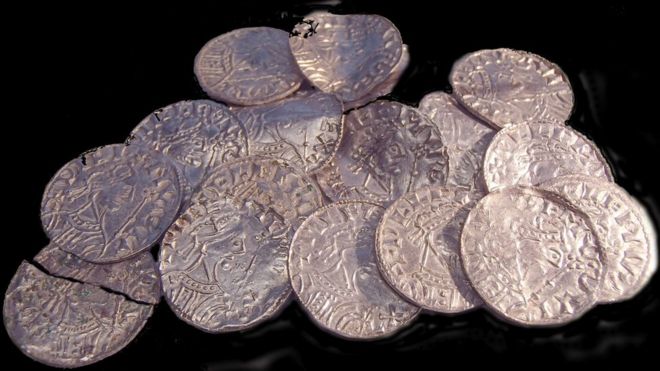
Coming forward several thousand years, metal detectorists have uncovered a huge hoard of important late Saxon and early Norman coins.

Now we enter the modern era! The Victorian introduction of the penny post revolutionised the way we communicate.

Lifestyle & Personal Development

Our favourite Zen master, Brad Warner, on the meaning of life.

And finally … The Victorians (of course!) apparently convinced married couples to sleep in separate twin beds. So how and why did this change?

Phew! There was a lot of that – hopefully something for everybody. More next month.

Monthly Links

So here goes on this month’s selection of items you may have missed, but which I think you may not have wanted to.

Science, Technology & Natural World

Good news for cats: scientists have found a way to study the parasite Toxoplasma gondii (cause of toxoplasmosis) without needing to infect cats.

Health & Medicine

The nasty, tick-borne, Lyme disease seems to be on the increase, but researchers are on the trail of a new vaccine. [LONG READ]

According to some the problem is not that we are fat per se but that the problem is “fat stigma” and the mental effects of the ubiquitous bullying.

Health researchers are predicting that giving the HPV vaccine to boys will prevent a large number of cancer cases.

More of us, and especially women, are breaking the taboos about discussing femaile bodily functions.

And the new openness has lead to discussion of why women need to have periods, and many are deciding to forego them. [LONG READ]

Which leads us on to … research has shown that menstrual cups are as reliable as tampons.

Sexuality

In more unlikely research, it seems that women like porn as much as men (at least as shown by brain imaging) but we’re all brainwashed into believing they don’t.

Language

The British are well known for not learning foreign languages, and it is now suggested there are five reasons why English speakers struggle with them.

Art & Literature

So just what is the history of the Bible?

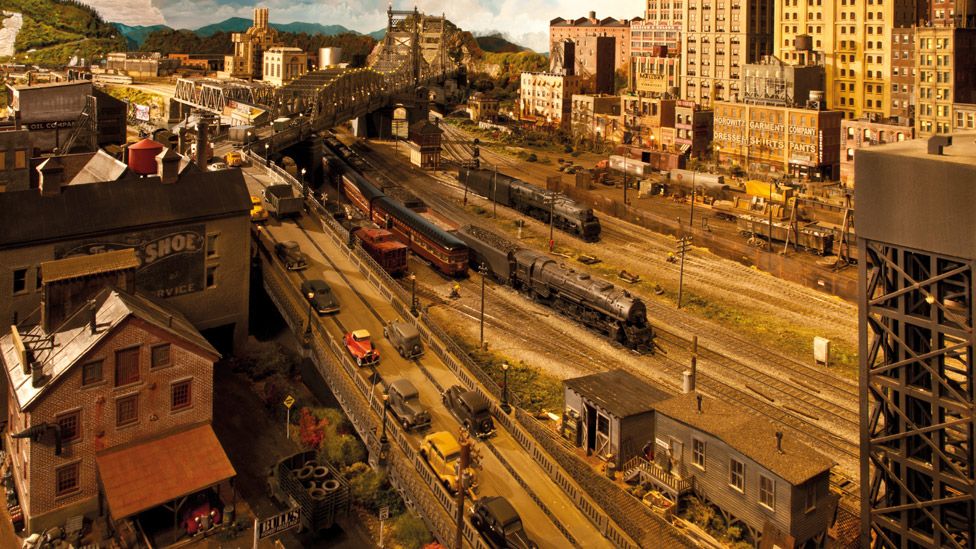
Rowland Emett’s fantastical railway sculpture will be on display at Bonhams New Bond Street from 12 August to 3 September, before being sold at auction.

History, Archaeology & Anthropology

Palaeontologists have found a massive dinosaur femur in south-west France.

It is being suggested that European Stone Age art could contain a code and possibly be the root of human writing. [£££]

In another story of the Stone Age, researchers have used modern forensic methods to solve a 33,000 year old murder mystery. [£££]

Excavations at the battlefield at Waterloo have uncovered the remains of a field hospital, including amputated limbs, and musket balls.

London

Wenceslaus Hollar created a 5 meter long aerial panorama of London shortly before the Great Fire of 1666. Here’s the story. [LONG READ]

In another piece of history, here’s the story of the Thames watermen and ferrymen.

There’s a fantastic new book about London Bridge and its houses.

Lifestyle & Personal Development

Mid-year burnout. Is it a thing, or are we all just terminally tired?

Medieval monks had some advice for us on avoiding digital distractions.

Regret can be all-consuming and destructive of mental health, so here’s a look at how to leave it behind.

Shock, Horror, Humour

To end with several items which have amused me unreasonably much this month …

First, there was Edward Lear’s Nonsense Botany

In a surprise revelation, opium-addicted parrots are terrorising poppy farms in India.

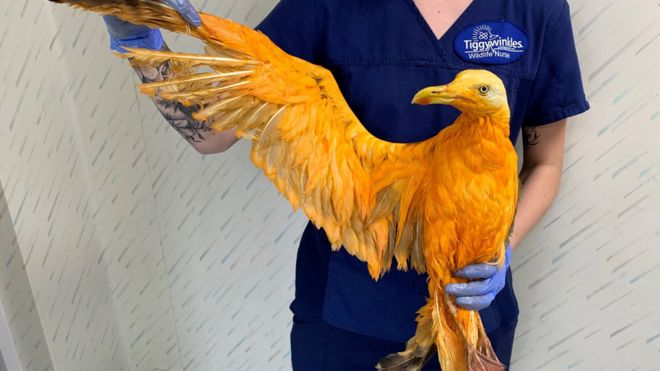
Concerned members of the public rescued a bright orange seagull, covered in curry or turmeric. Actually I think it’s a very fetching look!

And finally … a dancing parrot.

Enjoy the silly season!

Nuclear Power Redux

Back in February (OK, yes, I’m currently in catch-up mode) I read a very interesting article on resurrecting nuclear power (a) in a much safer form and (b) to solve our energy crisis. The article was Nuclear goes retro – with a much greener outlook. It is a very long read, so here is the usual tl;dr summary (edited quotes).

  • If you want poor countries to become richer you need a cheap and abundant power source. But if you want to avoid spewing out enough extra carbon dioxide to fry the planet, you need to provide that power without using coal and gas.
  • The standard alternatives simply wouldn’t be sufficient. Wind and solar power by themselves couldn’t offer nearly enough energy, not with billions of poor people trying to join the global middle class. Yet conventional nuclear reactors – which could meet the need, in principle – are massively expensive, potentially dangerous and anathema to much of the public (not to mention politicians).
  • But, the molten salt reactor (MSR) might just turn nuclear power into the greenest energy source on the planet.
  • They are basically a pot of hot nuclear soup – a mix of salts, heated until they melted, and a salt such as uranium tetrafluoride stirred in.
  • The uranium will undergo nuclear fission in the melt, keeping the salts molten, and providing power generation at the same time.
  • Oak Ridge National Laboratory in Tennessee successfully operated a demonstration molten salt reactor back in the 1960s.
  • They demonstrated that molten salt reactors were cheap enough for poor countries to buy and compact enough to deliver on a flatbed truck.
  • They’re also green as they will burn our existing stockpiles of nuclear waste, rather than generatign even more.
  • And they’re safe enough to put in cities and factories.
  • Even better these reactors would be proliferation resistant, because their hot, liquid contents would be very hard for rogue states or terrorists to hijack.
  • Getting there isn’t going to be easy – not least because hot molten salts are just as corrosive as they sound. Every component that comes into contact with the brew will have to be made of specialized, high-tech alloy that can resist that corrosion. While you want to dissolve the uranium in the salt, you do not want to dissolve your rector as well!
  • As one specialist has observed: “It will be exceedingly hard, but that is significantly better than impossible”.
  • The approach that won out for commercial power production – and is still used in almost all of the 454 nuclear plants currently operating globally – is the water-cooled uranium reactor (WCUR).
  • WCUR isn’t the best nuclear design, but it was one of the first. Other designs were left for later (if ever).
  • Oak Ridge successfully demonstrated all this in their MSR, an 8 megawatt prototype that ran from 1965 to 1969.
  • By the early 1970s, the Oak Ridge group was well into developing an even more ambitious prototype that would allow them to test materials as well as demonstrating the use of thorium fuel salts instead of uranium.
  • Officials in the US nuclear program terminated the Oak Ridge programme in early 1973. However MSR started to appear less visionary in 1974, when India tested a nuclear bomb made with plutonium extracted from the spent fuel of a conventional reactor.
  • Governments around the world realised global reprocessing was an invitation to rampant nuclear weapons proliferation. In 1977 US President Jimmy Carter banned commercial reprocessing in the United States; much of the rest of the world followed.
  • This left a nasty disposal problem. Instead of storing spent fuel underwater for a few years, engineers were now supposed to isolate it for something like 240,000 years, thanks to the 24,100-year half-life of plutonium-239. (The rule of thumb is to wait 10 half-lives, thus reducing radiation levels over 1000-fold.)
  • Developers at Oak Ridge tried to point out that the continuous purification approach could solve both the spent-fuel and proliferation problems at a stroke; but they were ignored by the nuclear planners.
  • Then in 1979 came the partial meltdown at Three Mile Island, a conventional nuclear plant. In 1986 another catastrophe hit meltdown at the Chernobyl plant in Ukraine.
  • The resulting backlash against nuclear power was so strong that new plant construction effectively ceased, the nuclear industry stagnated and was not in an innovative mood for 30 years.
  • Then in 2011, a tsunami knocked out all the cooling systems and backups at Japan’s Fukushima Daiichi plant causing the 1970s-vintage reactors to meltdown.
  • Seaborg Technologies launched in 2014 to design a molten salt Compact Used fuel BurnEr (CUBE) that would run on a combination of spent nuclear fuel and thorium.
  • CUBE is also so small that it can be transported to site on the back of a truck – a major advantage especially in remote regions.
  • Unfortunately none of this is going to happen tomorrow. The various MSR development companies are still refining their designs and the first prototypes won’t be running until at least the mid-2020s.
  • But perhaps the biggest, and most unpredictable barrier, is the public’s ingrained fear of anything labelled “nuclear”.
  • So developers have to keep stressing the why of nuclear power: to fight climate change, poverty and pollution. As well as the three big advantages of MSR: no meltdown, no proliferation and burning up nuclear waste
  • Apparently people are beginning, slowly, to listen – at least in the USA.

See also Molten Salt Reactors and Wikipedia.

Monthly Links

Another month comes to a close so it is time for links to items you may have missed, but which I didn’t and collected for you!

Science, Technology & Natural World

Some elements amongst the physics community are determined that an even bigger particle collider than the current LHC at CERN is an utter waste of money.

Oh dear! It seems that at the end of WW2 the Allies managed to lose a few cubes of uranium from Germany’s failed nuclear programme.

We know that plants’ growth shows a high degree of symmetry, but how many of use realised it was quite this complicated?

Scientists reckon that plants can hear bees buzzing – and they then make their nectar sweeter.

Talking of hearing … it turns out bats can tune their sonar very effectively by constantly wiggling their ears.

When is a cuttlefish like a human? When it has arms. Apparently all creatures’ arms/limbs are built from the same set of genes, regardless of how many there are.

Health & Medicine

This month’s medical column is all about girlie parts, but the boys will want to be educated too …

Women are now asking if it is possible to have a better period (depending on their value of “better”)

According to a couple of old articles in the sacred Cosmopolitan there are nine different types of boobs and seven different types of labia. The good news is that they are all perfectly normal and nothing to be ashamed of.

The story of one survivor who is campaigning against the brutality of FGM.

Environment

It is suggested that urban trees live fast and die young compared with those in rural forests

Social Sciences, Business, Law

The current incumbent seems to get embroiled on controversy, but what really is the role of the Speaker of the House of Commons?

Language

Not everyone agrees that language is a living, evolving entity, so here are 19 of the most contentious linguistic disagreements.

History, Archaeology & Anthropology

I never knew that some of the Lewis Chessmen were missing, but it seems that one of the missing few has recently resurfaced.

High quality viniculture is turning out to be a lot older than expected.

Historians across the ages cannot agree, but it seems that Druids are fairly skilled at metamorphosis – either that or the historians are making it all up as they go along!

Lifestyle & Personal Development

Somewhere, high on the Tibetan plateau, is a matriarchal culture where men are never in charge and where the women don’t know who is the father of their children.

Back in the western world, people are asking what it means to be genetically Jewish, but maybe not culturally so.

There is more accumulating evidence that a long working week really is bad for your health, and that a shorter working week isn’t necessarily less productive.

When might a big earthquake hit Tokyo, and how is Japan preparing itself?

Taxidermy is often seen as a rather unsavoury hobby, but a growing number of women are making their mark as taxidermists.

Brad Warner, our favourite Zen Master, takes a somewhat sideways look at the way all things are connected.

Food & Drink

The public health lobby are worried that too many people are getting home hygiene wrong.

And finally … Master of Wine, Caroline Gilby, looks at how long to keep an opened bottle of wine, and what you can do with it. (No, I know. What is this commodity “spare wine”?)

More in a month. Enjoy the summer.

Monthly Links

OK, so it’s time again for our monthly selection of links to items you may have missed the first time. There’s a lot in this month’s selection so here goes …

Science, Technology & Natural World

The mobile 5G technology is supposed to be the great white wonder but there are fears it could jam weather forecasting satellites (and others?).

Beavers are in the news again. New Scientist ran an article on a secret site in England where beavers control the landscape [£££]. And in Scotland they have been given protected status.

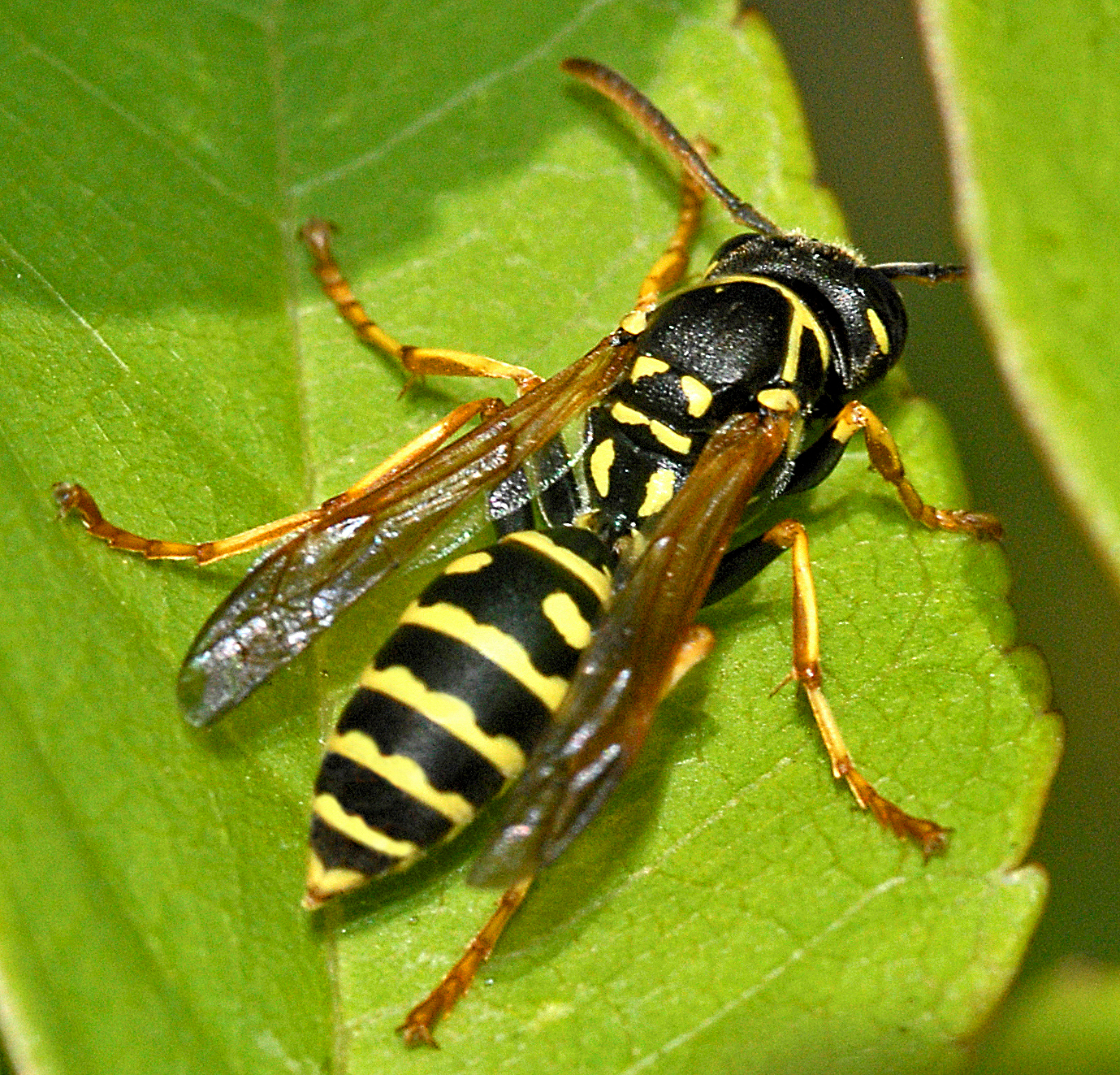
Researchers reckon that (some) wasps are able to reason using logic. If true they would be the first insect known to do so. And in other buzzy news scientists tell us that we really should appreciate wasps.

Health & Medicine

We know we’re all subtly different, but it seems that some of us harbour mysterious variations like extra teeth and extra nipples.

Recent work has suggested that having your appendix removed can make you more likely to develop Parkinson’s disease. The Conversation takes a look and discovers there really is no good evidence one way or the other.

There are medical reasons why some men need to be circumcised, usually in adulthood, but for a few this creates more trauma than beforehand.

Scarleteen is a great Sex Education resource. Here they talk to one woman about her experience of having an abortion. [LONG READ]

Staying on women’s health … Just what does the menopause do to the body? [Includes video]

Sexuality

How one couple rejuvenated their marriage and got out of a “sex rut”.

Environment

New York is banning glass-clad skyscrapers and iconic architect Le Corbusier warned against them. Now it seems academics are also coming to the conclusion that glass skyscrapers are an environmental folly.

So who would have guessed that urban greening can save species, cool warming cities, and make us happy.

Art & Literature

The genius of Leonardo da Vinci came up with ideas for things like helicopters. Some of them aren’t as far-fetched as it seems.

History, Archaeology & Anthropology

A fossilised bone found years ago in a Tibetan cave turns out to be from a Denisovan, showing they were widespread across Asia. Which would account for the fact that Tibetan people carry a genetic mutation from Denisovans which allows them to function at high altitude.

New Scientist tells the story of the Yamnaya who conquered Europe about 5000 years ago in what seems to have been a fairly bloody era. [LONG READ] [£££]

Here we go again … Yet another academic thinks he has uncovered the secret of the Voynich manuscript. I wonder.

Somewhat echoing my sentiments, Oxford Historian Amanda Power sets out a case for not restoring Notre Dame but keeping it as a symbol of our flawed lifestyle(s). Oh and, I believe, as a teaching aid for historians and architects.

London

London is in danger of flooding and the Thames Barrier is coming to the end of its design life. So what can be done?

London is full of statues. Diamond Geezer looks at a selection of royal ones.

In North London there is a botanical garden that’s home to a variety of bits of London no-one else wanted. It sounds worth a visit.

We all know about the ravens at the Tower of London, but now they have their first raven chicks for 30 years.

Lifestyle & Personal Development

One Guardian journalist took a lot of tests to try to find out if she was being poisoned by modern life.

So you really need five reasons to be naked in your garden! OK, here they are.

Food & Drink

Finally, one to gladden the hearts of many of my friends … Belgian monks have resurrected a 220-year-old beer after deciphering the recipe. And they’re brewing it!

More goodies next month! Cheers! Hic!

Monthly Links

It’s that time again! Time for our monthly round-up of items you may have missed the first time. Let’s go …

Science, Technology & Natural World

DNA isn’t the only intricate code used by life. There’s a really subtle and intricate coding of sugars coating every cell (diagram below). [£££]
Here’s another look from The Conversation.

DNA continues to shine light on the domestication of dogs.

From dogs to cats … apparently cats can recognise their own names. They just take no notice!

A “missing link” four-legged fossil shows how walking whales learned to swim. [£££]

Meanwhile the Antarctic Icefish expands our surprise at the variety of colours of blood.

Asian hornets (above) predate honeybees and are an invasive, alien, pest as they have no natural controls in Europe. Much as it grieves me to see anything destroyed (and especially given my defence of wasps) we are being asked to report any sightings. London’s Natural History Museum provides the low-down, identification guidance, and links for reporting sightings.

And now to the physical sciences …

Some brilliant science has led to the first picture of a black hole.

It has long been known, but often disputed, that the Northern Lights make a noise. Now scientists have worked out how this might happen. [£££]

Clouds of hot volcanic gas, rocks etc. (pyroclastic flow) can move at deadly speed. It seems the speed of pyroclastic flow is is due to a “hovercraft effect”.

Health & Medicine

It seems we’re getting our calorie counting all wrong.

Which brings us nicely to the understanding that our microbiomes need fibre to flourish and not the oft believed fermented foods.

This American woman lived to be almost 100 despite having almost all her organs in the wrong places.

The story of one young lady with an unusually obstinate hymen.

Sexuality

Well, yes, as you might expect, sex therapists really do hear it all.

So then, girls, how do you perk up your breasts? Spolier: you can’t. [£££]

Laura Dodsworth muses on vulvas, vaginas and the stigma of talking about them.

Environment

We know the Chernobyl disaster was caused by errors, but it was also followed by cover-ups.

Social Sciences, Business, Law

Article 13 is the EU’s new rules on online copyright enforcement. So what is it all about? [£££]

Art & Literature

There has been dispute over the authorship of Beowulf for many years. Now the latest research suggests it was the work of a single author.

History, Archaeology & Anthropology

One day, long, long ago, a humongous meteor crashed into Earth causing the death of the dinosaurs. Now one maverick palaeontologist believes he’s found a fossil site encapsulating the instant of the disaster. [LONG READ] [£££]
And here are two somewhat shorter summary articles: the first from New York Times [£££], the second from National Geographic.

Slightly more up to date, palaeontologists have discovered what they believe is another “human” species in a Philippine island cave.

So did Homo sapiens inter-breed with Denisovans more recently than we previously thought? [£££]

It seems that the Ancient Egyptians mummified mice (above)!

Experts now tell us that the Romans brought rabbits to Britain. Did we not already know this?

Dutch marine salvage teams, looking for lost shipping containers, have found the remains of ship wrecked in 1540 complete with its cargo of copper plates.

London

Although this is 18 months old, it is worth highlighting the disgraceful decay of the Houses of Parliament.

The Victoria & Albert Museum has a cast of Trajan’s Column. Now you can stand inside it.

Lifestyle & Personal Development

And finally … Japan is entering a new era wth the abdication of Emperor Akihito on 1 May 2019. The reign of each Emperor is given a name (gengo), which is used in the Japanese calender (alongside the Western calender). Emperor Akihito’s current gengo, Heisei, which means “achieving peace”. The era of the new Emperor, Naruhito, will be called Reiwa (right), signifying order and harmony.

Monthly Links

Here we go again with this month’s pointers to curiosities you missed earlier. Not so much science this month!

Science, Technology & Natural World

Scientists are resurrecting some old, apparently safer and greener, nuclear technology.

Mice sing. They sing in ultrasound which we can’t hear (but apparently cats can). And they sing politely to each other!

Health & Medicine

Medics have discovered only the second ever known pair of semi-identical (or sesquizygotic) twins. It’s a weirdness we were always told couldn’t happen; obviously it can but very, very rarely.

Many of us know someone who has panic attacks; some of us even suffer ourselves. Here are seven ways in which you can help someone through a panic attack.

Social Sciences, Business, Law

So many top leaders seem to be totally incompetent. So just how do incompetent men rise to the top?

It was hard to decide where best to put this next item … Researchers are suggesting that “big religion” may be being given too much credit for the evolution of modern society. But how will we ever know?

History, Archaeology & Anthropology

Palaeontologists have discovered an enormous haul of very well preserved, 500 million year old, fossil species in China.

Recently unearthed archaeological evidence suggests that humans have been living in Australia since about 120,000 years ago – that’s twice as long as previously thought.

Somewhat nearer our times, archaeologists have found the wreck of a ship in the Nile which shows that Herodotus was right about Ancient Egyptian shipbuilding almost 2500 years ago.

And coming almost up to date, DNA testing has shown that the crew of Henry VIII’s ship Mary Rose was from the Mediterranean and North Africa.

Lifestyle & Personal Development

Excellence is something we all strive for. But the thought now is that excellence is overrated, even destructive, and we should be cultivating “good enough”.

The world is getting more and more extrovert, so us introverts are feeling more and more guilty at declining invitations or struggling through social obligations. Here’s how one young woman learnt to accept her introversion.

Food & Drink

A company called Garçon Wines is proposing to make flat, rectangular wine bottles from PET plastic. Maybe they’re not as elegant as round bottles but they apparently save huge amounts on shipping and are recyclable.

People

Many of us have small, insignificant birthmarks, but congenital melanocytic naevus (CMN), where birthmarks cover a large area of the skin, is quite rare. It can also be very emotionally disturbing. Now 30 people with CMN have been photographed almost nude for an international exhibition by Brock Elbank. The aim is to make everyone, sufferers and the public, more comfortable with CMN.

More next month …

Monthly Links

So here goes with this month’s selection of items you may have missed the first time round. And there is quite a lot in this month!

Science, Technology & Natural World

Death-Cap Mushrooms are spreading across North America. But why? [LONG READ]

If you don’t like stinging things, look away now … The world’s largest bee has been found in Indonesia, after having not been seen for almost 40 years. And as stinging things go, it is huge!

One from the “I didn’t know that” box … Apparently (and I’ve not yet tried this) grapes can ignite in the microwave. And now scientists have worked out why.

After a long period of relative stagnation, scientists are now trying to work out why the magnetic north pole is moving fast towards Russia.

Health & Medicine

There are male and female brains, right? Wrong; there aren’t; just brains which are moulded slightly differently by our sexist culture.

The hormone testosterone is the thing which makes boys, well boys. Well not entirely: there’s also androsterone which is not produced in the testes. Also it seems that boys also go through several periods of “puberty”.

It seems that there are molecules in ginger which can remodel our microbiome (the flora & fauna that live in our guts).

Sexuality

Book Review: 100 women reveal their vulvas in words and pictures.

The clitoris is a gift, and we need to get over this if we are to really tackle FGM.

The Crown Prosecution Service has decided that pornographic adult consensual sex is no longer taboo. “In principle, anything which is legal to consent to doing is now legal to consent to distribute images of, providing the likely audience is over the age of 18.”

Apparently the female human body blocks weak sperm. Well who would have guessed?

Social Sciences, Business, Law

Ocado, the grocery supplier, recently lost a huge warehouse to a major fire. BBC reporter Zoe Kleinman visited one of their warehouses to see how their leading edge automation in action.

Art & Literature

After far too many years, the British Library are finally making their collection of obscene writing more generally available online – through accredited institutions and in their reading rooms.

London’s National Portrait Gallery has an exhibition of Elizabethan miniatures by Hilliard and Oliver, including one of Sir Walter Ralegh (right).

History, Archaeology & Anthropology

There is a cave, in Siberia’s Altai Mountains, where Neandertals and Denisovans set up home – and it’s challenging our view of cultural evolution.

The first evidence of beer brewing in Britain has been found in Cambridgeshire.

At the other end, the remains of a three person, 12th-century, loo seat is going on display at the Museum of London Docklands.

A guy called John Harding has spent the last 20 years tracking down and cataloguing carvings of naked women showing off their genitals (aka. Sheela-na-gigs) on Britain’s churches.

After which we can only go to the gateway to Hell! A cave in Nottinghamshire has been found to contain a huge number of anti-witch graffiti.

HMS Victory – taht’s the one before the famous one – is an abandoned shipwreck in the English Channel. And now there’s an argument over whether it should be raped by archaeologists or left to decay in peace.

London

Ianvisits goes to London’s newest cathedral.

Lifestyle & Personal Development

In Sweden there’s a “stylish” shopping mall where everything is recycled, reused or upcycled.

There are people around who have decided to make not buying new closthes a lifestyle and a business.

Women across the world stopped depilating for Januhairy. Here four of them talk about what they learnt.

There’s a new emoji for menstruation. But it seems to me, and many others, to be a bit too weak.

Fed up with being positive all the time? Then don’t. Take note of what makes you annoyed and feel negative; and just see the benefits!

Food & Drink

So do you eat mouldy jam? The Prime Minister says she does, but should you? The experts consider.

Shock, Horror, Humour

And finally … There’s a woman in Glasgow who can taste your name. I feel for all the jacks and Johns out there.

Toodle Pip.

Word: Olericulture

Olericulture

The cultivation of edible plants, especially leafy vegetables and herbs.
The branch of horticulture that specializes in the cultivation of edible plants.

The word is a Latin derivative, recorded by the OED as first used in 1886.

Monthly Links

Blimey! It can’t be the end of January already – Christmas was only last week! Well anyway here is the monthly selection of links to items you may have missed, and there’s a lot of it this month.

Science, Technology & Natural World

Why do cats have rasping tongues? It isn’t primarily for cleaning meat off bones as most of the bones a cat would encounter in the wild would be small enough for them to crunch up. No their tongues are ideally suited for keeping their fur properly groomed so it stays waterproof and insulating. And I’ve noticed, from having had quite a few cats, that female cats’ tongues are raspier than males – presumably to better groom their kittens.

The immediate challenges with Artificial Intelligence are not that it may take over but far more philosophical.

Almost three hundred years on a scientist corrects the physiological errors in Gulliver’s Travels

Health & Medicine

So how does ‘flu kill people? Spoiler: It doesn’t.

Haemochromatosis is a genetic disease where the body stores dangerously too much iron, and it’s a bigger problem than was hitherto realised.

There’s a lot of debate over whether cannabis is good or bad for mental health. Jonathan Stea on the Scientific American blog investigates.

A recent study has found that around half of people who think they have a food allergy actually don’t.

In another recent study medics have found that many people with back pain are told to do the exact opposite of what the science says works. [LONG READ]

Most of us get the “winter blues” to some degree, but for some (like me) it is full-blown Seasonal Affective Disorder (SAD). Whether you’re one of the unlucky ones may be related to the colour of your eyes.

As I have always suspected, the need for sunscreen is somewhat over inflated. [LONG READ]

[trigger warning] And finally in this section, it seems that miscarriages could be the result of damaged sperm.

Sexuality

Thoughts on how parents should talk to their children about sex.

On women, desire and why their ability to orgasm is supposedly so mysterious.

Environment

Focusing on how individuals can help limit climate change is very convenient for corporations as it takes then focus off them.

That great British tradition, the lawn, is actually not very environmentally friendly.

Social Sciences, Business, Law

I wasn’t sure where this best fits … Apparently most UK police forces fail to meet fingerprint evidence standards. (That’s not really surprising since there has never been a rigorous scientific study of the evidence as to whether fingerprints are reliable.)

History, Archaeology & Anthropology

Recent DNA studies are fermenting a brouhaha in India over who were the first Indians.

A tumbledown Welsh farmstead (above) has been discovered to be a rare medieval hall house. And now you can stay there.

The worriers are out to tell us that everyday Victorian and Edwardian objects were far too dangerous, although uranium glass certainly isn’t one of them (it is negligibly radioactive).

Once upon a time Britain was protected by some large concrete blocks.

London

Near Great Portland Street underground station, archaeologists have found an almost intact 18th-century ice house.

London’s Petrie Museum of Egyptian Archaeology houses one of the greatest collections of ancient Egyptian and Sudanese archaeology in the world, but it is well hidden.

London’s weather in 2018.

What to London Underground’s service announcements actually mean? Well it depends, and it’s complicated.

Here’s a report of the major mess which Crossrail is in. How does any project manager get here?

Lifestyle & Personal Development

Apparently, and to my surprise, the second-hand book trade is thriving.

Throw it away! Decluttering is actually good for you.

Gesshin Claire Greenwood, one of our favourite zen masters, considers Marie Kondo, Japanese Buddhism and breaking away from tradition.

Is it possible to live without plastic? Pioneer families show how it can be done.

Bicarb, vinegar, lemon juice: how to clean your house, efficiently, the old-fashioned way.

Here are a clutch of everyday objects with features you didn’t know were there, or didn’t know their purpose.

Apparently millennials are burnt-out. You mean every corporate employee isn’t?.

Late nights and erratic sleep patterns produce social jetlag and make you ill.

Of Walls and Squirrels. Our other favourite zen master, Brad Warner, on not sweating the things we can’t control.

What are the effects of total isolation, and can we cope with it?

Veganism is on the rise, but is it the latest piece of cynical marketing, or is it really the future of food. [LONG READ]

To sleep nude or in pyjamas? Which is better for your health?

Food & Drink

Five, allegedly important, genetically modified fruit. Maybe.

Shock, Horror, Humour

And finally … I do love it when the experts get their comeuppance! An apparently ancient Scottish stone circle was built in 1990s by a farmer.

More next month. Be good!