Our monthly look at what happened 100 years ago.
On this day, 3 August 1923 …


Our monthly look at what happened 100 years ago.
On this day, 3 August 1923 …
We bring you this month’s action-packed collection of links to items you may have missed.
Science, Technology, Natural World
When cells divide how do they accurately copy their DNA once, and only once? [LONG READ]
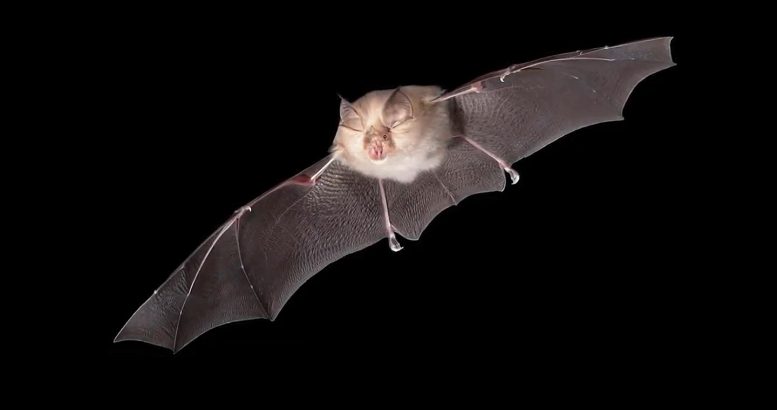
Bats in the UK harbour coronaviruses; none apparently immediately dangerous to us, but we need to know more.
China has a mysterious wildcat, but is the Chinese Mountain Cat actually a discrete species? [££££]
On the Byzantine labyrinths that make up a cat’s nose. [££££]
In potentially good news there’s a plan to establish the UK’s first feline blood bank.
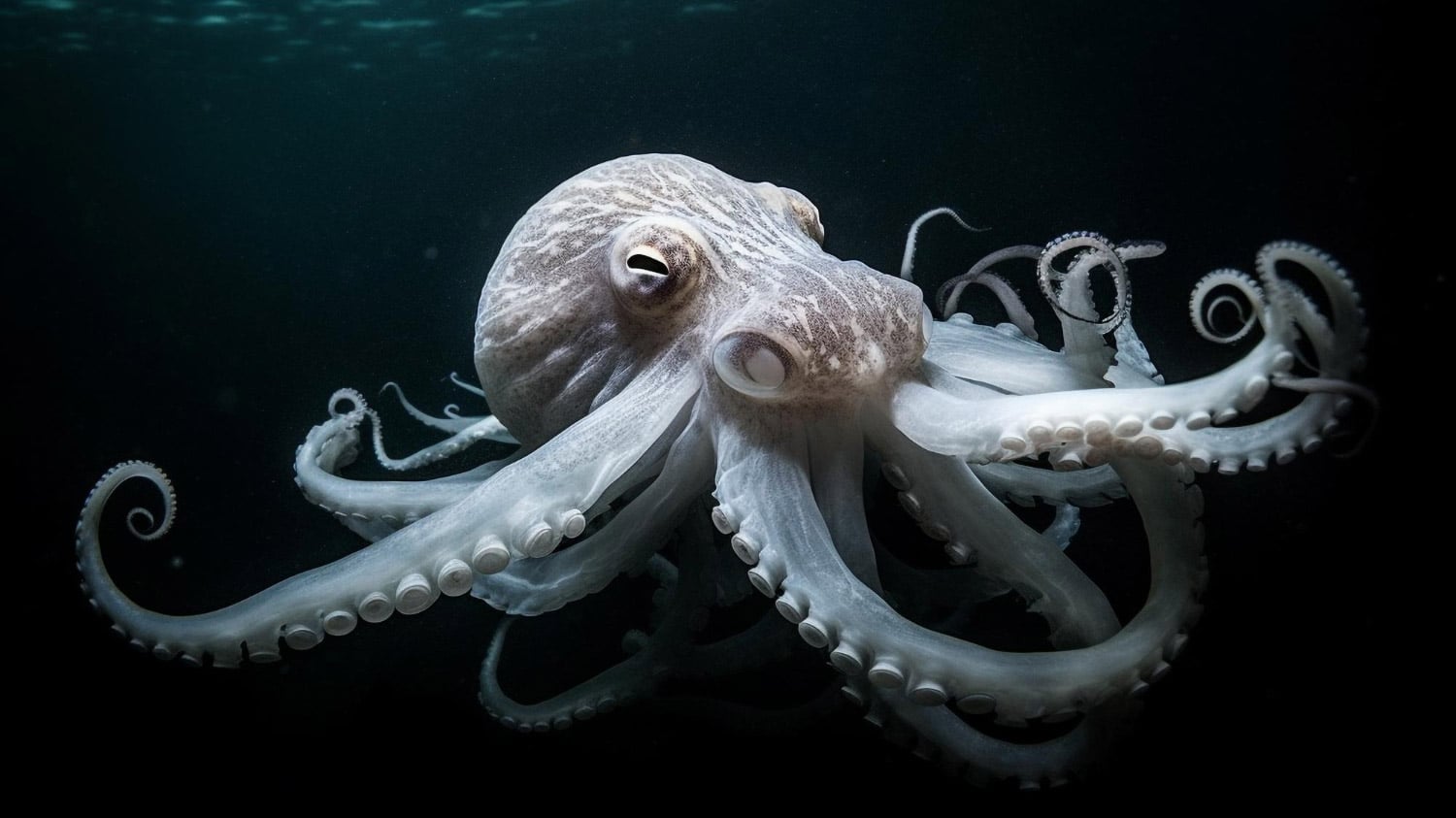
Octopuses change their skin patterns while sleeping, which suggests that they may be dreaming.
If insects actually have memories, it seems they may not survive across metamorphosis. [LONG READ]
Scientists have discovered a species of palm that flowers and fruits only underground, but they don’t yet understand how it is pollinated.
Health, Medicine
It seems that we have a gene which prevents most bird flu viruses from infecting us.
Nightmare Warning … There’s an unidentified something which causes a green hairy tongue – luckily it’s benign, just disturbing.
Sexuality
In a possible explanation of why vibrators are so effective, researchers have discovered neurons in the clitoris and penis which are especially sensitive to vibration. [££££]
One couple talk about sex in their mid-70s.
Social Sciences, Business, Law, Politics
One tax specialist is of the opinion that the UK’s Office of Budget Responsibility (OBR) has a completely erroneous view of the economy. [LONG READ]
Art, Literature, Language, Music
Some rarely seen Holbein sketches of the Tudor court are going on display later this year at the Queen’s Gallery.

When the fantasy world wants a pest do they always choose rats?
History, Archaeology, Anthropology
Pendants made from bits of giant sloth indicate that humans settled in the Americas a lot earlier than previously thought.
At the same time archaeologists believe they’ve found the USA’s oldest stone tools to date. [LONG READ]
Back in the UK a rare Neolithic polissoir has been found hiding in plain sight in Dorset.
Pyramids and other remains have been discovered off the western tip of Cuba.
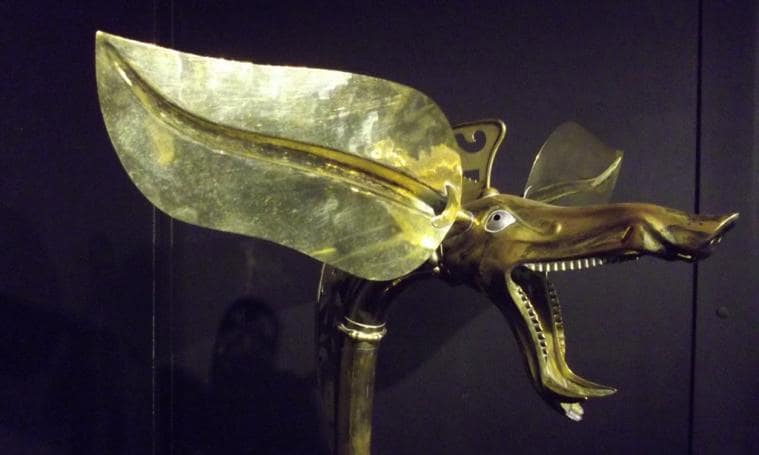
The Carnyx, a brass musical instrument, was used as a psychological weapon of war by the ancient Celts.

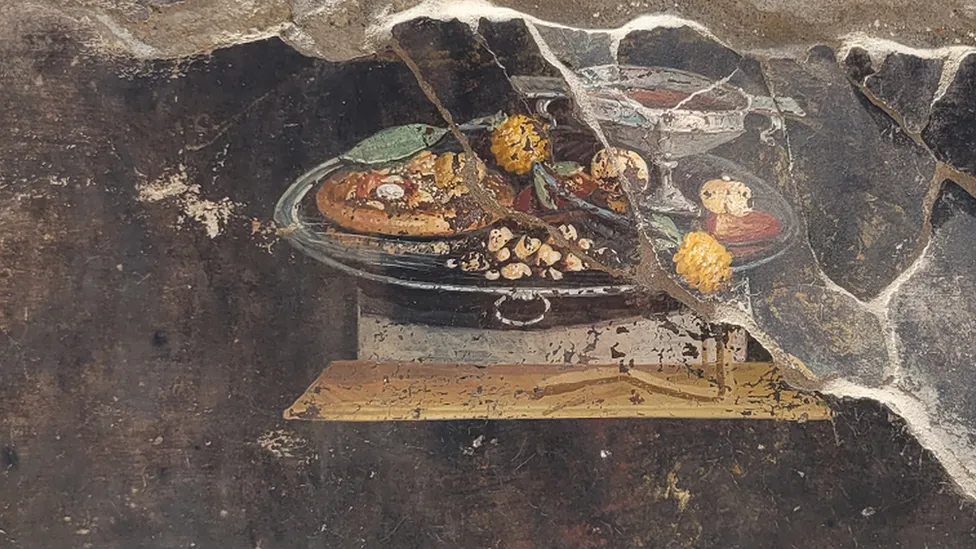
Pompeii continues to provide surprises. In a current excavation archaeologists are uncovering a building containing a bakery oven (above), courtyard, a fountain and a number of frescos including one of what has (jokingly) been described as an early pizza (below).
The story of Salisbury’s Medieval Giant.
London
London’s Hyde Park was once the playground of Tudor and Stuart monarchs, courtiers, and the upper echelons of society. [LONG READ]
There’s a hidden world underneath Waterloo Station, which is being revealed on its 175th anniversary prior to redevelopment.
Food, Drink
The Guardian‘s food writer, Felicity Cloake, looks at a few food rules and suggests they can be safely ignored.
Rachel Roddy recreates that Pompeii “pizza” (see above).
Do we need to be worrying about the sweetener aspartame in diet drinks? Spoiler: probably not. [LONG READ]
Lifestyle, Personal Development, Beliefs
A ramble around body hair and hairless bodies through the ages.
Shock, Horror, Humour, Wow!
And finally, please enjoy some highlights from this year’s Finnish Hobbyhorse Championships.

And yet already we arrive at time for our monthly round-up of links to items we thought interesting, and you might too.
Science, Technology, Natural World
A new dinosaur species has been discovered on the Isle of Wight.
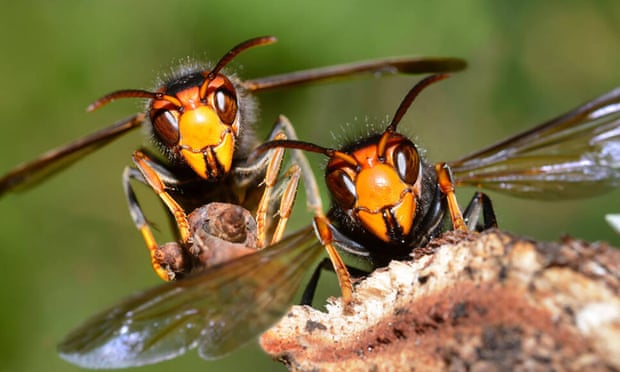
There’s a crack squad of hunters keeping the island of Jersey free of the invasive Asian Hornets (above). And no these aren’t the “murder hornets” which are invading the west coast of North America which are even nastier.
Scientists are taking another look at just when animals like foxes started living alongside humans. [££££]
A new study is finding clues to when masturbation evolved in primates – because it isn’t just humans that indulge.
Palaeontologists believe that Homo naledi in South Africa may have made etchings on cave walls and buried its dead. [££££]
Well now this (isn’t) surprising … it seems that air quality filters are picking up airborne DNA which reveals what species are nearby.
Changing tack somewhat … the US is being urged to reveal its UFO evidence amid (more) claims it has intact alien vehicles.
Meanwhile the “gateway to the underworld” megaslump in Siberia is revealing secrets from 650,000 year old permafrost.
And back to humans … there’s a myth that we use only 10% of our brain, but it is just a myth. [££££]
Health, Medicine
Here are nine things you probably didn’t know about saliva.
Also from the Zoe Health Study, here’s a look at the importance of bile.
Sexuality
Some curious scientist has taken an in-depth look at the condition known as “Blue Balls“, and discovered some interesting things about sexuality.

Who knew that until fairly recently many countries officially provided whores for wartime soldiers near the battlefield? No, it isn’t much known and talked about. And it wasn’t just in wartime.
Social Sciences, Business, Law, Politics
England is apparently going to trial providing a “universal basic income“. The trial will be in just two places with a very small number of people for two years, so don’t hold your breath.
One historian is suggesting that we’re on the brink of civil war – the US in particular but the Western world in general – but that we can avert it if we wake up. [LONG READ]
Art, Literature, Language, Music
So who actually knew there were officially many shades of black? [LONG READ]
History, Archaeology, Anthropology
Archaeologists have found evidence of plague in Britain 4,000 years ago. And it is being suggested this might be the reason the culture and people who built Stonehenge suddenly vanished from the record.
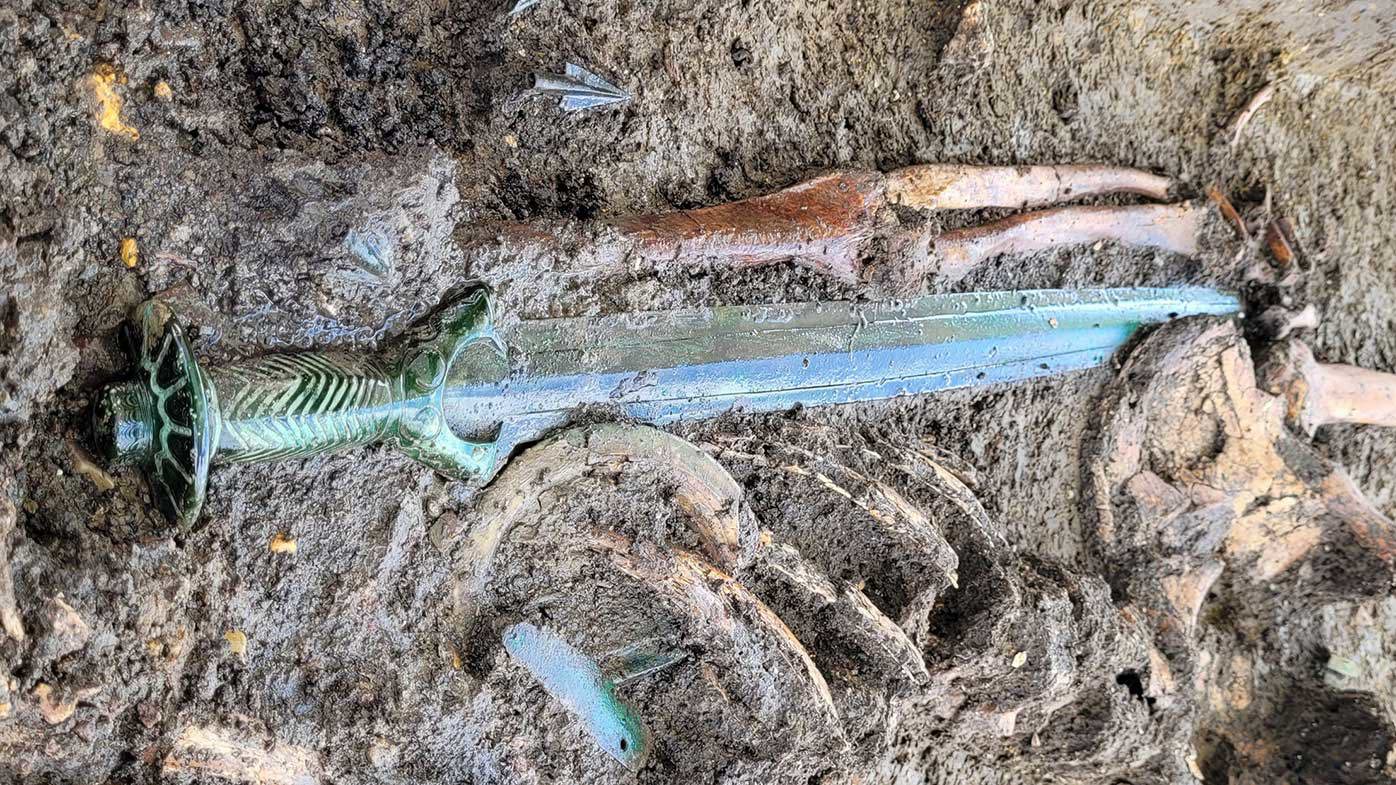
A stunning 3,000 year old bronze sword (above) has been found in a Bronze Age grave in Bavaria.
Cricket clubs don’t generally expect to be the custodians of several Roman gods’ heads.
Also with the Romans, a stunning mausoleum has been discovered on a building site in Southwark.
Here’s the story of St Ursula and the 11,000 virgin martyrs. [LONG READ]
Minstrels played an important role in medieval society, and it is now being appreciated that their work could be mad, bad and bawdy.
A pair of shipwrecks full of Ming era porcelain in the South China Sea are telling us a lot about the historic Silk Road trade routes.
Myths based in medieval goings-on are not always accurate. Here’s the case of the Fowlmere Tunnel. [LONG READ]
Lifestyle, Personal Development, Beliefs
And finally for this edition, here are 13 signals all cat owners should recognise. [LONG READ]
And so to this month’s collection of links to items you dodn’t know you din’t want to miss! Let’s start, as usual, with the tough science stuff.
Science, Technology, Natural World
Some scientists have been thinking about how life would have started and self-assembled. [LONG READ]

Turning the tables round, will we actually know alien life when we encounter it? [LONG READ]
While we decide that, how likely is it that alien life is eavesdropping on our mobile phone calls? [££££]
Staying with the cosmological … Observers have detected the largest cosmic explosion ever seen.
Meanwhile the James Webb telescope has found asteroids in the Fomalhaut star system.
And it gets weirder, as astronomers think they’ve seen live-action of a star swallowing one of its planets.
Coming back a little nearer to sanity … hare’s a look at Alan Turing and the most important machine that’s never been built. [LONG READ]
After which, riddle me this … How do you find a new species of Demon Catshark? By reading it’s eggs, of course. [££££]
But then again, genetics turns up many surprises, including the mutation which turned ants into parasites in one generation. [LONG READ]
More strangeness on genetics … it turns out strawberries have eight sets of chromosomes, which have contributed to their domestication and survival. [££££]
Deeper and deeper into plants, photosynthesis actually requires four photons to complete the transfer of sunlight into chemical energy but the details of the final step are only now coming to light. [££££]
And so back into the (almost) real world. Clever palaeontologists have been able to recover the DNA of the wearer of a 25,000-year-old pendant.
Health, Medicine
How accurate are all those old-wives tales – you know like “chocolate causes acne” and “carrots help you see in the dark”?
So just what are puberty blockers and how do they work? Side issue: should we be using them? [££££]
Medics now seem to have decided that removing just the Fallopian Tubes will significantly reduce the number of women with ovarian cancer. [££££]
Meanwhile, deciding whether to have HRT treatment for the menopause is a difficult decision for many women. [LONG READ]
Sexuality
Here’s the usual, and regular suggestion of ten ways to improve your sex life.
Environment
All the rubbish buried along the Thames estuary is coming back to the surface to bite us. Why do we think we can treat the place like a trash can? [LONG READ]

There’s one thing you do not want in your garden (or anywhere): Japanese Knotweed. [LONG READ]
Social Sciences, Business, Law, Politics
Historian and headmaster Sir Anthony Seldon has been writing book-length report cards on British prime ministers for 40 years. His latest is on Boris Johnson, and he’s not impressed.
Art, Literature, Language, Music
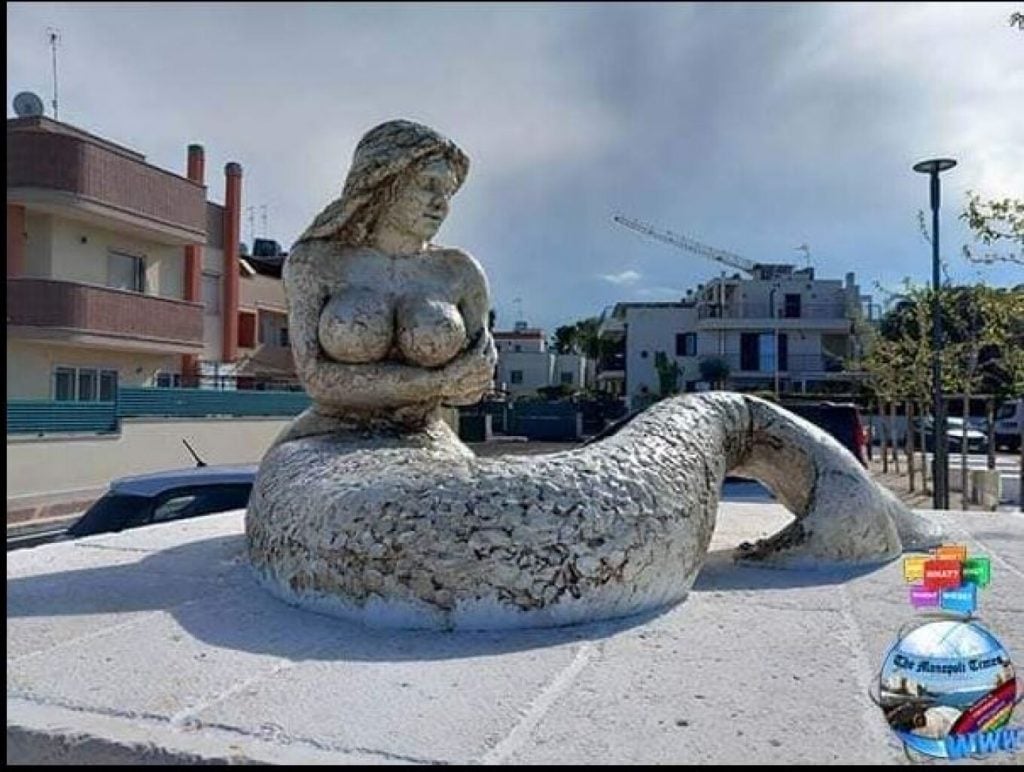
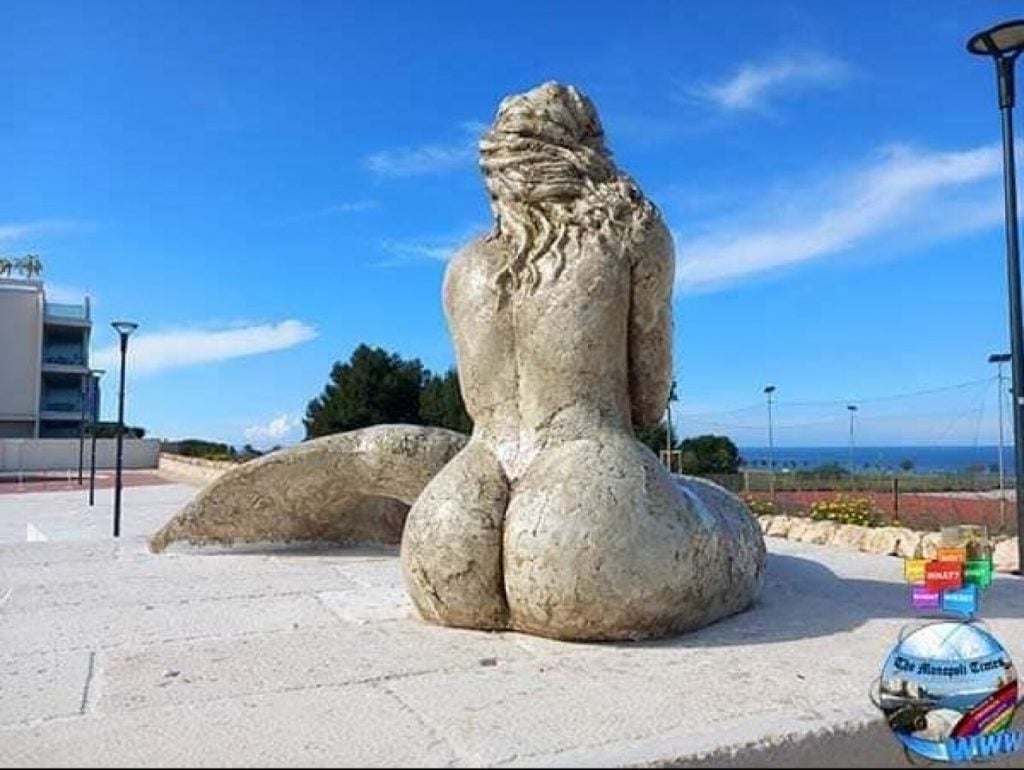
Oh dear. Some of the southern Italians are upset. They’ve decides that a mermaid statue is too provocative. Judge for yourself …
London’s Courtauld Gallery has released almost a million rarely seen photographs from their collections online anf free.
History, Archaeology, Anthropology
The Mediterranean keeps producing ancient shipwrecks. Now one off Sicily has been found to contain ingots of a rare alloy called orichalcum.
A look at the Port of London in Roman times.
A large Roman temple in France could have been used for the worship of many gods.
So what was the Medieval attitude to cats?
Food, Drink
Emma Beddington asks why we’re unable to give up salt – but doesn’t come up with a good answer.
Lifestyle, Personal Development, Beliefs
This is Local London website runs a series of thoughtful articles by senior school pupils on various topics. One recent such looks at attitudes to gender identity.
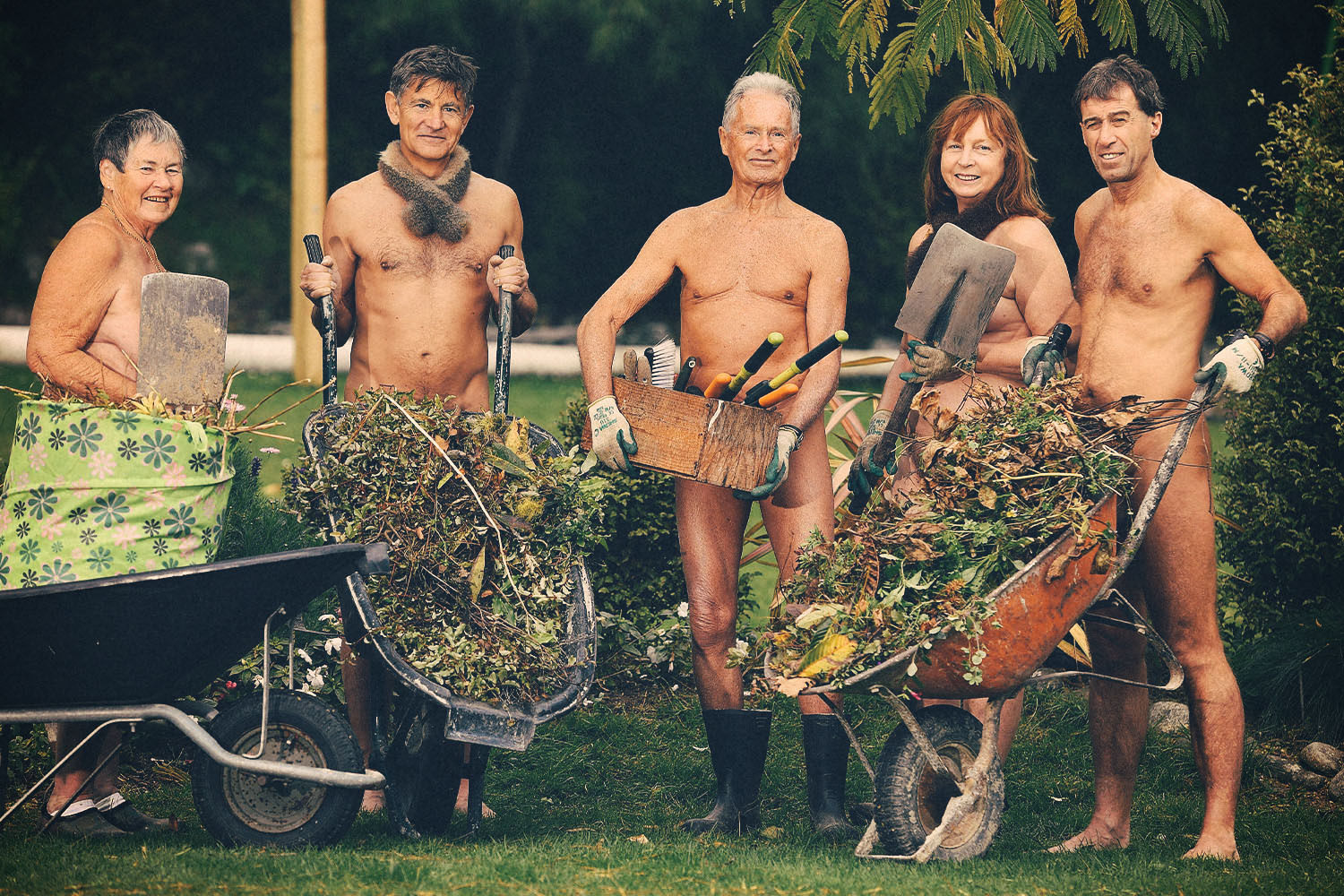
Here are yet another ten reasons to embrace everyday nudity.

Shock, Horror, Humour, Wow!
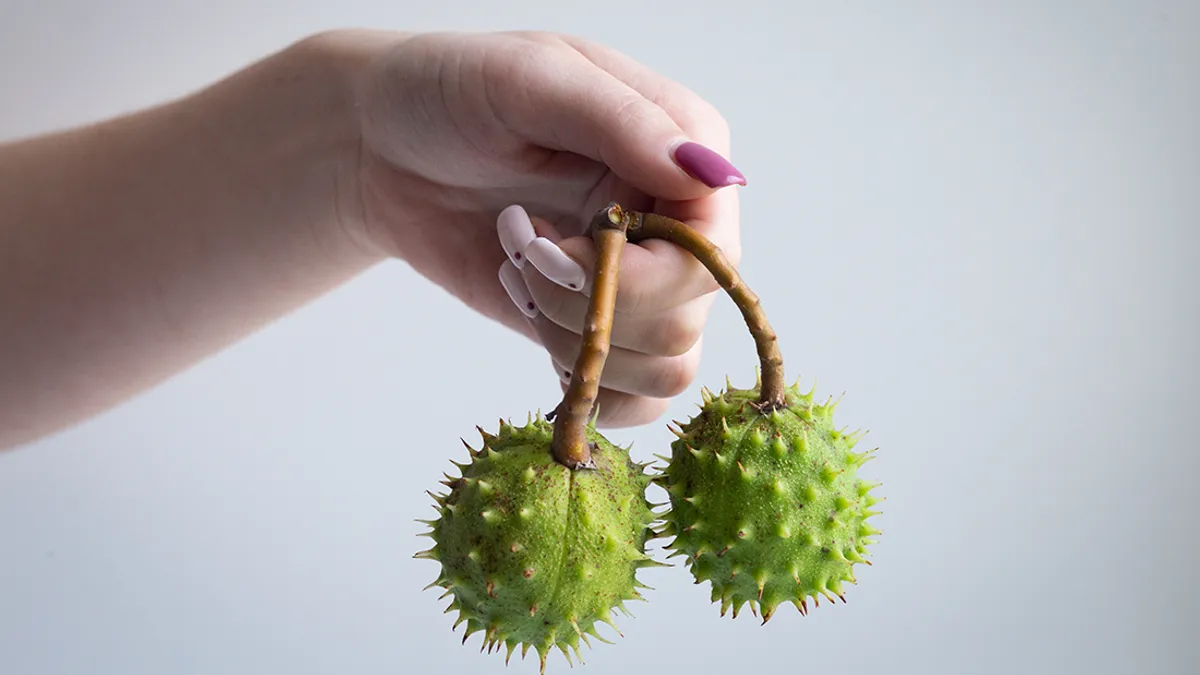
A study – surely a contender for an Ig Nobel Prize – has discovered that it is “barely possible to identify a beautiful scrotum“. [££££]
Our monthly look at what happened 100 years ago.
This day, 8 May 1923 saw …

In keeping with everything springing back to life and growing we have a blossoming collection of links to items you may have missed this month.
Science, Technology, Natural World
First off, here’s a Twitter thread from astrophysicist and science communicator Katie Mack assessing future technology.
Looking the other way, at the consequences of the universe’s origins, there appear to be four possible types of multiverse.
Weirdly it seems that the majority of planets in the Galaxy are in orbit around stars we cannot see. [££££]
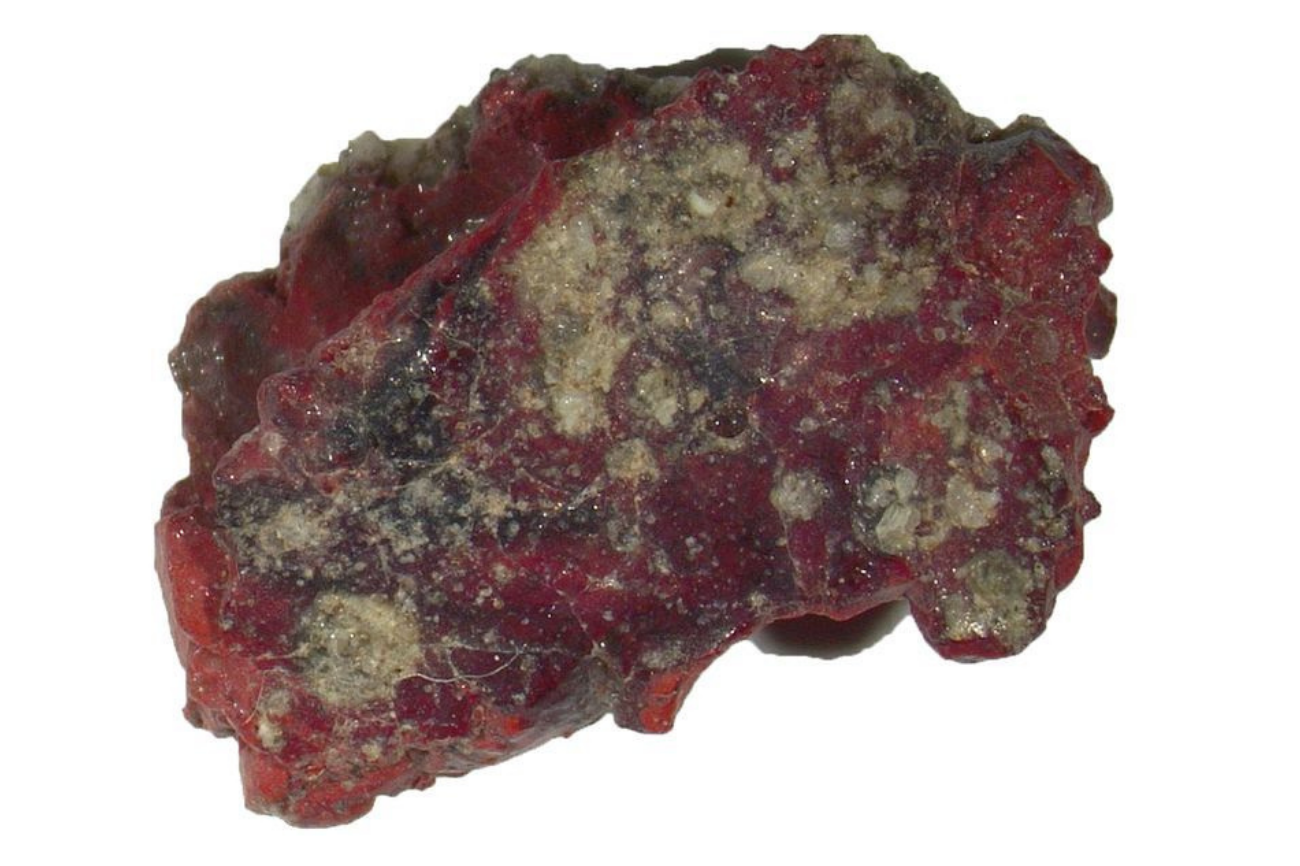
And to “homemade” stars … the first atomic bomb (the Trinity Test) created a “forbidden” quasicrystal.
Meanwhile some evolutionary innovations wait millions of years for their chance to shine. [LONG READ]
Wasps complicated social lives can illuminate the evolution of animal societies.
Palaeontologists have recently found the oldest bat skeleton on record.
At the other end of the accessible world scientists have spotted an unknown fish at a record depth of 8300 meters off Japan.

Talking of unknown life in unexpected places … oceanographers have found a massive river and cavern beneath a West Antarctic glacier which is teeming with life. [LONG READ]
Finally in this section of the unexpected, scientists are reporting that plants emit rapid bursts of ultra-sound when stressed – although it isn’t clear if this is an artefact of their structure or a “deliberate” act.
Health, Medicine
Here’s a review of Kate Clancy’s new book Period, which aims to change we understand menstruation.
Sexuality
According to a recent survey Britain is a lot sexier than thought.
In an unsurprising finding it seems sexual wellness and talking about sex helps us flourish.
All of which makes sense when you consider that someone, somewhere, thinks we all need to learn the dos and don’ts of kissing.
Social Sciences, Business, Law
So are coincidences real, or are they merely us spotting patterns which should be expected? [LONG READ]
Art, Literature, Language, Music
Researchers have looked at the science underlying why some Renaissance artists used egg in their oil paints.
History, Archaeology, Anthropology
Let’s start this long section of history with the Ancient Egyptians … They seem to have been creating automata 4000 years ago.
Also in Ancient Egypt, archaeologists have found a collection of severed hands and suspect it is evidence of trophy-taking.
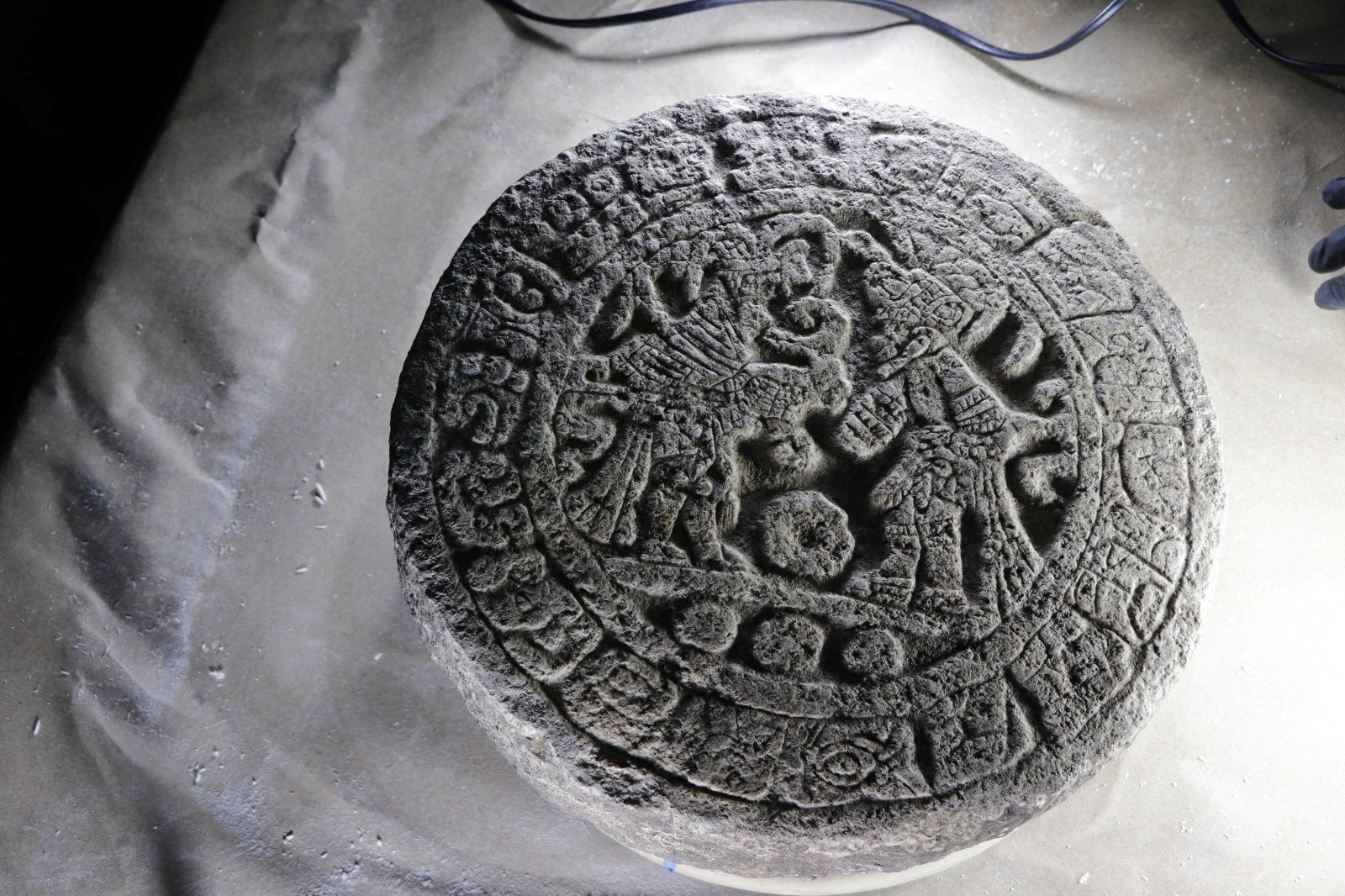
Across the globe in Mexico archaeologists have found what they believe is a scoreboard for the ancient Mayan ball game pelota (above).
Iceni Queen Boudicca who led a revolt against the Romans is enjoying a resurgence as a symbol of rebellion and a feminist icon.
New dendrochronology shows the Vikings really did live in Newfoundland around 1021, but we don’t know how long for.
A building archaeologist asks “what is a castle?“. [LONG READ]
In a surprise twist Pink Floyd have inspired research into medieval monks and volcanology.
Going Medieval takes a look at nobility, courtship, moral justification, and sexy tapestries. [LONG READ]
In another round of medieval myth-busting our building archaeologist looks at why the historic records may not tell you the date of your house. [LONG READ]
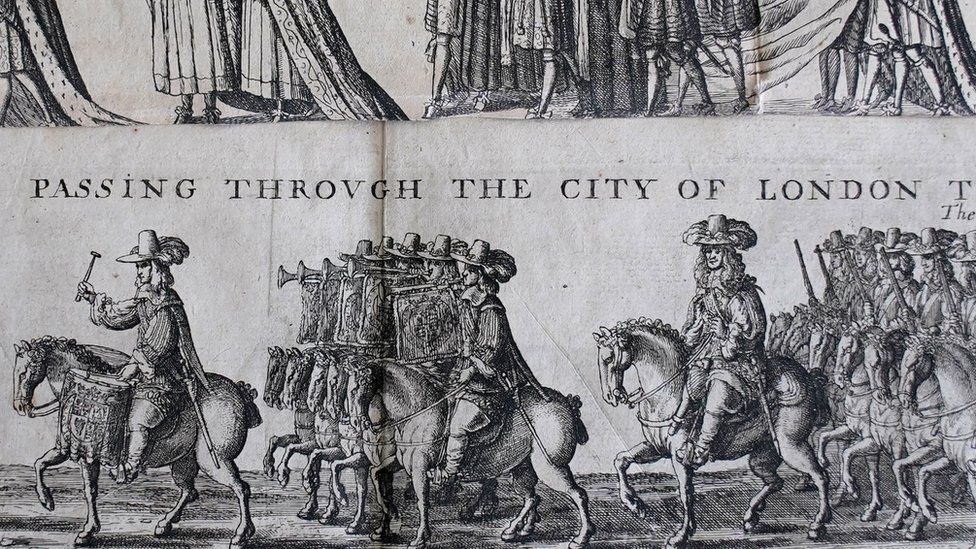
Etchings of the Coronation of Charles II in 1661 by Wenceslaus Hollar have been found hidden in the back of a cupboard.
Temple Bar was once an historic boundary to the City of London – and the site still is. [LONG READ]
They’re digging underneath the Palace of Westminster, and one recent discovery is an 18th-century fish token gaming counter.
London
Over 300 old London street signs are up for auction next month (18 May).
Lifestyle, Personal Development, Beliefs
In a break with tradition, King Charles will use a new coach for the Coronation procession to Westminster Abbey – and it has electric windows and air con.

Some people absolutely cannot abide being in the same room as some of their hated foods.
People
And finally, the 40-year mystery of three abandoned children and two missing parents.
Here are the answers to this month’s five quiz questions. If in doubt, all should be able to be easily verified online.
April Quiz Questions: American History
Answers were correct when questions were compiled in late 2022.
Again this year we’re beginning each month with five pub quiz style questions, with a different subject each month. They’re not difficult, but it is unlikely everyone will know all the answers, so hopefully you’ll learn something new, as well as have a bit of fun.
April Quiz Questions: American History
Answers will be posted in 2 weeks time.
Here are this month’s links to items you may have missed.
Science, Technology, Natural World
Baffled by black holes? Confused by quantum theory? You’re not alone, so here are some simple explanations of various mysteries of the universe. [LONG READ]
An ancient, giant insect has been rediscovered outside a Walmart store in Arkansas. And no, that isn’t a euphemism!
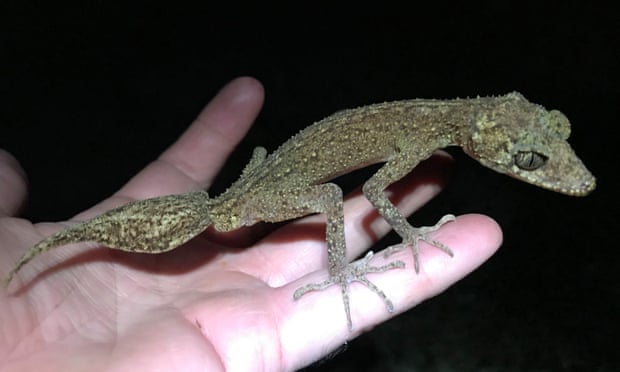
In another discovery, a new gecko species (above) has been discovered on a rugged Queensland island. And it does indeed look like a tiny, rather cute, dragon.
So just how do animals manage to follow their nose to find food or mates? [LONG READ]
We’re learning more and more about the microbes that live in and on us. Here scientists are uncovering what lives in our mouths. [LONG READ]
Meanwhile scientists are also looking at the strange microbes inhabiting an abandoned uranium mine.
And still at the microscopic level, scientists have discovered a completely new and unexpected group of aquatic and predatory microbes, which might be a whole new biological kingdom.
There are even more new discoveries: it has also been found that Japan’s most familiar wild orchid is actually two closely related species.
Health, Medicine
OK, so H5N1 bird flu which is causing the deaths of thousands of birds (especially seabirds) can jump to mammals. But how much do we need to worry about it? [LONG READ]
Here’s one for the “I never knew that” file … Lemon juice can combat kidney stones.
As those of us with depression are probably aware there has long been a debate about the involvement of serotonin as a causative agent. Here’s a layman’s summary of what we think we know about depression treatments. [LONG READ]
Sexuality
Men report reliably having far more orgasms during straight sex than do women. But we should be more open about what constitutes sex to find ways of closing the orgasm gap.
Environment
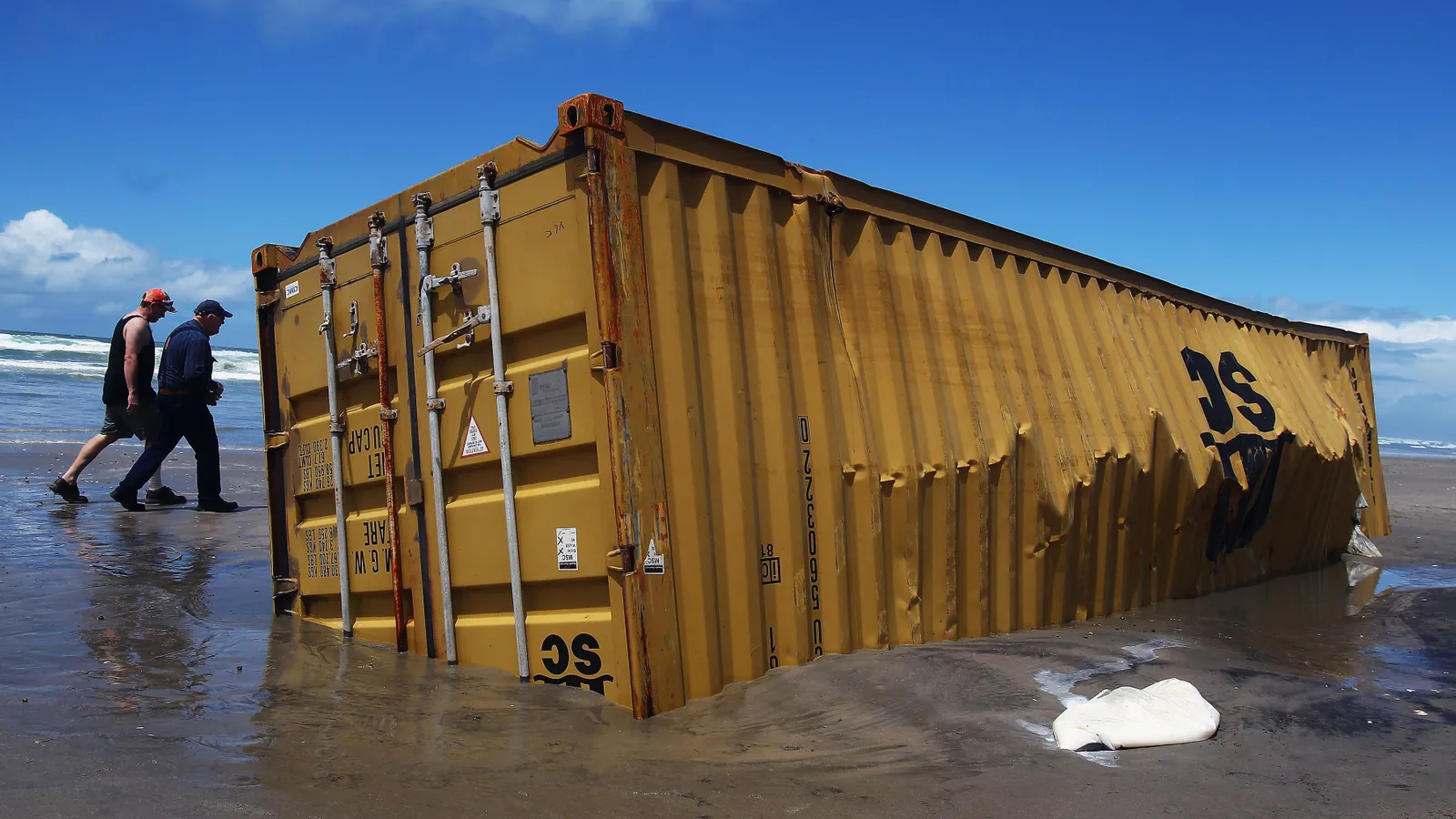
It is quite surprising what washes up on our beaches.
Art, Literature, Language, Music
A rare painting by Brueghel the Younger has been found behind a door in French house.
A Ming dynasty Buddha has been found in the sand near a north Australian beach, and it is being suggested this is evidence of Chinese visits to Australia much earlier than previously known. Hmmmm …
History, Archaeology, Anthropology
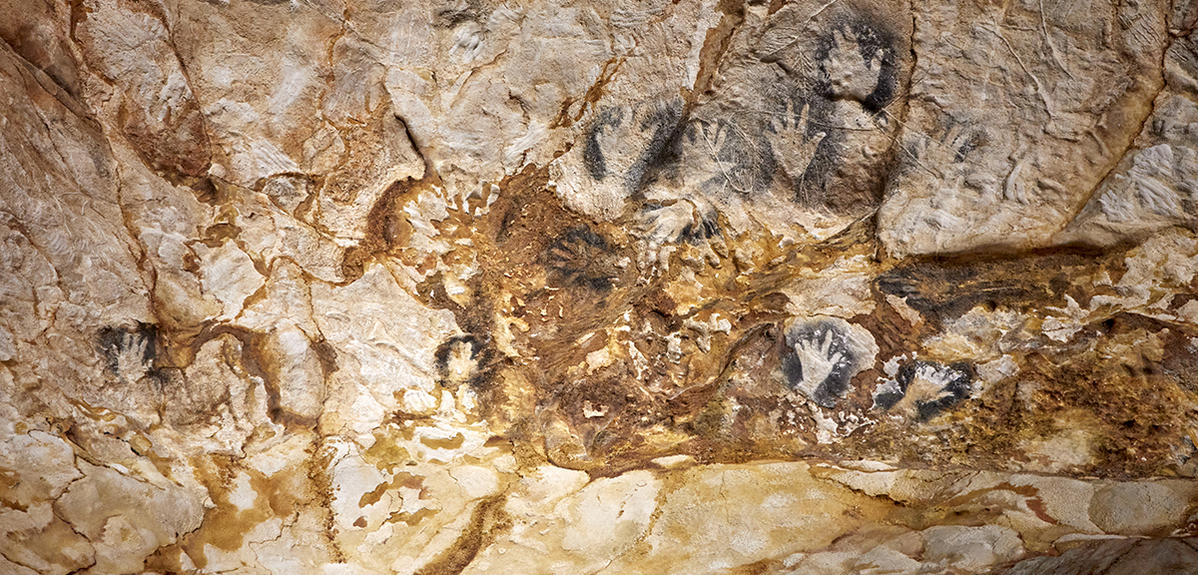
Ancient cave paintings often feature hand impressions, and many appear to have mutilated fingers. This is now being suggested as deliberate concealment of fingers as part of a Stone Age sign language. [££££]
One day we’re going to realise that ancient peoples moved around quite a lot, and European prehistory is not what we thought. [££££]
I don’t understand why it is thought “startling” that Roman gladiators fought in Britain.
A supposed Roman altar has been found at Leicester Cathedral, supporting a long-held legend.
On the other side of the world on Rapa Nui (Easter Island) an apparently unfinished Moai statue has been found in a volcanic crater.
Coming back to home, researchers have finally managed to decipher a batch of Mary Queen of Scots’ letters from her incarceration.
Come forward another 100 years or so … renovation at a flat in the centre of York had revealed unknown 17th-century friezes.
London

London has about 40 pairs of peregrine falcons who feed largely on the feral pigeons and starlings. But what happened during lockdown when the pigeons dispersed along with the humans? They upped their predation on the Ring-Neck Parakeets – but subsequently returned to dining on pigeons.
Lifestyle, Personal Development, Beliefs
Zen Master Brad Warner has offered a Buddhist perspective on transgenderism.
Teenagers are well known for being moody, but here are eight ways to nurture teenage minds.
And finally, a designer shares her love for the tiny things which enable the world.
Here are the answers to this month’s five quiz questions. If in doubt, all should be able to be easily verified online.
March Quiz Questions: British History
Answers were correct when questions were compiled in late 2022.