When will the Western world understand that, by their actions, they are responsible for the terrorist attacks which are happening around the world? I’m thinking specifically of Paris last Friday but there are many many others.
By interfering — usually with military force — in the Arab nations all they are succeeding in doing is further radicalising those countries’ (potentially) disaffected youth and other (misguided) religious zealots.
And why are they surprised at this? If some set of foreigners, with a different culture and religion, were launching air strikes on us, wouldn’t we be sending anyone who would into their countries as insurgents? Especially if we had poorly organised and equipped military ourselves.
Of course we would — and we have. For starters, see the WWII French Resistance and other clandestine organisations like SOE. And we have officially sanctioned and organised terrorists called the SAS.
The more we meddle, and the more we retaliate, the worse we are going to make the problem. And it is a problem which is of our making! We started meddling in the Middle East way back at the time of the Crusades and it has escalated (on and off) ever since. In After the Victorians AN Wilson makes the point that one of the underlying causes of WWI was Britain trying to prevent Germany getting access to Arab oil which we had claimed. We’ve been interfering ever since. And it goes on.
None of these countries — in fact overall very few countries in the world — have a tradition of democracy. They are nearly all used to autocratic rule in one form or another. Just as we were, once upon a time. It has taken us 800 years, starting with Magna Carta in 1215, to get our democracy to its current (fragile) state. Some of the countries of our erstwhile empire have taken the English model on board. Other European countries have got there too by their own, often bloody, routes — see, for example, the French Revolution.
So how is it we expect to be able to walk into any country, tell them to embrace democracy and expect them to jump for joy and do so overnight? Why would they? How can they when it’s taken us 800 years? To them democracy is a revolution and a totally different culture. People don’t like change and they are mostly OK with what they have because at least they understand it. Nearly everywhere we’ve done this in the last 200 years we have ended up with, at best, a bloody nose.
The Arab countries are large enough and well enough orchestrated that they can bring their resistance to us. They have a religion which, by and large, transcends their tribal divisions and they aren’t confined to their own little enclaves like many African nations. Contrary to Christianity, when push comes to shove, the Arab religious beliefs will overcome any tribal animosities.
Why is it that politicians cannot learn from history? It isn’t that hard. If I, a mere scientist, can do so then so can anyone with more than six brain cells. (Oh, hang on, do politicians even have six brain cells?)
No I am not saying we should be soft on terrorists. Yes we have to deal with them on our territory according to our laws — just as they would if the tables were turned.
What I am saying is twofold: (a) stop meddling in other countries, except perhaps through diplomatic channels, and (b) stop bombing the shit out of them at any excuse. Unless, of course, your objective is to radicalise them.
Let me leave you with two final thoughts.
(1) Never lose sight of the fact that your enemy is a human being too. He (or she) has a mother, a sister, a child, a spouse who loves them. They eat, pee and lust the same as you. They were once that carefree child playing in the street. To lose sight of your enemy’s humanity is to lose all respect for others and yourself.
(2) And in the words of Abraham Lincoln:
Category Archives: current affairs
From Agincourt to WWII
This is a very lightly edited version of something I posted earlier today on Facebook, but I’m repeating it here as I feel it needs to be filed for posterity.
There’s an interesting perspective from Martin Kettle in today’s Guardian under the banner
We can respect the fallen without wrapping ourselves in the flag,
as the Agincourt anniversary shows.
And I have to agree, especially as I see the BBC have already dusted off their never-ending supply of Remembrance Day poppies. Basically I’m with Evelyn Waugh who back in the 1930s described Remembrance Day as a disgusting idea of artificial reverence and sentimentality. Moreover I object to being subjected to what is now basically moral blackmail.
But note very clearly: I’m not saying be unpatriotic, not to remember and not to be grateful for the sacrifice others have made to protect our freedoms. I’m saying that the current public display of maudlin sentiment and obsequiousness associated with Remembrance Day (and everything around it) is nauseating and unnecessary and serves only to glorify war. Martin Kettle says it much better, and in much more measured words, than I can:
… if we are capable of thinking about Agincourt without wrapping ourselves in the flag, why not other later conflicts too? In three weeks’ time we will reach the climax of the annual military remembrance rituals. A century after the great war, these rituals have become more culturally hegemonic than ever before. Yet it is surely possible to respect the importance of history and to support events that bring peoples together while still feeling that … these particular rituals have now become unnecessarily oppressive.
At some point in the future … we will begin to let go of these rituals. One day, the head of state will no longer lay a wreath at the Cenotaph in November for the long-distant dead. One day, MPs and TV newsreaders will not feel the press of obligation to wear poppies on all public appearances …
For the present, people in public roles have little scope but to conform on such matters … we will be right to stop doing these things … and there is nothing inappropriate or disrespectful about suggesting that we would benefit from that time coming sooner rather than later.
We need to be looking and going forward, working for peace; not looking mournfully backward.
Oddity of the Week
Pope Francis is currently visiting Cuba and the USA. The followning was reported at the end of August by the Wall Street Journal and the Washington Post and summarised by the Weird Universe blog:
Muslim clerics complain of the commercialization of the holy city of Mecca during the annual Hajj pilgrimages, but for Pope Francis’s visits to New York, Washington, DC, and Philadelphia in mid-September, shameless street vendors and entrepreneurs already appear to be eclipsing Mecca’s experience. Merchants said they’d be selling, among other tacky items, mozzarella cheese statuettes of the Pope ($20), a Pope Toaster to burnish Francis’s image on bread, a Philly-themed bobblehead associating the Pope with the boxer “Rocky”, local beers Papal Pleasure and YOPO (You Only Pope Once), and T-shirts (“Yo Pontiff!” and “The Pope Is My Homeboy”). The Wall Street Journal quoted a Philadelphia archdiocese spokesman admitting that “you kind of have to take it in stride”.
So It's Two Fingers to You …
They just do not get it, do they!
According to today’s news feeds (for example here from the BBC) Rebekah Brooks is to return as chief executive of Rupert Murdoch’s UK newspaper operations.
This is the woman who was acquitted (yes, OK, she was found not guilty) of phone hacking last year, having not known, or forgotten, large chucks of what was happening in her empire over a period of something like 10 years. Others were allowed to take the fall.
OK, I accept it is Murdoch’s right to appoint anyone he likes to his organisation (providing they fulfil the legal niceties). As Evan Harris of Hacked Off has observed (quoted in the Guardian a few days ago)
Mrs Brooks’s successful defence at trial was that she was such an incompetent executive that she was unaware of industrial-scale criminal wrongdoing in intercepting voicemails and bribing public officials, and unaware of the vast conspiracy to cover it up, despite her admitting to destroying millions of emails and putting the company’s reputation before cooperation with the police.
This doesn’t seem to be a very encouraging sign in one expected to lead an organisation — any organisation.
Moreover to me this also says much about the Murdoch empire’s total disregard for ethics and morality. As the shadow Culture Secretary and others have said (also in the Guardian) it sends a massive two fingers to the British public and, I suggest, a high-five to the wealthy and influential who seem to be able to can get away with almost anything they like.
However legal it is, they basically just do not seem to get how cynical this is.
The (Plastic) Pound in Your Pocket
The Bank of England is introducing plastic money. Specifically polymer banknotes. They start in the autumn of next year with a new £5 note, followed by a new £10 note in 2017. And, it has been announced today, a new £20 in 2020. Which will leave only the £50 note made from paper.
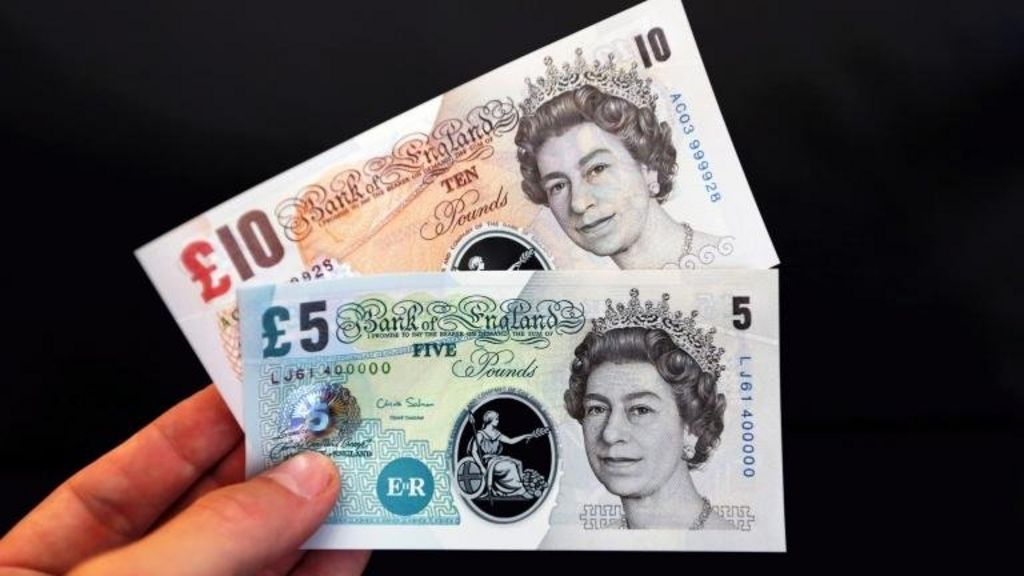
But why, oh why, does this take so long? The Bank essentially know the designs, the technology and the security features. So why is it not possible to have the new £10 and £20 notes next year along with the £5 note? Why does it take 5 years to create the new £20 note. This isn’t building a space shuttle; it’s essentially printing pieces of paper, albeit with some devilishly clever technology embedded.
I have never understood why it takes any public enterprise — central government, local government, Bank of England, the NHS; the list is endless — so long to accomplish anything. They’d never survive in a competitive marketplace.
Gawdelpus!
A Right Bag of Cornflakes
Oh dear, dear.
From 5 October retailers in England are required by law to charge 5p each for single use plastic carrier bag. Except when they don’t.
It’s all well and good, and very laudable, in theory. But as with all legislation the devil is in the detail.

And oh dear me! As the Independent on Sunday pointed out yesterday, the system is a mess and is bound to lead to a whole raft of arguments with supermarket cashiers who are going to be at the sharp end of implementing the scheme. I can already picture the low-life having fisticuffs round the checkouts in Asda and Tesco.
Just take two minutes to read the article. Think about some of the implications and it’ll soon become apparent that this isn’t as clear-cut and easy as it needs to be.
If you want more you can always read the Government’s guidance.
What a mess!
How can they?
MPs given go ahead for 10% pay rise to £74,000
How can MPs justify a 10% pay rise when the rest of the country (except bankers, of course) are getting 1% at best?
Oh, so they can no longer claim expenses for duck houses and they (may) get smaller pensions. So that’s all right then.
But I still find this inexplicable and inappropriate.
Greece without a Paddle
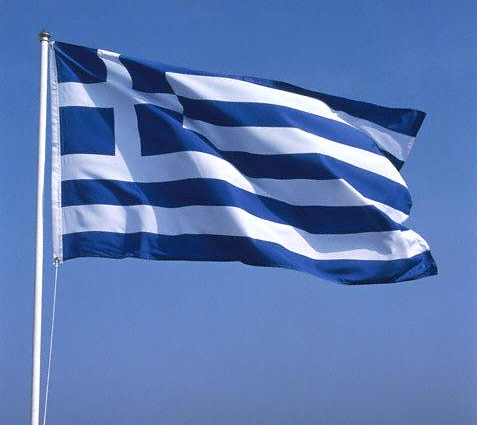 Greece has been shafted. Whatever the outcome of the farce unravelling in Brussels, the Greeks are stuffed, like so many dolmades. Austerity upon austerity and a collapsing economy if they agree to another bailout. Total chaos, a collapsed economy and international ruin if they don’t get a bailout and leave the Eurozone (even if only temporarily).
If you want to understand more about the international machinations which have brought this about then read this by George Monbiot for the Guardian last Tuesday, and this by Heather Stewart in yesterday’s Guardian. Do go and read them.
I’m not going to try to summarise them articles here except to say that international debt is out of control and pretty much every country in which the IMF has intervened has been largely destroyed.
Gawdelpus!
Non, Papa Francesco!
A few weeks ago, Pope Francis stated as his opinion that couples who choose not to have children were selfish.
A society with a greedy generation, that doesn’t want to surround itself with children, that considers them above all worrisome, a weight, a risk, is a depressed society. The choice to not have children is selfish. Life rejuvenates and acquires energy when it multiplies: It is enriched, not impoverished.
[Guardian; 11 February 2015]
No. Absolutely not. I cannot agree. In fact the opposite is true: couples who have children are the selfish ones.
.jpg) Even leaving aside the cost of raising children, they are an environmental disaster. Right from the off parents have to provide nappies, where the choice is between two very un-green options: washable cotton terry towelling or disposables. Noreen looked at this from a professional standpoint and came to the conclusion there was little to choose, environmentally, between the options.
Even leaving aside the cost of raising children, they are an environmental disaster. Right from the off parents have to provide nappies, where the choice is between two very un-green options: washable cotton terry towelling or disposables. Noreen looked at this from a professional standpoint and came to the conclusion there was little to choose, environmentally, between the options.
And from then on there is an ever increasing requirement for clothing, food, warmth, entertainment, schooling and all manner of other plastic toot. Very little of which is at all environmentally friendly.
Children are really not very green.
Which, I’m sorry to say, seems to mean that couples who have children do so essentially for their own gratification. What is that if it isn’t selfish? Especially on a planet which is already over-populated.
Noreen and I made a deliberate decision, some 30 years ago, not to have children. We were neither of us sure we wanted children and we both had (some approximation to) a career: me earning money and Noreen in a relatively poorly paid public service job giving back to the community.
In making the decision we committed to be there for our friends; their children; their grand-children; and even their parents. Why? Because at some time everyone is going to need some support.
However good a parent — and most parents do a fantastic job — they can never provide everything a child needs. There will always come a time when there will be something a child will not wish to discuss with their parents, but for which they might value unbiased support: boy/girl-friend problems; job worries; study concerns; money worries; having done something stupid and needing bailing out of the police station; or just needing a bed for the night. And adults can need these things too, of course.
Over the years we have been rung at 3AM by a friend wanting support because they’re in court the following day. We’ve helped friends through divorce. We’ve provided a contact point for the teenage daughters of American friends travelling alone through London. We’ve talked to teenagers about study options and going to university. We’ve connected parts of both our families back together. And so on …
How is this selfish?
OK, so from a biological point of view we aren’t propagating our genes. So what? Does it matter? If it doesn’t matter to us, then it matters not at all. And it is no-one else’s concern. But yes, we are lucky to have had the choice.
We’ve given up the option of passing on our genes and increasing the population in favour of helping other people who are already here, and most of whom are completely unrelated.
None of that sounds selfish to me — precisely the opposite.
So, no, Papa Francesco, on this you aren’t even wrong.
Arrggghhhh!!! Politicians!
There’s a scathing article, by Zoe Williams, about Education Secretary Nicky Morgan in yesterday’s Guardian. Just the opening paragraphs are enough …
In waging a war on illiteracy and innumeracy, Nicky Morgan has fallen for a fascinating delusion: “war” as a metaphor for determined, effective action. In real life war is slow and incredibly destructive; and by the time it is over, nobody can even remember what the objective was.
The education secretary’s bellicose mood takes practical shape with this suggestion: any English primary school that can’t drill times tables into every pupil by the age of 11 will be taken over by new management. Since there will always, in every school, be one kid who can’t manage it, the next government will, some time in 2017, be looking for 17,000 new headteachers.
Never say “never”, “every” or “always” for they will always come back and bite you!