
Hic! One of my birthday presents was a bottle of Hammer & Sons “Old English Gin“. It comes in a recycled green bottle, with a cork and wax seal.
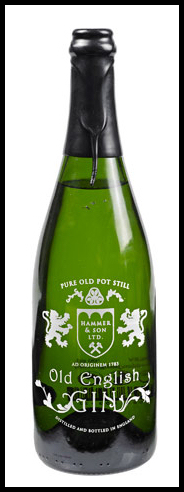 So of course I had to try it at lunchtime. It is rather nice. I recommend it!
This Old English Gin is made from a 1783 recipe, distilling eleven botanicals in Angela, the oldest pot still being used in England today. Despite the number of botanicals used there is a distinct juniper flavour, which I like. (The juniper flavour seems contrary to the current fashion in gin making where the final product appears not to have even seen any juniper — that’s just not gin in my book, more like funny flavoured vodka!)
I spotted this gin on the British Library shop website (of all the unlikely places!) but it seems to be rather more widely available than I had expected. Good grief, it’s even available on Amazon! OK it isn’t cheap, but it is strong (44% ABV) and it is good.
Yes, this is a strong, refreshing gin. In fact it is so good it almost seems a shame to add anything to it, even tonic water. It is definitely too good for making cocktails or using the enhance the curry. Drink it strong with not much tonic, so that the botanicals get a chance to show through.
This could well become one of my most favourite gins, along with Adnams Copper House gin.
Overall Rating: ★★★★★
All posts by Keith
Ten Things #1
 Here beginneth a new monthly series. My idea is that on the tenth of each month I will post a list of 10 things. They may be things I like; things about me; fun things; stupid things; or just random things like ships’ names or types of cauliflower. Who knows until we get there!? It’s just a bit of fun. I’m going to start semi-seriously with …
10 things I want to do in 2014:
- Sleep
- Eat well
- Relax more
- Be more active
- Be miserly
- Keep breathing
- Meditation
- Have a holiday
- Take more photographs
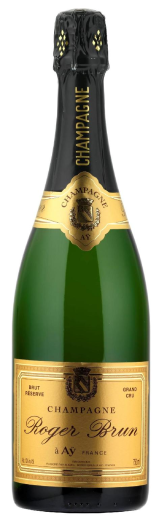
- Drink more champagne
And finally what could be better than …
Something for the Weekend
Just for all you Shakespeare enthusiasts …
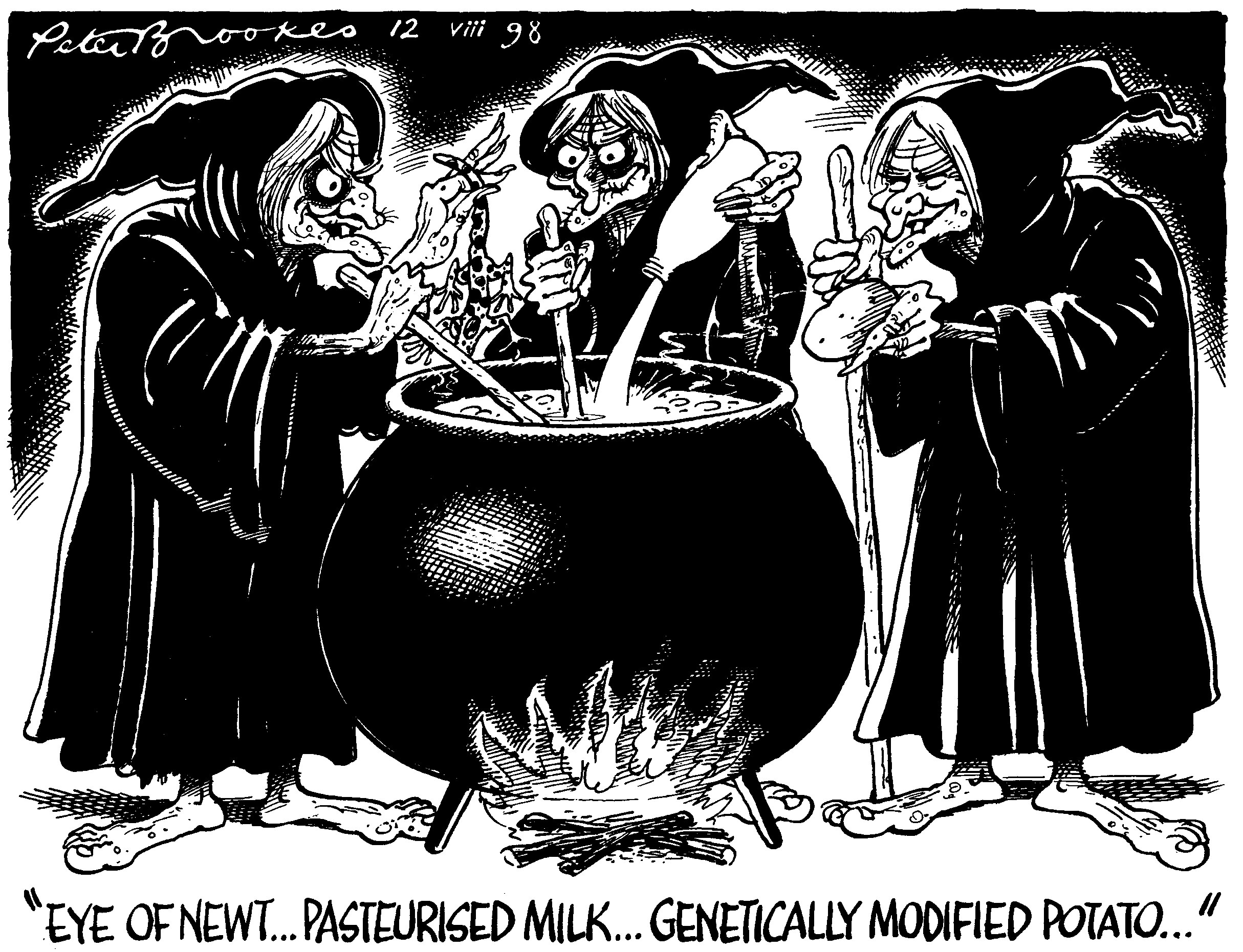
Click the image for a larger version
Oddity of the Week: Sheep Walking
OK, guys and gals, here’s another silly little regular (I hope) series to pique your interest in the middle of the week: Oddity of the Week.
There are just so many odd, curious and amusing facts out there. And they just cry out to be shared. Like everything here some will be serious; some will be amusing; and some will just be terminally out of their tree. It all depends how I feel at the time.
Let’s start with one of those real curiosities of English Law, and in this case a modern one:
Sheep-Walking.
On 10 December 2003 the then Under Secretary of State at the Department of Environment, Food and Rural Affairs, Ben Bradshaw MP, provided a Commons written answer to confirm that taking one’s pet sheep for a walk does not require a licence. However, walking one’s pet pig does: a regulation introduced in 1995 to reduce the risk of spreading disease.
Book Review
Alice Roberts
Evolution: The Human Story
(Dorling Kindersey, 2011)
This is another of the book I have long wanted to read and which I was given for Christmas. And I was not disappointed.
As one would expect from Dorling Kindersley this is a sumptuously produced book with a very large number of outstanding photographs and illustrations. And it is a large, and heavy, coffee table sized volume, so not ideal for reading in bed.
But do not be decieved by this, or the Dorling Kindersley imprint. Evolution is a serious book documenting the story of our development from the earliest known hominins of some 7 million years ago to the present. It is very much aimed at the interested layman, although I would think that teenagers interested in archaeology, palaeontology or anthropology (or indeed just biological science in general) would also find it absolutely fascinating and useful.
The text, which although maybe a little on the sparse side for me, presents the prevailing scientific understanding in proper, but intelligible, detail — and it clearly highlights and explains where there are conflicting hypotheses. All of this is just as one would expect from Prof. Alice Roberts who is one of the current generation of outstanding British scientists and science communicators.
The book is divided into five sections: Understanding Our Past, Primates, Hominins, Out of Africa, From Hunters to Farmers. Each of the sections has been created by a specialist in the field and collated by Alice Roberts who wrote the Out of Africa section.
The middle section, Hominins, occupies almost half of the 260 pages. In doing so it presents several double page spreads on each of the 20 or so major species along the route from early hominins to us. Each of these mini sections tells the story of the species, how it was discovered, what characterises it and ends with a double page spread of photographs of a reconstructed head showing what the species might have looked like and highlighting the characterising features.
These reconstructions were done by the immensely knowledgeable and talented Dutch brothers Adrie and Alfons Kennis. These reconstructions really are truly stunning and must have taken a great deal of time and cost thousands. They alone are worth the cost of the book!
Having said all that, this is not a book to be read from cover to cover, and indeed I have so far skimmed it quite quickly stopping here and there to read in detail. Although readers will want to look through the whole book to understand its compass, it is really something to be dipped into repeatedly, reading small sections as the interest arises. And it is something I shall indeed be returning to time and again.
Along with Alice Roberts’ earlier The Incredible Human Journey, this is for me one of the outstanding science books of recent years.
Overall Rating: ★★★★★
Weekly Photograph
Our photograph this week is of the nave roof of Chipping Norton Church, taken with an ultra-wide angle (fisheye) lens.
There’s apparently been a church here since before 1066 and the current church dates from the 12th century. Like many churches in East Anglia and the West Country it was built on the proceeds of wool. The current structure is though to have been built by the same “architect” who built Eton College chapel. But of course it has been much altered over the years and completely wrecked by the Victorians. That bright, light, open clerestory is quite something though.

Church Roof
Chipping Norton, September 2011
Chipping Norton is definitely on the list of places to go back to this year. Noreen has ancestors, from Chipping Norton, indeed they were stonemasons who probably worked on the church and her ggg-grandfather (as I recall) is buried outside the church door. I too have have now found I have ancestors from only a handful of miles away.
Five Questions, Series 5
To start off the New Year I decided we would have another round of Five Questions.
As before they are a mix of difficult and slightly silly questions, although of course you can treat them all as serious, or all as silly, should you wish. And there’s no knowing what I shall do when I get to answer each!
So the five questions for series 5 are:
- What is time?
- Describe your fantasy girl. (Yes girls, you can answer this too!)
- Do stairs go up or down?
- Give me the story of your life in six words.
- Unicorns or magic carpet as your only form of transport? Why?
As in previous series, if you take them seriously I think they’re going to be deceptively tricky. I certainly don’t know exactly how I’m going to answer them all, although I have a few ideas up my sleeve.
But answer them I will; one at a time over the coming weeks; the first probably in about a week from now — so you (and I!) have some think time.
And as I’ve said before, if anyone has any more good questions, then please send them to me. I’d like to continue to do this two or three times a year so good, but potentially fun, questions are needed.
Watch this space!
Quote: Normal
Not Even Wrong: New Trees are not Ancient Woods
FFS what sort of madman can even start to think that new trees are equivalent to ancient woodland. Just for a start the biodiversity is completely different.
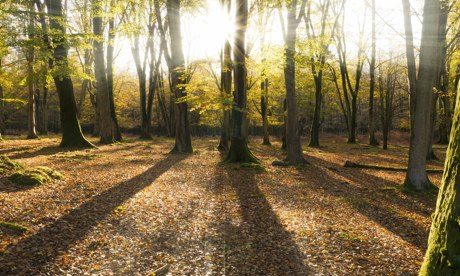
Ancient woodlands could be cut down under ‘biodiversity offsetting’ proposal
This is the most stupid idea I’ve heard since culling badgers.
What say we cull the Environment Ministry?
Word: Grizzled
Grizzled
1. Partly grey or streaked with grey.
2. Having fur or hair streaked or tipped with grey.
Usage is now mostly restricted to descriptions of hair, although the name lives on in the names of some species, eg. Grizzled Skipper butterfly.

Surprisingly the first recorded English usage was as early as 1458. The word is possibly derived from the French grisellé, but the OED says this is lacking evidence.