
Seriously, though, people vary in the times they like to sleep and wake—this has been the case throughout history. What’s new, however, is the recent discovery that the tendency toward being a lark or an owl is genetically determined in a similar way to the tendency to have blue or green eyes. The gene that governs sleep/wake predisposition is called Period, or PER for short. Like the gene for eye color, it comes in two different types (let’s call them PERI, which causes people to have larkish tendencies, and PERo, which causes them to have owlish tendencies). You probably know that we have two copies of all our genes, which means we have two copies of PER as well. The trick, however, is that these copies don’t have to be the same: If you have two copies of PERI, you’ll be a lark. If you have two copies of PERo, you’ll be an owl. But if you have one copy of each (which is what 50 percent of the population has), you’ll be somewhere in between. This works for eye color too, by the way: If you have two copies of EYE-COLORg, you’ll have green eyes. Two copies of EYE-COLORb you’ll have blue eyes, and a copy of each you’ll have brown eyes.
From Penelope A Lewis, The Secret World of Sleep (2013)
All posts by Keith
Transforming the NHS
As regular readers will know, transforming the NHS so that it can provide excellent healthcare to people in the UK at an affordable cost is something which has exercised my mind for a long time (see, for example, here and here). And I am involved, at a local level, in trying to help unlock this.
Now don’t get me wrong. Many parts of the NHS are excellent. In an emergency they generally work brilliantly, at least in the short-term. And many of the doctors and nurses care deeply about looking after the patients.
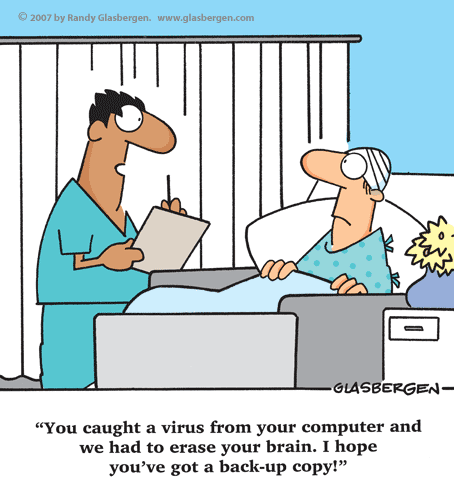
However whenever I walk into any NHS hospital, clinic or office** there are several things which immediately strike me:
- the obscene level of waste
- the absence of appearing professional
- the number of staff who seem to spend their lives wandering around doing little or nothing
- the appalling environment
- the apparent lack of both money and the will to put any of this right.
And that is despite the fact that the NHS should already have shed-loads of money to do everything we would want it to do if it used it wisely.
The other day I had to visit a local private hospital, and the contrast with the NHS was almost as stark as it has always been. No, it wasn’t perfect. For a start it was far too hot, but it was clean and looked professionally welcoming. Yes, there were plenty of staff around, and they all appeared to be doing something with a purpose. You had a degree of confidence that everyone knew what they were doing and why and that they cared about their patients.
This is more what the NHS should be like. But how to get there?
I keep thinking about this and here’s my three step plan for the paradigm shift which the NHS requires, from top to bottom.
Step 1. Get someone at the top who can successfully run a large, quality, profitable corporation and who is able and willing to tell the politicians to butt out and stay out. Someone like Richard Branson, or perhaps Alan Sugar (no, I don’t care that you dislike them; they’re good at what they do). Someone who will have a vision of how the organisation should be and will implement it regardless of push-back from any level — if you aren’t going to do the job, get out.
Step 2. Tackle the appalling level of waste. This includes finding efficiencies — improved ways of doing things — at all levels. And that means everything from reducing bloated layers of managers and administrators, through cupboards full of medical supplies which have to be thrown out because they go out of date while other departments can’t order the very same thing, to turning down the heating.
Yes, really! Turn the heating down! NHS hospitals, clinics and offices are always far too hot; when people who are usually cold tell me it’s too hot then you really are wasting money! Just this one thing could save the NHS millions.
And while you’re saving money, fix the buildings: even if you can’t build new hospitals (because of time, money or space) you can at least make the ones you have into a habitable environment. Fix the leaks etc. Stop the draughts. Buy some paint. Because they will save you even more money in the long run.
Do those two things and you will start to see a culture change. But to complete the paradigm shift you need to do something just as fundamental the the outlook and attitude of all the staff — from the most world renowned consultant surgeon to the lowest lavatory cleaner. So that means …
Step 3. Everyone needs to take on board four basic beliefs and habits:
- Cherish the patients. They are why you are doing what you do. They’re not just important they are your whole raison d’être. They deserve the best.
- Put yourself in the other person’s shoes, whether they’re a consultant, GP, patient, nurse, administrator or ancillary worker. Think what effect things will have on them. And then treat them as you would like to be treated.
- Work as a single team. Everyone is equal but everyone has different skills. It doesn’t matter if you’re a patient, the most renowned surgeon or the ward cleaner, everyone has an important role which has to be valued as important to the patient’s recovery. (And part of that means valuing people and paying them decently.)
- Be empowered. If it is right and needs doing, do it. This has to come from the top by giving everyone freedom (not bullying), and it has to come from the bottom with people grasping that freedom. Unless there is an over-riding reason not to do something, just do it.
No, I don’t pretend it will be easy. That’s why you need the right person, with the right attitude, at the top. Without that one person it will never work because the politicians will keep meddling and the all the vested interests will see the top as weak and keep playing their own games. And then the patient (remember him/her?) is forgotten.
Yes, initially there will be a lot of scepticism and probably a morale hit. But as time goes on, as it begins to work and people start to buy-in, morale will increase and you’ll win lots of crusaders.
But it will take time. I went through this in a multi-national corporation in the 1990s and it took the best part of a decade, lots of head-banging, a lot of people being retrained and several rounds of redundancies for those who couldn’t or wouldn’t adjust. So I’ve seen it done; I was looking up from the bottom wondering WTF was happening; after a couple of years the penny dropped and I too changed. I know it can be done.
So David Cameron and Jeremy Hunt, do you have the balls to do this?
I’m not holding my breath.
____________________
** This also applies to some GP surgeries although most are better as they are small stand-alone businesses which have to keep afloat.
Quote: Fences
[GK Chesterton]
Five Questions, Series 5 #4
We’ve got to question 4 of the Five Questions in Series 5 that I posed at the beginning of the year. (OMG, a month of the year has gone already!)
Question 4: Give me the story of your life in six words.
How about this as a fair summary:
I didn’t get where I am today by achieving anything other than mediocrity.
 OK, yes I did well academically by most people’s standards: reasonable first degree, a masters, then a doctorate (by the skin of my teeth!). But I failed dismally as the academic I wanted to be and left after a year.
I was destined to be a top consultant technician in a large IT company, but allowed myself to drift from job to job. I realised towards the end of my career that I could have achieved much more so-called success if I had put my mind to it. But I hadn’t and I realised I really didn’t want it, although I would have liked the status, the money and the pension. And that, from the outside looks like under-achievement because the early academic promise should have taken me much further than it did.
Unfortunately this just reinforced my internal mental self-portrait as a loser, an image which seems to have been instilled in me in childhood. It became an ingrained self-fulfilling prophesy. But of course it’s bollox. Intellectually I know it is.
But changing one’s internal self-image is damn hard. I’ve managed to get a long way from being a miserable, negative, “they’re all out to get me” git of a loser, as my father was, and as I was set to become. But so far I haven’t managed to shift the internal “loser” self-portrait.
No wonder I’m depressive.
Bah! Humbug!
Weekly Photograph
This week’s photo was taken last October when Noreen and I travelled on the paddle-steamer Waverley from London (Tower Pier) to Southend. This guy was one of the passengers. He was totally oblivious to me sitting on deck less than 10 feet away taking his photo. I don’t know how he was warm enough in just a t-short at 9AM on a cold foggy morning. I ask you, what does he look like?!
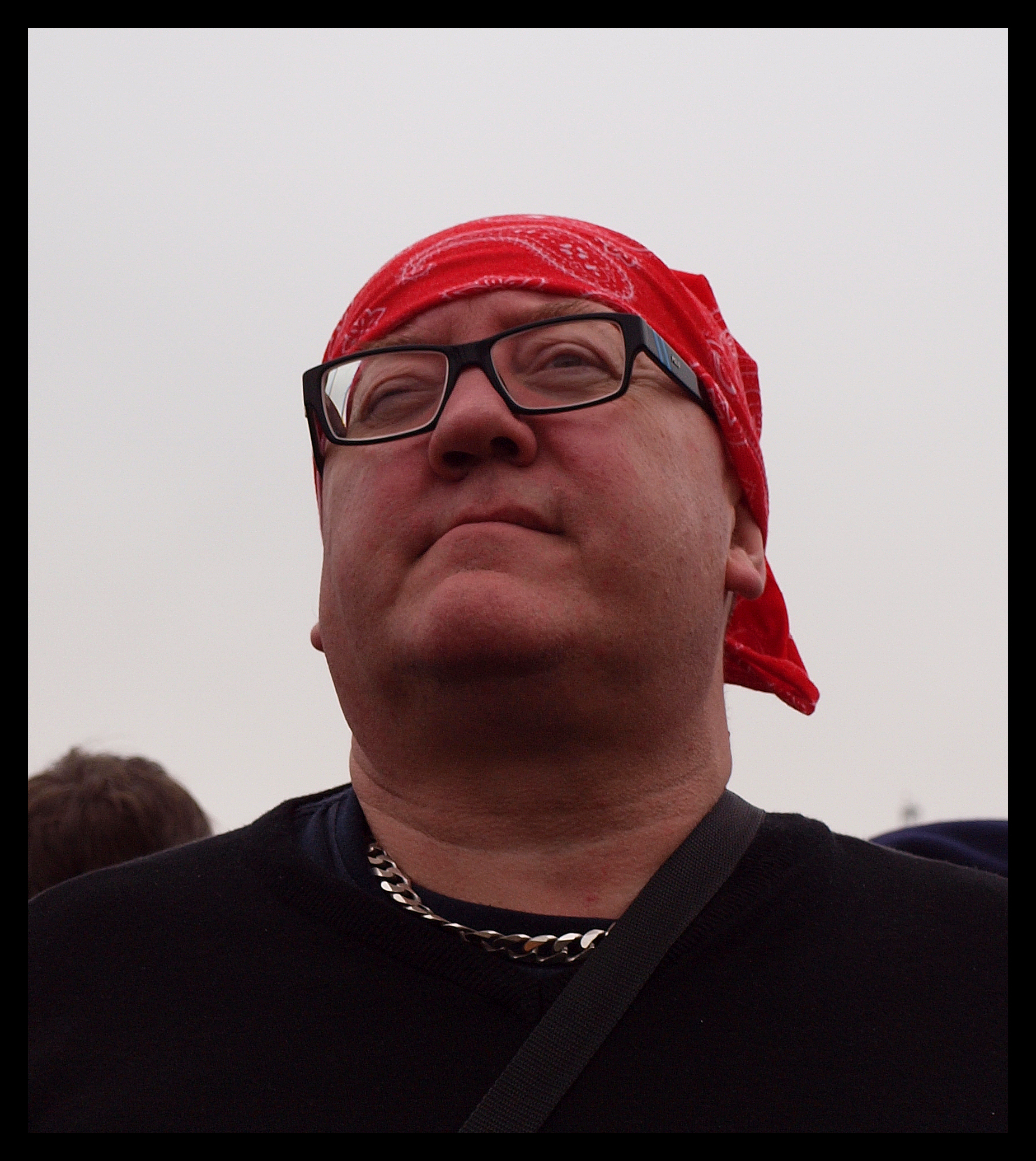
Plonker
River Thames, October 2013
Quotes
Another in our series of interesting, thought-provoking or humourous quotes recently encountered.
It has proven surprisingly difficult to work out how many sheets of A4 the average goatskin can produce.
[@ianvisits on Twitter]
Challenges cannot possibly be good or bad. Challenges are simply challenges.
[Carlos Castaneda]
Less and less is done until non-action is achieved. When nothing is done, nothing is left undone.
[Lao Tzu]
There are basically two types of people. People who accomplish things, and people who claim to have accomplished things. The first group is less crowded.
[Mark Twain]
The whole modern world has divided itself into Conservatives and Progressives. The business of Progressives is to go on making mistakes. The business of the Conservatives is to prevent the mistakes from being corrected.
[GK Chesterton]
A man’s bookcase will tell you everything you’ll ever need to know about him
[Walter Mosley, born 1952]
In expanding the field of knowledge we but increase the horizon of ignorance.
[Henry Miller, The Wisdom of the Heart (1941)]
It is a very sad thing that nowadays there is so little useless information.
[Oscar Wilde (1854-1900)]
Beware of false knowledge; it is more dangerous than ignorance.
[George Bernard Shaw (1856-1950)]
For lust of knowing what should not be known,
We take the golden road to Samarkand.
[James Elroy Flecker (1884-1915), The Golden Journey To Samarkand]
It’s because someone knows something about it that we can’t talk about physics, it’s the things that nobody knows about that we can discuss. We can talk about the weather; we can talk about social problems; we can talk about psychology; we can talk about international finance … so it’s the subject that nobody knows anything about that we can all talk about!
[Richard Feynman (1918-88)]
… and at the very bottom, a world of caverns whose walls are black with soot, a world of cesspools and sloughs, a world of grubs and beasts, of eyeless beings who drag animal carcasses behind them, of demoniacal monsters with bodies of birds, swine and fish, of dried-out corpses and yellow-skinned skeletons arrayed in attitudes of the living, of forges manned by dazed Cyclopses in black leather aprons, their single eyes shielded by metal-rimmed blue glass, hammering their brazen masses into dazzling shields.
[Georges Perec, Life: A User’s Manual]
If you’ve ever tried counting yourself to sleep, it’s unlikely you did it using the square roots of sheep. The square root of a sheep is not something that seems to make much sense. You could, in theory, perform all sorts of arithmetical operations with them: add them, subtract them, multiply them. But it is hard to see why you would want to.
[Matthew Chalmers, “Reality Bits”, New Scientist, 25/01/2014]
Something for the Weekend
I rather like this XKCD from earlier in the week:
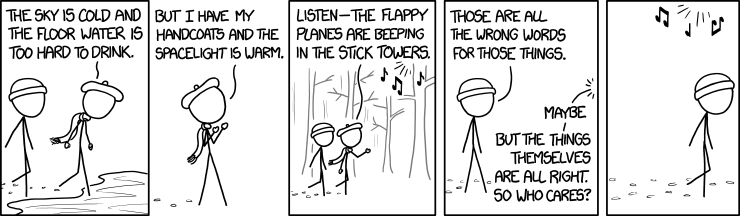
Click the image for a larger view
Book Review: The Secret World of Sleep
Penelope A Lewis
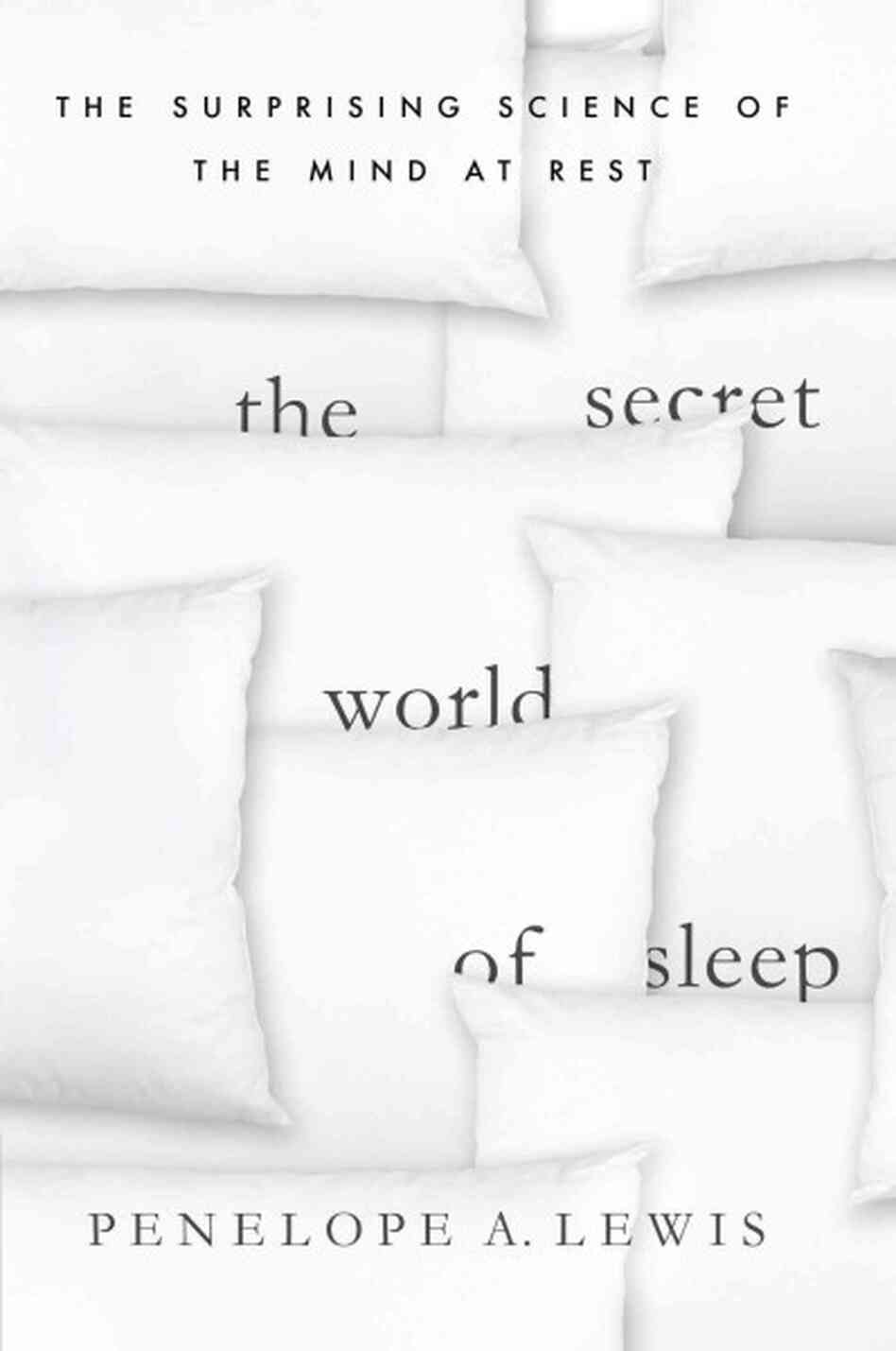
The Secret World of Sleep: The Surprising Science of the Mind at Rest
Palgrave Macmillan, 2013
This is another of those books which I wanted to read and which appeared for either Christmas or my birthday (I forget now which as they are quite close together). This is what the cover blurb says:
A highly regarded neuroscientist explains the little-known role of sleep in processing our waking life and making sense of difficult emotions and experiences.
In recent years neuroscientists have uncovered the countless ways our brain trips us up in day-to-day life, from its propensity toward irrational thought to how our intuitions deceive us. The latest research on sleep, however, points in the opposite direction. Where old wives’ tales have long advised to “sleep on a problem,” today scientists are discovering the truth behind these folk sayings and how the busy brain radically improves our minds through sleep and dreams. In The Secret World of Sleep, neuroscientist Penny Lewis explores the latest research into the nighttime brain to understand the real benefits of sleep. She shows how, while our body rests, our brain practices tasks it learned during the day, replays traumatic events to mollify them, and forges connections between distant concepts. By understanding the roles that the nocturnal brain plays in our waking life, we can improve the relationship between the two and even boost creativity and memory. This is a fascinating exploration of one of the most surprising corners of neuroscience that shows how science may be able to harness the power of sleep to improve learning, health, and more.
 Yes, OK, I guess it does do all of that and at a level which is likely OK for the intelligent layman. But as a scientist I found it somewhat lacking, or maybe more correctly it felt loose, in the details. I don’t profess to be very knowledgeable about the neurology of sleep, but I had the feeling that there was more there which is known and which would tie everything together. I may be wrong, and in fairness to Lewis she does say at a number of points “we don’t know how this works”.
Did it tell me anything I didn’t know? Well nothing which I found helpful and which has stuck sufficiently that I could recite it now. As always, yes, OK, I’m probably way above the audience this was written for. I found it an easy but not compelling, or gripping, read — sufficiently so that I whizzed through it far faster than I had expected.
All of this is a shame because I wanted to get that “Wow!” inspirational insight and it didn’t happen. I still feel it should.
As with many modern books it is a slim volume (about 190 pages) and it could have been much slimmer: as always there is too much white space on the page. Even if you don’t want to reduce the font size the leading could certainly be reduced, as could the margins slightly. That would make it a more compact volume, both in looks and physically.
I was also not struck on the cartoon-style illustrations. I didn’t find them illuminating (indeed at times downright confusing) and felt that maybe a few more, better, diagrams were needed for the target audience.
One thing which Lewis does however do well is to write a summary paragraph or two at the end of each chapter. Other authors please copy.
Is this a bad book? No, certainly not. It would likely work very well for an intelligent layman. It is merely that it didn’t work for me; but then it probably wasn’t intended to.
Overall Rating: ★★★☆☆
Word: Orchidectomy
Orchidectomy
The excision of one or both of the testicles; castration.
This is derived from the Greek ὄρχις (orkhis, a testicle) + ἐκτοµή (ektomi, cutting-out).
According to the OED the first recorded usage was in 1870.
And just to remove any confusion, the group of plants called orchids are so named because of the testicular appearance of the roots of some species.
Oddity of the Week: Banana Radiation
We are exposed to ionising radiation every minute of every day, much of it in the form of background radiation including cosmic rays, rocks in the ground, radon gas, water and food.
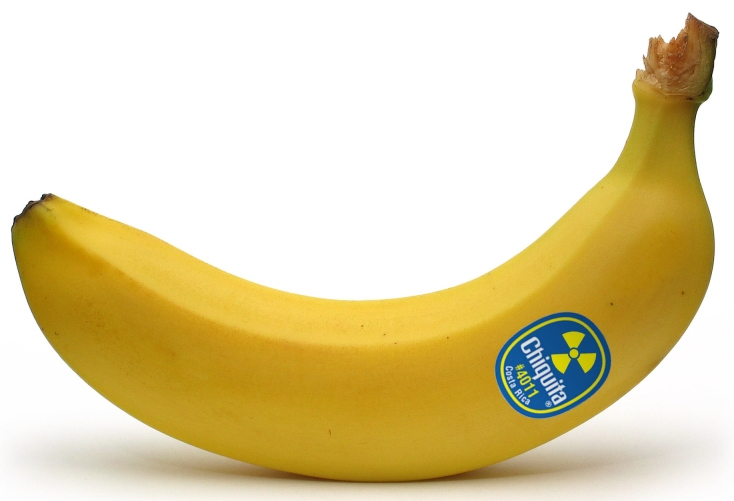
Bananas, for example, contain naturally occurring potassium-40, a radioactive isotope of potassium. Incredibly, there is even something known as the ‘banana-equivalent dose’, an attempt to contextualise artificial radiation exposures for the general public.
An X-ray screening at a US airport is roughly two and a half times a banana-equivalent dose.
From Simon Flynn, The Science Magpie (2012)