
For everyone going out to dinner this Valentine’s day …
All posts by Keith
Your Interesting Links
Another catch-up on items you may have missed.
 Before delve into the depths of science-y things, let’s start with a mystery … A couple of scientists have come up with a possible way of interpreting the mysterious Voynich manuscript — and it is all based on the illustrations.
Well what a surprise! January was England’s wettest winter month in almost 250 years. December wasn’t far behind and it is looking as if February will follow suit!
So how should you cover your mouth when we sneeze? Hand? Hankie? Or Elbow?
More strangeness of animal genetics. Cells in females shut down one of their two X chromosomes at random.
Synesthesia is a very strange affliction. Here one young lady talks about what it is like.
Confused by all the different ‘flu viruses that appear in the media? Scientific American tries to unmuddle you.
What’s the relationship between what we eat and how well/ill we are? Basically scientists think they know, but actually nobody does.
Why do so many of our best spices come from very low down on the evolutionary tree of plants?
Well who would have guessed? Clearly not scientists. Birds can smell!
Hands up: Who knows what a thylacine is? Who thinks it’s extinct? Who would like to find out?
Just like we trust our doctors, we trust our vets to know what medicines work on our pets. But maybe they often don’t know.
Ever wondered what your cat thinks about you? Maybe you don’t want to know!
Here’s the story of how we get ever more clever at defining the the length of the standard metre.
At long last! Let’s leave all this geeky science stuff behind …
A London cabbie looks at the history and development of Waterloo Station.
English has always borrowed words from other languages. How good is your knowledge of English’s borrowings?
The discovery of a secret Viking message … sealed with a kiss?
Going even further back in time, some 850,000 year old footprints have been uncovered in Norfolk.

So time to relax with a few interesting facts about tea.
And finally as a prelude to Valentine’s Day … Many people no longer expect passion to last a lifetime. And yet some couples stay in love to the last. What’s their secret?
Oddity of the Week: Speed of Chocolate
I’ve been meaning to write about this for some time, and having come across the instructions again the time is now.
It took over 300 years of experimentation and refinement to arrive at the figure for the speed of light which we use as standard today. That being the case, this method for determining that speed yourself might seem more than a little surprising. All you need is some kind of food that can melt (chocolate is good but you can also use marshmallows or cheese), a microwave oven, a microwave-safe dish to put the food in, and a ruler.
- Place the food on the dish.
- Remove the turntable from the microwave — it’s important that the dish can’t move.
- Put the dish in the microwave.
- Cook on a low heat until it’s clear the food is beginning to melt in spots. Begin by trying 30 seconds. These spots relate to the peaks of the ‘wave’ — the distance between two peaks is half a wavelength.
- Once the melted spots appear, remove the dish and measure the distance between the centres of these spots. One distance should repeat again and again.
Now look on the microwave (it might be on the back) to find its frequency — this is typically 2.45GHz.
We know that c = λν, or the speed of light = wavelength multiplied by frequency.
So, ν is the frequency of the microwave. If it’s 2.45GHz then the figure you will use in your calculation will be 2,450,000,000 (whatever the frequency listed is, it will almost certainly be in gigahertz — 1GHz is 1,000,000,000 so make sure your calculation reflects that). You now need to multiply this by λ, which is double the distance you measured in metres (for example 15cm is 0.15 metres). See how close to the true speed of light, 299,792,458 ms-1, you get.
And having done that you can eat the chocolate!
From: Simon Flynn, The Science Magpie (2012).
Beavers
I’m coming to like the idea of beavers. And no, I don’t mean those, I mean the animated furry kind. Oh maybe not that either … the animals what build dams in rivers, m’lud.
I used not to think much of these animals, but research seems to be showing that they really do have a beneficial effect on water management, otherwise known as flood control.
And beavers are back on the agenda (well, maybe) because a large part of southern England is under water thanks to a record breaking deluge over the last 2-3 months. December and January rainfall has been the heaviest in England and Wales since records began 240 years ago — and it looks as if February is about to join them.
According to New Scientist the rains have been exacerbated by the weather in Indonesia and the tropical west Pacific — no I don’t get that either but then I’m not a meteorologist. But regardless, we’ve had several oceans of rain recently and consequently there is much flooding in southern England.
There is an argument going on about whether rivers were dredged sufficiently, and whether if they were it would have made any difference. On the one side we appear to have the UK government who say rivers must be dredged more and they’ll pay — mainly because they’re trying to appease agribusiness. On the other hand every hydrologist being quoted is saying dredging would, at best, have made no difference and would likely have made things worse.

I think I might just trust the hydrologists rather than the politicians.
Joining in with the hydrologists is environmentalist and thinker George Monbiot. His piece in the Guardian at the end of January mocks the politicians’ unseemly positions but also makes many salient environmental points which the politicians appear to have missed (or ignored).
Quoting from an Environment Agency report, Monbiot says:
“Dredging of river channels does not prevent flooding during extreme river flows … The concept of dredging to prevent extreme flooding is equivalent to trying to squeeze the volume of water held by a floodplain within the volume of water held in the river channel. Since the floodplain volume is usually many times larger than the channel volume, the concept becomes a major engineering project and a major environmental change.”
He then says:
Is that not bleeding obvious? A river’s capacity is tiny by comparison to the catchment from which it draws its water. You can increase the flow of a river by dredging, but that is likely to cause faster and more dangerous floods downstream when the water hits the nearest urban bridge … If you cut it off from its floodplain by turning it into a deep trench, you might raise its capacity from, say, 2% of the water moving through the catchment to 4%. You will have solved nothing while creating a host of new problems.
Among these problems, the Environment Agency points out, are:
1. Massive expense. Once you have started dredging, “it must be repeated after every extreme flood, as the river silts up again”.
2. More dangerous rivers: “Removing river bank vegetation such as trees and shrubs decreases bank stability and increases erosion and siltation.”
3. The destabilisation of bridges, weirs, culverts and river walls, whose foundations are undermined by deepening the channel: “If the river channels are dredged and structures are not realigned, ‘Pinch Points’ at structures would occur. This would increase the risk of flooding at the structure.” That means more expense and more danger.
4. Destruction of the natural world: “Removing gravel from river beds by dredging leads to the loss of spawning grounds for fish, and can cause loss of some species. Removing river bank soils disturbs the habitat of river bank fauna such as otters and water voles.”
Yep, that’s right: dredging is a tool for improving navigation not land drainage. If you want to prevent flooding you need to do things like:
• More trees and bogs in the uplands — reconnecting rivers with their floodplains in places where it is safe to flood …
• Making those floodplains rougher by planting trees and other deep vegetation to help hold back the water — lowering the banks and de-canalising the upper reaches, allowing rivers once more to create meanders and braids and oxbow lakes. These trap the load they carry and sap much of their destructive energy.
So how should all this be done?
Well one answer appears to be beavers!
Yes, beavers. The pesky furry critters what fell trees and build dams.
We used to have beavers in this country but they were hunted to extinction here several hundred years ago — they lasted until Tudor times in Scotland but disappeared from England long before that.
Why beavers? Well to quote from a Wild Wood Trust document:
Beaver are considered to be a ‘key-stone’ species because they have the ability to create and maintain wetlands by building dams and digging ditches. They also create coppice, selectively felled areas of woodland. In doing this they provide essential habitat for many other species of plant and animal. Wetland areas and coppice must currently be maintained artificially, at significant cost to the public. Beaver damming activity has also been observed to filter pollutants out of the water, leaving streams cleaner.
Wetlands are … fragile ecosystems, but they can also act as a flood defence and could protect homes across the country. After heavy rainfall, wetland areas and flood plains act as a sponge, holding excess water and releasing it slowly, preventing sudden rises in water level and flash floods …
Beavers have been reintroduced across Europe, and have not caused any serious ecological problems. Reintroductions have been extremely successful as long as the population density is low enough that the beavers do not come into conflict with human activity.
There’s a fuller report, by Natural England and People’s Trust for Endangered Species, on reintroducing beavers to England here.
Sure, beavers likely aren’t going to do a lot of good actually on the Somerset Levels. But they will help if they are present on the uplands which drain into the Levels. One of the keys seems to be the need to manage water flow much higher up the valleys than the actual areas currently being flooded.
But of course that’s counter-intuitive both to the affected residents and to politicians. And of course neither trusts the experts who they employ. If you’re not going to listen to experts — insisting instead on a DIY fuck-up — then don’t waste money employing them.
So the bottom line is we need to reintroduce beavers.
What a great idea!
Meanwhile I’ll leave you with George Monbiot’s final salvo:
Cameron’s dredge pledge is like the badger cull. It is useless. It is counter-productive. But it keeps the farmers happy and allows the government to be seen to be doing something: something decisive and muscular and visible. And that, in these dismal times, appears to be all that counts.
Word: Cataphract
Cataphract
1. Defensive armour used for the whole body and often for the horse, also, especially the linked mail or scale armour of some eastern nations.
2. A horseman covered with a cataphract.
3. The armour or plate covering some fishes.

The word is derived from the Latin cataphractes, Greek καταϕράκτης, a coat of mail; also from Latin cataphractus, Greek κατάϕρακτος, clad in full armour.
Surprisingly the OED gives the first recorded usage in 1581.
Ten Things #2
Here’s my February list of Ten Things.
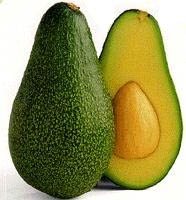 10 Fruits & Vegetable I Like:
- Jerusalem Artichokes
- Avocado
- Pink Grapefruit
(such a shame I can’t eat it) - Fennel
- Garlic
- Butter Beans
- Purple Sprouting Broccoli
- Victoria Plums
- Chard
- Aubergine
There are lots more, but they’ll do for now!
Why Monogamy?
I’m dipping into (“reading” is too organised a concept for my random excursions) This Explains Everything: Deep, Beautiful and Elegant Theories of How the World Works, edited by John Brockman. This is a collection of almost 150 short essays written in response to the Edge question of 2012: What is your favourite deep, elegant, or beautify explanation?
The answers cover the spectrum from particle physics through psychology to the social sciences. Authors include luminaries like Susan Blackmore, Leonard Susskind, Stephen Pinker, Carl Zimmer and Jared Diamond as well as a whole host of people I’ve never heard of.
One essay I read last evening stood out for me, and I am naughtily going to reprint it here in its entirety.
The Overdue Demise of Monogamy
Aubrey de Gray
Gerontologist; chief science officer, SENS Foundation; author, Ending Aging
There are many persuasive arguments from evolutionary biology explaining why various species, notably Homo sapiens, have adopted a lifestyle in which males and females pair up long-term. But my topic here is not one of those explanations. Instead, it is the explanation for why we are close — far closer than most people, even most readers of Edge, yet appreciate — to the greatest societal, as opposed to technological, advance in the history of civilization.
In 1971, the American philosopher John Rawls coined the term “reflective equilibrium” to denote “a state of balance or coherence among a set of beliefs arrived at by a process of deliberative mutual adjustment among general principles and particular judgments.”* In practical terms, reflective equilibrium is about how we identify and resolve logical inconsistencies in our prevailing moral compass. Examples such as the rejection of slavery and of innumerable “isms” (sexism, ageism, etc.) are quite clear: The arguments that worked best were those highlighting the hypocrisy of maintaining acceptance of existing attitudes in the face of already established contrasting attitudes in matters that were indisputably analogous.
Reflective equilibrium gets my vote tor the most elegant and beautiful explanation, because of its immense breadth of applicability and also its lack of dependence on other controversial positions. Most important, it rises above the question of cognitivism, the debate over whether there is any such thing as objective morality. Cognitivists assert that certain acts are inherently good or bad, regardless of the society in which they do or do not occur—very much as the laws of physics are generally believed to be independent of those observing their effects. Noncognitivists claim, by contrast, that no moral position is universal and that each (hypothetical) society makes its own moral rules unfettered, so that even acts we would view as unequivocally immoral could be morally unobjectionable in some other culture. But when we make actual decisions concerning whether such-and-such a view is morally acceptable or not, reflective equilibrium frees us from the need to take a view on the cognitivism question. In a nutshell, it explains why we don’t need to know whether morality is objective.
I highlight monogamy here because, of the many topics to which reflective equilibrium can be usefully applied, Western society’s position on monogamy is at the most critical juncture, Monogamy today compares with heterosexuality not too many decades ago, or tolerance of slavery 150 years ago. Quite a lot of people depart from it, a much smaller minority actively advocate the acceptance of departure from it, but most people advocate it and disparage the minority view. Why is this the “critical juncture”? Because it is the point at which enlightened thought-leaders can make the greatest difference to the speed with which the transition to the morally inescapable position occurs.
First let me make clear that I refer here to sex and not (necessarily, anyway) to deeper emotional attachments. Whatever one’s views or predilections concerning the acceptability or desirability of having deep emotional attachments with more than one partner, fulfillment of the responsibilities they entail tends to take a significant proportion of the twenty-four hours of everyone’s day. The complications arising from this inconvenient truth are a topic for another time. In this essay, I focus on liaisons casual enough (whether or not repeated) that availability of time is not a major issue.
An argument from reflective equilibrium always begins with identification of the conventional views, with which one then makes a parallel. In this case, it’s all about jealousy and possessiveness. Consider chess, or drinking. These are rarely solitary pursuits. Now, is it generally considered reasonable for a friend with whom one sometimes plays chess to feel aggrieved when one plays chess with someone else? Indeed, if someone exhibited possessiveness in such a matter, would they not be viewed as unacceptably overbearing and egotistical?
My claim is probably obvious by now. It is simply that there is nothing about sex that morally distinguishes it from other activities performed by two (or more) people collectively. In a world no longer driven by reproductive efficiency, and presuming that all parties are taking appropriate precautions in relation to pregnancy and disease, sex is overwhelmingly a recreational activity. What, then, can morally distinguish it from other recreational activities? Once we see that nothing does, reflective equilibrium forces us to one of two positions: Either we start to resent the temerity of our regular chess opponents playing others, or we cease to resent the equivalent in sex.
My prediction that monogamy’s end is extremely nigh arises from my reference to reproductive efficiency above. Every single society in history has seen a precipitous reduction in fertility following its achievement of a level of prosperity that allowed reasonable levels of female education and emancipation. Monogamy is virtually mandated when a woman spends her entire adult life with young children underfoot, because continuous financial support cannot otherwise be ensured. But when it is customary for those of both sexes to be financially independent, this logic collapses. This is especially so for the increasing proportion of men and women who choose to delay having children until middle age (if then).
I realize that rapid change in a society’s moral compass needs more than the removal of influences maintaining the status quo; it also needs an active impetus. What is the impetus in this case? It is simply the pain and suffering that arises when the possessiveness and jealousy inherent in the monogamous mind-set butt heads with the asynchronous shifts of affection and aspiration inherent in the response of human beings to their evolving social interactions. Gratuitous suffering is anathema to all. Thus, the realization that this particular category of suffering is wholly gratuitous has not only irresistible moral force (via the principle of reflective equilibrium) but also immense emotional utility.
The writing is on the wall.
____________________
* A Theory of Justice (Cambridge, MA: Belknap Press, 1971).
Friends with benefits. Or just friends. Or just benefits. Where’s the problem?
As one of my university friends used to observe: why should sex not just be an expression of friendship; we have sex just because we’re friends and feel like it; no more, no less? How is this actually different from having a drink, listening to records, or playing tennis together?
I’ve always struggled to see why anyone has a problem with this.
Weekly Photograph
This week a photograph from the archives; it was taken in October 2011.
I see a Green Woodpecker going through the garden a couple of time most years. But this guy (yes, probably male) was on our next door neighbour’s lawn and back then this was the third or fourth time I’d seen him visiting over a period of 2-3 weeks. One day I watched him for 45 minutes, quartering the same area repeatedly, so it must be very rich in ants. Taken at a range of 20-25 yards from the study window with my biggest lens and still this is a small crop from the middle of a frame.

Green Woodpecker
Greenford, October 2011
NHS Communications
Every week someone somewhere in the NHS sends out an email bulletin called NHS Networks News. It is intended to provide a channel of useful information and articles on the happenings in the NHS for clinicians and similar. For some reason I seem to be subscribed, so I see a copy.
And each week this email starts with a short piece called “Editor’s blog”. Sometimes it is useful. Sometimes it is humorous. This week’s was undoubtedly supposed to be humorous. But in actual fact all it has done is highlight the appalling levels to which the NHS culture and NHS communications have sunk, because it is far closer to the truth than I think the anonymous author realises, as you’ll know if ever you have tried reading any NHS documentation. (Although the same is equally true of most corporate cultures.)
Just for your edification, I shall reproduce here the full item.
The gas and air principle
All NHS staff must learn a second language before they can be truly proficient communicators: they need to be able to speak NHS.
In the latest in our occasional series of tutorials, we offer further tips for the aspiring NHS speaker.
Verbs
In most languages, verbs are “doing” words. In NHS they are “actively considering” words. Saying that you will “do” something may make you appear brash or over-confident. Acceptable alternatives include “aim to”, “take steps toward” and “formulate a vision and strategy for”.
When you have practised each of these, you can use them together to convey the desired nuance or level of obfuscation.
So while “aiming to tackle the causes of health inequalities” could still be mistaken for a commitment, “aiming to take steps towards formulating a vision and strategy for tackling health inequalities” avoids the risk of embarrassment and disappointment when nothing happens, but demonstrates very strong active consideration.
Nouns
In English, nouns – or naming words – denote a person, place or thing. In NHS, nouns are used to create the impression of something tangible.
For example “stakeholder” is a useful term meaning someone who is not involved and you have no intention of involving, but who cannot be ignored. A patient is a good example of a “stakeholder”.
When you have mastered “stakeholder”, you can start to introduce “ownership” into your everyday conversation. Here are a few phrases to practise, with English translations in brackets.
- “I’m going to give you ownership” (“It’s your problem now”)
- “We don’t have ownership” (“Nothing is our fault”)
- “We are working with stakeholders to establish full ownership” (“No one knows what’s going on”)
Adjectives
Adjectives in English are used to describe things, usually to make them clearer. Adjectives have a slightly different role in NHS, which is to make statements more emphatic. Simple ones to start with include “key”, “core”, “vital”, “meaningful”, “strategic” and “high-quality”. In NHS it is mandatory to use at least one of these words in front of any noun.
“Increasing” is among the most useful adjectives in NHS. Describing all problems as “increasing” helps to explain why they continue to get away from us despite the steps we have taken to formulate a vision and strategy for aiming to solve them.
Putting it all together
Once you have grasped the different parts of speech, you will soon be ready to try out your new skills. Here are two superb examples of written NHS, taken from a report published this week by the Local Government Association* and Public Health England. Don’t be disheartened if your first attempts are not up to this standard.
“A history of joint working has ensured that health issues are built into planning policies. Healthy urban planning is now high on the council’s priority agenda and a toolkit is being developed to embed health issues further into planning.”
“A number of partnerships and a strategy involving a parallel inter-linked range of initiatives have been set up to tackle the increasing problem of alcohol misuse in the city. Pioneering use has been made of the council’s traditional functions in the service of health. Involving the public and service users has been a key component.”
Note how the sheer density of each sentence creates a sense of meaning without allowing any actual meaning to escape. This is the effect you should aim for in your own written and verbal communications.
All of which leads us to the first rule of NHS, known as the gas and air principle: the purpose of words is not to bring ideas to life but to render them unconscious as swiftly and safely as possible.
(*Not an NHS organisation, but an accomplished NHS speaker in its own right.)
Oh dear! If it wasn’t quite so true it would indeed be amusing.
Something for the Weekend
The superannuated geek in me appreciated this …