Wally nails it again …
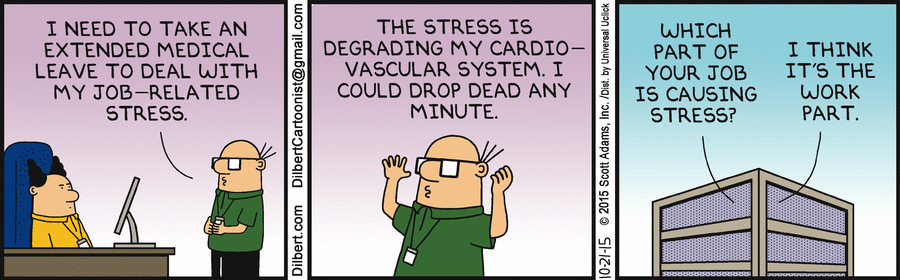

Wally nails it again …
This is the first of what I hope will be an irregular series: Thinking Thursday. My idea is to post puzzles, riddles and so on for amusement, but which will hopefully make you think a bit too. Answers will be provided on the following Sunday, so you’ll have a couple of days to mull over the questions.
OK, so lets have the first puzzle …
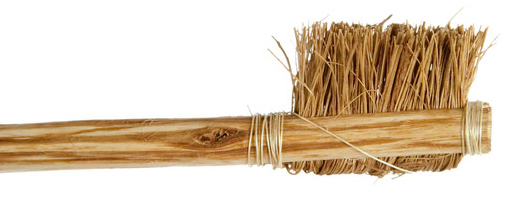
The toothbrush was invented in London’s most notorious prison
In the 1770s William Addis was serving time in Newgate for causing a riot. Brushing his teeth the same way as everyone else — in other words using a rag to rub them with soot and salt — he decided that there had to be a better way. Inspired by the sight of a broom, he took a small animal bone left over from his dinner and drilled small holes into it. Persuading a guard to fetch him some bristles, Addis threaded them through the holes and glued them in place. On his release the invention made him a fortune. His most expensive brushes used badger hair, while the lower end of the range featured pig and boar hair. His company, now known as Wisdom Toothbrushes, survives to this day.
Peter Ackroyd
The History of England, Volume 1: Foundation
Macmillan; 2011
 This is the first in a series by Peter Ackroyd in which he charts the history of England (and he does mean England, not Britain). The already available subsequent two volumes cover the Tudors and the Civil War.
It is a thick tome — running to just shy of 450 pages of text, plus bibliography, index and colour plates — which charts the rise of England from about the year zilch up to the end of the Wars of the Roses and the accession of Henry VII. This is, I think, too much, because in that space it is almost impossible to cover the ground in any great depth — although Ackroyd struggles manfully to do so, and almost pulls it off.
Most of the book is political history: the rise and demise of kings, rebellion, war, parliament and tax; with each period (pretty much each monarch) being given its own, often long chapter. But in between there are short cameos, often just 3 or 4 pages, of social history on subjects such as the rise of the town, the family of a medieval merchant or ancient roads.
Even having read this book, I still struggle with sorting out who was who, who fought who, and why, during medieval times. For me this just does not hang together as a narrative, the sequence of kings is obscure and all the various plots and wars are just too unmemorable. So I found the social history cameos the most interesting parts of the book and wanted more of them and longer.
But that likely says more about me, than about Ackroyd’s writing, for he lays out, often in quite some detail, the machinations surrounding the rule of each of the monarchs from the late Saxons onwards. This is a discursive history which seeks to try to understand — using existing material — how each monarch got to where they were and stayed there (or didn’t); it is not a book of new material, hitherto unknown research, or amazing revelations. It is very much a synthesis of what we already know, perhaps approached from a slightly different angle, and to that extent it is an easy read.
In other ways this is not an easy read. While Ackroyd writes well, and I often found it hard to put the book down, the text is dense and it isn’t always easy to keep track of the dramatis personae. Which Earl of Warwick are we talking about? The one who has just had his head removed? Or his son? Or his father? Which is, I think, why I find this such a difficult period of English history to get a grip on.
So is this a book worth reading? Yes, I think it is if you want a good overview of how England got from the Romans to the beginning of the Tudors, and can manage to keep straight in your head who begat who; who married who; and whose head was removed and why. I was very confused about this period of English history before I started on the book. I’m a little less confused now; but it is still not crystal clear, which I hoped it would be. Which, as I said earlier, probably says more about me than about the book.
Overall Rating: ★★★☆☆
This week’s photograph is one from our garden. This is a magnificent Acer growing in a large tub on our patio — it is doing so well it is over 6 feet and we think has rooted through the pot and through the paving of the patio! But it is absolutely gorgeous, especially at this time of year when it has this wonderful golden/red leaves. The stems are naturally red all year and in Spring contrast with the delightful fresh pale green of the new leaves. This shot was taken about a week ago and is a composite of two frames.

This is a very lightly edited version of something I posted earlier today on Facebook, but I’m repeating it here as I feel it needs to be filed for posterity.
There’s an interesting perspective from Martin Kettle in today’s Guardian under the banner
… if we are capable of thinking about Agincourt without wrapping ourselves in the flag, why not other later conflicts too? In three weeks’ time we will reach the climax of the annual military remembrance rituals. A century after the great war, these rituals have become more culturally hegemonic than ever before. Yet it is surely possible to respect the importance of history and to support events that bring peoples together while still feeling that … these particular rituals have now become unnecessarily oppressive.
At some point in the future … we will begin to let go of these rituals. One day, the head of state will no longer lay a wreath at the Cenotaph in November for the long-distant dead. One day, MPs and TV newsreaders will not feel the press of obligation to wear poppies on all public appearances …
For the present, people in public roles have little scope but to conform on such matters … we will be right to stop doing these things … and there is nothing inappropriate or disrespectful about suggesting that we would benefit from that time coming sooner rather than later.
We need to be looking and going forward, working for peace; not looking mournfully backward.
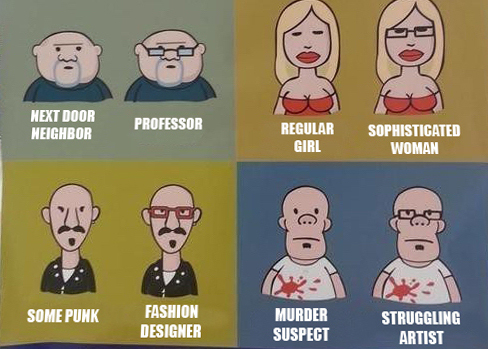
Glasses maketh man and woman …
So soon already here’s another rag-bag of links to interesting articles you may have missed the first time round …
Quite a long time ago Scientific American posted an interactive Periodic Table, but they have been doing some updates to it. Click the element for some basic information. May be helpful for those with yoofs studying chemistry.
So ladies, what if everything your doctors told you about breast cancer was wrong? Find out some of the realities ad decide for yourself whether you should have that mammogram. [Long read]
New! Amazing! Awesome!
Low-benefit (but Internet-connected!) devices now on sale (from February 2015 MacLife magazine):
Culled from Weird Universe.
Time this week for some pussy porn from the archives. Here’s Tilly doing her cute wriggle act back last Spring.
