
Something for the Weekend

Simon Jenkins, writing for the Guardian website has a properly measured response to yesterday’s horrific events in Brussels: Our response to the Brussels bombings requires patience and restraint.
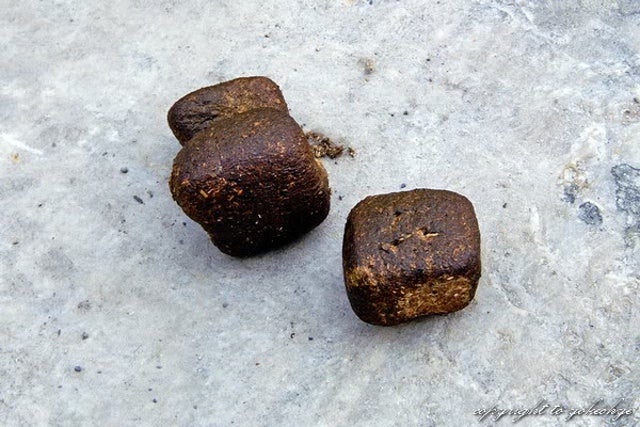
The wombat is a large, solitary and nocturnal relative of the koala, native to Australia. It has poor eyesight but an excellent sense of smell, which is its main navigation aid.

 As one might expect, Christopher Snowdon (he who has taken the new alcohol guidelines apart) writing over on City AM is not at all impressed by George Osborne’s new tax on sugar.
It’s a money spinner; no more, no less — at least according to Snowdon. For my money, if we really want a tax on sugar to reduce consumption as well as raise revenue, Osborne has missed several tricks:
That would hopefully affect all consumers, relatively equitably. It would encourage people to buy less-sweetened products (without having to give up sweetness completely). And encourage producers to reduce sweetener content with substantial price advantages, and hence hopefully higher sales/greater market share.
Anatoliy Omelchenko of Triangle Tree has designed the Edible Spoon Maker.
It works on the toasted sandwich maker principle and allows you to bake your own edible spoons from either home-made or ready prepared dough in only a few minutes.
In this video Omelchenko demonstrates the device using ready-made biscuit dough:
Find out more over one Triangle Tree.
Our mid-month round-up of the amusing and thought-provoking wisdom of the world recently encountered …
Guess what? Birth is grisly, living is a messy business, and dying is fucking horrendous. Health care is at the gritty end of things. That’s its job. That’s what it does. We don’t expect it to look lovely. We don’t expect it to speak nicely, and wear expensive clothes. We expect it to work. We expect it to get down into the guts of the matter and fix things. It needs to fix people. It needs to fix lives. It needs to help us give birth, it needs to ease living, and soothe the dying. It isn’t about forms and management committees and balance sheets, not where it really matters.
[Katy Wheatley]
Man is the most insane species. He worships an invisible God and slaughters a visible Nature … without realizing that this Nature he slaughters is this invisible God he worships.
[Hubert Reeves]
[T]he close ties between a family and their GP is rapidly coming to an end. The politicians do not seem to understand that General Practice is not just about making a diagnosis and giving someone the ‘correct’ treatment in the shortest time possible. Although this is important, it is also about trust, compassion, reassurance, inter-relationships, life and support — most of which is not measurable and can only successfully be achieved once you’ve developed an on-going relationship in which a person has faith and trust in their doctor and the doctor has faith, trust and an understanding of the history (physical, social and psychological) of their patient.
[Dr Jonathan Lenten, Leicester]
People feel uncomfortable expressing views that Gordon Brown would have described as bigoted, but they feel them anyway, and so politicians and pundits come up with safe proxies to use.
Immigrants take jobs. Immigrants take benefits. Immigrants take without contributing.
It’s a soft xenophobia about strange other people with their strange ways, packaged into a Tesco Value political argument about the cost of migration on the UK Government’s rather overdrawn bank account.
[Ian Mansfield at IanVisits]
Chores on a morning as grim as double maths. Two magpies cross the back of the class like naughty paper aeroplanes.
[Simon Barnes on Twitter]
Small children are justified in being conspiracy theorists, since their world is run by an inscrutable and all-powerful organization possessing secret communications and mysterious powers — a world of adults, who act by a system of rules that children gradually master as they grow up.
[Thomas Griffiths & Joshua Tenenbaum in a 2006 study on coincidences]
The chains of habit are too light to be felt until they are too heavy to be broken.
[Warren Buffett]
The same number of doctors with a lower limit on maximum hours, providing the same level of care, across more days.
[Jeremy Hunt, Secretary of State for Health quoted in the Daily Telegraph]
[Compare with NASA’s much reviled desire for “Faster, Better, Cheaper”. Neither computes.]
I may be a Guardian
[Dean Burnett, Guardian, 11/03/2016]
Court at your peril those spirits that dabble lasciviously with primeval matter, horrid substances, sperm of the world, producing monsters and fantastic things, as it is written, so that the toad, this leprous earth, eats up the eagle.
[Anthony Powell, Temporary Kings]
No government or party comes towards smokers with a position of policy purity — it is an income stream.
[Australian Federal MP Ewen Jones]
… plonkers to the right of ’em.
This, from the Guardian a week or so ago, encapsulates the “Brexit problem” rather well.
The real problem is that no-one knows; there is no objective information; just lies, innuendo and wishful thinking.
Gawdelpus!
This month Ten Things returns to being more personal with 10 Places I Have No Desire To Go:
