Something for the Weekend

[Medical trigger warning]
As today is four weeks since surgery, I thought we should have a progress report on the rehab of my left knee.
Things are now definitely getting better physically; but I’m still feeling very low mentally. Most of the bruising has gone as has almost all the swelling – ice-packs several times a day have helped (the hospital provided a specially designed cuff cooler when I had the right knee done). For some days now I’ve been walking around the house without the aid of crutches or sticks – the exception being the stairs where I still don’t feel entirely safe. I’m still taking crutches if I go out, if only for safety.
When I saw my physiotherapist this time last week I had 110° of flex on the knee, and I know it will be even more by the time of my appointment next Monday. Needless to say the physio was very happy; the flex and function of the knee are good although still painful; he even had me on an exercise bike doing gentle to and fro motion (a full cycle is not yet possible, although I did try). I was given an extra set of exercises to do, which are all about strengthening the muscles as well as improving the range of movement; and the exercises are gradually getting easier and less painful. I’m still being subjected to the torture of the green anti-DVT stockings though.
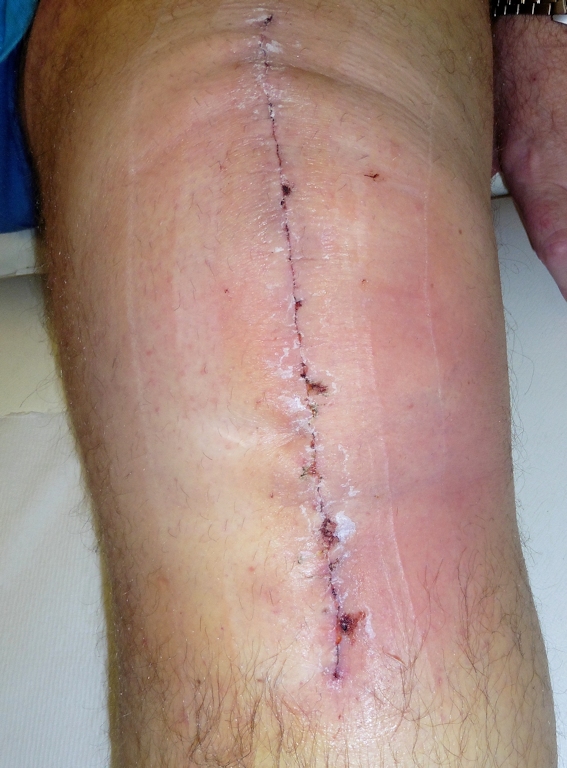
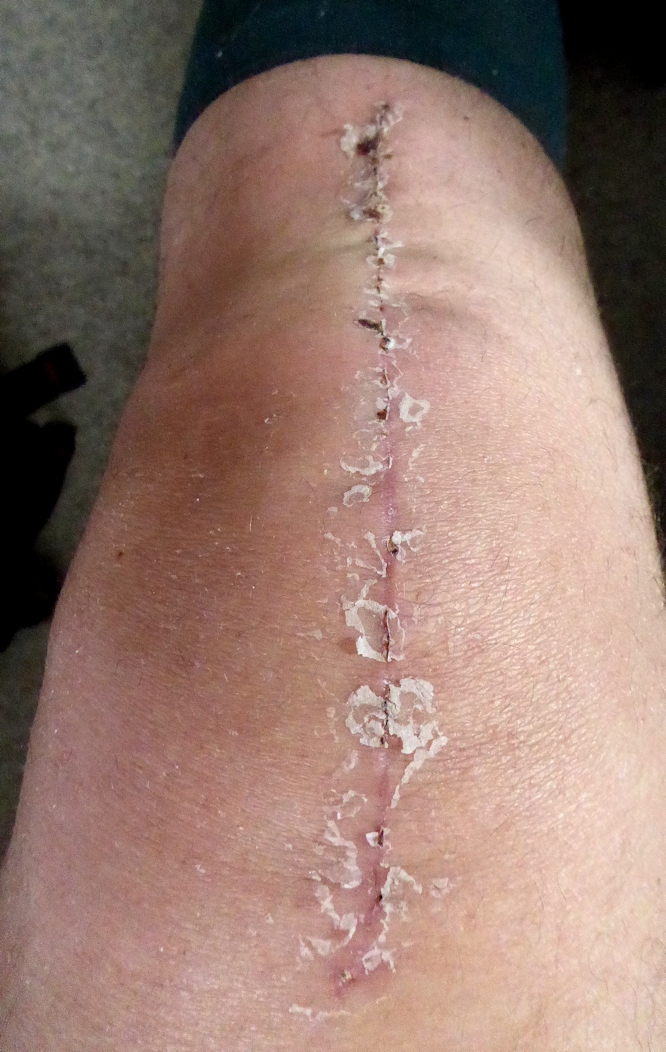 As you can see from yesterday’s photo, the scar itself is healing well and looks as if it might eventually be even less obvious than the one on my right knee. (Incidentally I don’t know if the visible flaking is dead skin, surplus glue from closing the wound or some form of plastic skin which was applied to cover the wound. But the right knee was the same and it seems to be OK.)
The pain is very definitely subsiding. Yesterday was the first day since surgery that I’ve awoken at 6 or 7 AM and not immediately thought “Bloody hell I must have some painkillers”. In fact yesterday I didn’t need to take any painkillers from midnight to lunchtime – although by then the knee was very achy. So with luck I in the next week I can start thinking about tailing off the codeine, if not the paracetamol as well.
Meanwhile I managed to screw up my lower back last week; and yes, on the left side! This entailed two trips to the osteopath. The first on the Monday helped immediately but then the muscles were going into spasm every time I tried to move. This settled down overnight with a couple of small doses of Valium as a muscle relaxant. But by Friday the lower back was giving trouble again, so Saturday saw me back at the osteopath seeing a different guy who comes to osteopathy via a sports training background. I have to say he was brilliant – not just at releasing the back but also at explaining how this was all down to the muscles and joints readjusting to different ways of moving following the operation. His prescription was to walk (do what you can and build up slowly) to get the muscles etc. used to working properly again. I came away walking well and feeling much more at peace mentally. So far I’ve concentrated on walking around the house, but our long back garden is beckoning.
I’m still feeling anxious, depressed and panicky at times but that mostly isn’t the knee but everything else I have piled up getting me down. But with the pain receding, and a more positive outlook for the knee, I am at last managing to catch up on some of the stuff I’ve ignored over the last few weeks.
So the bottom line is: keep going; keep doing what you’re doing; it does get better (even if it doesn’t always feel that way hour-to-hour or day-to-day). Onwards and upwards.
Having just had my second knee transplant (sorry, total prosthetic knee replacement) I thought that for this month’s Ten Things I should maybe write a few of the important things I’ve learnt about knee replacement operations.
Ten Things I’ve Learnt about Knee Replacement
I’m taking as read all the usual stuff about operations, general anaesthetics, etc. (like anti-DVT stockings, morphine causing constipation). This is knee replacement specific things. First of all it is important to realise that no two knee operations are the same, so what follows is based on my experiences; yours may be different.

There is a lot more I can say, and I do intend to try to write all this up for the benefit of others. But that will do for now!
If you think that good, clear, written English is irrelevant, pedantic or elitist you really need to think again and read this from the Guardian …
This is worth reading …
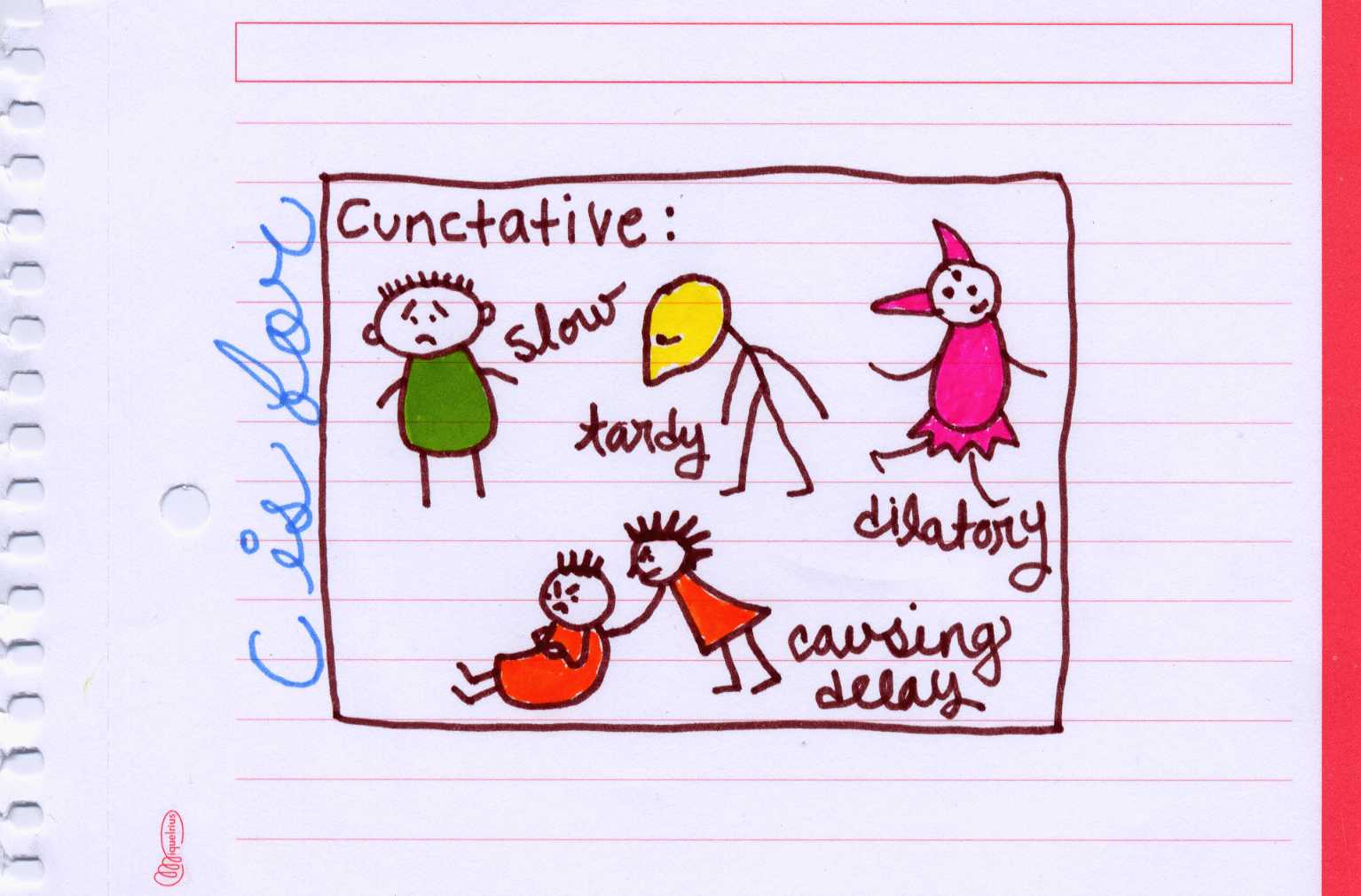
Cunctation
Procrastination; delay; tardy action.
Here’s this month’s round-up of miscellaneous links to items of interest or amusement from the last few weeks.
Science & Natural World
Is it an asteroid? No. Is it a comet? No. It’s actually something new: a binary comet.

David J Ley
Ethical Porn for Dicks: A Man’s Guide to Responsible Viewing Pleasure
ThreeL Media, USA; 2016
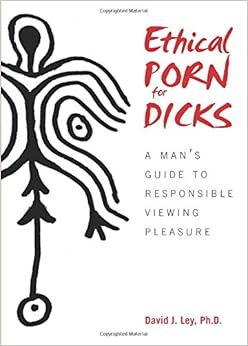 Do you watch porn? If you’re male there’s a very high chance that you have at sometime in your life, even if you don’t now. If you’re female the chances are still good that you have done.
Do you believe that porn is bad for you? That it incites sexual abuse and violence? That all the performers are doing it because of exploitation, their working practices are unsafe and they have no control?
Do you feel shame because you, or your partner, watch porn?
If the answer to any of these questions is “yes”, then this book is for you. OK it is American and is aimed directly at men, but in my view it is relevant for everyone from mid-teens upwards, and whatever their gender and sexual orientation.
Our media are filled with cautionary, polarizing messages about the dangers of porn, even while sexually explicit images are exploited deliberately and persuasively in adverts and entertainment. This book offers anyone feeling shame and anxiety about their own, or their partner’s, behaviour a non-judgmental way to view and use pornography responsibly, while exploding many of the surrounding myths.
Ley is an expert on issues relating to sexuality, pornography and mental health. As a practising psychologist he is the head of a large behavioural health and substance abuse out-patient programme. Consequently he is able to bring years of first-hand experience, and academic credibility, to understanding what the problems of pornography are, and aren’t.
The book’s style is casual and accessible while remaining evidence-based – it isn’t littered with footnotes, but all the referenced texts are listed in the bibliography. Because it is broken down into about ten chapters, each consisting of several discrete sections, posed as questions, it can either be read cover-to-cover (as I did) or can sensibly be dipped into.
Just two quotes from the book …
Porn, for better or worse, is here to stay. In the US, it is protected under free speech, and it needs to be because if we lose the right of free sexual expression, we lose many other critical protections. Porn, as illustrated by … cave drawings … has been around as long as humanity. Attempts to get rid of porn are just more likely to drive it underground, where it is secret and hidden. And under such secrecy, people are more likely to get hurt or taken advantage of, and lose the ability to freely consent.
Rates of sexual offending go down as people in a society have more access to pornography. This is research that has been replicated in the United States and around the world. People don’t talk about this because they don’t want to acknowledge what it means. Porn is good for society. A society with more access to porn is a sexually safer society. Access to pornography may decrease rates of juvenile sex offending even more. If pornography were a moral-altering thing, turning weak-minded people into rapists and paedophiles, it would have a greater negative effect on teen boys. And it doesn’t. Just the opposite. Gay men watch more porn than straight men. But rates of rape and sexual violence in gay men are lower than in heterosexuals.
These are two of the key messages from the book. But there are two more which struck me:
First … We need to keep firmly in mind that porn is fantasy, in just the same way that Terry Pratchett and Disney are fantasy. It isn’t real life and we shouldn’t treat it as such. Just as real life isn’t filled with giants, battles and fairy princesses the way fantasy novels/films are, so real life sex isn’t (certainly shouldn’t be) violent, abusive and non-consensual. Porn may portray these traits as part of their fantasy fiction (and indeed many have them as mental fantasies) but neither is real life, properly adjusted, sex. We need to help people, especially the younger generations, understand this.
Secondly … If you worry about the exploitation aspects of porn then there are many producers who create ethical porn – the performers are well paid, their health is looked after, their working practices are safe and they have control over what is, and is not, permissible – then this book references several of these together with a long list of resources at the end.
Having said all that I did find the book rather too easy-reading; I wanted some more meat – but that’s me with my scientific background. Overall, if porn is a subject which interests you, or on which you feel you need more knowledge to help inform your children, then you could do much worse than read this book.
Overall Rating: ★★★★☆
[If you don’t like things medical, skip this.]
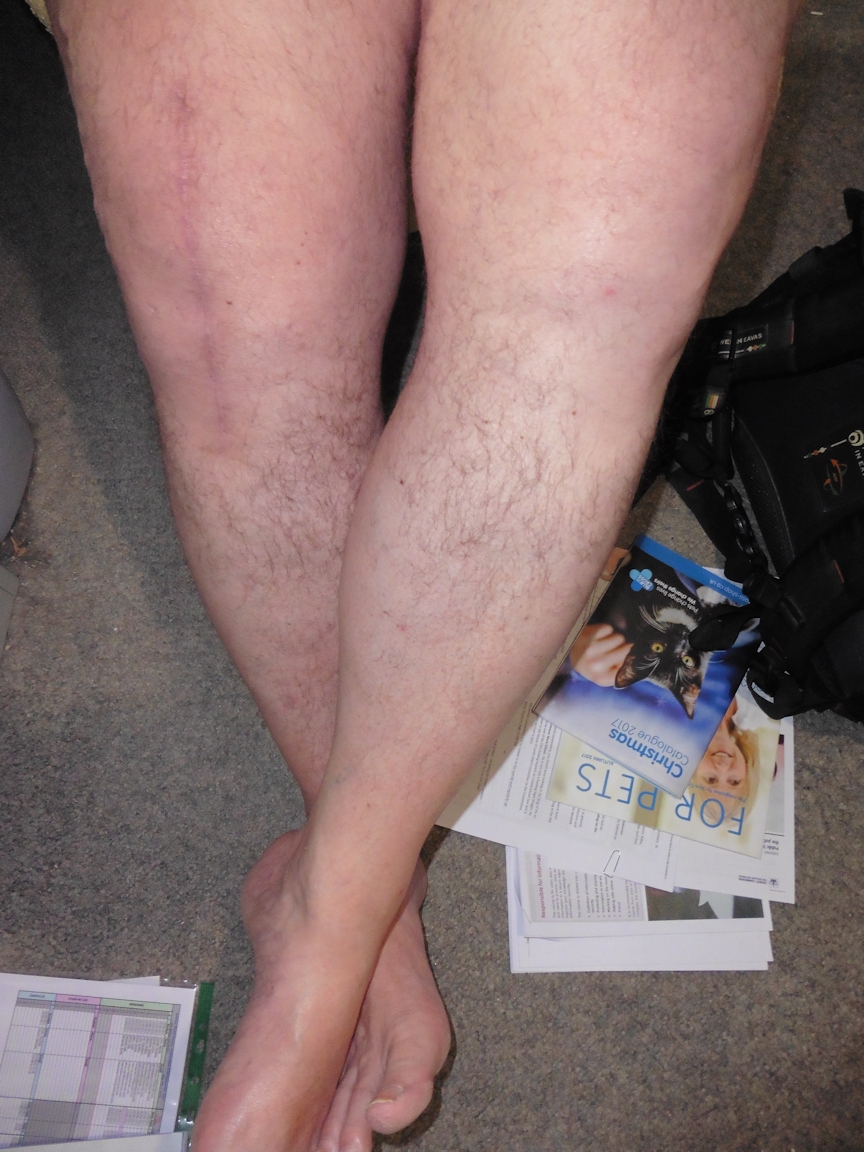
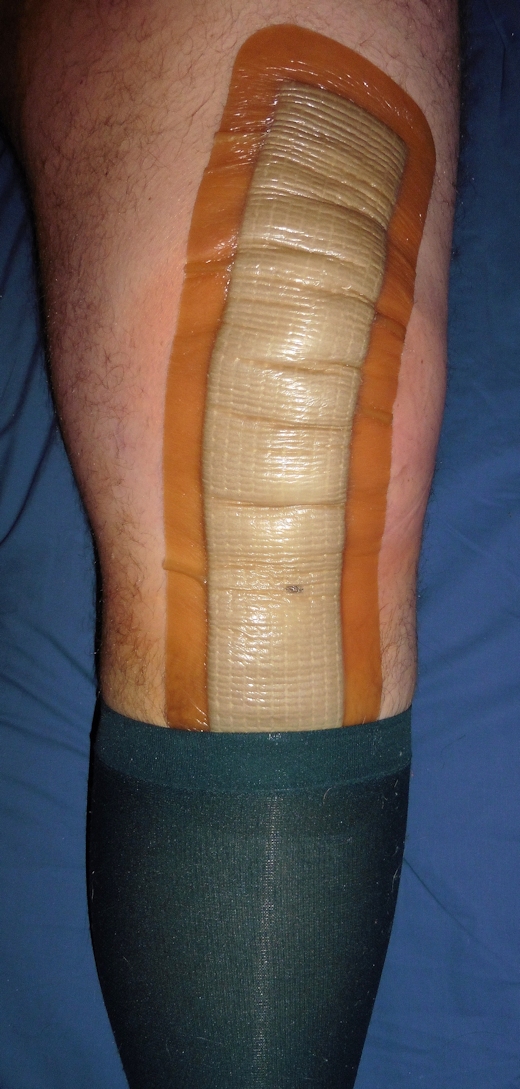
So it’s now a week and the day since I was let out of hospital after a complete left knee replacement to match the right one that was done at the beginning of the year. On the left, here’s the knee before (notice the impressively neat scar on my right knee that was prepared earlier) and on the right dressed post-op: