All posts by Keith

I’m a controversialist and catalyst, quietly enabling others to develop by providing different ideas and views of the world. Born in London in the early 1950s and initially trained as a research chemist I retired as a senior project manager after 35 years in the IT industry. Retirement is about community give-back and finding some equilibrium. Founder and Honorary Secretary of the Anthony Powell Society. Chairman of my GP's patient group.

Waltham Abbey – 1

Monday of this week saw us on a special away-day to Waltham Abbey, but I’ll keep you in suspense about the specialness until part 2.

I was brought up in Waltham Cross, just a couple of miles as the crow flies across the Lea Valley and marshes from Waltham Abbey, and although we didn’t go there frequently, I remember the town from my childhood.

I’ve not been to Waltham Abbey since Valentine’s Day 1979 (a day with an inch of ice on every road!) when Noreen and I went out to an expensive restaurant there. And it’s even longer since I was there in daylight.

We didn’t have to be at our appointed place until midday, but having contracted a friend to drive us, we decided to leave early, at 8am, as we knew we had to negotiate the London suburbs to the M25 and then one of the most notorious sections of the motorway. After a slow start we were amazed to be parked up outside Waltham Abbey Church before 9.30. So we had time to spare.

The first requisite was breakfast, and The Gatehouse Café opposite the west door of the Abbey church was calling. Full English Breakfast all round as we didn’t know whether we would get lunch. I’d spotted the café had good ratings on TripAdvisor, and we weren’t disappointed.

Breakfast over, we still had plenty of time to investigate the Abbey church – which I had not been in since singing in a choir there 50 years ago! And let me tell you this is a church well worth a visit.

Waltham Abbey was re-founded by King Harold 1060, there having been a place of worship there since the 7th century. It is said that Harold’s battle cry at Hastings in 1066 was “For the Holy Cross of Waltham” – the Holy Cross being an early 11th century “relic” owned by the Abbey. And it is also reputed that Harold was buried in the Abbey church – there is today a memorial stone (the Harold Stone) some way outside the east end of the church, where the original high alter would have been – the church was originally at least twice the size of what you see today (indeed what you see today is only the nave of the original 12th century church).

The Abbey church itself is of Norman architecture, with decorated round arches in the nave, clerestory and triforium, and substantial round pillars some of which are decorated with spiral or zigzag cut stonework.

Waltham Abbey Tower

The abbey was re-founded (again!) as an Augustinian priory in 1177 by Henry II as part of his penance for the murder of Thomas Becket.

In 1290 the Abbey at Waltham was one of the resting places of Queen Eleanor’s body on its journey from Lincolnshire to burial at Westminster. On the orders of Edward I a cross was erected at each overnight stop, and the one at Waltham was placed at what is now Waltham Cross, being both the nearest solid ground to the Abbey and on the then road north out of London. Waltham Cross is one of only three of the original 12 crosses which survive; the others are at Geddington and Hardingstone. (The cross outside Charing Cross Station is a Victorian replica, and several hundred yards from the original site – but that’s a different story.)

Waltham was the last abbey in England to be dissolved by Henry VIII in 1540 – a mark of its importance – with the last Abbot and the cannons receiving handsome annuities or other payments. This included Thomas Tallis who had been a senior “singing-man” since 1538 and who went on to a post in the choir at Canterbury Cathedral. The Holy Cross also seems to have disappeared at this time. Since the Dissolution the Abbey church has been the local parish church, with the addition of a 16th century tower but demolition of the remaining Abbey buildings.

Waltham Abbey Denny Tomb
The Denny Tomb

The church still contains a couple of Tudor monuments; there is a section of painted wall and a Tudor window in the Lady Chapel; as well as some hideous Victorian additions. The 16th century tower is faced with some rather pretty flint-work and the church stands in a substantial, well-kept and treed churchyard. Much of the Abbey grounds are still preserved, although the only remains are a gateway and the remnants of a bridge.

All in all it is well worth a visit.

From here we went on to our to our midday appointment, which I’ll tell you about tomorrow in part 2.

Ten Things

It’s “stick you neck on the block” time in this month’s Ten Things

Ten Vanity Projects (Past and Present):

  1. London’s Garden Bridge (hopefully now permanently abandoned)
  2. HS2 (High Speed London to Birmingham, and beyond, rail link)
  3. Olympic Games
  4. World Cup Football
  5. Formula 1
  6. Heathrow Runway 3
  7. London’s Millennium Dome
  8. Pedestrianisation of Oxford Street
  9. London’s Emirates Dangleway
  10. Donald Trump (right; a vanity project all on his own)

Enviroconcern

Two articles on environmental concerns in the Guardian during the week caught my attention.

First George Monbiot slices into agriculture and our habit of eating meat in The best way to save the planet? Drop meat and dairy. While he may be technically correct, I don’t see this being very practical – although of course most of us could happily eat much less meat than we do.

Secondly Simon Jenkins inserts quite a few daggers between the ribs of Heathrow’s proposed Third Runway in Heathrow airport’s polluting new runway is a macho folly. Jenkins doesn’t say it in as many words, but it is essentially just a vanity project and willy-waving by the erstwhile BAA. To be sure, the alternatives aren’t too wonderful either, but then as I’ve been saying for a long time we have to get to grips with our fetish for flying everywhere – two, three, four long-haul holidays a year are just not sustainable.

Something for PPG Awareness Week

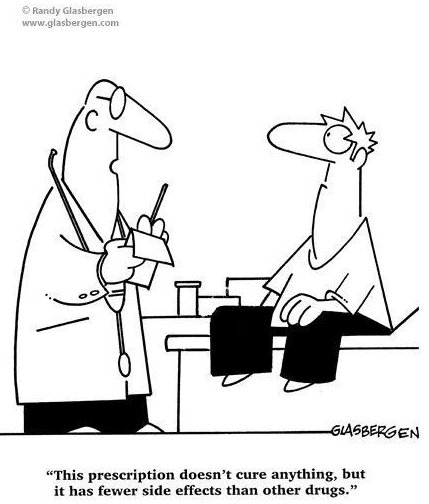
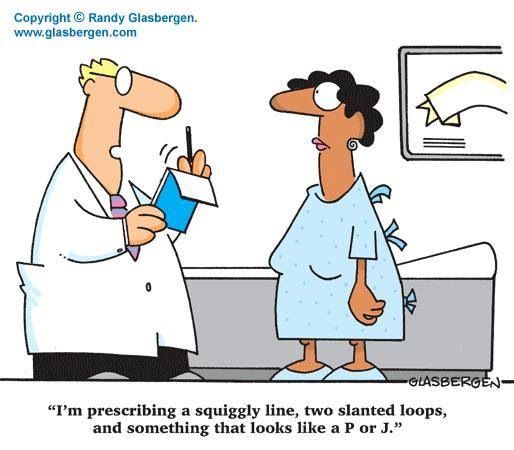
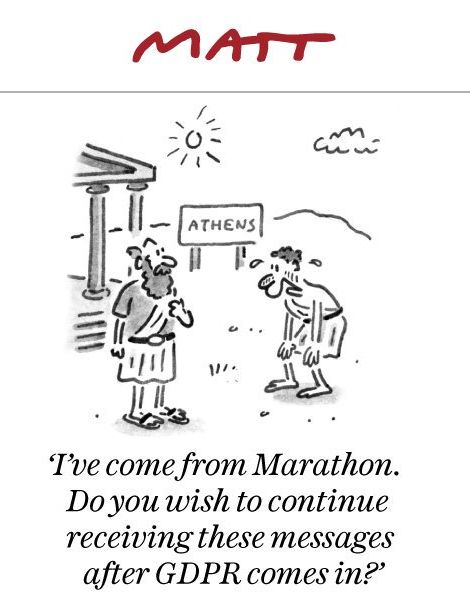
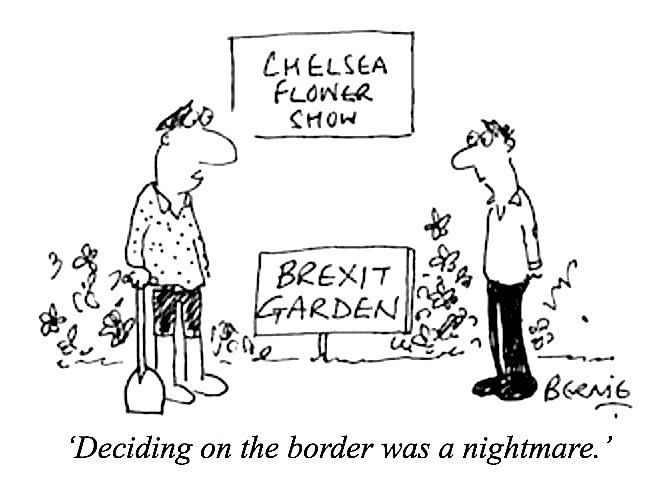
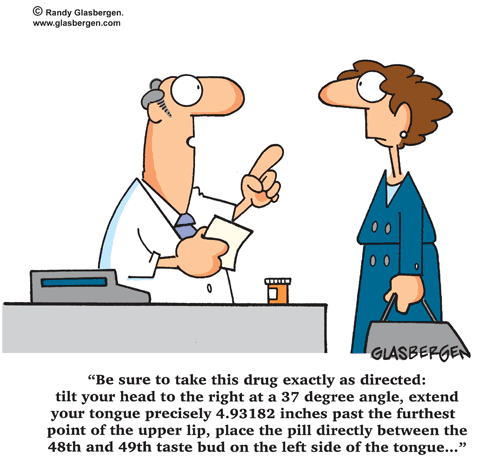
This week (4-9 June 2018) is Patient Participation Group (PPG)** Awareness Week. And as I’m Chairmen on my GP’s PPG I thought we might have three, light, doctor-orientated amusement.

** What’s one of them then? You can find out the basics of what PPGs do in this short article from the Patients’ Association

Who’s Day

Today (2 June) is International Whores’ Day, aka. International Sex Workers’ Day.

As regular readers will know, and you don’t have to look too far back in the archives to find out, I am a firm believer that sex work should be decriminalised. I’ve never used the services of a sex worker, and I have no plans to do so, but I fail to see why people should not be able to pay for sex, or to sell sex, if that is their choice.

Prostitutes (of all types) perform a valuable social service. In part they may be considered part of the leisure industry, providing what might be called “alternative entertainment”. But they also provide service for many who would not otherwise have sex, or have the sex they want, and that can be a significant factor in preserving mental health.

Fortunately there does seem to be a growing body of academically rigorous evidence that decriminalisation is the best way to protect the human rights of sex workers, and ensure they can follow their chosen profession in safety, with unobstructed access to legal recourse where there is violence or abuse. New Zealand has shown the way on this, as have the World Health Organization and Amnesty International.

I don’t want to have to write at length about all the reasoning, so here are just a few relatively recent reports of some of this research.

Decriminalising sex work is the only way to protect women – and New Zealand has proved that it works; Independent; 29 May 2017

Decriminalising prostitution could ‘dramatically’ reduce sexual violence and STI transmission; Independent; 20 December 2017

Decriminalising Sex Work Is Better for Everyone; Big Think; 12 December 2017

Amnesty International policy on state obligations to respect, protect and fulfil the human rights of sex workers; Amnesty International; 26 May 2016

Q&A: policy to protect the human rights of sex workers; Amnesty International; 26 May 2016

Decriminalising sex work in New Zealand: its history and impact; Open Democracy; 21 August 2015

I don’t understand why prostitution is illegal. Selling is legal. Fucking is legal. Why isn’t selling fucking legal? You know, why should it be illegal to sell something that’s perfectly legal to give away?
– George Carlin

Why is the decision by a woman to sleep with a man she has just met in a bar a private one, and the decision to sleep with the same man for $100 subject to criminal penalties?
– Anna Quindlen

Monthly Links

Here’s this month’s collection of links to items you may have missed the first time round. As usual we start with the seriously scientific and end with … the not so seriously scientific.

Science, Technology & Natural World

London blogger Diamond Geezer visits the National Physical Laboratory in Teddington. I’ve never been there, but I really should because, although it will be much changed, my mother worked here as a draughtsman’s tracer during the WW2.

A guide to the spiritual world of Hawaii’s lava. Guess you need it if you insist on sitting atop a huge volcano!

We have this notion that all humans are descended from a small population in East Africa. However the current theories are that this is wrong and that our origins are much more diverse and colourful. [LONG READ] [£££]

Now you might think this is bit of an obvious thing to do, but scientists have finally unravelled the genetic secrets of roses.

So what sort of nutter spends his life being stung by insects? Justin O Schmidt is the answer.

Health & Medicine

Do you keep marine fish? If so do you know how deadly your aquarium might be?

It seems that migraine changes your brain and the way you experience the world – all the time, not just during an attack. [LONG READ] [£££]

Nothing is off limits at the Menopause Cafe – watch the video!

Sexuality

Oral sex has been around for a long, long time: here’s a brief history from ancient China to DJ Khaled.

Environment

So how are we really going to solve our waste problem? New Scientist takes a look. [£££]

This is why I don’t indulge in long-haul, safari holidays: it seems tourism’s carbon impact is three times larger than previously estimated.

Following which, the Guardian looks at the true cost of eating meat, only to find this is also even worse that we thought.

But then we can’t even manage the food we don’t eat: Sainsbury’s has dropped a pilot project to halve food waste.

Social Sciences, Business, Law

So here’s a 45-year-long American study on how to raise genius children. No it isn’t for parents to “hothouse” normal kids but to take the brightest and stretch them. Now explain to me why we shouldn’t have Grammar Schools! [LONG READ]

History, Archaeology & Anthropology

New evidence suggests that ancient humans settled the Philippines 700,000 years ago. That’s around 600,000 years before previously thought.

The Ancient British Queen Boudica was the scourge of the Roman’s in Britain. Or was she?

How about finding an 800-year-old label to date a shipwreck in the Java Sea – and thereby rewrite its history?

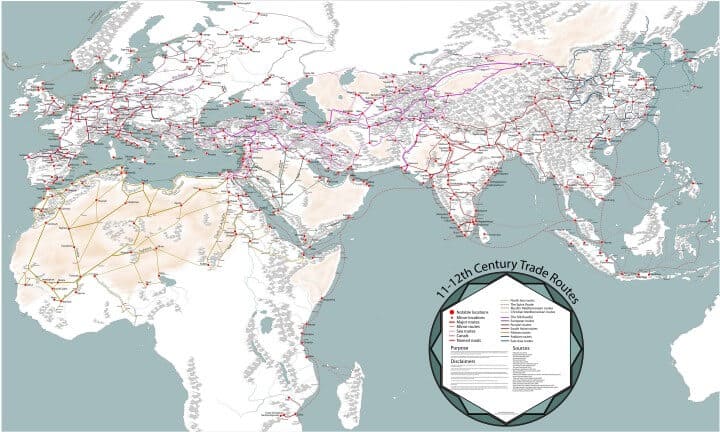
Wow! Just, WOW! An historian has created an incredibly detailed map (above) of the medieval trade routes across Europe, much of Africa and much of Asia. Absolutely stunning!

London

So just why has the number of Londoners using are tube recently fallen so dramatically?

Lifestyle & Personal Development

Scientific American reckons that we don’t understand ourselves as well as we think, and offers ten things you don’t know about yourself.

If you’re really curious, and not at all paranoid, you can get a clue as to how long you are going to live.

Every year there is a Boring Conference in London. Diamond Geezer reports on this year’s siesta fiesta.

Did you ever want to know everything Facebook and Google know about you? Here’s how. [LONG READ]

Shock, Horror, Humour

And to round off this month’s offerings, we have not one, but three amusements …

Ever wondered what to do with your old bras? Well you can always donate them to the cows.

Not to be beaten by the Boring Conference, the Flat Earth Conference suggests the Universe is an egg and the moon isn’t real. There’s another report here.

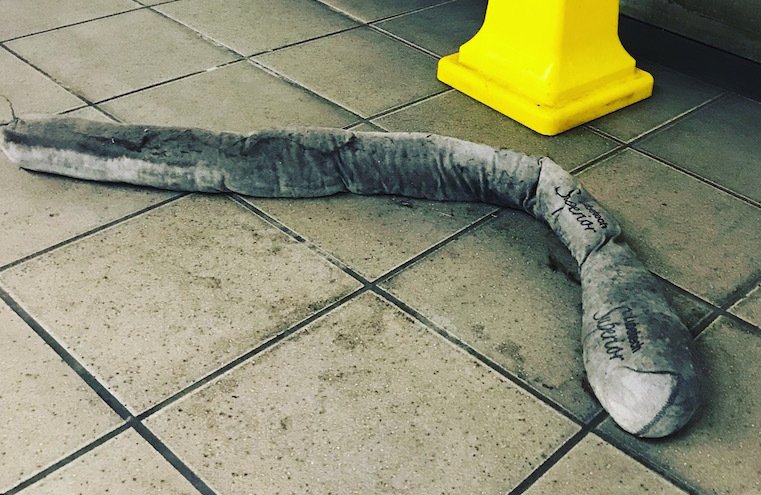
And finally … If you ever happen across a Tube Snake, do make sure you report its location as they are an endangered species in need of conservation.

Toodle-pip.

More on Trees

The Conversation has an article Forests are growing again where human well-being is increasing, finds new study.

This is true as far as it goes: wealthier countries are increasing their forest cover, and poorer countries are losing forest. But of course there are caveats:

[S]witching from net forest loss to net gain may simply involve sourcing things like wooden furniture or paper pulp from abroad, often from poorer nations with weaker environmental policies and safeguards … [for example in] Vietnam, where national increases in forest cover were linked to sharp increases in imported wood, about half of which was illegal.
. . .
… recovered forests often aren’t all they seem. Under some definitions they can include plantations of oil palm or rubber – technically “forests”, yet with few of the ecological benefits of the environment they replace.

Caveat emptor, as usual!

The Woodland Trust have an article on the fight for street trees:
Street fighters: Protests, petitions, planting and paints. It takes all sorts to stand up for street trees. It includes the little section:

Urban trees hold historical and cultural significance. They’re part of our urban heritage. They’re landmarks. Old friends.
But they also serve us in other ways. They clean our air. They shade our pavements. They lift spirits, feed wildlife and beautify our surroundings. They even increase the value of our homes.
Without trees, our towns and cities would be very different places.
. . .
What do street trees do for us? They create habitats for wildlife. Trees provide homes and food for birds, insects and other wildlife.
They promote health and well-being. People exercise more and feel better around trees.
They prevent flooding. Trees intercept rain water and can even slow floods.
Trees improve air quality. Trees reduce air pollution and keep our cities shaded and cool.
Trees elevate house prices. Houses are worth more and sell quicker on streets with trees.

This is why I believe in trees.

Monthly Quotes

Our monthly round up of quotes amusing and interesting …

Time – a uniform, universal flow that transports us inexorably from a past we cannot revisit to a future we cannot know.
[Michael Brooks; New Scientist; 18 April 2018]

Note to people without illness / disability: If your response to our statement that we have a problem starts with “Can’t you just…” – shut up. We are not idiots – if a solution is “obvious” then you’re lacking the detail to see why it is flawed.
[@betabetic on Twitter; 20 April 2018]

Naturism offers a way of being that dares to suggest that who we are without any additions or covering up is all we need to be.
[Philip Carr Gomm]

You may say, “I must do something this afternoon”, but actually there is no “this afternoon”. We do things one after the other. That is all.
[Shunryu Suzuki]

Time has no “now”
Einstein’s relativity also says that the passage of time is affected by motion, with moving objects seeing less time passing. So not only does how much time elapses vary from place to place, but different observers looking at the same place but moving at different speeds will see different amounts of time passing.
So even “now” is relative, and you can’t even draw one objectively agreed line between all the points in the universe currently experiencing it. From its own perspective, each event has its own past, formed of those areas from which signals travelling at light speed, the cosmic speed limit, have had time to travel and so influence it. The event also has a future, formed of those areas to which light signals can propagate and feel its influence.
But other observers will see those pasts and futures differently. And outside each of those carefully delimited pasts and futures are vast swathes of the cosmos that are neither past nor future, but also not “now”. Our grammar of time, again born out of local experience, fails to describe what those areas might be.

[New Scientist; 18 April 2018]

The stigma of condoning sex outside a relationship approved by the Church renders politicians incapable of rational thought.
[Tiffer Gilliard]

Women who hate sex workers confuse me. Imagine being so delusional as to think you are somehow inherently worth more than whores because you perform sex acts for FREE as opposed to getting paid for them. What fantasy world do these chicks live in?
[@YEVGEN1YA on Twitter]

I’ve learned that when you try to control everything, you enjoy nothing.

Don’t make excuses for nasty people. You can’t put a flower in an arsehole and call it a vase.

Naturism is … Liberating! The thought of nudity is scarier than nudity itself. When you shed your clothes you also shed just a few of the burdens of everyday life. The feeling of liberation, discovery and freedom is something that you cannot describe.
[British Naturism]

Leaving aside the question whether superstring theory is the right way to combine the known fundamental forces, the approach may have other uses. The theory of strings has many mathematical ties with the quantum field theories of the standard model, and some think that the gauge-gravity correspondence may have applications in condensed matter physics. However, the dosage of string theory in these applications is homeopathic at best.
[Dr Sabine Hossenfelder, Backreaction Blog]

There is nothing you can see that is not a flower; there is nothing you can think that is not the moon.
[Matsuo Basho]

EU reactions range from the charge that the UK’s ideas are magical thinking to the view that they are “less use than a deodorant”.
[Guardian; 17 May 2018]