Two amusements for this holiday weekend …


Two amusements for this holiday weekend …


The Conversation has an article Forests are growing again where human well-being is increasing, finds new study.
This is true as far as it goes: wealthier countries are increasing their forest cover, and poorer countries are losing forest. But of course there are caveats:
[S]witching from net forest loss to net gain may simply involve sourcing things like wooden furniture or paper pulp from abroad, often from poorer nations with weaker environmental policies and safeguards … [for example in] Vietnam, where national increases in forest cover were linked to sharp increases in imported wood, about half of which was illegal.
. . .
… recovered forests often aren’t all they seem. Under some definitions they can include plantations of oil palm or rubber – technically “forests”, yet with few of the ecological benefits of the environment they replace.
Caveat emptor, as usual!
The Woodland Trust have an article on the fight for street trees:
Street fighters: Protests, petitions, planting and paints. It takes all sorts to stand up for street trees. It includes the little section:
Urban trees hold historical and cultural significance. They’re part of our urban heritage. They’re landmarks. Old friends.
But they also serve us in other ways. They clean our air. They shade our pavements. They lift spirits, feed wildlife and beautify our surroundings. They even increase the value of our homes.
Without trees, our towns and cities would be very different places.
. . .
What do street trees do for us? They create habitats for wildlife. Trees provide homes and food for birds, insects and other wildlife.
They promote health and well-being. People exercise more and feel better around trees.
They prevent flooding. Trees intercept rain water and can even slow floods.
Trees improve air quality. Trees reduce air pollution and keep our cities shaded and cool.
Trees elevate house prices. Houses are worth more and sell quicker on streets with trees.
This is why I believe in trees.
Our monthly round up of quotes amusing and interesting …
Time – a uniform, universal flow that transports us inexorably from a past we cannot revisit to a future we cannot know.
[Michael Brooks; New Scientist; 18 April 2018]
Note to people without illness / disability: If your response to our statement that we have a problem starts with “Can’t you just…” – shut up. We are not idiots – if a solution is “obvious” then you’re lacking the detail to see why it is flawed.
[@betabetic on Twitter; 20 April 2018]
Naturism offers a way of being that dares to suggest that who we are without any additions or covering up is all we need to be.
[Philip Carr Gomm]
You may say, “I must do something this afternoon”, but actually there is no “this afternoon”. We do things one after the other. That is all.
[Shunryu Suzuki]
Time has no “now”
Einstein’s relativity also says that the passage of time is affected by motion, with moving objects seeing less time passing. So not only does how much time elapses vary from place to place, but different observers looking at the same place but moving at different speeds will see different amounts of time passing.
So even “now” is relative, and you can’t even draw one objectively agreed line between all the points in the universe currently experiencing it. From its own perspective, each event has its own past, formed of those areas from which signals travelling at light speed, the cosmic speed limit, have had time to travel and so influence it. The event also has a future, formed of those areas to which light signals can propagate and feel its influence.
But other observers will see those pasts and futures differently. And outside each of those carefully delimited pasts and futures are vast swathes of the cosmos that are neither past nor future, but also not “now”. Our grammar of time, again born out of local experience, fails to describe what those areas might be.
[New Scientist; 18 April 2018]
The stigma of condoning sex outside a relationship approved by the Church renders politicians incapable of rational thought.
[Tiffer Gilliard]
Women who hate sex workers confuse me. Imagine being so delusional as to think you are somehow inherently worth more than whores because you perform sex acts for FREE as opposed to getting paid for them. What fantasy world do these chicks live in?
[@YEVGEN1YA on Twitter]
I’ve learned that when you try to control everything, you enjoy nothing.
Don’t make excuses for nasty people. You can’t put a flower in an arsehole and call it a vase.
Naturism is … Liberating! The thought of nudity is scarier than nudity itself. When you shed your clothes you also shed just a few of the burdens of everyday life. The feeling of liberation, discovery and freedom is something that you cannot describe.
[British Naturism]
Leaving aside the question whether superstring theory is the right way to combine the known fundamental forces, the approach may have other uses. The theory of strings has many mathematical ties with the quantum field theories of the standard model, and some think that the gauge-gravity correspondence may have applications in condensed matter physics. However, the dosage of string theory in these applications is homeopathic at best.
[Dr Sabine Hossenfelder, Backreaction Blog]
There is nothing you can see that is not a flower; there is nothing you can think that is not the moon.
[Matsuo Basho]
EU reactions range from the charge that the UK’s ideas are magical thinking to the view that they are “less use than a deodorant”.
[Guardian; 17 May 2018]
Not everyone will understand your journey. That’s fine. It’s not their journey to make sense of. It’s yours.
How much is that tree in your street worth? Or the one in the park where you walk the dog? Probably a lot more than you think: it could be a five figure sum.
An article in last week’s New Scientist looks at the ways in which a value is beginning to be put on trees, especially urban trees. As the article is behind a paywall, here are some extracts to give you the flavour.
What the Victorians didn’t know [about London’s giant Plane trees] was how bloody big they get … Nor could they have appreciated the true value of the trees, beyond their hardiness and handsomeness
. . .
[Now] “treeconomists” have begun to put a fair price tag on trees, accounting for the services they provide, from keeping our buildings cool to preventing skin cancer.
. . .
[But] trees come at a cost … they must be constantly looked after … particularly … in cities, where ageing or diseased branches can fall on people and property, and roots can break up pavements … [which is why] Sheffield has generated protests … with its chainsaw massacre of 5500 trees, with another 12000 at risk .
. . .
What is important is the trees’ economic benefits … an existing method … which focused on a tree’s aesthetic contribution to a landscape. This typically generated value … in the hundreds of pounds.
. . .
[A] new method, which attempted to capture trees’ worth as an amenity, taking into account their attractiveness and how they accentuate or diminish a sense of place … called Capital Asset Value for Amenity Trees (CAVAT), it starts by multiplying the cross-sectional area of the tree’s trunk by a unit price … that relates closely to what the tree costs to buy, and which goes up with inflation … augmented … to take into account the tree’s species, visibility to the public, local population levels, the size and condition of the leaf canopy, the suitability of the species for its site and the tree’s life expectancy.
. . .
iTree attempts to price up the environmental services trees provide. It combines local weather and pollution data with tree metrics – including trunk girth, species type, canopy size and sunlight exposure – to calculate the value of the services the trees provide. These range from the pollution they remove from the air to the carbon they store, and the run-off into the sewage system they prevent by soaking up rain.
. . .
[There are] four core benefits trees provide: soaking up air pollution, storing carbon, saving money on energy by shading buildings in summer and cooling them in winter, and avoiding the emissions associated with the production of that energy.
. . .
Treeconomics has used iTree and CAVAT to calculate the worth of urban trees across the UK … [in] Hyde Park [they audited] the park’s 3174 trees, including 1188 planes … iTree estimates, their environmental services are worth £208,916 per year. The bulk of this … is the “social damage” cost of the pollution the trees prevent.
. . .
Because the park is in such a densely populated area, and because the trees are large, visible and highly suited to their setting, the amenity value of all the trees there is huge: £52,378 on average for each London plane.
. . .
The next step [is] a tool to help plan tomorrow’s forests … iTree Species, allows an urban forester to rank the environmental services desired in a new planting scheme, including reducing air pollution, wind and ultraviolet light. After plugging in these characteristics, alongside the hardiness required to cope with local geography and weather, and the predicted mature size of the tree, the software produces a ranked list of recommended species.
. . .
If a lamp post falls down or is damaged, people expect it to be replaced – it should be the same for a tree … trees get larger and provide more value as they get older, meaning they need to be preserved, not replaced.

And that makes almost no mention of the importance of the biodiversity supported by many trees – everything from aphids and pollinating moths to crows, all feeding, and feeding off, each other.
No, trees are not valueless. And they can’t be instantly replaced. Planning authorities and developers please note – removing trees for your convenience, even if they are replaced with saplings, is just not OK.
In an article on BBC News website over the weekend one woman talks about how she feels about being fat. I found it interesting because so much of what she says chimes with how I feel. Here are some of the things she says and which I share (plus a few tropes of my own).
Feeling good about your body isn’t always easy when you are overweight.
. . .
Quite literally, I am the elephant in the room.
. . .
I am fat, there’s no getting away from it.
. . .
I don’t think there’s a single part of me … that is small.
. . .
Society has its own sort of perception of people like me – we are disgusting, fat, slothful, lazy, incompetent, stupid.
. . .
[H]ow could you be that fat? The answer is simple – a lack of control, a lack of confidence …
Yes, I have a lack of self-control; it isn’t good enough now but it was much worse years ago when I first put on weight. It is partly down to the lack of confidence but it’s also, in part, the anxiety and depression.
It’s kind of sad that I’m comforted by food rather than other elements in the world.
. . .
The eating combined with my osteoarthritis and other disabilities doesn’t help – the additional weight on the joints isn’t a positive impact.
. . .
I did swim, but don’t any more.
. . .
“Just lose weight.” I hear that all the time from family, friends, colleagues, doctors …
It’s not rocket science – I know that … but that means effort, doesn’t it? It means having to motivate myself and persevere … I can’t …
I can’t because mostly the depression acts as a complete roadblock. I wish it didn’t, but despite trying just about everything available I’ve not yet found a way through the roadblock.
What is also for many oversized people, me included, is that the brain doesn’t internally know one’s real size. The brain still thinks of you being your normal size and doesn’t adjust for your new size. So you don’t (instinctively) realise how much space you take up. You have this internal picture of yourself the way you were (or should be).
People are constantly judging me … I am a reflection of something that they could become. They tell themselves that they’ve got control, they’re sensible, intelligent and no way would they ever get to my size. But let me tell you, I was you once and you could be me.
. . .
The only person I can hold responsible for my position is me. However, I refuse to accept the size I am. This is not who I was meant to be.
If I accept it then I’m telling myself that I’ve given up and I don’t want to give up.
I don’t want to be normal because normal is boring. I just want to be the best of myself.
I wish it wasn’t thus. I don’t like being the size I am. I understand the risks. I know all the things I should do to combat it, and if I could do it I would have done long ago. But having looked at, and thought about, the problem in depth, the first thing that has to happen is to fix the depression and other mental issues. That is a huge challenge, and I’ve not yet found the key to unlocking it – I wish I had!
A story in the Guardian earlier this week quotes “feminist academic” Germaine Greer as saying publicly on Channel 4 TV that all public toilets should be gender-neutral.
Now I don’t like Germaine Greer, her strident attitude and many of her apparent beliefs. But on this I have to agree with her. Why can’t toilets be gender-neutral?
I recall when I was a graduate student (mid-1970s), I was a student rep on the university’s accommodation sub-committee and we were debating the possibility of having mixed corridors in student residences. Not just mixed blocks with single sex corridors of rooms, but actually mixed corridors. This was put up for debate by the university housing department as a way of better utilising the available accommodation. None of the student reps had a problem with the idea, nor did the younger university staff; in fact the only objections came from a couple of stuffed shirts at the top of the housing department. As we all pointed out: bathrooms have doors which can be locked, as do student rooms; and we all have to live in the real world with mixed genders. So how are student residences any different especially when many students choose to live in mixed-gendered flats/houses.
(I don’t know if this was implemented as I left before the start of the next academic year.)
How is this different from having mixed toilets, even if the toilets are “public conveniences”? Our local swimming pool has a mixed gender changing room with cubicles. How is this different from mixed toilets? We live in a multi-gendered society. It’s not as if we’re asking pregnant or menstruating women (or indeed anyone else) to perform their ablutions without any screening; and yes, I do get why they wouldn’t want to.
So you think you (or the children) might see something they shouldn’t. Oh, please! For a start we all know what’s under my t-shirt and jeans, and your t-shirt and jeans, so why the fuss. And kids have to learn about what’s under those t-shirts and jeans, and the bodily functions, sooner or later. How much better for them to learn in an open environment where they can be properly, and age-appropriately, explained by a parent, grandparent etc. – or in an educational environment like a school?
Yes, OK, public toilets tend not to be the most pleasant of places, but we make them that way. Men’s loos are supposedly worse than women’s – until you talk to people who run clubs who’ll tell you the women’s loos are often much worse than the men’s. So we all need to be more civilised. And maybe the thought that the other gender – who, of course, we want to impress – are watching might get us all to smarten up our ideas.
If gender neutral (or should they be “gender inclusive”) toilets are such a bad idea how is it that many public organisations like theatres and museums, let alone many companies, are going this route? And how come “disabled access toilets” are always non-gendered?
I don’t buy all this division of facilitates, any facilities, by gender. For all me we’d have mixed gender changing rooms with no cubicles. I just don’t get the problem, and I never have. I can’t be doing with it.
So I have to concede that Germaine Greer is right: all public toilets should be gender neutral.
This month something slightly more topical in Ten Things …
Ten Things I did Over Bank Holiday Weekend:
We’ve not had a selection of the eccentric and downright weird auction items recently. This is mainly because the last couple of sales at our local auction house have been on the dull side. However here is a selection of the best oddities from the March and April sales.
A charming set of eight buttons, each styled as a Victorian watch face, the numerals linked by swags of flowers, each button 2.6 cm Image
A collection of wooden plucked musical instruments Image
A Royal Albert Flowers of the Month part tea service, an orange lustre tea service decorated with romantic couples, a Royal Doulton toby jug The Walrus and the Carpenter D6600, a small quantity of souvenir ware, a Japanese vase and a safety deposit box and contents
A Victorian entomology cased and glazed set of pinned moths Image
As so often that isn’t quite what they mean!
A nice collection of mainly wood and metal ware including cased set of chessmen and dominoes, 19th century wooden box present from Loch Fyne, 19th century hand painted tea caddy, a collection of alabaster eggs in wicker basket, religious wares, 19th century inlaid stoneware desk paperweight and candlestick, set of three hand painted wooden candlesticks, wooden bowls, letter racks, milking stool, a box of hand tools, brushes, two copper jelly moulds, etc.
An old red plastic telephone, a box of tea and magazine cards including Valiant, old magazines including Rin Tin Tin, Tweety, Sylvester, Look and Learn, and a signed card from Dave Clark of “Time, The Musical”
A mixed lot including a 1906 copy of The Temperance Party paper, a fashion print, cigarette cards, silhouettes, two folders of official slides of medieval frescoes in Yugoslavia, a quantity of silver-plated commemorative spoons, miniature porcelain and a 1938 copy of The Daily Telegraph, etc.
A green plastic carton containing a miniature horse and trap, powder boxes, a decorative spoon, hat pins, a pair of stylish early 20th century door handles, a shell purse, lighters, a model alpine house, photo album, etc.
No allocated
But it has an Image!
A child’s vintage Lilliput typewriter, cased men’s grooming sets, a ladies vintage shoe stretcher, a silver plated sugar sifter, a cased set of M Dobson binoculars, a cased Greenkat telescope and a decorative horn
A good lot of pewter in three boxes comprising a 17th century style candle wall sconce, table wares, tureens, dishes and bowls, steins, an art nouveau butter dish with liner, a jelly mould, toast rack, a pair of pricket candlesticks, coffee pot, etc., a box of reference books on collecting including pewter and money boxes, and a Victorian folding deckchair
Not Allocated
Another which also has an Image!
A most interesting collection of 38 Friendly Society ceremonial staff heads in brass, mounted on wooden stands
A Victorian pottery jardiniere stand supporting the bust of a lady
That could have been better phrased!
An old metal trunk with labels containing blankets
I’m still puzzled as to how to get a blanket in a label
A vintage Nativity set, a pair of vintage scales, two large table lamps, a small oak stool, a vintage record holder and a large vase
Three bamboo and rattan tables, a wickerwork basket, three towel rails, a lampstand, a rocking horse and a glass-fibre boot stick stand
As so often it is the odd juxtapositions that make many of these stand out, despite the lack of crap taxidermy.
More anon!
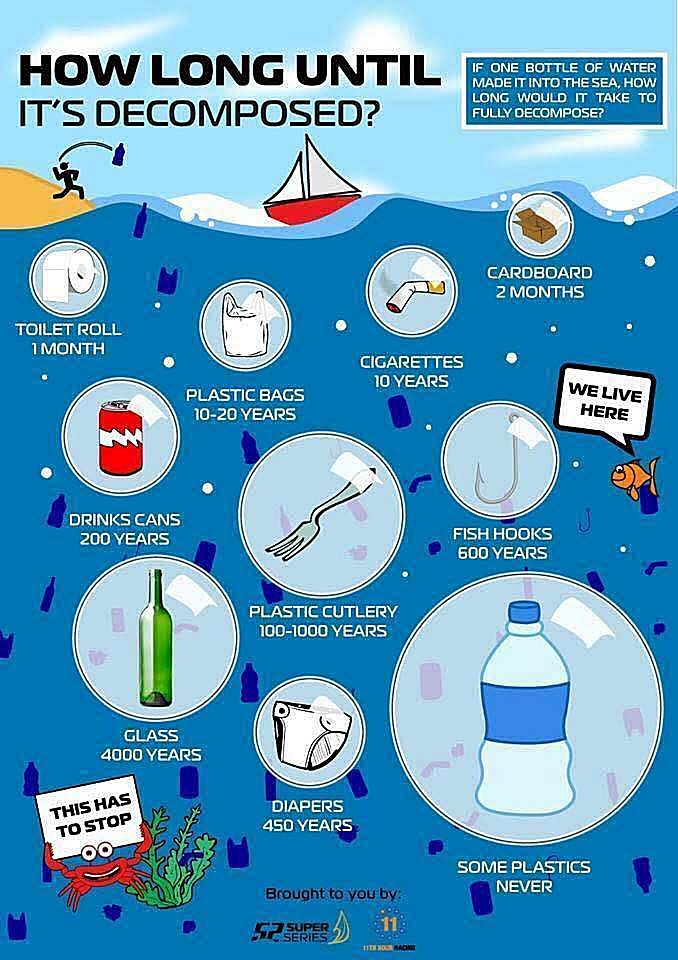
I am appalled at this story from yesterday’s Guardian:
I’m especially appalled at the stupidity of people that they just cannot be arsed to do better than this.

And here’s another “cost of food” story we (yes, including me) quietly ignore:
These are such good demonstrations of how, as a species, we’re so self-centred that it’s going to destroy everything.
On a slightly different tack, here’s another example, this time from Scientific American:
Like three times bigger! FFS.
Someone please explain to me how anyone can genuinely justify any of this.
Gah! People!