 Zaftig
Of a woman: plump, curvaceous, ‘sexy’.
Full-bosomed.
Having a full, shapely figure.
From the Yiddish zaftik, juicy.
The first use recorded by the OED is in 1937.

Zaftig
Of a woman: plump, curvaceous, ‘sexy’.
Full-bosomed.
Having a full, shapely figure.
From the Yiddish zaftik, juicy.
The first use recorded by the OED is in 1937.
This week’s photograph is of Lydd Church in Kent. It is a large church — it not know as “the cathedral of the marshes” for nothing. (That’s the Romney Marsh, by the way.) There has been a church on this site for 1000 years or more — there is a piece of Saxon wall in the NW corner of the nave which has only relatively recently been recognised as such. This is a panoramic joiner image of the south side of the church taken in August 2007.
Click the image for larger views on Flickr
Lydd Church, Southern Aspect
August 2007
The British Asparagus Festival in the Vale of Evesham kicks off on Tuesday 23 April and runs until 21 June.
The official start of the UK’s eight-week asparagus season launches with the Great British Asparagus Run. This celebrates the first-cut round of asparagus with all the pomp and ceremony you’d expect on Saint George’s Day. The Run traditionally begins at the National Trust’s only pub — the Vale of Evesham’s Fleece Inn. Following a morning of festivities, the newly-harvested spears are escorted by a fleet of Morgan Cars to destinations such as Parliament and Buckingham Palace.
Following the Run, Worcestershire goes asparagus crazy throughout May and June. Scores of pubs and restaurants serve asparagus-themed menus whilst shops sell an array of asparagus products ranging from sausages, jam, ice cream and even soap. Visitors to the county can hop on an Asparabus for a tour of the local growers to learn more about the venerated vegetable as well as enjoy cookery demonstrations and tastings.
Find out more on the British Asparagus Festival website at .
As I love asparagus and will only buy British, I might even have to go myself! Let’s hope it isn’t too badly affected by the last year’s awful weather.
22 to 26 April is National Stop Snoring Week. This is one of the few medical awareness weeks which I am going to mention, because snoring is usually ignored but can actually be life threatening.
National Stop Snoring Week is the annual event, sponsored by the British Snoring & Sleep Apnoea Association, promoting general awareness that nobody need suffer as a result of snoring: it is a condition that can be treated.

And indeed snoring is a condition which should be treated as it is often a symptom of Obstructive Sleep Apnoea, a condition where the airways collapse during sleep preventing breathing. If untreated, sleep apnoea not only destroys restful sleep (and thus quality of life/ability to function) but can lead to heart disease and strokes. Luckily it is easily and successfully treated in 90% of diagnosed cases.
Of course snoring may have other causes and other effects. If nothing else it often disrupts the sleep of family members. And contrary to popular belief snoring is not something which affects only middle-aged and elderly men; anyone can be a snorer.
More information on National Stop Snoring Week at www.britishsnoring.co.uk/national_stop_snoring_week.php.
Transparency: Yes, I suffer from Obstructive Sleep Apnoea which is now well controlled.
Click the image for a larger version
Monday 22 to Sunday 28 April is National Stationery Week. Yes, that’s “stationery” with an “e” as in “envelope”.
The aim of National Stationery Week is to get people writing. It is a celebration of the written word and all things stationery. The idea is to get more people putting pen to paper and writing by hand more often, especially children. Oh and to get them spelling stationery correctly with an “e”!
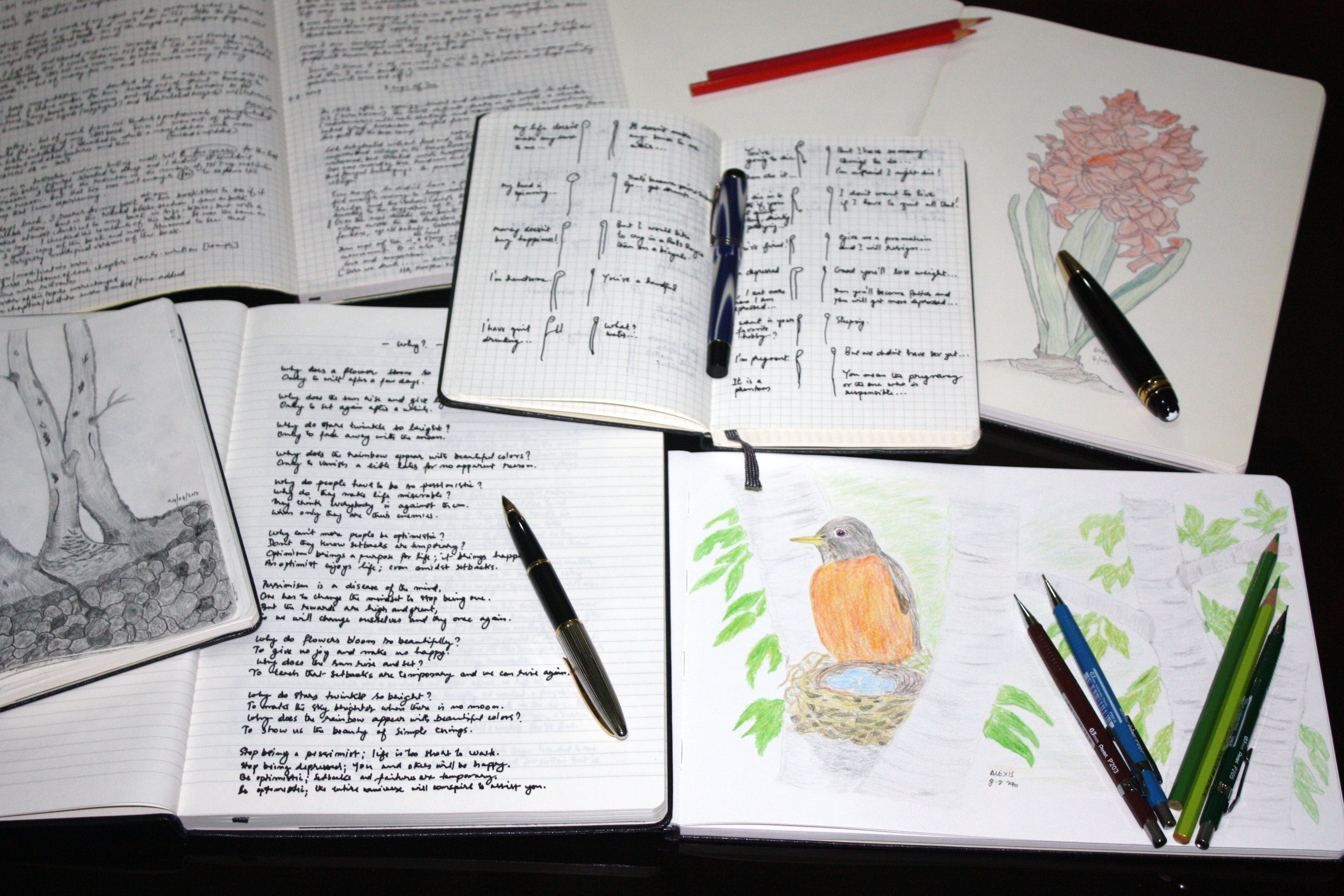
Some would have us believe that, in this digital age, letter writing and writing by hand is dead in the water and no longer matters. But in truth technology has merely distracted us from the joy and importance of writing, it hasn’t replaced it — we still have to write note, postcards, posters and exam papers; and many still enjoy writing letters and even novels by hand. Indeed there remains something special about receiving a handwritten letter or card.
There’s a whole website devoted to National Stationery Week at nationalstationeryweek.com including a page which focuses on children and schools.
Great British Beef Week runs from 21 to 27 April.
Great British Beef Week is an annual celebration of the British Beef industry. Timed to coincide with St George’s Day each year, it is supported both at a local level, with regional events, and nationally with the backing of the nation’s biggest supermarket retailers.
This year, Ladies in Beef is joining forces with the Royal Agricultural Benevolent Institution, a charity which helps farming families in financial difficulty. Its work is funded by public donations, fundraising events and initiatives and support from businesses and community groups.
More information at www.rabi.org.uk and www.ladiesinbeef.org.uk.
Ebonics
African-American English, especially when considered as a distinct language or dialect with linguistic features related to or derived from those of certain West African languages, rather than as a non-standard variety of English.
What linguists far more often term African American Vernacular English, and that was originally used with strong connotations of the African origin of this language.
The term is a conflation of “ebony” and “phonics” and , according to the OED, was first used by Prof. RL Williams in January 1973.

Examples, as quoted by the Urban Dictionary, are:
Ebonics: “Yo G, you frontin me?”
English: “Excuse me, my peer, are you attempting to influence me to engage in a violent action with you?”
Ebonics: “You gots to git those Benjamins so you cin git dat bling-bling fo yo ride.”
English: “You need to get money so that you can get expensive accessories for your car.”
This week’s photo is from the shorty holiday we had in Rye in September 2010 with our friend Katy and her kids.
I found a lot of very flat stones on the beach at Rye Harbour which I assume are due to them coming from thin beds of sedimentary rocks in the cliffs further along the coast, although some was clearly brick or concrete. I was interested by the variety of colours and textures.

Stone Pile
Rye, September 2010
It’s also surprising what can be pressed into service as a backcloth. I had to use something other than the scruffy patio table at our rental house, and a black t-shirt (complete with white cat’s hairs), although not ideal, did the job.
Our irregular round-up of links to interesting (well to me, anyway) items you may have missed. In no special order …
First up an oldish item from Physicist Sean Carroll on what is science, what is not science, how we can tell, and how we examine he world about us.
“Bring us a shrubbery”. Researchers have found that the greener (plant-wise) an area the lower the crime rate.
Now here’s a puzzle. How does Polynesian DNA mysteriously show up in a Brazilian tribe on the wrong side of South America? Even the researchers find their conclusions unsatisfactory.
OK, so does penis size really matter? Men always think it does. Women tell us it doesn’t. Turns out both are right — just.
Your time machine should be delivered this week. So ready for your trip back to Tudor times researchers have written the Good Pub Guide for the 16th century.
Sheep. Real sheep. Artificial sheep. On roundabouts!? Well why not?
There are a lot more cat species than we usually realise. Here’s a list of the six most endangered feline species. They could easily have made that a list of a dozen.
Life and death in Pompeii and Herculaneum is the British Museum’s latest blockbuster exhibition which is getting rave reviews. I’m hoping to get to it this week.
Travelling on business? Finding you’re lonely in your hotel? Why not hire a goldfish?
Dig a hole almost anywhere in central London and you’ll find something historically interesting. There’s a huge construction site at Bank where the archaeologists are recovering literally thousands of pieces of Roman London from building timbers to shoes.
Finally one for the ladies. A French researcher has come to the conclusion that girls may as well throw away their bras because they don’t actually do any good, regardless of the size or shape of what you put in them. Maybe that’d be good for use men too? ☺