Ten Things #6

Here’s my list of ten things for June. Something slightly different this month …
10 Things in My Bedside Drawer:

  1. Spare opened packs of medicines
  2. Blood glucose meter
  3. Condoms
  4. Bookmarks
  5. Spare spectacles
  6. Steel bracelet
  7. Pill cutter
  8. Hearing aid spares
  9. Aromatherapy oils
  10. Toothpicks

And as a bonus let’s also have …
10 Things on My Bedside:

  1. CPAP machine
  2. Table lamp
  3. Current medicines
  4. Alarm clock
  5. Post-It notes and index tags
  6. Extra strong mints
  7. Box of tissues
  8. Nail file & nail clippers
  9. House phone
  10. Pencil

Perhaps the only real surprise is that it is so ordinary!

Weekly Photograph

It is scary to realise that I took this week’s photograph eight years ago. It is a composite of at least half a dozen frames — well we didn’t get such good wide-angle lenses on cameras then! As the eagle-eyed will realise this is Paris. We were sitting having lunch with a friend outside her favourite bistro in Place Dauphine, a quiet square at the western end of Ile de la Cité, on a warm Friday in May. This was real non-touristy Paris, even down to the handful of Parisian corporation workers playing boules in the square.

Click the image for larger views on Flickr
Place Dauphine
Place Dauphine
Paris, May 2006

Oddity of the Week: Blue Honey

French beekeepers were recently shocked when their bees started producing thick, blue and green honey.
After investigating, they discovered their bees were feeding on the colourful shells of M&Ms — a Mars processing plant was located just 4 km away.
The Mars waste-processing plant has now solved the problem and are cleaning any outdoor or uncovered containers that M&M waste was stored in, so it’s unlikely you’ll see the blue honey on the market any time soon.


As Reuters reports, the unsellable honey is a new issue for the beekeepers, who are already struggling with high bee mortality rates and dwindling honey supplies.
From http://sciencealert.com.au/news/20142405-25561.html

Weekly Photograph

In this week’s photographs we bring you the world of Beatrix Potter …
We were in the village of East Carleton, just outside Norwich, the other day visiting my mother. Driving slowly through the village we came across Jemima Puddleduck with eleven quite well grown ducklings meandering slowly along the verge. We stopped the car and I took their portraits from the passenger seat.
Mother looked like a Aylesbury-Mallard cross; white like an Aylesbury but only Mallard size. There were four white and seven “tabby” ducklings. The ducklings were quite fearless, and once we stopped the car they were happy nosing around just inches from the wheels — until mother called them to come away. All the while they were making little chirping noises at each other and clearly enjoying the lovely wet day.
Here’s Jemima Puddleduck herself …

Click the images for larger views on Flickr
Jemima Puddleduck 3
Jemima Puddleduck 3
East Carleton, May 2014

And here are some of the ducklings …
Ducklings 2
Ducklings 2
East Carleton, May 2014

And another with mother in the background …
Mother & Ducklings 1
East Carleton, May 2014

Word: Carabiner & Piton

Carabiner or karabiner
An oblong metal ring with a spring clip, used in mountaineering to attach a running rope to a piton or similar device.
The word is a late introduction (1932 according to the OED) from the world of mountaineering; it is a shortened form of the German karabiner-haken, spring-hook.
 
 
Piton
A metal spike fitted at one end with an eye for securing a rope and driven into rock or ice as a support in mountain climbing.
A slightly earlier introduction (1898) which derives from the French mneaning a “ring-bolt”.

Thoughts on Nudity

I recently came across a couple of pieces by writer Nick Alimonos on his blog The Writer’s Disease. And given a number of things which have been happening recently they make some sense (although I don’t agree with everything he says).
These first two quotes are from the article Nudity is the Future from April 2013.
I recently had the fortune to read an article in Cracked, “The Five Craziest Ways Men Have Censored Female Sexuality” … what really stood out for me was how Islamist countries like Iran fight to repress human nature. Censors paste cartoon shirts on all of the female characters on the show Lost, because tank-tops are just too arousing. Even things we would never consider sexual, like a man and a woman sitting on a couch or the bulge of a woman’s blouse, is deemed unacceptable. Iranian censors will even blur a closeup of a woman’s face.  No matter how many things the Iranian government tries to omit from TV and movies, boys will find something to be aroused by, because sexual desire comes from within … Trying to repress this instinct is a lost cause. It’s plugging up a pressure cooker bound to explode. The irony is that, by making everything taboo, everything becomes a forbidden fruit. Essentially, Iranian censors are creating the sex crazed society they are trying so desperately to prevent … The battle against free information cannot be won, as history has proven again and again. The only recourse is acceptance, and acceptance is a good thing, because human nature is in the right. Honest, open, free information results in the good of any society. As nudists, we find nothing inherently sexual … so that the act of sex develops naturally, by getting to know a person as a person.
The Internet is changing more than Islamic society, however; it’s changing ours as well. The last irrational, moralistic taboo in America is that of public nudity. There is no difference between an Iranian woman being arrested for going out in the streets without her hair covered and an American woman being arrested for stepping out her front door without a top on. Nobody can give a rational explanation for anti-nudity laws. The government uses, instead, abstract terminology like “disturbing the peace” or “public indecency”. Without realizing it, we criminalize nudity on strictly moral grounds, based on ancient and outdated religious biases that have no place in a modern society.


And these three are from a piece on Alimonos’s philosophy of Naturism.
As Americans, we live in an insane world, where you can legally carry and conceal a gun, but risk imprisonment should anyone see your genitals.
I reject the notion that men and women cannot live in sight of one another without clothes. I reject the belief that bodies are inherently sexual and must be hidden from view. And I know, with certainty, that nudity is not harmful to children — in fact, quite the opposite is true — shaming our kids, making them believe that their bodies are sinful, harms their self-esteem and their sense of identity.
For tens of thousands, if not more than a hundred thousand years, mankind was oblivious to nakedness. After the Ice Age, we adopted textiles to retain heat, but at some point in our history, an invention of necessity became a global neurosis, a hatred for our own bodies.
It seems to me that there is a large amount of common sense there even if some of Alimonos’s views (not really represented here) do support the patriarchy more than one might like.

Coming up in June

Some interesting events an anniversaries in the month ahead.
1 to 30 June
National Microchip Month. Is your pet microchipped? By 2016 all dogs will be required by law to be microchipped. And it is well worth having any animal microchipped — we have found the owner of one cat, and had one of our cats found and been contacted purely because they were chipped. It is an easy, cheap process and doesn’t distress the animal. Any vet should be able to do it and your pet’s details are then on a national register. There’s a lot more information at www.petlog.org.uk/national-microchipping-month.
1 June
Asparafest 2014. Held at Ashdown Farm, Evesham this is Worcestershire’s asparagus themed music and food festival and all part of the British Asparagus Festival. Full details at www.asparafest.co.uk.
6 June
D Day Landings. The 70th anniversary of the 1944 D Day Landings which were the beginning of the end of WWII.
13 June
First V1 attack on England was on this day in 1944, just a week after D-Day.
14 & 15 June
Open Garden Squares Weekend. Around 200 gardens across London take part in Open Garden Squares Weekend each year. There is a real variety — from the traditional private squares to contemporary roof gardens, not to mention skips, prisons, museums, schools and allotments. Feed your curiosity in this magical two-day event. More information at www.opensquares.org.
14 June
Trooping the Colour. The annual parade on London’s Horseguards when the Queen inspects her troops. British military pageantry at it’s most splendid.
14 June
World Gin Day is a celebration of all things gin, giving us a legitimate excuse (not that we need one) to try all of the exceptional gins that are currently on the market.


20 to 22 June
Evesham National Morris Weekend. Morris sides from around the country come together in a national festival to dance the end of the asparagus season. Lots more information at www.nationalmorrisweekend.co.uk.
20 June
On this day in 1214 the University of Oxford received its charter.
21 June
Summer Solstice. The longest day in the northern hemisphere.
21 June
National Flash Fiction Day. Flash fiction is a really short story — basically, it contains everything you would write in an ordinary short story, but it’s much more condensed, often to just a handful of words. And Flash Fiction Day aims to celebrate all that’s good in this art form. There’s lots more information at https://nationalflashfictionday.co.uk/.
22 June
The first even cricket match was played at Lord’s Cricket Ground — the current one, that is, because Mr Lord had two previous nearby grounds both of which had to move because of property development. So it was third time lucky!
23 June
This day in 1314 witnessed the Battle of Bannockburn when the Scots decisively routed the English.
24 June
St John’s Day; Midsummers Day. This is the day on which many religions, from Christians to pagans, celebrate mid-summer.

28 June
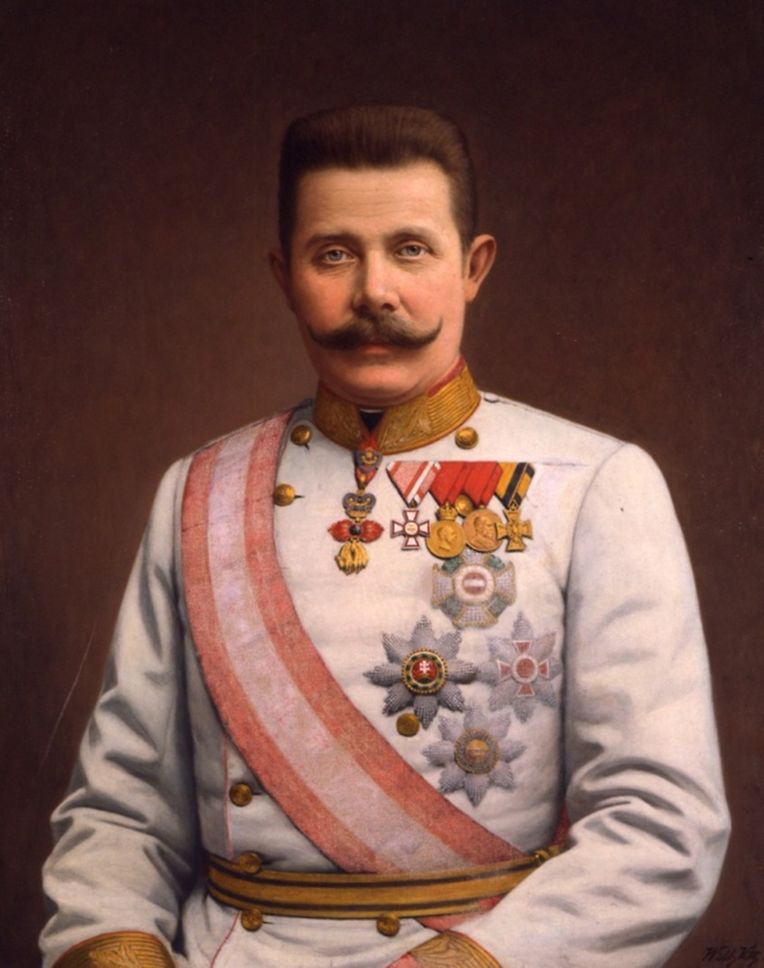
Archduke Franz Ferdinand was assassinated in Sarajevo on this day in 1914, and act which precipitated World War I. The event is marked in the opening chapter of Anthony Powell’s novel The Kindly Ones.
Oddity of the Week: Celery

Celery [traditionally an aphrodisiac] sends mixed messages. The ancient Greeks associated it with death: tombs were trimmed with it, and the dismal classical catchphrase “He now has need of nothing but celery” meant that some unfortunate Greek was about to kick the bucket.
From “Sex and the Celery: Ancient Greeks Get Busy With Help From Veggies” at http://theplate.nationalgeographic.com/2014/05/20/sex-celery-ancient-greeks-get-busy-help-veggie/