Category Archives: words

Word: Maculate

Maculate

Verb. To spot, stain or soil.
Adjective. Spotted or blotched; stained or impure.

Hence immaculate: unspotted, pure, undefiled.

According to the OED the first usage is in a legal roll from 1432-50, shortly followed by Caxton in 1481. Sadly maculate is now confined to medical and zoological usage.


The Panther (or Rusty-Spotted) Genet (Genetta maculata)

Word: Zaftig

Zaftig

Of a woman: plump, curvaceous, ‘sexy’.
Full-bosomed.
Having a full, shapely figure.

From the Yiddish zaftik, juicy.

The first use recorded by the OED is in 1937.

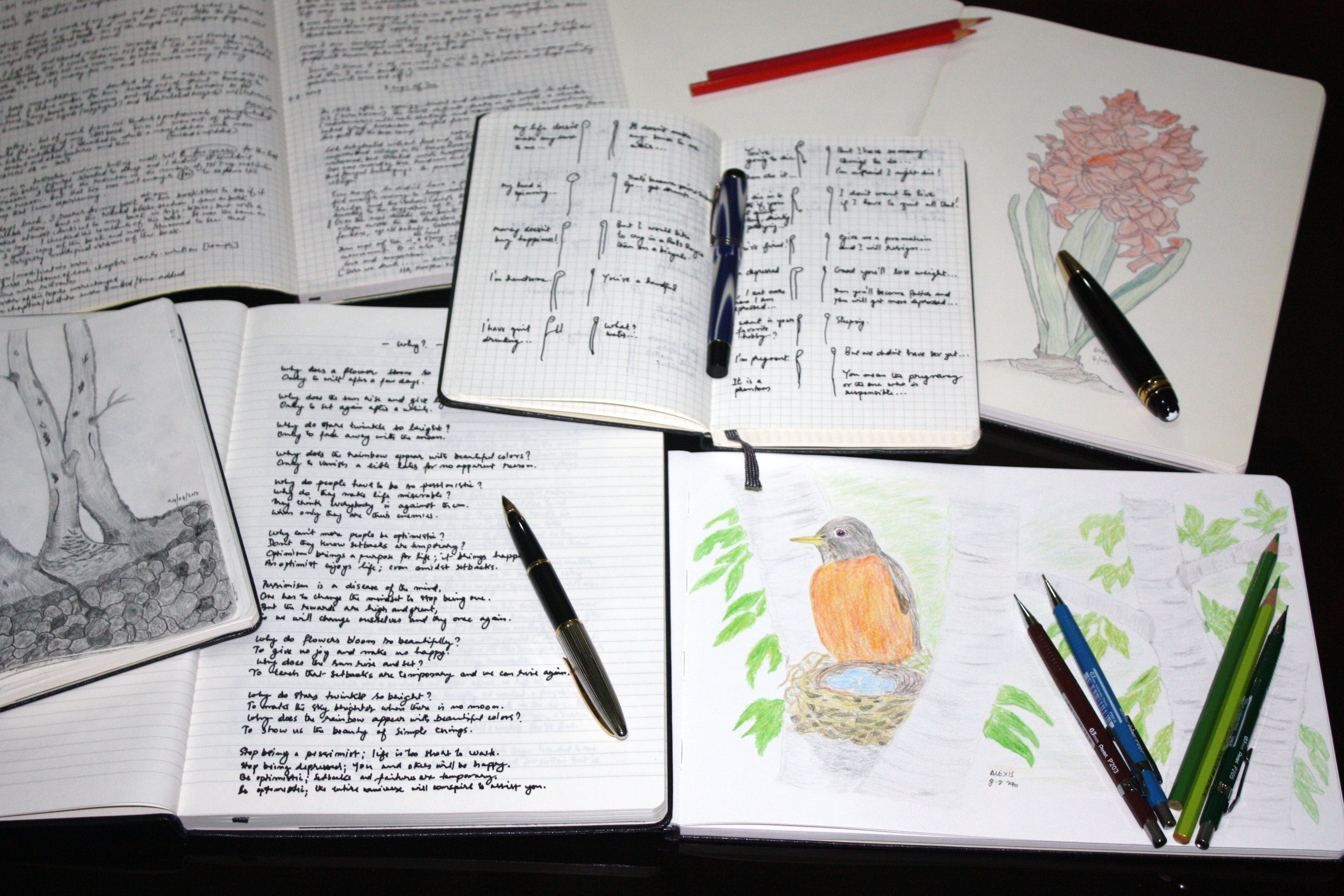
National Stationery Week

Monday 22 to Sunday 28 April is National Stationery Week. Yes, that’s “stationery” with an “e” as in “envelope”.

The aim of National Stationery Week is to get people writing. It is a celebration of the written word and all things stationery. The idea is to get more people putting pen to paper and writing by hand more often, especially children. Oh and to get them spelling stationery correctly with an “e”!


Some would have us believe that, in this digital age, letter writing and writing by hand is dead in the water and no longer matters. But in truth technology has merely distracted us from the joy and importance of writing, it hasn’t replaced it — we still have to write note, postcards, posters and exam papers; and many still enjoy writing letters and even novels by hand. Indeed there remains something special about receiving a handwritten letter or card.


There’s a whole website devoted to National Stationery Week at nationalstationeryweek.com including a page which focuses on children and schools.

Word: Ebonics

Ebonics

African-American English, especially when considered as a distinct language or dialect with linguistic features related to or derived from those of certain West African languages, rather than as a non-standard variety of English.
What linguists far more often term African American Vernacular English, and that was originally used with strong connotations of the African origin of this language.

The term is a conflation of “ebony” and “phonics” and , according to the OED, was first used by Prof. RL Williams in January 1973.


Examples, as quoted by the Urban Dictionary, are:

Ebonics: “Yo G, you frontin me?”
English: “Excuse me, my peer, are you attempting to influence me to engage in a violent action with you?”

Ebonics: “You gots to git those Benjamins so you cin git dat bling-bling fo yo ride.”
English: “You need to get money so that you can get expensive accessories for your car.”

Word: Novate, Novation

Novate

To replace by something new; specifically in law, to replace by a new obligation, debt, etc.

Hence …

Novation

1. The introduction of something new; a change, an innovation. (Scots, obsolete)
  
2. The substitution of a new debtor, creditor, contract, etc. in place of an old one.


I’ve most commonly encountered novation in the second sense and in the situation of company acquisitions etc. X has a contract to provide a service to Y; when X is bought by Z the contract with Y is novated from X to Z, but only by mutual agreement of the parties through a legal process. It applies equally to company contracts and to moving your bank account during a take-over/acquisition.

The earliest use recorded by the OED is from Speed’s History of Great Britain of 1611.

Word: Crenellate

Crenellate

To furnish with battlements, embrasures or loopholes.

Hence crenellated, embattled.

May be spelled with either one or two ‘l’s.

From the French créneler.

Word: Baksheesh

Baksheesh

An Oriental (mostly Arabic?) term for a gratuity, present of money, tip or bribe. Or as a verb, to give the same.

According to the OED, first recorded in English as far back as 1625 although not commonly until mid-19th century.

It appears to derive from the Persian bakhshīsh, a gift; which is from bakhshīdan, to give.

Will Save Lives

I’m getting really totally fed up with the rubric that

Doing A will save X lives

Just this morning the Daily Telegraph has given us

Minimum alcohol pricing would save lives, says Tory MP

FFS, once and for all … NO IT WILL NOT!


Let’s get this one straight — for better or worse, none of us is immortal, hence lives cannot be saved.

What you mean is: Doing A may postpone X deaths. Which is rather different, innit.

Word: Fud

Fud.

For a small, emphatic word it is surprising that this is one which appears to have little if any use. That’s possibly because it is largely Scots and northern dialect. So what does it mean?

  1. The backside or buttocks.
  2. The tail or scut of a hare, rabbit, etc.
  3. Woollen waste for mixing with mungo and shoddy. [Although the OED isn’t certain about this]
  4. The pubic hair (especially of a woman) and hence the female genitals. [Now scatological]

The last of these meanings is the earliest quoted by the OED in the 1771 poem The Hen-peckt Carter by James Wilson Claudero

Each hair of her fud is the length of a span,
What fud can compare with the fud of Joan?

Yes it is surprisingly little used given its scatological possibilities.

[Found in Mark Forsyth, The Horologicon]

Word: Macaronic

Time for another nice word. Today I have chosen …

Macaronic (noun and adjective)

A burlesque verse form in which vernacular words are used in a Latin context, with Latin constructions etc. It can also be used where the verse is based on Greek instead of Latin; and thus loosely to any form of verse in which two or more languages are mingled together.

Hence it has also come to be descriptive of a jumble or medley.

According to the OED the word seems to have been invented by Teofilo Folengo (‘Merlinus Cocaius’) whose ‘macaronic’ poem (Liber Macaronices) was published in 1517. In the second edition of 1521 he explains that the ‘macaronic art’ is so called from macaroni, which is quoddam pulmentum farina, caseo, botiro compaginatum, grossum, rude, et rusticanum (literally a crude, rustic mixture of flour, butter and cheese) — so probably quite tasty.