An Advent Calendar of Notable Scientists Leonardo da Vinci
Image from Wikipedia
An Italian polymath of the Renaissance whose areas of interest included invention, drawing, painting, sculpture, architecture, science, music, mathematics, engineering, literature, anatomy, geology, astronomy, botany, palaeontology, and cartography. He is widely considered one of the greatest painters of all time. Leonardo is revered for his technological ingenuity. He conceptualized flying machines, a type of armoured fighting vehicle, concentrated solar power, an adding machine, and the double hull.
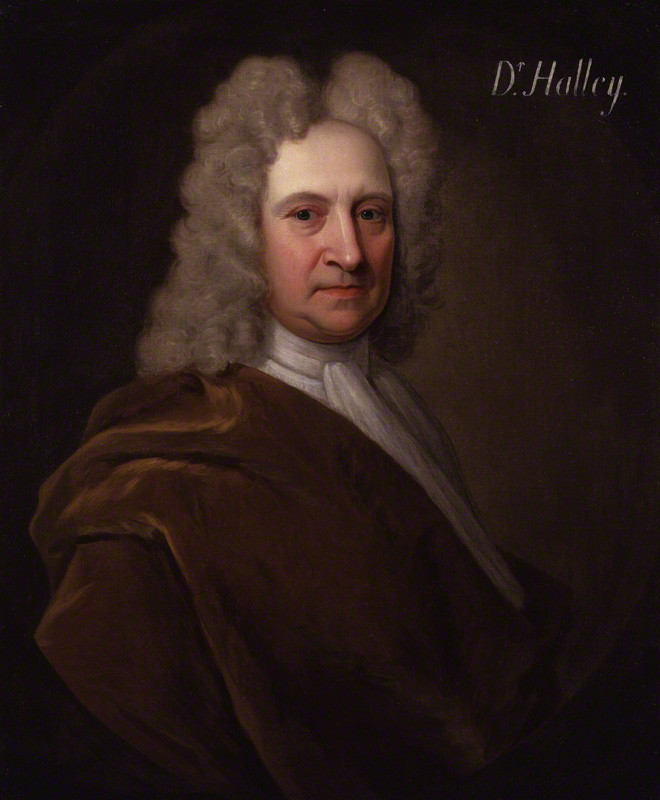
An Advent Calendar of Notable Scientists Edmund Halley
Image from Wikipedia
English astronomer, geophysicist, mathematician, meteorologist, and physicist. He was the second Astronomer Royal in Britain, succeeding John Flamsteed in 1720. From an observatory he constructed on Saint Helena, Halley recorded a transit of Mercury across the Sun, and realised a similar transit of Venus could be used to determine the size of the Solar System. From his September 1682 observations, he used the laws of motion to compute the periodicity of Halley’s Comet in his 1705 Synopsis of the Astronomy of Comets; it was named after him upon its predicted return in 1758, which he did not live to see.
An Advent Calendar of Notable Scientists Johannes Kepler
Image from Wikipedia
German astronomer, mathematician, and astrologer. He is a key figure in the 17th-century scientific revolution, best known for his laws of planetary motion, and his books Astronomia nova, Harmonices Mundi, and Epitome Astronomiae Copernicanae. These works also provided one of the foundations for Newton’s theory of universal gravitation.
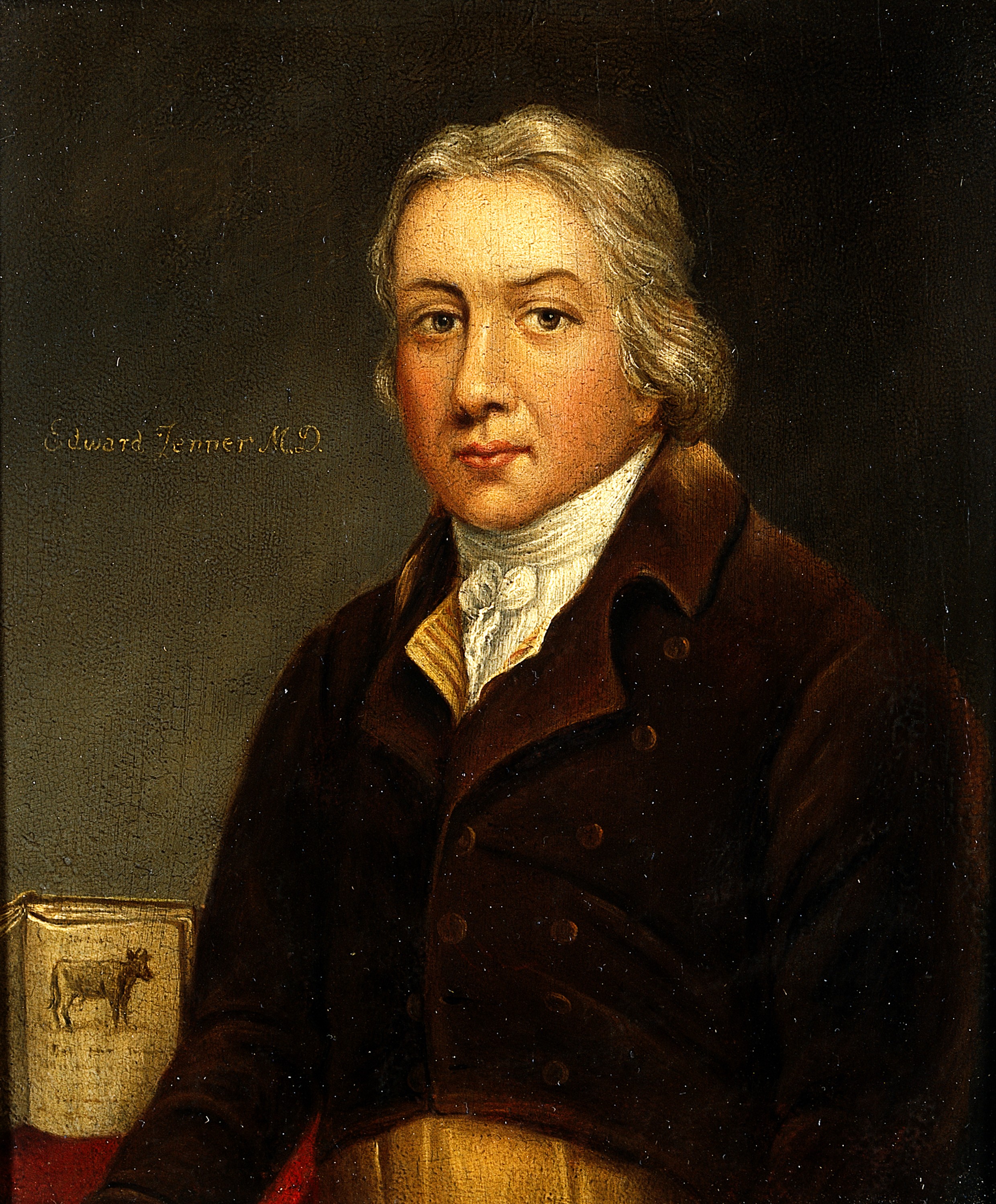
An Advent Calendar of Notable Scientists Edward Jenner
Image from Wikipedia
English physician and scientist who was the pioneer of smallpox vaccine, the world’s first vaccine. The terms vaccine and vaccination are derived from Variolae vaccinae (smallpox of the cow), the term devised by Jenner to denote cowpox. Jenner is often called “the father of immunology”, and his work is said to have “saved more lives than the work of any other human”
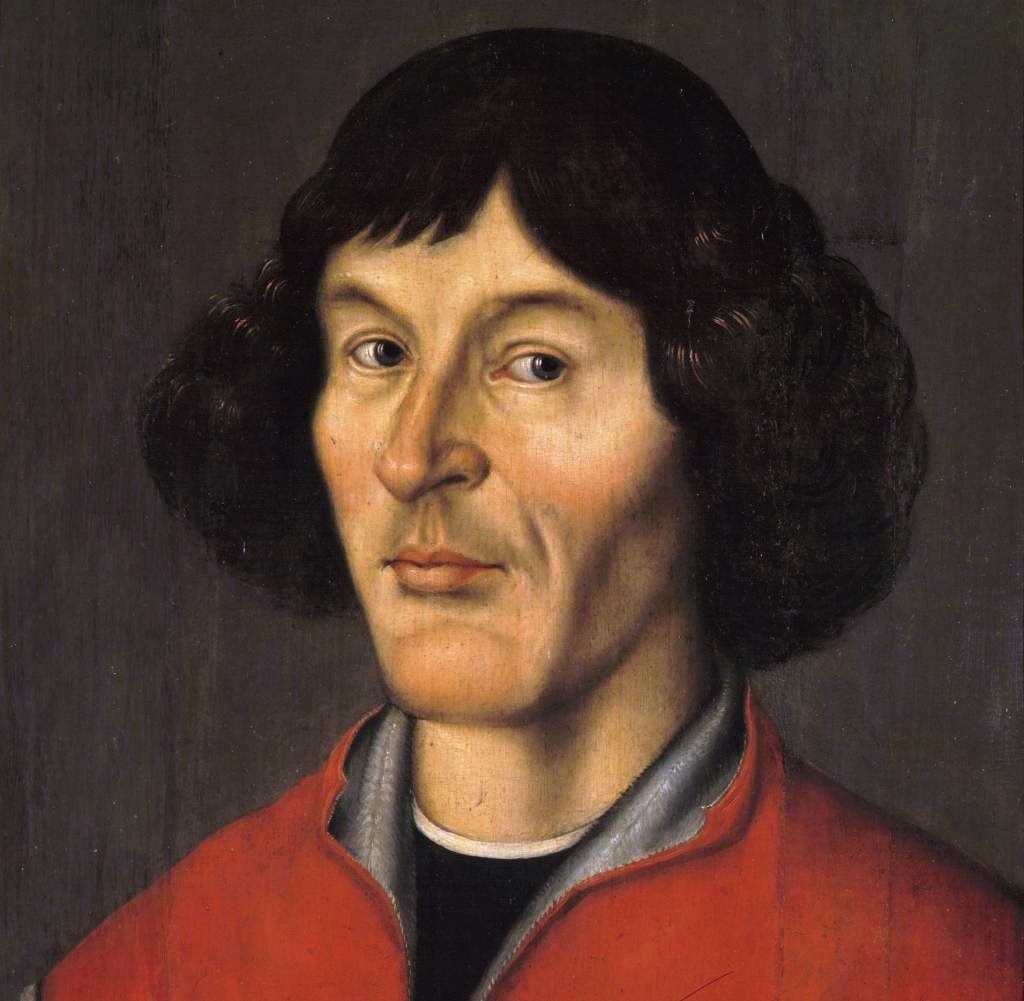
An Advent Calendar of Notable Scientists Nicolaus Copernicus
Image from Wikipedia
Renaissance-era mathematician and astronomer, who formulated a model of the universe that placed the Sun rather than Earth at the center of the universe. The publication of Copernicus’ model in his book De revolutionibus orbium coelestium, just before his death in 1543, was a major event in the history of science, triggering the Copernican Revolution and making a pioneering contribution to the Scientific Revolution.
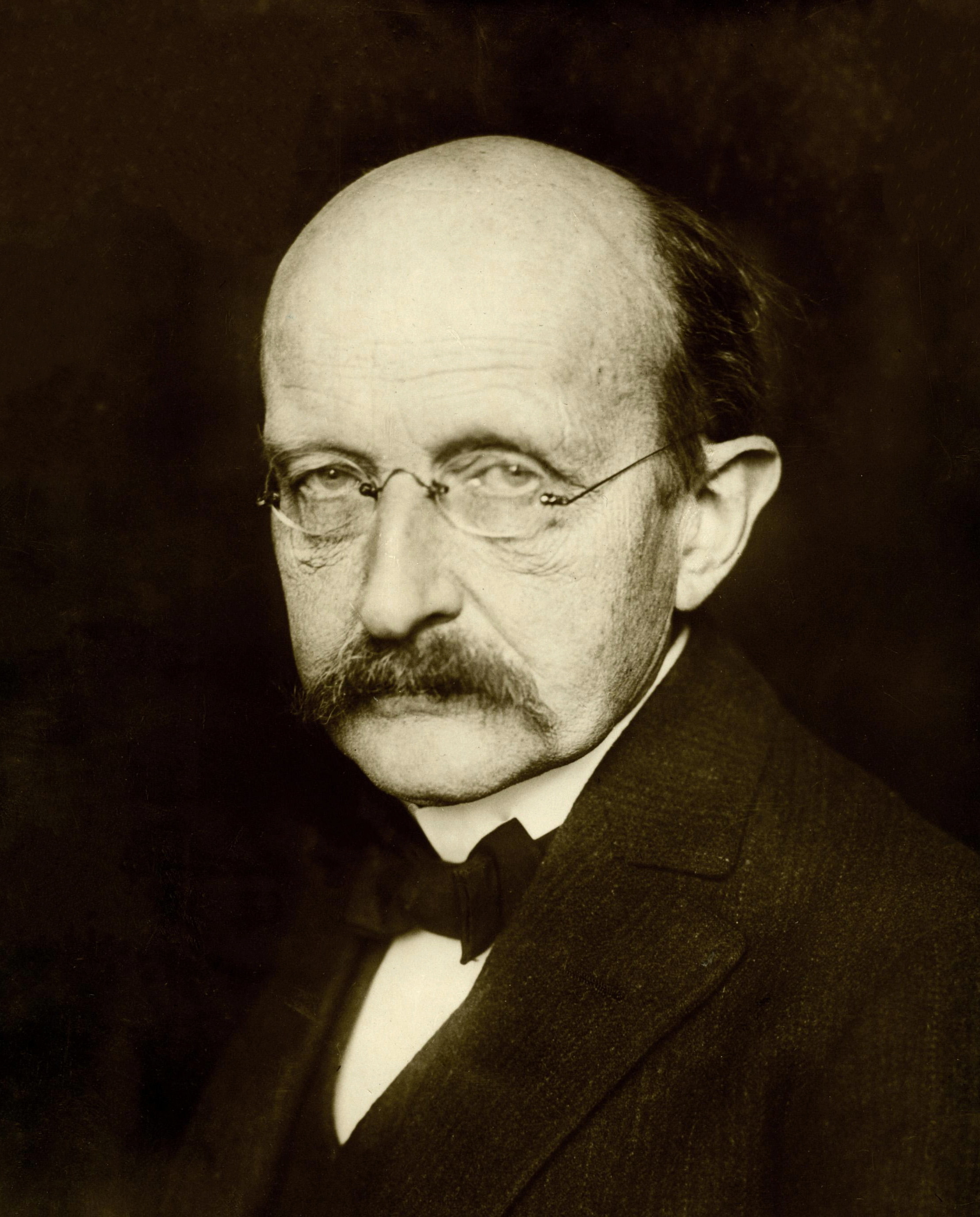
An Advent Calendar of Notable Scientists Max Planck
Image from Wikipedia
German theoretical physicist whose discovery of energy quanta won him the Nobel Prize in Physics in 1918. Planck made many contributions to theoretical physics, but his fame as a physicist rests primarily on his role as the originator of quantum theory, which revolutionized human understanding of atomic and subatomic processes.
An Advent Calendar of Notable Scientists Dorothy Hodgkin
Image from Wikipedia
British chemist who developed protein crystallography, for which she won the Nobel Prize in Chemistry in 1964. She advanced the technique of X-ray crystallography, a method used to determine the three-dimensional structures of molecules. Among her most influential discoveries are the confirmation of the structure of penicillin, and the structure of vitamin B12. In 1969, after 35 years of work, Hodgkin was able to decipher the structure of insulin.
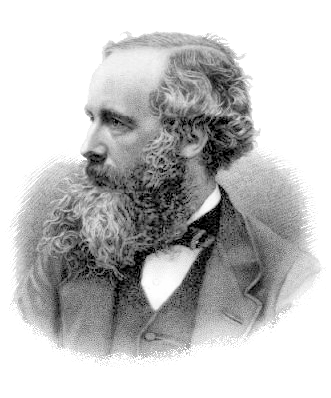
An Advent Calendar of Notable Scientists James Clark Maxwell
Image from Wikipedia
Scottish scientist in the field of mathematical physics. His most notable achievement was to formulate the classical theory of electromagnetic radiation, bringing together for the first time electricity, magnetism, and light as different manifestations of the same phenomenon. Maxwell’s equations for electromagnetism have been called the “second great unification in physics” after the first one realised by Isaac Newton.
An Advent Calendar of Notable Scientists Archimedes of Syracuse
Image from Wikipedia
One of the leading scientists in classical antiquity. Generally considered the greatest mathematician of antiquity, Archimedes anticipated modern calculus and analysis by applying concepts of infinitesimals and the method of exhaustion to derive and rigorously prove a range of geometrical theorems, including the area of a circle, and the surface area and volume of a sphere. His other achievements include deriving an accurate approximation of pi, defining and investigating the spiral bearing his name, and creating a system using exponentiation for expressing very large numbers.
An Advent Calendar of Notable Scientists Robert Bunsen
Image from Wikipedia
German chemist who investigated emission spectra of heated elements, and discovered caesium (1860) and rubidium (1861) with physicist Gustav Kirchhoff. Bunsen developed several gas-analytical methods, was a pioneer in photochemistry, and did early work in the field of organoarsenic chemistry. With his laboratory assistant, Peter Desaga, he developed the Bunsen burner, an improvement on the laboratory burners then in use.
Eccentric looks at life through the thoughts of a retired working thinker