
Our mid-monthly round up of recently encountered quotes, inspirational, educational and amusing.
If porn is inherently & in all contexts destructive, then SEX is inherently & in all contexts destructive.
[Emily Nagoski]
Most people can’t fathom why naturist families have such positive, wholesome relationships. Children from clothes free families grow up with relatively few body confidence issues.
[British Naturism]
Save the Earth; don’t give birth. This is the really radical ecological message people aren’t willing to face: the most damaging thing you can do environmentally is breed.
[Mark Walsh & Dane Burman quoted on Facebook]
It’s hard to win an argument with a smart person, but it’s damn near impossible to win an argument with a stupid person.
[Bill Murray]
I sympathise a little with Hunt [UK Health Secretary] — he was born into military aristocracy, a cousin of the Queen, went to Charterhouse, then Oxford, then into PR: trying to get him to understand the life of an overworked student nurse is like trying to get an Amazonian tree frog to understand the plot of Blade Runner. Hunt doesn’t understand the need to pay doctors — he’s part of a ruling class that doesn’t understand that the desire to cut someone open and rearrange their internal organs can come from a desire to help others, and not just because of insanity caused by hereditary syphilis.
[Frankie Boyle]
You go through life blind but with the delusion of sight. Try not to be fooled by what you think you see & what other people think they see.
[Brad Warner on Twitter]
The proposals the Secretary of State outlined did not appear to depart significantly from the Human Rights Act — we note in particular that all the rights contained within the ECHR are likely to be affirmed in any British Bill of Rights. His evidence left us unsure why a British Bill of Rights was really necessary.
… … …
If a Bill of Rights is not intended to change significantly the protection of human rights in the UK, we recommend the Government give careful thought before proceeding with this policy.
… … …
Given the seemingly limited aims of the proposed Bill of Rights, the Government should give careful consideration to whether, in the words of the Secretary of State, it means unravelling “the constitutional knitting for very little”. If for no other reason, the possible constitutional disruption involving the devolved administrations should weigh against proceeding with this reform.
[House of Lords European Union Select Committee; Report The UK, the EU and a British Bill of Rights; May 2016]
To bring about structural change, lasting change, awareness is not enough. It requires changes in law, changes in custom … You consolidate your gains and then you move on to the next fight from a stronger position.
[Barrack Obama]
Earl Cathcart: My Lords, the noble Lord, Lord Hunt, has twice mentioned weights and measures authorities enforcing this [tobacco regulations] in a heavy-handed or a light-touch way. Can the Minister comment on which he thinks they will do?
Lord Prior [the Minister]: I certainly hope that enforcement will be more Italian than traditionally British, if I may put it that way.
[House of Lords debate on the new Tobacco Regulations from the EU]
Wind chimes are made from the metallic bones of robots that tried to overthrow us. Hang them outside your house as a warning to the others.
When you are dead, you don’t know that you are dead. It is difficult only for the others. It is the same when you are stupid.
Not every day is a good day,
live anyway.
Not everyone tells the truth,
trust anyway.
Not everyone will love you back,
love anyway.
Not every game will be fair,
play anyway.
We act as if the Earth was a craft ball someone told us to bedazzle.
[Rob R Dunn]
Category Archives: quotes
Quote: Life
Your future is not about people who walk away.
It’s about the people who stay in it for the ride.
Quotes
Here’s our monthly round up of interesting, inspiring or amusing quotes encountered in the last few weeks. In no special order …
… one of the great mantras of our times, that anything bad that happens to us must be somebody else’s fault. It cannot be us who are to blame …
[Christopher Snowdon at Spectator Health]
No cookbook can cure the fact that we are meat rotting from the inside, unable to recapture the fading glow of youth.
I never let schooling interfere with my education.
[Mark Twain]
Too often we enjoy the comfort of opinion without the discomfort of thought.
[President Kennedy]
As democracy is perfected, the office of the President represents, more and more closely, the inner soul of the people. On some great and glorious day, the plain folks of the land will reach their heart’s desire at last, and the White House will be occupied by a downright fool and a complete narcissistic moron.
[HL Mencken]
I don’t think people realise how the establishment became established. It simply stole the land and property off the poor, surrounded themselves with weak minded sycophants for protection, gave themselves titles and have been wielding power ever since.
[Tony Benn]
Puritanism. The haunting fear that someone, somewhere, may be happy.
[HL Mencken]
Brexit is like the English civil war, when families and friends found themselves split between King and parliament. Other historical divides — as over the reformation, the corn laws or Irish home rule — tended to cohere round religion or self-interest.
[Simon Jenkins; Guardian; 31 March 2016]
Political psychologists increasingly dismiss reason as having any role in electoral decision … Thus Brexit. It is declining into a sort of primitivism, a debate over what is inherently unknown. Argument is hijacked by hobgoblins.
[Simon Jenkins; Guardian; 31 March 2016]
Battle not with voles, lest ye become a vole; for if you gaze into the burrow, the burrow gazes back into you.
Dogs are for people who need to be worshiped as gods. Cats are for people who are strong enough to put up with gods standing on their chests at 5:00 AM and demanding a sacrifice.
I find television very educating. Every time somebody turns on the set, I go into the other room and read a book.
[Groucho Marx]
Train people well enough so they can leave, treat them well enough so they don’t want to.
[Richard Branson]
Machiavelli defines the central thrust of human nature as ambition, the drive for power bringing with it wealth and corruption.
[Sarah Dunant; BBC News Magazine]
Being a little weird is just a natural side-effect of being awesome.
[Sue Fitzmaurice]
More next month.
Quote: Iconoclasm
Sometimes being an iconoclast may be beneficial to optimal functioning.
Quotes
Our mid-month round-up of the amusing and thought-provoking wisdom of the world recently encountered …
Guess what? Birth is grisly, living is a messy business, and dying is fucking horrendous. Health care is at the gritty end of things. That’s its job. That’s what it does. We don’t expect it to look lovely. We don’t expect it to speak nicely, and wear expensive clothes. We expect it to work. We expect it to get down into the guts of the matter and fix things. It needs to fix people. It needs to fix lives. It needs to help us give birth, it needs to ease living, and soothe the dying. It isn’t about forms and management committees and balance sheets, not where it really matters.
[Katy Wheatley]
Man is the most insane species. He worships an invisible God and slaughters a visible Nature … without realizing that this Nature he slaughters is this invisible God he worships.
[Hubert Reeves]
[T]he close ties between a family and their GP is rapidly coming to an end. The politicians do not seem to understand that General Practice is not just about making a diagnosis and giving someone the ‘correct’ treatment in the shortest time possible. Although this is important, it is also about trust, compassion, reassurance, inter-relationships, life and support — most of which is not measurable and can only successfully be achieved once you’ve developed an on-going relationship in which a person has faith and trust in their doctor and the doctor has faith, trust and an understanding of the history (physical, social and psychological) of their patient.
[Dr Jonathan Lenten, Leicester]
People feel uncomfortable expressing views that Gordon Brown would have described as bigoted, but they feel them anyway, and so politicians and pundits come up with safe proxies to use.
Immigrants take jobs. Immigrants take benefits. Immigrants take without contributing.
It’s a soft xenophobia about strange other people with their strange ways, packaged into a Tesco Value political argument about the cost of migration on the UK Government’s rather overdrawn bank account.
[Ian Mansfield at IanVisits]
Chores on a morning as grim as double maths. Two magpies cross the back of the class like naughty paper aeroplanes.
[Simon Barnes on Twitter]
Small children are justified in being conspiracy theorists, since their world is run by an inscrutable and all-powerful organization possessing secret communications and mysterious powers — a world of adults, who act by a system of rules that children gradually master as they grow up.
[Thomas Griffiths & Joshua Tenenbaum in a 2006 study on coincidences]
The chains of habit are too light to be felt until they are too heavy to be broken.
[Warren Buffett]
The same number of doctors with a lower limit on maximum hours, providing the same level of care, across more days.
[Jeremy Hunt, Secretary of State for Health quoted in the Daily Telegraph]
[Compare with NASA’s much reviled desire for “Faster, Better, Cheaper”. Neither computes.]
I may be a Guardian
[Dean Burnett, Guardian, 11/03/2016]
Court at your peril those spirits that dabble lasciviously with primeval matter, horrid substances, sperm of the world, producing monsters and fantastic things, as it is written, so that the toad, this leprous earth, eats up the eagle.
[Anthony Powell, Temporary Kings]
No government or party comes towards smokers with a position of policy purity — it is an income stream.
[Australian Federal MP Ewen Jones]
Quote: Expecting
Haruki Murakami; Kafka on the Shore
Quotes
OK, so here goes with our monthly (mid-month) round-up of the amusing and thought-provoking wisdom of the world recently encountered. In no special order …
Clutter is not just physical stuff. It’s old ideas, toxic relationships and bad habits. Clutter is anything that does not support your better self.
[Eleanor Brownn]
One awesome thing about Eeyore is that even though he is basically clinically depressed, he still gets invited to participate in adventures and shenanigans with all of his friends. And they never expect him to pretend to feel happy, they just love him anyway, and they never leave him behind or ask him to change.
[David Wolfe]
The planet does not need more successful people. The planet desperately needs more peacemakers, healers, restorers, storytellers and lovers of all kinds.
[Dalai Lama]
Life is not about how fast you run or how high you climb but how well you bounce.
[Vivian Komori]
Every man identifies with Hamlet, it has been said, since every man imagines himself a disinherited monarch; every woman identifies with Alice, since every woman sees herself as the sole sane person in a world filled with lunatics who imagine themselves disinherited monarchs.
[Adam Gopnik]
Whether the British ruling class are wicked or merely stupid is one of the most difficult questions of our time, and at certain moments a very important question.
[George Orwell]
We had a sermon a while back from our pastor talking about how shaming someone is to go against everything Christian. Yet children are natural nudists. The only way to keep them dressed is to teach them shame. “Don’t pull up your dress &,dash; someone will see your panties.” “Don’t go outside naked — someone will see your penis.” This occurs again and again until there is a wall of shame. Is nudity a dangerous path? I believe shame is far worse.
[“Jon” quoted in Naturist Life International]
“Consensual sex” is just sex. To say that implies that there is such a thing as “non consensual sex”, which there isn’t. That’s rape. That is what it needs to be called. There is only sex or rape. Do not teach people that rape is just another type of sex. They are two very separate events. You wouldn’t say “breathing swimming” and “non-breathing swimming”, you say swimming and drowning.
One of the best things about getting older: knowing that someone is an arsehole before they even speak.
Man is the sole animal whose nudities offend his own companions, and who, in his natural actions, withdraws & hides himself from his own kind.
If God declared our unclothed naked bodies to be VERY GOOD on day 6th day of creation. THEN THEY MUST BE SO.
A fellow who I helped write two books about psychology and psychiatry was a renowned psychiatrist in London called Robin Skynner said something very interesting to me. He said, “If people can’t control their own emotions, then they have to start trying to control other people’s behaviour.” And when you’re around super-sensitive people, you cannot relax and be spontaneous because you have no idea what’s going to upset them next. And that’s why I’ve been warned recently don’t to go to most university campuses because the political correctness has been taken from being a good idea, which is let’s not be mean in particular to people who are not able to look after themselves very well — that’s a good idea — to the point where any kind of criticism or any individual or group could be labelled cruel.
[John Cleese]
Christianity. The popular belief that a celestial Jewish baby who is also his own father, born from a virgin mother, died for three days so that he could ascend to heaven on a cloud and then make you live forever only if you symbolically eat his flesh, drink his blood and telepathically tell him you accept him as your lord & master so he can remove an evil force from your spiritual being that is present in all humanity because an immoral woman made from a man’s rib was hoodwinked by a talking reptile possessed by an malicious angel to secretly eat forbidden fruit from a magical tree.
He who would make his own liberty secure must guard even his enemy from oppression; for if he violates this duty he establishes a precedent that will reach to himself.
[Thomas Paine, philosopher and writer, 1737-1809. With thanks to John Monaghan]
Quote: Minds
average minds discuss events,
weak minds discuss people.
[Socrates]
Quotes
So here is the next instalment of interesting, amusing and thought-provoking quotes recently encountered. And as with our “Interesting Links” posts these posts will now be monthly, on or around the middle day of the month. So here goes …
The best thing that can happen to someone before they retire is that they hate their job at the end. Those that have loved it and are restructured out or pushed out have a harder time. If I had a recipe for good retirement it would be to have a bad job in the last three working years.
[Ken LeClair, professor of psychiatry]
Maybe our western culture just doesn’t help people deal with their feelings. It’s complicated, loving someone is hard. Staying the course with someone is hard. You can’t just keep upgrading people like you do with your phone.
[Jeanette Winterson]
Secresy is an instrument of conspiracy; it ought not, therefore, to be the system of a regular government.
[Jeremy Bentham, in his essay “Of Publicity”, published in 1843. And yes, “Secresy” is the spelling in the original]
There is no difference between talking to someone with their top on as there is with their top off. I think you make a choice whether to make the situation sexual, and it’s usually the relationship you have with the person that makes it erotic.
The skin is more beautiful than the garment in which it is clothed.
[Michelangelo]
We have come into the world naked, and all the animals are naked, why should man hide his body behind clothes?
[Osho]
Is obesity a result of overeating? Yes, maybe, and no. There’s science and then there is the agenda of the various health, fitness and diet businesses mixed up in this. Sometimes fatness is the result of inadvertent repetitive dieting which can upset our metabolism. Sometimes it’s a result of eating the non-food foods that industry peddles. These drench our tastebuds with fat, salt and sugar combinations that overstimulate without giving a sense of satisfaction — other than reaching the end of the packet. Sometimes it is because these same non-food foods take a too-quick journey through our body without being properly digested.
Sometimes, as epigeneticists are discovering, it is to do with changes that occurred two generations ago, when food was very scarce. Sometimes … it is to do with changes caused by early and frequent antibiotic use which alter the flora in our gut.
And then there’s the psychology of it all. Sometimes it’s because the pressure towards restraint leads to rebellion, to a desire to gorge ourselves, as consumerism invites us to with beautiful food-porn programmes. Sometimes of course, fat is a form of individual protest in a world that valorises thin. Sometimes fat is a result of emotional hungers perceived to be too difficult to express any other way. Sometimes fat is a result of absorbing a family preoccupation with food and then contesting it. Sometimes fat, like anorexia, is an eating difficulty that shows. Most don’t, but fat does.
[Susie Orbach; Guardian; 14/12/2015]
Tell people there’s an invisible man in the sky who created the universe, and the vast majority will believe you. Tell them the paint is wet, and they have to touch it to be sure.
[George Carlin]
None of us knows the future. You always have to act with only the knowledge you possess at the moment. You’re going to make mistakes. When you’ve made a mistake … it’s best to apologize or try to put it right …
[Brad Warner; Hardcore Zen; 21/12/2015]
Yes, English can be weird. It can be understood through tough thorough thought, though.
[David Burge, @iowahawkblog on Twitter]
No pleasure is worth giving up for the sake of two more years in a geriatric home at Weston-super-Mare.
[Kingsley Amis]
Verily I say unto you, All sins shall be forgiven unto the sons of men, and blasphemies wherewith soever they shall blaspheme: But he that shall blaspheme against the Holy Ghost hath never forgiveness, but is in danger of eternal damnation.
[Mark, 3:28-29. Such a good way to get rid of Jehovah’s Witnesses et al.]
Last year, 44 Americans were shot by Muslim terrorists. By comparison, 52 Americans were shot by toddlers. Which raises the question: Why isn’t the government doing more to protect us from toddlers? Think about it. They don’t share our values. They barely speak English. They steal our welfare. They have no marketable skills. They’re prone to angry outbursts. Worst of all? Most of them aren’t even Christians. How long until we say enough is enough and deport these free-loading parasites once and for all?
[Jeremy McLellan, comedian]
In the Elizabethan play Wily Beguiled, a character named Will Cricket boasts that women find him attractive because he possesses “a sweet face, a fine beard, comely corpse, and a carousing codpiece”.
[From: What goes up must come down: a brief history of the codpiece]
Rationality is what we do to organize the world, to make it possible to predict. Art is the rehearsal for the inapplicability and failure of that process.
[Brian Eno]
History is changed by people who get pissed off. Only neo-vegetables enjoy using computers the way they are at the moment. If you want to make computers that really work, create a design team composed only of healthy, active women with lots else to do in their lives and give them carte blanche. Do not under any circumstances consult anyone who (a) is fascinated by computer games (b) tends to describe silly things as ‘totally cool’ (c) has nothing better to do except fiddle with these damn things night after night.
[Brian Eno]
A child educated only at school is an uneducated child.
[George Santayana]
The problem with today’s world is that everyone believes they have the right to express their opinion AND have others listen to it. The correct statement of individual rights is that everyone has the right to an opinion, but crucially, that opinion can be roundly ignored and even made fun of, particularly if it is demonstrably nonsense.
[Professor Brian Cox]
More next month.
Language, Politics and War
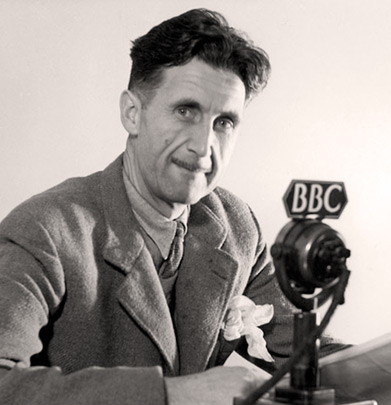 I the last couple of days I’ve seen two articles, of very different natures, invoking George Orwell (1903-1950, right) against the deceit and obfuscation of modern politics, and indeed public life generally.
The first goes under the banner 10 George Orwell Quotes that Predicted Life in 2015 America, although it applies just as well to any other country. Here are a few of the Orwell quotes (sadly not referenced):
All the war-propaganda, all the screaming and lies and hatred, comes invariably from people who are not fighting.
War against a foreign country only happens when the moneyed classes think they are going to profit from it.
In a time of deceit, telling the truth is a revolutionary act.
Journalism is printing what someone else does not want printed: everything else is public relations.
Threats to freedom of speech, writing and action, though often trivial in isolation, are cumulative in their effect and, unless checked, lead to a general disrespect for the rights of the citizen.
I’ll wait here while you think about those for a few minutes …
…
…
…
OK? Good. Then I’ll resume …
The second article is quite a long essay in last Saturday’s Guardian from Dr Rowan Williams, former Archbishop of Canterbury. But don’t let that deter you because the article is erudite, well-written and in the tradition of English essay-writing. It is an edited version of this year’s Orwell Lecture.
[Orwell was working at what may well have been the height of the English art of essay-writing — and he was a master essayist. Essay writing was the way for journalists and intellectuals to summon up and communicate their thoughts; which is why we were taught to write essays at school. It was essentially the 1920s to 1950s version of modern blogging — at least the more serious end of blogging.]
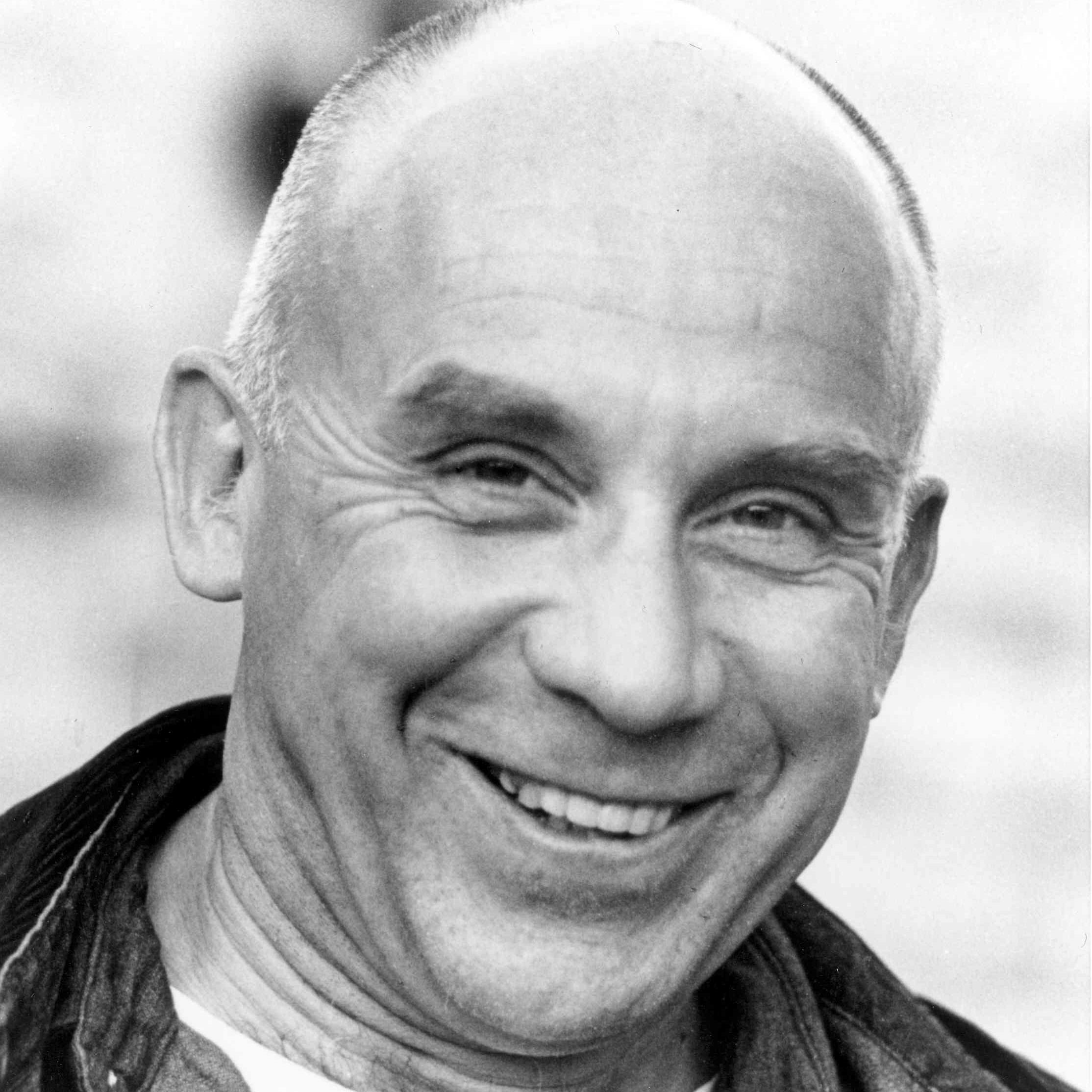 In his article Williams looks at the way in which Orwell, and his contemporary Thomas Merton (an American Roman Catholic monk, 1915-1968, pictured right), teach us about the language of terror and war. Essentially the thesis is that in order to counteract the obfuscation of “military strategists and politicians” the commentator has to write well — clearly, concisely, transparently — in order to permit communication and hence understanding.
Williams’ essay is dense. So dense I had to read it twice. Nevertheless it is itself clear and well written — so don’t let the density put you off; it is very well worth reading. This is where I would normally give you a couple of quick quotes as the nub of the article, but were I to do that here I would have to reproduce the whole essay! That is how good it is. But undeterred, I will anyway because Williams says it so much better than I can …
Bureaucratic double-speak, tautology and ambiguous cliché not only dominate the language of public life from the health service to higher education, talking and writing badly also prepares the ground for military and terrorist action.
Merton relished the comment of an American commander in Vietnam: “In order to save the village, it became necessary to destroy it”.
When the agents of Islamist terror call suicide bombers “martyrs”, the writer’s job is to direct attention to the baby, the Muslim grandmother, the Jewish aid worker, the young architect, the Christian nurse or taxi driver whose death has been triumphantly scooped up into the glory of the killer’s self-inflicted death.
Both Merton and Orwell concentrate on a particular kind of bureaucratic redescription of reality, language that is designed to be no one’s in particular, the language of countless contemporary manifestos, mission statements and regulatory policies, the language that dominates so much of our public life, from health service to higher education. In its more malign forms, this is also the language of commercial interests defending tax evasion … or worse, governments dealing with challenges to human rights violations, or worst of all (it’s in all our minds just now) of terrorists who have mastered so effectively the art of saying nothing true or humane as part of their techniques of intimidation. In contrast, the difficulty of good writing is a difficulty meant to make the reader pause and rethink.
Our current panics about causing “offence” are, at their best and most generous, an acknowledgement of how language can encode and enact power relations … But at its worst, it is a patronising and infantilising worry about protecting individuals from challenge; the inevitable end of that road is a far worse entrenching of unquestionable power, the power of a discourse that is never open to reply … On both sides of all such debates, there can be a deep unwillingness to have things said or shown that might profoundly challenge someone’s starting assumptions.
Yes it is a dense, but good and illuminating, essay. It’s well worth the effort required to read it. And when you’ve read it, please hammer its lessons into the concrete heads of our politicians.