Category Archives: links

Your Interesting Links

Another in our series of links to items you may have missed, but which I found for you.
First off let’s kill off a few common science myths which most people seem to believe but which are, well, myths.


Next, something dear to my heart … what gives beer it’s flavour?
Also interesting is what causes the colours of gemstones.
And a third infographic (isn’t that a horrible word?) on how dogs evolved.
Returning to the theme of science mysteries and myths, here are a few things about how the world of flying works.
And on to the medical. What is the classical medieval disease? No not plague, but leprosy. It is something else which is commonly misunderstood, including the fact that it is still around.
And here are seven things you shouldn’t let your doctor do unless you absolutely have to.
Just what were they thinking? A Chinese hospital has installed an automatic sperm extractor.
Yes, apparently female infant masturbation is a thing, at least in America. And it really isn’t a cause for concern.
Meanwhile sex educator and blogger Emily Nagoski has this week been answering sex education questions from her readers. Interestingly one asked “How do you fix sex education?” Here’s Emily’s answer, which is just as applicable to the UK as the USA.
Apparently one psychologist is suggesting that we should give up forcing gender equality in the sciences at school. And from reading this article have to say I agree: far better that boys and girls study what they’re interested in than we channel them into subjects they may not do so well at, just because. At the end of the day I don’t care who deigns my drugs or my car; I’m more interested that they do it well and hopefully enjoy doing it. But that doesn’t mean we should put roadblocks in the way of girls doing science or boys doing needlework. When I was at school (half a century ago!) no-one stopped girls doing science. Yes more girls than boys did English, French and Biology at A-level but almost as many girls as boys did Maths and Physics. And we even had one boy who insisted on doing O-level Domestic Science! Let’s just find out what kids can do and encourage them to do what they enjoy — which should be so much more fulfilling.
Meanwhile according to another doctor we would all be much better off and less stressed if we were all to work a four day week. What he doesn’t say is whether we would get only 4 days pay for it, and if not how it would be funded.
horse

Now an article on how wildlife is thriving in the aftermath of Chernobyl and in the absence of meddling humans.
A very interesting report on some historic experiments to determine if birds of prey see or smell out their carrion lunch.
What to do with dead wood? For the sake of wildlife, just leave it alone.
George Monbiot (who else?) suggests that the principal threat to freedom of expression comes not from state regulation but from censorship by editors and proprietors
Ah, so we’re now onto wordy things. OK, so here are 11 “modern” words which are much older than we think.
Still on words, it seems Shakespeare invented many phrases we take for granted in the modern world.
Which allows us to shimmy quickly to history. Our favourite London cabbie is still writing about the history of Waterloo Station and its environs. Episode 9 is about Waterloo’s darker side.
And while on the darker side, here’s an encyclopaedia of everyday monsters, starting with that widespread parasite, the earworm.
Coming up to date, here are some more infographics who owns all the major brands in the world. So who thought all these companies were independent?
Finally I’ll leave you with this summary of what it is like to be middle aged …

Your Interesting Links

More items you may have missed and will wish you hadn’t. As usual the more scientific (though that doesn’t mean more difficult or incomprehensible) stuff first …
Ten scientific ideas that have transferred to common parlance and which we all misuse.


We’ve known for a long time that building bigger roads actually makes traffic worse, not better. Here’s a piece on why this is.
Ever wanted to know what it’s like to do research on whale vaginas? This will tell you (some of it).
Humans are very successful at domesticating animals — so successful there are three times as many chickens in the world as there are humans! Moreover we’re so good we apparently domesticated ourselves.
Apparently there is evidence that nudity provides health benefits for both body and brain.
Men’s naked bodies are the stuff of nightmares — NOT!
One day scientists will actually make up their minds … Maryn McKenna suggests it is likely that fat is good for us.
An interesting piece from Emily Nagoski re-analysing old data which shows that even before the pill, more sex did not mean more pregnancies.
So men think about sex every few seconds. Well maybe not!
So from sex to pussies … There are a few things you can do to hopefully add years to your cat’s life.
An interesting short piece on why it is so hard to objectively judge expensive wines — actually make that any wine.
Like judging wine, it’s all in the mnd. Here’s a quick “index card” summary of memory loss.

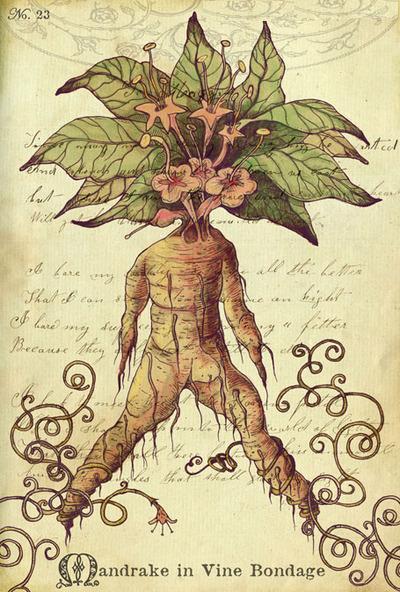
How the medievals got it so fantastically wrong about mandrake: the plant they thought murderous and grown from the blood of a hanged man.
Next year we celebrate the 800th anniversary of Magna Carta and the British Library is staging a special exhibition as well as bringing together the four surviving 1215 copies of Magna Carta. Here’s a portal to their Magna Carta exhibition page, webpages and medieval manuscripts weblog.
Our friendly blogging London cab driver is still investigating the history of Waterloo Station. Here’s part 7: trivia.
Finally to end on a worrying note, WTF is wrong with Americans? According to this guy it is all down to their education system. And the UK isn’t too far behind!
Gawdelpus!

Your Interesting Links

More interesting items you may have missed.
According to George Monbiot it is all very simple: if we can’t change our economic system, our number’s up.
In case you ever wondered, here a brief history of mathematical symbols.


Cats? Well OK, so what was the role of cats in Anglo Saxon England?
And while on cats, let’s have a quick look at the chemistry behind catnip’s effect on cats.
So how on earth do you manufacture a link from cats to the human penis? Oh well, maybe you don’t. Anyway, scientists are getting interested in all those microbes that inhabit our bodies, and one group is now looking at the microbiome of the penis.
So from old jocks to old books … What does cause that smell of new & old books?
OK, so you still need to get the kids interested in science … try the bizarre liquid that sometimes acts like a solid, and which you can make at home.
And from the crazy to the ridiculous (maybe) … here’s a possibly not so serious scientific investigation of mermaids.
And so to the truly astonishing. In Canada a group of swallows have worked out how to open automatic doors.
So yes, insects do sleep. Here are some nice pictures of sleeping jewel wasps.
And onto food … it now seems that the Mediterranean diet effect may all be down to salad and olive oil. Well who would have guessed!
Meanwhile everything you think you know about breakfast is wrong. Well almost everything.
Celery. Aphrodisiac or harbinger of death?
While on health things, here is a piece on the health benefits of sleeping naked. Personally I can’t imagine sleeping comfortably any other way.
OK so we’re on the slippery slope to nowhere, so here’s a brief history of 8 hallucinogens.

And Diamond Geezer tells us 30 things learnt about sex over the last 30 years.
While we’re talking about learning, it seems we learn better if we take handwritten notes and don’t use a laptop. Why do I not find this surprising?
What’s more learning to write by hand means young children also learn to read more easily. Seems it’s something to do with the connectivity in the brain.
OK, so hands. It also seems that the hand you favour shapes your moral space. Which I find kinda weird.
And finally to a couple of historical items. First up the next part in the series on Waterloo Station — this is part 6 on Waterloo’s wildlife.
Tom Shakespeare tries taking a look at what it would be like to take England back to the Dark Ages. I suspect we’d all agree it’d be fairly horrific.
And finally as a piece of lunacy it seems Great Britain has an underwater rugby team. Do what!?!?!?!

Your Interesting Links

More interesting items you may have missed. Lots of science and medicine curiosities in this edition, but its should all be accessible to the non-scientist.
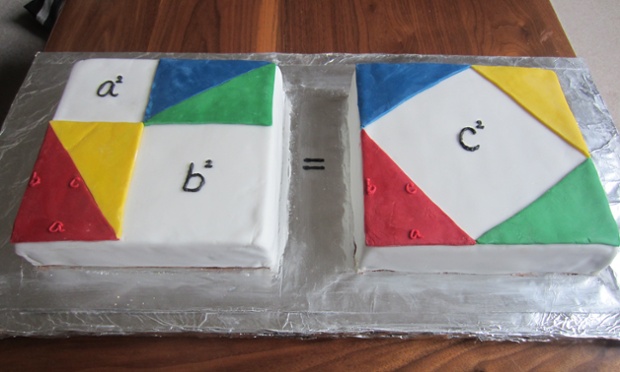
Who thinks mathematics is boring? You won’t when you see the beauty of mathematics in pictures! I’m definitely worried about image four.


Chemicals have a bad name. Wrongly! Manmade or natural, tasty or toxic, they’re all chemicals.
Shifting to the zoo-world, here’s a piece on the curious and improbable tale of flatfish evolution.
Beaver! No not that sort! Honestly your minds! I’m talking about the beavers that have been reintroduced to Scotland, and which are doing well.
Concrete jungle. Yes, it certainly is a jungle out there. Our cities, yes even the most urban and built-up parts of them, can be important wildlife habitat.
Bananas are in trouble and we don’t have a solution to save our favourite fruit. Oh and they’re quite an interesting plant too.
All our food is toxic, innit. Actually, no. But here’s why the fear, uncertainty and doubt are far too easy to believe, and how to counteract it.
On the continuing saga of why chocolate is good for us, but just not in the form you like it.
Five-a-day doesn’t add up. It’s not all marketing hype, except when the arithmetic is wrong.
Turnips. The humble vegetable that terrorised the Romans and helped industrialise Britain.
What do you mean you thought apples grew on trees? Well, OK, they do but originally not the trees you thought. An interesting piece on saving the wild ancestor of modern apples.

Farting well? It could mean you have a good healthy collection of gut microbes.
Just don’t read this next story over dinner. It seems we eat parasites more than we realise.
And another that’s definitely not safe for mealtime reading … A long read on some of the work going on behind faecal transplants, and how they’re being so successful in treating stubborn illnesses.
Lads, here are three cardinal rules from a urologist about care of your plumbing.
Phew! So now let’s leave the scientific and medical behind us and more on.
Naturism is the practice of going without clothes — and it’s not shameful, embarrassing or ridiculous.
Still on naturism, here’s one young lady’s experience of being clothes free at home.
image6

And here are some more views on the way the new Nordic sex laws are making prostitutes feel less, not more, safe.
From
Vagina in the workplace — a story. The closing ideal has to be a good way forward, surely.
Changing tack (yes, OK, about time!) here’s part five of the ongoing series from a black cab driver about Waterloo Station. OK, hands up, how many of you knew it was a war memorial?
And finally, the BBC have unearthed a box of forgotten letters sent from occupied France during WWII. See you never know what’s in that dusty box in the attic!

Your Interesting Links

Interesting items seem to be coming thick and fast at the moment, so here’s another instalment of links to items you may have missed. And not so much boring science stuff this time!
Apocalypse? So what would happen if all our satellites fell from the sky? Yep, apocalypse may not be far off the mark!
Do you wear glasses? Or lenses? Ever wondered whether you could see without them? You can. Here’s how. And it really does work!
The strange story of a tetragametic woman — that’s someone made from four gametes (two eggs, two sperm) rather than the usual two. This is a form of chimerism and as chimeras are normally detected only because of external abnormalities (for example differently coloured eyes) we don’t really know how common it is.
We know the phases of the moon influence the behaviour of many creatures from big cats to owls, but how much does the moon affect human behaviour?


An interesting short read on saffron, that brightly coloured spice from crocus flowers.
While on plants, this stunning piece of sculpture was carved into an olive stone in 1737.
And so to religion … here’s an interesting evolutionary tree of religion.
Allegedly the human mind is primed to believe in god. If so, how is it that atheism is on the rise?
Meanwhile archaeologists have been staring into the mists of time and come to the conclusion that Britain’s oldest settlement is Amesbury, near Stonehenge, in Wiltshire. Doesn’t seem too surprising to me.
An American mother takes a very sensible look at nudity and how it does not cause any problems for kids.
And to finish on our usual theme of sexuality, here’s a considered response to the Nordic conception of controlling prostitution from a Canadian sex worker.
These final two items may not be safe for those of a pathetically puritanical mind; they are included here in the interests of normalising our attitudes to sex and sexuality.
Girl on the Net asks whether blowjobs are anti-feminist. Spoiler: No, because feminism is a state of mind not an attribute of “things”.
And really finally, with the spotlight on Girl on the Net, here’s an interview with her in the University of York student newspaper, York Vision (it was called Nouse in my day!).

Your Interesting Links

So soon already we have another instalment of links to items you may have missed. Although many of the links in these articles are scientifically inclined, I do try to steer away from heavy science in favour of things which are of more general interest and intelligible by intelligent non-scientists. And of course I do try to include items on history, pets and other interests as well as amusements. Anyway here is today’s collection.
So you don’t really need to know the science of how any of this works to appreciate these freaky chemical and physical reactions. [Animated GIFs]
No there isn’t soap in your mayonnaise! Why are we all so terrified of chemicals? Everything is a chemical! Gal Science shows how ridiculous these fears can be.


Garlic eating cows fart less methane, so could this save the world from climate change? Nice idea, but I suspect it will turn out to be a big definite “probably not” when the true effects are realised.
Changing tack, here’s an interesting piece on how IUDs work as contraceptives — and it mostly isn’t how you think!
Got a cold? Then take care who you spread it to, because we have a lot of delusions about when we are contagious — and it is more than you probably think!
While on things infectious, how much do pets bring bacteria into our homes? Answer, yes, just as much as you feared!
Every cat owner knows that, despite being inscrutable, cats think, but what do they think about and how intelligent are they really? Are you surprised that finding out was a real challenge?
Do animals give each other individual names, just as we do? It is hard to tell, although it seems that parrot parents do give their chicks names which stick for life.
Many many things have been used as a writing pad, but an ostrich egg?!

And remaining on things medieval, here are some wonderful blue maps of the medieval world. And they’re surprisingly accurate.
Next up, the history of food. How was tomato ketchup invented? Well, no, not originally by HJ Heinz although they had a finger in the jar.
Changing tack again, here’s a piece on the, to me scary, world of extreme cavers. Surely these guys are out of their trees! What is it about the human species that makes us have to do these things “just because they’re there”? [Very long read]
I’m not sure this is quite right but certainly the Awkwardness Zones should be bigger.
We’re always busy — busy, busy, busy. No wonder we’re always tired. We need to kill the culture of “always busy/always on”. Here are a few ways that will help at an individual level — and yes, these really do work!
Why is there such a resistance to nudity? Because we have this myth that nudity is sexual. But it is just a myth.

And finally an article from the Independent saying that the UK is too prudish and we should follow Munich’s example and legalise public nudity. Errr … actually public nudity isn’t illegal in the UK unless with intent to cause distress, alarm or outrage — although the Plod so often ignore this distinction.

Your Interesting Links

More links to articles you may have missed.
Apparently odd numbers are dodgy — except for 7 — but even numbers are good.
So just what is the evolutionary or biological purpose of menstruation? Even you girlies might be surprised at the (details of) the answer.
While we’re on girlie bits, here’s probably more than you wanted to know about having a tit reduction.
Most of my friends will have managed to navigate this OK, but just in case you needed to know, here’s how to care for your changeling.
On the stress of trying to cope with a life-threatening nut allergy.
For all those of you who sleep together, apparently the way you sleep says volumes about your relationship, unless you sleep on your back. Not sure how Noreen and I have survived all these years then.
Research tells us that in the UK we start kids on formal learning much too young. As so often Europe gets it right and we get it wrong.


And now for something more light-hearted. Here’s a medieval image of John Lennon. Love the specs!
While on the old, here’s more on the riddle of the Voynich Manuscript. The article is suggesting it is a forgery — I agree this seems likely.
Back about 1750, long before Cleopatra’s Needle, Canaletto painted a large obelisk on the north bank of the Thames in London. IanVisits investigates.
For once a sensible and accurate article about the Japanese, sub-tropical paradise of Okinawa and Okinawan music in the UK press. And it quotes my friend John Potter.
How the coming of the railways changed elopement.

Meanwhile in Paris the new-fangled police force were spying on the mistresses of the well-to-do for no apparent reason.
And in modern Munich nudity is perfectly OK.
Apparently 2014 has been designated the Year of the Bush. And not before time, say I.
Finally … So you’re worried that your naked body isn’t perfect. Don’t be. A masseuse reassures us that we’re all the same — beautifully imperfect!

Your Interesting Links

Another selection of links to items you may have missed …
As seems to be becoming tradition, let’s start with Fukushima. Scientific American recently carried an article on a UN report that the meltdown is unlikely to lead to large number of cancers.
According to the Guardian some researchers are saying the Black Death was not transmitted by rat fleas. Excellent demolition job by by the Brooke Borel.
Going back a few centuries, Alasdair Wilkins asks “Was Robert Hooke really the greatest asshole in the history of science?” Answer, yes he probably was, but he was still a great scientist.
Some amusing illustrations of the Gluteal Crease. Yes, that’s where the butt crack begins.
OMG, scientists cannot leave the (alleged) mystery of female orgasm alone! Now they’re trying to shed light using ultrasound and wet tampons. Duh!
Next up two absurd creatures; and both are fish. First the tripod fish. Second the oarfish which like a lizard can shed it’s tail to escape.
And here’s another rather pretty oddity: MRI scans of fruit.
Moving away from science, apparently Islamic law to be enshrined in British law as solicitors get guidelines on ‘Sharia compliant’ wills. This is wrong on so many levels.
The Atlas of Prejudice has 20 interesting ways to view Europe.


Now to an interesting perspective on the depiction of nudity and naturism.
Asp milk or ass milk? No not that kind of ass milk!
A couple of scientists have compared every major diet and found that they’re all more-or-less bunkum. But the winner was … real food! Well who would’ve guessed?
Meanwhile some other researchers reckon that the bergamot in Earl Grey Tea is actually protective against heart disease. That shouldn’t be a surprise as it is known to block statins (which is why anyone taking statins is told not to eat grapefruit) because it binds to the same receptors. Duh! Again!

And here’s something else which is actually good for you … hops. Yes, that staple of brewers, Humulus lupulus.
And now to things historic … Here’s part 4 in the series by a London cabbie on Waterloo Station: the London Necropolis Railway.

Going east, here’s an article on the normality of the sacred and sensuous in Indian art.
I find it slightly astonishing (though I guess I shouldn’t) that the Tibetans have long has a pattern book for drawing and sculpting representations of the Buddha.
Returning to Europe, here’s another medieval manuscript containing cat paw prints.
And finally, few of us have time to read all of Shakespeare’s plays. Now there’s a “get out of jail free” card: every Shakespeare play reduced to just three panels. Brilliant!

Your Interesting Links

Another round-up of links to articles you may have missed.
First let us return again to the perennial question of Fukushima and the effects of the radiation. Screening of children in Fukushima has found a higher than expected incidence of thyroid problems, but the thinking is that this isn’t linked to the accident but a function of the increased screening: look harder, find more!
Known unknowns: a look at what we know we don’t know about the universe.
Another in the series of jobs you never wanted to do: Pig Semen Catcher
How the jungle fowl got to be the chicken.
So just why do big cats love Calvin Klein Obsession for Men
Long read on the disease that may or may not be Morgellons.
And next up a somewhat disturbing read about the menstrual myths of the Indian sub-continent.
From the icky to the slightly less icky: five things you didn’t know about earwax.
One of these days the medical profession will make up their minds about food. Now we’re being told that almost everything we’ve they’ve said about unhealthy foods is wrong.
However this is why dark chocolate is thought to be good for you. It’s all to do with microbes.
Changing flightpath completely, here’s an amazing video realisation of just one day of the flights over Europe. [Download required]
Combining transport and history, there’s a battle going on between English Heritage and archaeologists about approaches to looking at anything historic uncovered by HS2 rail link.
Cats again. New work on some ancient Egyptian kitten skeletons suggests cats were domesticated in Egypt much earlier than thought.
We all know they’re unruly, but here’s how medieval Europe tackled teenagers.


Just north of Heathrow Airport there’s a massive medieval barn, the “Middlesex Cathedral”. Here are the days it’s open to the public this summer.
And finally I’ll leave you with a selection of absolutely pointlessly gendered products. Their excuse is what?

Your Interesting Links

Another round-up of links to articles you may have missed.
First let us return to the perennial question of Fukushima and whether the fear of radiation the real killer, rather than the radiation itself. The BBC’s
Rupert Wingfield-Hayes investigates again.
Now for the truly bizarre. A tiny wasp that enslaves a cockroach with a sting to the brain.


And here are ten things you likely didn’t know about parasitic Ichneumon wasps. They’re incredible and they’re all around us!
Cats are all around us as well. Here’s an article on how they manage their society with group scent.
We all know that cats and dogs don’t really get on. And surprise, this is quite naturally part of their approach to the world.
Dogs see the world completely differently to us. Here’s how.
Here’s a very scary graphic from XKCD which puts us and our domesticated animals in perspective with wild land mammals. Now tell me again why we don’t need to reform agriculture?
The Raven was Toast’s “Bird of the Month” for February.
The human microbiome just gets more weird. Earwax transplants indeed!
Still on the medical, some surgeons have discovered that silk screws are strong enough to mend broken bones. And they’re biodegradable.
We are ashamed of everything that is real about us and this is causing us harm. Like I keep saying we need to normalise sexuality and nudity.
And if that means just being happily nude at home, then why not just do it?
Now for more weirdness, this time archaeological. Apparently some of the stones at Stonehenge ring like bells when struck. Could Stonehenge be a prehistoric belfry?
Also in SW England, a 4,000-year-old burial on Dartmoor is shedding lots of new light on our bronze age history.
More up to date and in London here’s part 3 of the history of Waterloo Station.
Here’s something I bet you Londoners didn’t know about. Roaming the Thames with Thames Clippers — a jump on, jump off river rover ticket.
And while we’re talking about London, what if Greater London was to be made a National Park? Well the idea isn’t quite so crazy.
And finally one to send you girls right over the top … an orgasm machine to deliver climax at the push of a button.