Click the image for a slightly larger view

Midden
1. A dunghill or refuse heap.
2. In archaeology, a mound or deposit containing shells, animal bones, and other refuse that indicates the site of a human settlement.
.jpg)
Denmark Gives Student $430,000 for Research on Legendary Underground Trolls
Despite the state of Demark’s economy the country’s government has awarded a $430,000 grant for a study that investigates the existence of underground trolls (that’s the mythical kind, for those in doubt).
Recipient Lars Christian Kofoed Rømer, a PhD student and part-time anthropology lecturer at the University of Copenhagen, plans to research ‘actual relationships’ between humans and trolls on the Danish island of Bornholm.
This is the second in my series of articles on depression — my depression. They are written from a very personal perspective; they are my views of how I see things working and what it feels like on the inside. Your views and experiences may be vastly different. My views and experiences are not necessarily backed by scientific evidence or current medical opinion. These articles are not medical advice or treatment pathways. If you think you have a problem then you should talk to your primary care physician.
 I was first diagnosed with depression back around 1980 — certainly some time in the two years after Noreen and I married. I have been on and off antidepressants ever since. And over the years I’ve tried just about every possible approach to managing the depression: drugs; psychiatry; counselling; CBT; giving in and curling up under the duvet.
Talking therapies don’t work on me and they never have; I know (and have likely tried) everything they try to suggest and I know already it doesn’t work. Such is the curse of being intelligent, questioning and experimental. The last thing I need is for some therapist to give me something more to do.
For the last couple of years I’ve been having monthly-ish hypnotherapy sessions and even this has not yet been very productive, although I remain hopeful; it feels closer to a solution than many previous attempts.
Looking back I have probably been depressed at least since my teenage years, maybe earlier, although no-one, including me, realised. It may all be tied up with being shy; a loner; and not having many friends.
The first real trigger I can remember was at the start of my second year at university (so over 40 years ago) when my girlfriend of over 2 years and I broke up (at her instigation).** This, piled on top of other circumstances, left me paralysed with depression for several months; I’m very lucky I didn’t totally screw my chances of getting a degree. Of course being male, and young, and not really knowing what was happening, I never got medical help but just tried to struggle on.
Since then, although I have had bouts of more serious depression, above the background level, I am not conscious of any particular thing which has been a trigger. I’m lucky in that I have never been seriously suicidal or into self-harm; that’s something I’ve not had to cope with. Nor do I have bipolar disorder: I never have the highs.
But one general trigger does seem to be a high level of change and overload. Too much to do and/or too much change. This happened when I was at work; everything occasionally got on top of me and I had to take a duvet day. This did my career and reputation no favours, and I was well aware of it. This is also why I never pushed to get higher up the ladder than I did; I knew I didn’t want the aggravation that went with it, much as I would have liked the recognition. It is also why I ended up retiring early, because I could not have done another year of the “project from hell” I was working on.
And this overload/change effect still happens, because I still keep doing things. I cannot not be involved. If I didn’t get involved I fear I would quickly vegetate. As someone expressed it to me the other day: “if I sat at home all day I’d go senile”.
But sometimes everything gets too much. I try not to let it get in the way of things I have committed to do for other people – just as I tried to avoid it affecting my professional life. But that means all too often the fallout descends on my personal life. Hobbies get neglected; and far too often I end up ducking out of something we’ve booked to do. However much I need to find that space, I always feel bad about it because it always affects at least Noreen as well. I’ve got to the stage where the only real way to mitigate this is to book as little in advance as I can. And that in itself is demoralising and depressing.
I’m very lucky in that Noreen does her best to understand this and ride with it, even if she cannot really understand from the outside what the depression is actually like on the inside. Understandably she feels helpless to do anything to alleviate my suffering. I’m continually surprised, and hugely grateful, that Noreen is as understanding and patient as she is. She does a lot to help: doing bits and pieces for me; mopping up after me; quietly, behind the scenes, helping me achieve a lot of the things I get involved in. And she stops me getting involved in too much! I don’t think she realises just how much difference she makes and just how grateful I am. In this I am truly lucky; it is probably the one thing which really keeps me going.
To be continued …
** I’m not going to write in detail about this because although 95%+ of it would be about me there would be things about other people from whom I cannot get consent and who, should they happen to read this, may not wish to be reminded of what happened.
Another selection of articles you may have missed. And there’s not so much hard science in this edition.
#333333;" />Many people still have concerns about vaccinations, which is largely unwarranted. Wired has looked at what actually is in a ‘flu shot.
The Ancient Greeks knew far more than we realise, but did Ancient Greek women use tampons? Seems the jury is probably still out on this one, ‘cos it’s all a matter of language.
Nuts. Most blokes like theirs. Girls: how much do you love you guy’s nuts? Because you should: testes contain the most distinct types of human tissue of anywhere in our bodies. But sorry, girls, the study isn’t reported to have looked at your ovaries — poor show!
How did cats become domesticated? It seems it is probably all down to their genes, which are rather different to their nearest wild relations — although scientists don’t yet understand what all the differences mean.
While on cats, have you ever wondered how much exercise your moggie gets? So some guy fitted a FitBit tracker to his cat Java to find out. Which is seriously cool even if I can’t be bothered to try it!
PS. Java is seriously cool too …

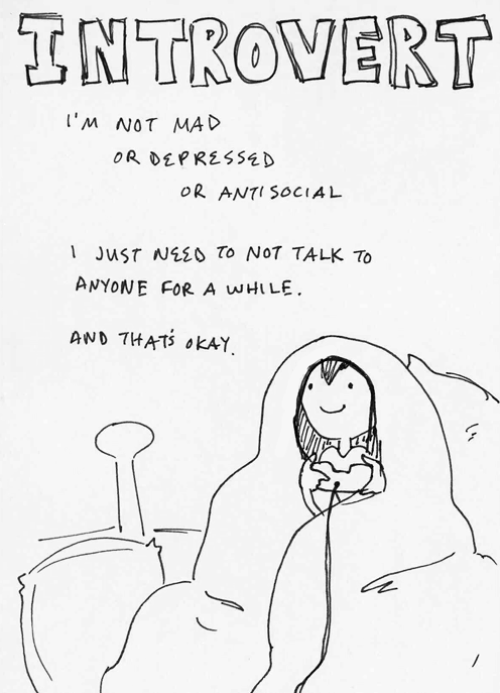
This month’s “Ten Things” continues last month’s theme of “influences”. It was inspired by the quotation from Eleanor Roosevelt which I came across some time back:
Many people will walk in and out of your life, but only true friends will leave footprints in your heart.
So here are 10 people who have left their muddy bootprints on my heart. And no, I’m not going to explain; those who know, know; those who don’t can make wildly wrong guesses.
Hmmm … interestingly female dominated and not always for the reasons you might think!
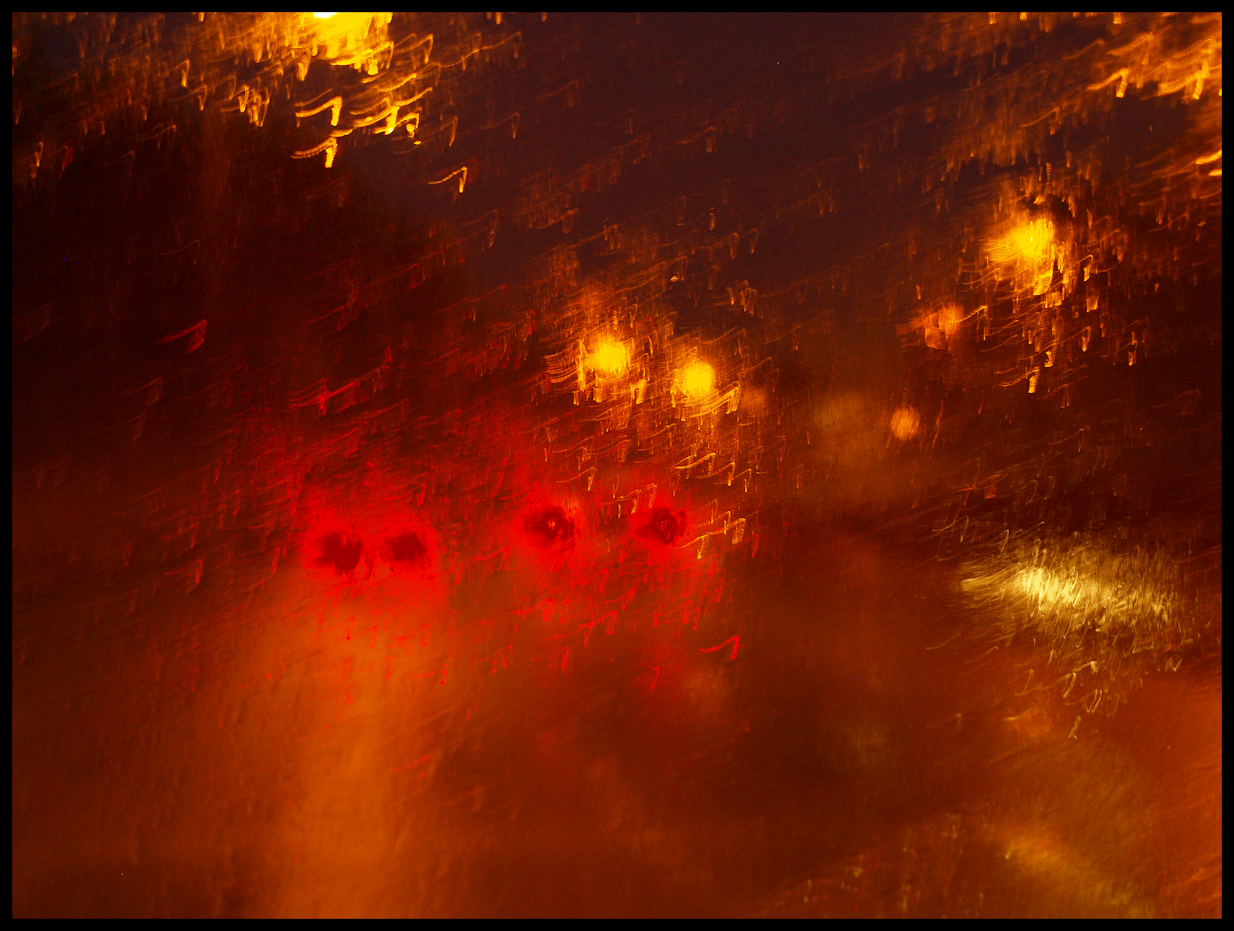
This week’s photograph was taken a few weeks ago on our way back from Norwich. We ran into heavy rain as we neared London. Being in the passenger seat I took the opportunity to capture the moment.
Oh dear, oh dear, oh dear! I had completely forgotten about the ast two questions in my Five Questions series. No excuses; just incompetence! So without further ado, here is the answer to Question 4.
This is the first of a series of articles on depression — my depression. They are written from a very personal perspective; they are my views of how I see things working and what it feels like on the inside. Your views and experiences may be vastly different. My views and experiences are not necessarily backed by scientific evidence or current medical opinion. These articles are not medical advice or treatment pathways. If you think you have a problem then you should talk to your primary care physician.
My name is Keith. I have depression.
I have been in a serious bout of depression for most of the last 6 months — yes all summer and autumn — and I have no clue why.
I’ve decided to write a occasional things about depression; my depression. Just because.
Unless you are one of the half a handful of people closest to me you would probably not know I have depression, because most of the time when I’m out and about I can put on a mask to hide it and function more or less normally.
I want to get rid of the depression but I don’t have the first fucking clue how to.
No that isn’t an invitation to tell me how to do it – so please don’t! — because over the years I have tried almost everything and it hasn’t worked (as you’ll see by reading on).
I’ve been on antidepressants for many years; this time around I know it is well in excess of 12 years because I was on them when I changed doctors shortly after the millennium. I’ve been on the tablets for so many years I no longer have a clue whether they are doing any good, but currently it feels as if they’re useless.
Unfortunately the antidepressant I’m on is one of the worst for withdrawal symptoms when you try to get off them. I’ve had several attempts over the years but failed every time. After talking with my GP recently I’m currently having another attempt to switch to a different antidepressant. I’m hopeful this time I will succeed; but I’m fearful that I won’t.
What makes this worse is that I don’t really know why I have depression. I know that it is multifactorial and I know what some of those factors may be. For instance I know that I am worse during the winter and that I do technically have mild SAD (I was tested for that about 25 years ago). I know change and overload are also big factors. And there may be a genetic predisposition as my father and his father were also both depressives. Worrying about all the things I know I should do (exercise, lose weight, blah, blah, blah) makes the depression worse too. So it isn’t as if there is one cause which I can change to fix the problem. I wish there were.
Along with the depression, for me, go anxiety and panic attacks. Fortunately the panic attacks are now relatively rare; much rarer than they were back in the 1990s. But only because I have found strategies to avoid putting myself in the position where they are likely to happen; so I can to a large-ish extent control this.
For instance, I dislike the London Underground: the motion; the lack of fresh air; being packed in like sardines; the claustrophobia. So ask me to travel on a packed tube train and you’re asking me to have a panic attack. So I don’t travel on the underground if I can avoid it, although short distances and the over-ground parts are doable, sometimes. I feel similarly about buses, although there the problem is more to do with motion sickness — something I’ve always suffered from. Compensating for this gets expensive as it means using taxis. And luckily I am OK with normal trains; I’ve always loved proper trains.
Here’s a useful graphic which will tell you a lot more about depression. (Click the image for a larger, readable, version.)
To be continued …