All posts by Keith

I’m a controversialist and catalyst, quietly enabling others to develop by providing different ideas and views of the world. Born in London in the early 1950s and initially trained as a research chemist I retired as a senior project manager after 35 years in the IT industry. Retirement is about community give-back and finding some equilibrium. Founder and Honorary Secretary of the Anthony Powell Society. Chairman of my GP's patient group.

Oddity of the Week: Chimerism

One person outside but two people inside. That’s the gist of the chimera, a human being who carries the DNA (and sometimes the body parts) for two. It sounds crazy, but it happens. In fact, doctors think it probably happens more often than we realize. Unless there were some reason to test the DNA from cells in different parts of your body, you could easily be a chimera and never know it.
A chimera is a single organism composed of genetically distinct cells. This can result in male and female organs, two different blood types, or subtle variations in form. Animal chimeras are produced by the merger of multiple fertilized eggs.


Tetragametic chimerism occurs through the fertilization of two separate ova by two sperm, followed by aggregation of the two at the blastocyst or zygote stages. This results in the development of an organism with intermingled cell lines. Put another way, the chimera is formed from the merging of two non-identical twins. As such, they can be male, female, or have mixed intersex characteristics.
This can produce an organism with totally different characteristics on each side of the body: different genders or different colouring — as in the budgie above. Or it can cause mozaicism where the organism contains patches of the different cell types, something most easily spotted in coat colouring — as in the human above — or eye colour.
But very often the mosaicism is there; we just don’t know it.

Weekly Photograph

Meteorologically, at least for the UK, yesterday (1 March) was the first day of Spring. Which means Summer must surely be not far behind. This week’s photograph is another from the archive to remind us what Summer is like and what we have to look forward to.

Click the image for larger views on Flickr
Hollyhock
Hollyhock
Pinner; July 2011

Oddity of the Week: Bats

Bats roost in big groups in caves. Wrong! If you’re a Hardwicke’s woolly bat, you prefer to sleep in a more luxurious — and private — place.
Kerivoula hardwickii roosts inside tropical pitcher plants. These carnivorous plants usually attract insects, but Nepenthes hemsleyana lacks the scents that others have, so few bugs are lured in. Instead, it benefits from the faeces of this tiny bat, which provides more than a third of its nitrogen and may be crucial to the plant’s survival.
These bats found a niche that no-one else was occupying; they are the only bat species known to roost in pitcher plants.


To take [the image above, and others] Merlin Tuttle waded through tropical forest peat swamps on Borneo. Once he had found an occupied plant, he would spend a few hours taming a bat before snapping it from his portable studio, which provided protection from heavy rains. “It only takes a small fraction of a second for a bat to either enter or emerge, so capturing the action at just the right moment is a real challenge,” says Tuttle.
Within a few days, the bats had learned to bump against his nose when they wanted him to give them some mealworms. “We were quite amazed at the intelligence of such tiny animals,” Tuttle says. “Contrary to common misconceptions, bats in general are gentle, highly intelligent and trainable.”
It is the fact that wild bats are so easily trainable that really struck me!
From New Scientist, 21 February 2015 and at www.newscientist.com/article/mg22530090.100-tiny-bat-makes-home-in-a-carnivorous-plant.htm.

Weekly Photograph

This week a self-portrait from several years ago. Taken, with a fisheye lens, in our hotel room when away for the weekend — I was actually going to a school reunion.

Click the image for larger views on Flickr
Self-Portrait with Chair
Cheshunt; June 2008

Word: Bascule

Bascule
A device operating like a balance or see-saw, especially an arrangement of a movable bridge, by which the rising floor or section is counterbalanced by a weight.
A bridge with a movable section hinged about a horizontal axis and counterbalanced by a weight.


London’s Tower Bridge has two bascules …

From the French bascule, formerly bacule, a see-saw; from battre to beat, to bump, or bas low, down + cul the posterior.
The word appears to have been first used in English in 1678.

M&S "Southwold" Beers

shwb2For quite some while — probably 2-3 years; maybe more — Marks & Spencer have been selling a range of “Southwold” beers, which we know are brewed for them by Adnams of Southwold.
Over the years I have tried probably most of them and found them at least acceptable and often quite pleasant. But then, as regular readers will know, I am partial to the odd pint of Adnams — with the exception of Broadside which I find too heavy. I especially like Adnams “Ghost Ship” and their current very hoppy lager.
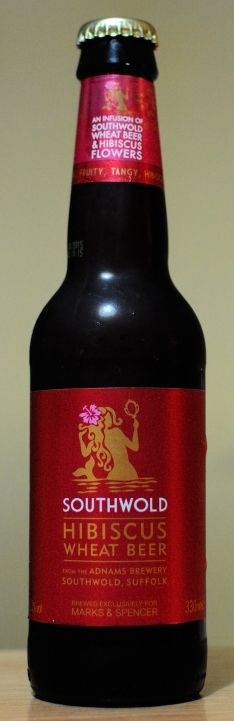
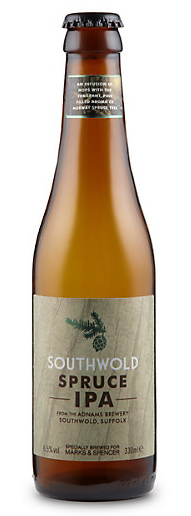
Herself was shopping in a local M&S this afternoon and noticed two “Southwold” beers she’d not seen before: “Southwold Hibiscus Wheat Beer” and “Southwold Spruce IPA” in small (330ml) bottles. Being thoughtful that way, Comrade Wife bought me a couple of bottles of each to try. And I have done so.
The result? Let’s say they are not to my taste, for as the names imply they are slightly flavoured with the non-traditional ingredients.
ssipa2The “Southwold Hibiscus Wheat Beer” (4.3%) is described on the bottle as “an infusion of Southwold Wheat Beer and hibiscus flowers”. It has a very slight red tinge to the otherwise mid-brown colour; and it has a fruity/flowery bouquet and slightly sweet taste.
The “Southwold Spruce IPA” (6.5%) is described in similar terms as “an infusion of hops with the fragrant, pine filled aroma of Norway spruce trees”. It is a rich brown with a slight pine bouquet.
The underlying beers would be perfectly acceptable, but I’m not a fan of what’s they’ve been turned into. I don’t much like fruit flavoured beers (which is essentially what the hibiscus one is) and I decidedly do not want my beer smelling or tasting of bathroom disinfectant.
Sorry guys, you might just as well not have bothered!
Southwold Hibiscus Wheat Beer, Overall Rating: ★★☆☆☆
Southwold Spruce IPA, Overall Rating: ★☆☆☆☆

Oddity of the Week: State Tomatoes

[American] State legislatures have muddied the fruit/vegetable waters … The custom of creating state symbols dates to the [1893 Chicago World’s Fair] where … exhibits [included] the world’s largest conveyor belt, a US map made of pickles, Bach’s clavichord, a herd of ostriches, and a 22,000-pound Canadian cheese. Also featured at the Fair was the National Garland of Flowers, for which each state was asked to select a representative flower.
State flowers were soon followed by a host of other official state symbols, among them birds, trees, animals, insects, reptiles, fossils, minerals, gemstones, songs, and folk dances. Utah and Delaware now have official state stars. Maine, Massachusetts, and North Carolina have official state boats. Texas has designated the cowboy boot its Official State Footwear. In the food category, we have official state fruits, vegetables, nuts, grains, herbs, beverages, muffins, cookies, and pies.


Some state fruit and vegetable decisions have been straightforward. Six states, for example, chose the apple as their symbolic fruit, and three opted for the strawberry. Two — Georgia and South Carolina — chose the peach; Alabama — unable to make up its mind — picked the blackberry as state fruit and the peach as the state tree fruit.
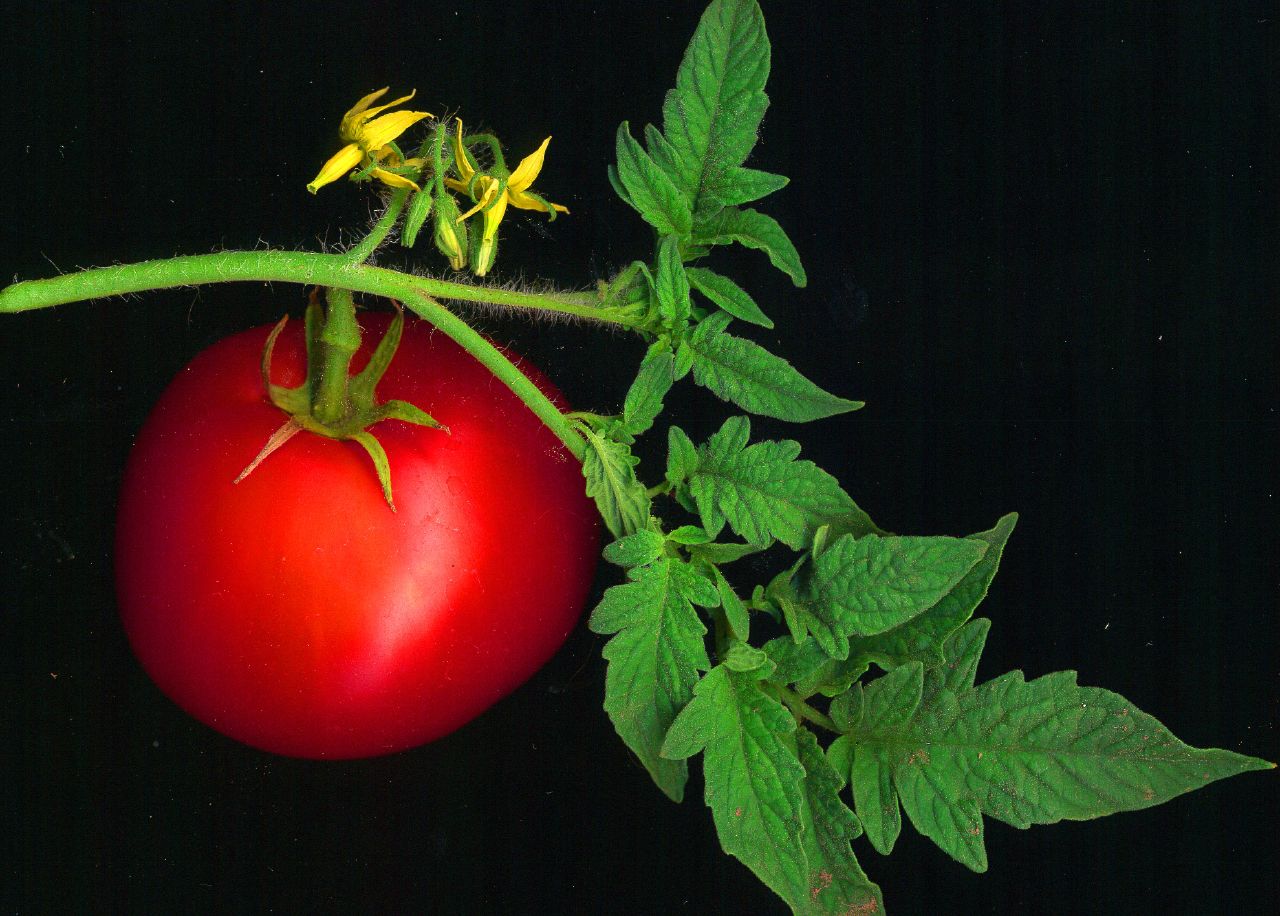
Tennessee and Ohio went with botany and chose the tomato as their state fruit; Arkansas, hedging its bets, decreed the tomato to be both the state’s official fruit and official vegetable. Louisiana, on the other hand, appointed the sweet potato state vegetable, but named the tomato the state’s official “vegetable plant” … Louisiana’s state fruit is the strawberry; they’ve also got a state doughnut, a state jelly, and a state meat pie.
From: Is a Tomato a Fruit? It Depends on How You Slice It

Your Interesting Links

Further instalment of links to articles you really shouldn’t have missed!
As usual we’ll start with the techie stuff, after which it is all down hill into the circles of … oh, probably somewhere.
Wired reckons there are five things everyone should know about light. Does everyone really need all five of these!
I suggest you don’t read this while eating lunch … Public transport, and especially subway trains, always seems fairly grimy. And now scientists have mapped the microbes on the New York subway. And there’s nothing to make us think the London Underground is any better!
Miracle foods or marketing scam? The Guardian lifts the lid.


Something fishy on a little dishy? The fish you eat may not be what it seems. Caveat emptor.
So we’d all better go back to eating those formerly fashionable elegantly dressed salads.
After which, of course, we’ll need a nap. But do you know how much sleep you should be getting? New recommendations have been released, and it is probably more than you thought.
On to less savoury habits … Why do we pick our noses?
Now this one is definitely NSFW. Doctors in Florida have performed the world’s first penis reduction operation. Yes, you did read that right!
As we’ve said many times before, there are benefits in social nudity and you’re likely missing out on them. The thing is you don’t know you’re missing the benefits until you’ve tried social nudity.
Descending further into interpersonal relationships [can there actually be an intrapersonal relationship?] why do we use terms of endearment and pet names in relationships?
And so to London … First of all the London Borough of Camden have ideas of redesigning the whole of Tottenham Court Road and making it essentially pedestrians and buses only — no cars, not even taxis. London Reconnections have the low down.
Meanwhile our friend Diamond Geezer lays down a challenge … The All Lines Challenge: travel on each of the London Underground’s eleven lines in the shortest time. The current record stands at just over 33 minutes.
And now descending right to the depths for our last couple of items …

Parrots are well know for talking, and there is a long history of them having particularly shocking vocabularies.
Finally, Abracadabra!

In the midst of the word he was trying to say,
In the midst of his laughter and glee,
He had softly and suddenly vanished away —
For the Snark was a Boojum, you see.